
Today, watches not only detect our bedtime and wake-up times but also use heart rate and accelerometers to roughly determine the proportion and distribution of our sleep zones
This article will explain the underlying principles to help you determine whether your watch measurements are accurate
1. Sleep structure diagram and brief description of sleep periods
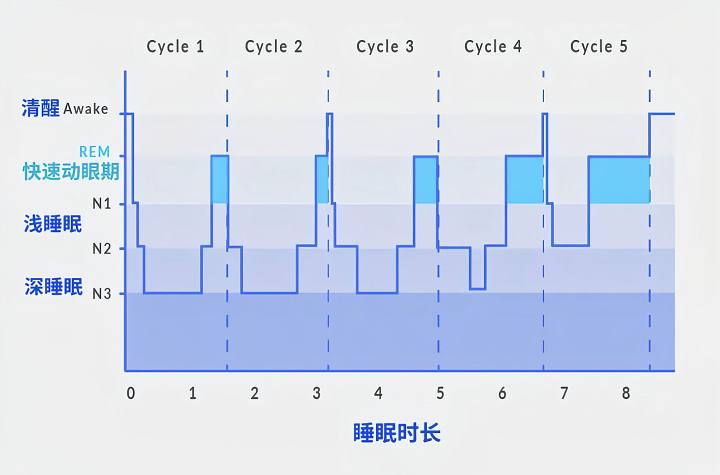
Sleep structure diagram
We first need to understand how sleep is structured to know whether the manufacturer's algorithm is reasonable

During sleep, brain waves undergo various changes as sleep duration increases. Based on the characteristics of these brain wave changes, sleep is divided into two states: non-rapid eye movement sleep (NREM) sleep and rapid eye movement sleep (REM sleep)

NREM sleep includes N1, N2, and N3 (with further subdivisions including N4).

Among them, N1-2 is light sleep, and N3 is deep sleep. Because sleep changes periodically, there are usually 3-6 such sleep cycles each night

Introduction to sleep stages (three stars):
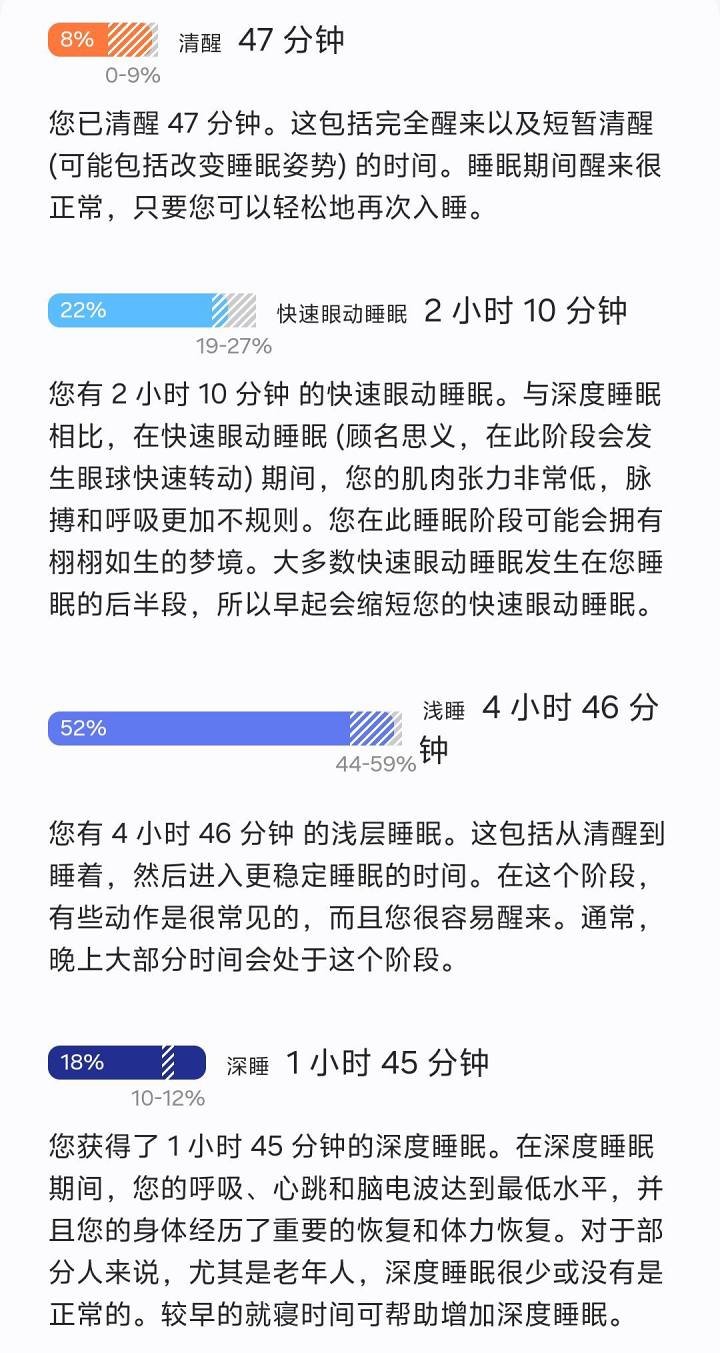
Sleep stage
Sleep Proportion by Period:
Deep sleep<体力恢复>: usually concentrated in the first half of the night, accounting for 15-20% of total sleep time. (So some manufacturers often use 30-40% deep sleep—isn't that excessive.)

)
REM sleep<精神恢复>: usually concentrated in the latter half of the night, accounting for 20-25% of total sleep time. (Early wristband watches had limited accuracy and could not measure this sleep range.)

We can also use the time we dream to assist our judgment

)
Light sleep: the most widely distributed and the most timely, accounting for 45~65% of total sleep time

Awake: divided into perceived and EEG alertness, generally measuring perceived alertness, with the less awake the better

Summary: Only by reasonably timing and proportioning each sleep period can a more accurate sleep structure chart be formed

(Sometimes timing around the same time isn't enough; distribution must be reasonable.)
2. The principle of measuring sleep on watches
The watch uses a PPG optical heart rate sensor to measure changes in heart rate, HRV (heart rate variability), blood oxygen, and respiratory rate (some watches do not support this). Some watches can also measure skin temperature

, such as the Apple Watch8 and Huawei GT4), combining activity data from accelerometers with sleep tracking model algorithms to roughly determine sleep intervals and their proportions. (It feels much more complicated than heart rate.)

Some algorithms on ordinary watches may falsely detect and enter sleep

)
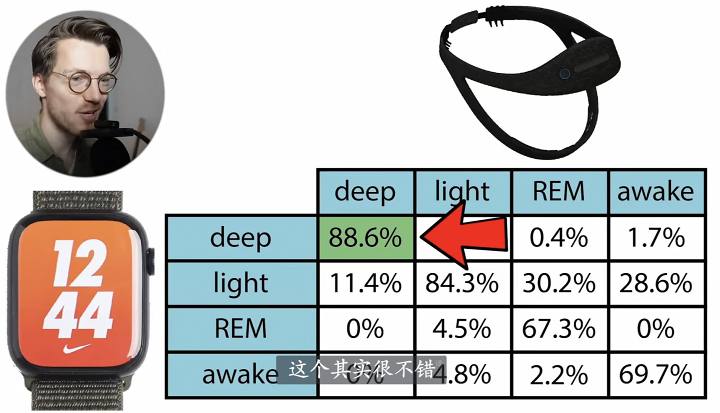
Actual measurement
Foreign bloggers tested the EEG with a professional EEG device and found a high correlation between the Apple Watch and EEG.
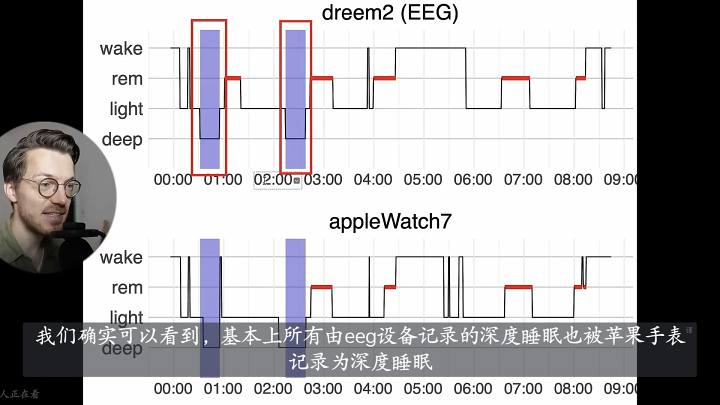
Contrast
At the same time, the time and proportion of sleep periods on the Apple Watch are quite reasonable [no needle poking].
3. Sleep Tests by Brand
1. Apple and Samsung: The distribution of deep sleep and REM sleep is quite reasonable. (Apple on the left, Samsung on the right)
Samsung is more awake (including turning over during sleep), and it recommends sleep duration and sleep duration based on age groups.
Apple is less alert and sometimes goes undetected

Overall, both are considered fairly accurate among phone manufacturers

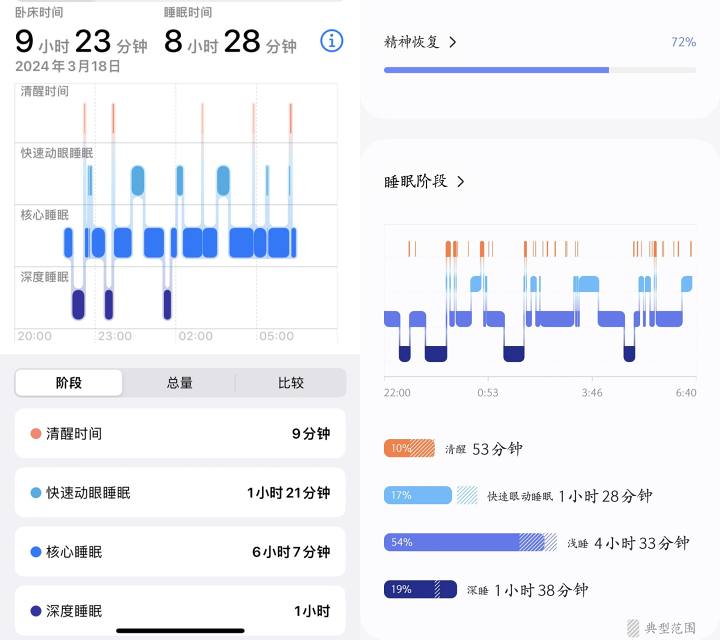
18
Samsung tends to have more deep sleep in the later stages

(It may be waking up again and entering deep sleep)
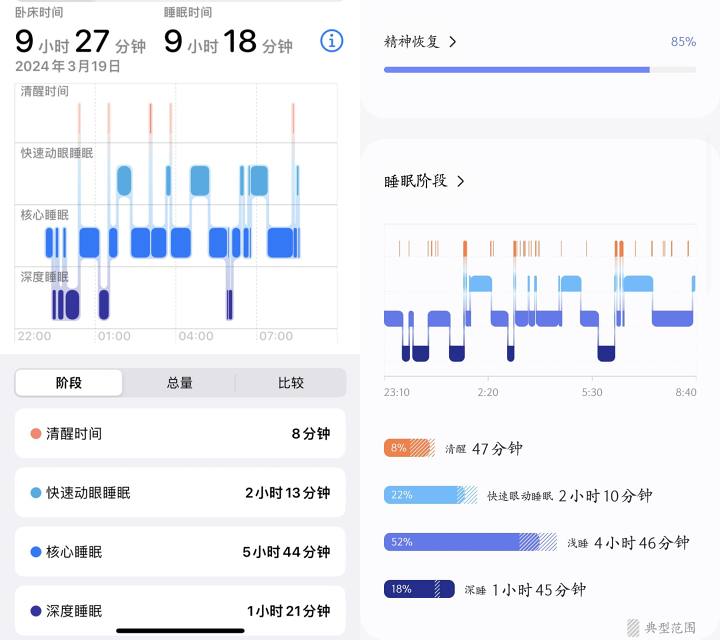
19
Samsung tends to have more deep sleep in the later stages

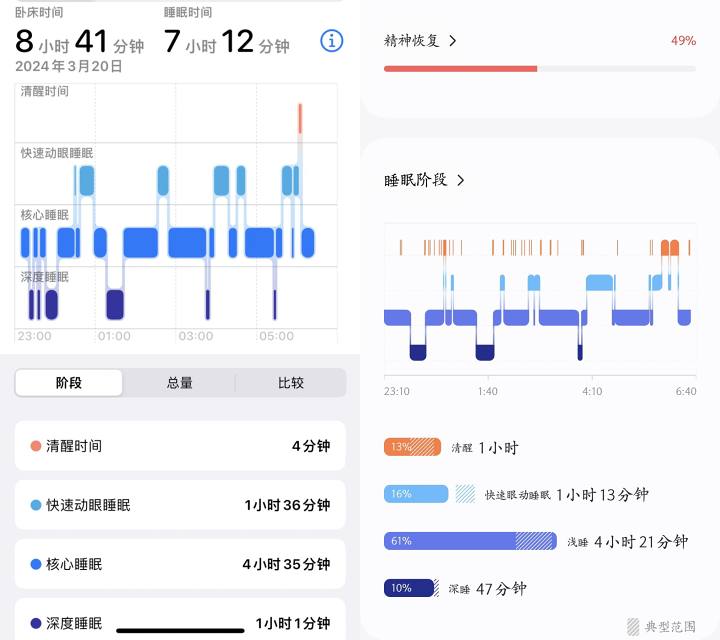
20
Samsung's early REM sleep was slightly lacking, and both ended up misreading (because they didn't move when awake and their heart rate was slower, the watch was prone to misjudgments).

)
Devices: Samsung Watch 5, Apple Watch S4
Summary: It is highly valuable for reference
2. Huawei and Honor: These two have basically the same algorithm

, so I'll just put them together

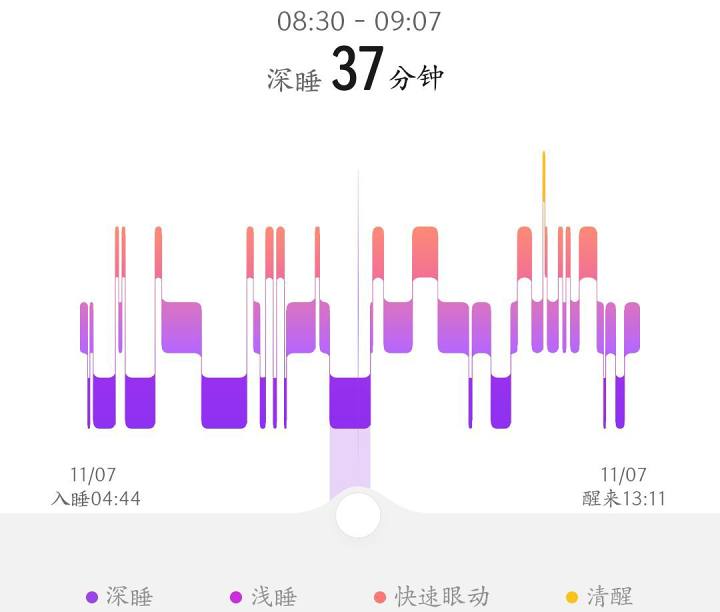
Huawei
It can be seen that the proportion and distribution of deep sleep time on Huawei is quite unreasonable, with deep sleep occurring at almost every stage of sleep

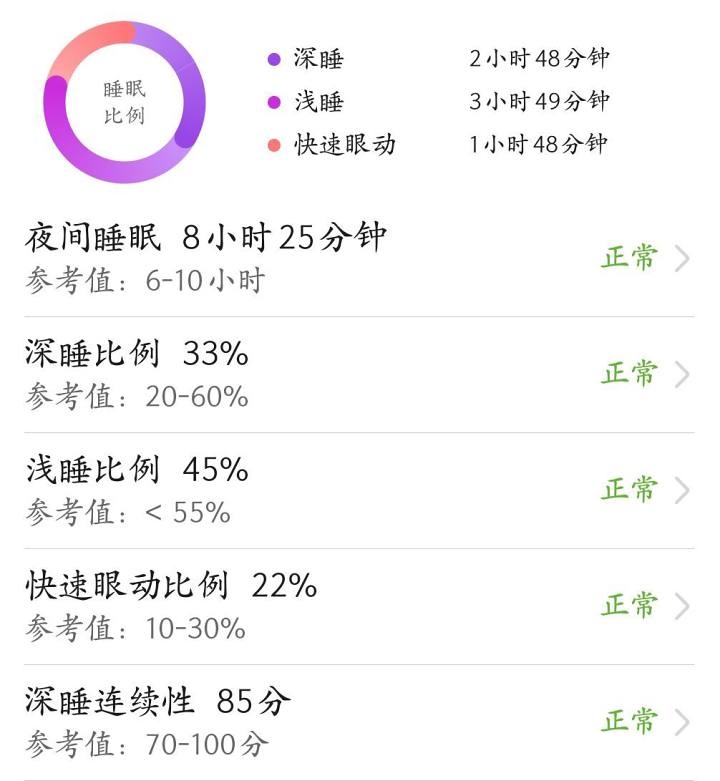
Huawei reference value
Looking at Huawei's deep sleep reference value, 20~60%

This might explain why I slept deeply all night, and REM sleep was a bit chaotic and unevenly distributed

The standard for sober judgment is similar to Apple's.
Device: Huawei GT Runner
Summary: The reference value is quite average
3. OPPO: I've only used products from before OPPO, so I feel it's not fair to compare them

I went to Bilibili's Qiangge sleep test and found sleep analysis charts for new products on Weibo.
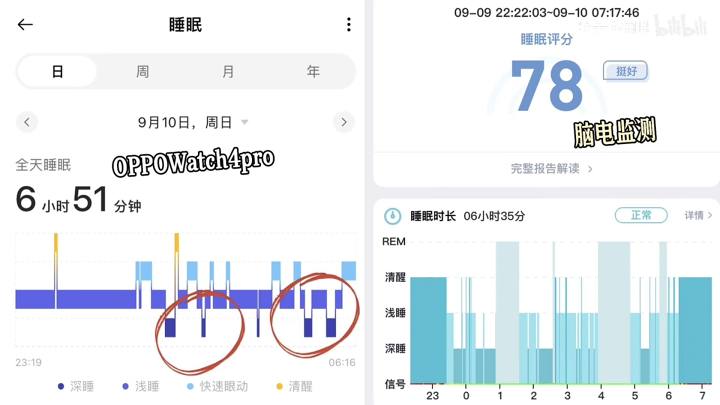
OPPOwatch4pro
Compared to EEG testing, OPPO's deep sleep distribution is also somewhat unreasonable, and REM sleep is a bit chaotic like Huawei's

The first half of light sleep is divided into few segments, and overall light sleep is not very reasonable.
OPPO's sleep algorithm also has issues with its time and proportion of sleep algorithms

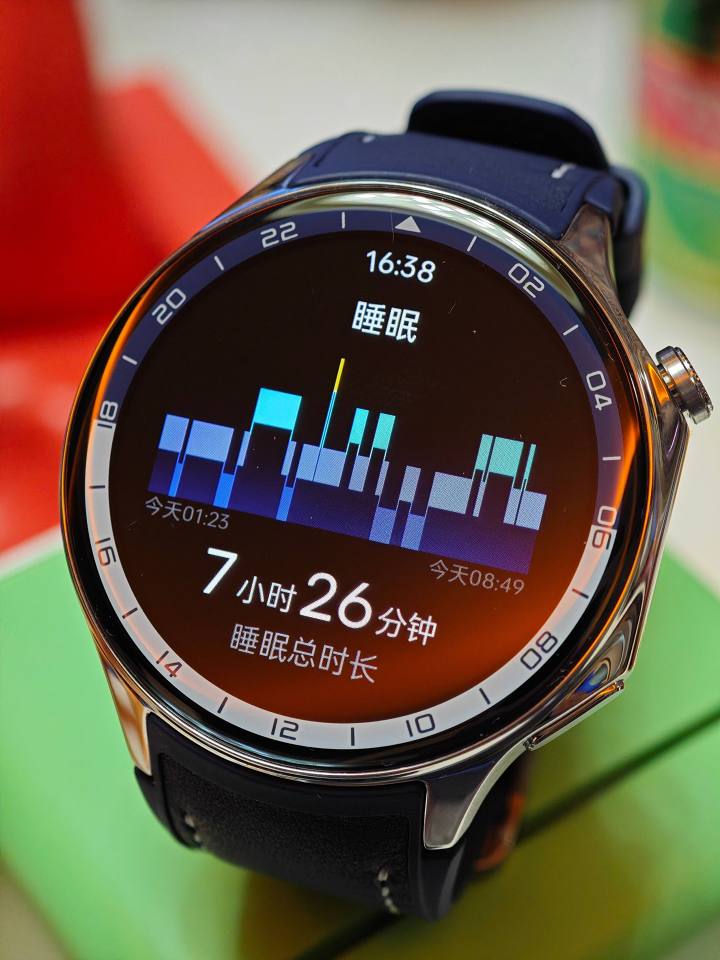
OPPOwatchx
The latest OPPO WatchX still maintains a very evenly distributed deep sleep

(Bad), it feels like light sleep is split into more segments, but overall it's still not very good

The actual situation still depends on actual testing

You can follow Bilibili's Qiangge Sleep Test and other brain EEG tests.
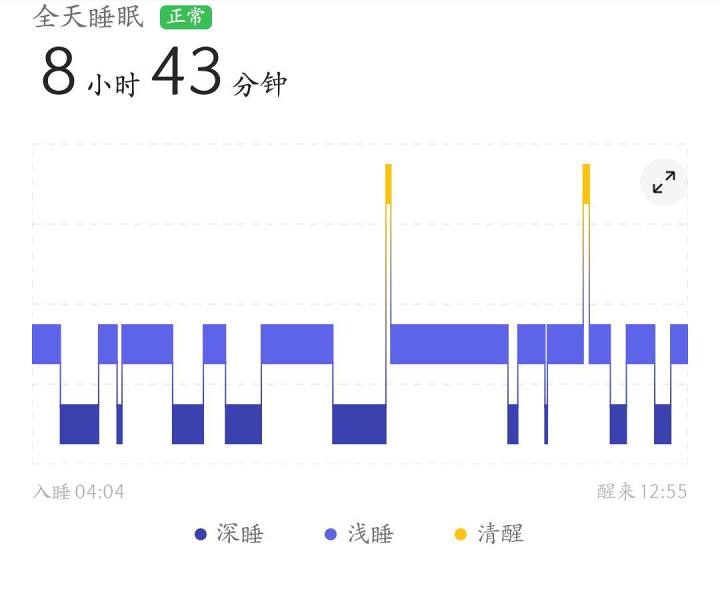
Old
The OPPO Watch 1 is in a sorry state

(Not only is it inaccurate, but there is also no REM sleep data.)

), and the Apple Watch S4, released a few years earlier, performed similarly to the newer models, and system maintenance is also very important

Devices: OPPO Watch4 Pro, OPPO Watch1
Summary: The reference value is quite average
4. VIVO/iQOO: The distribution and timing of deep sleep are quite reasonable and accurate. REM has a larger sleep error and longer duration

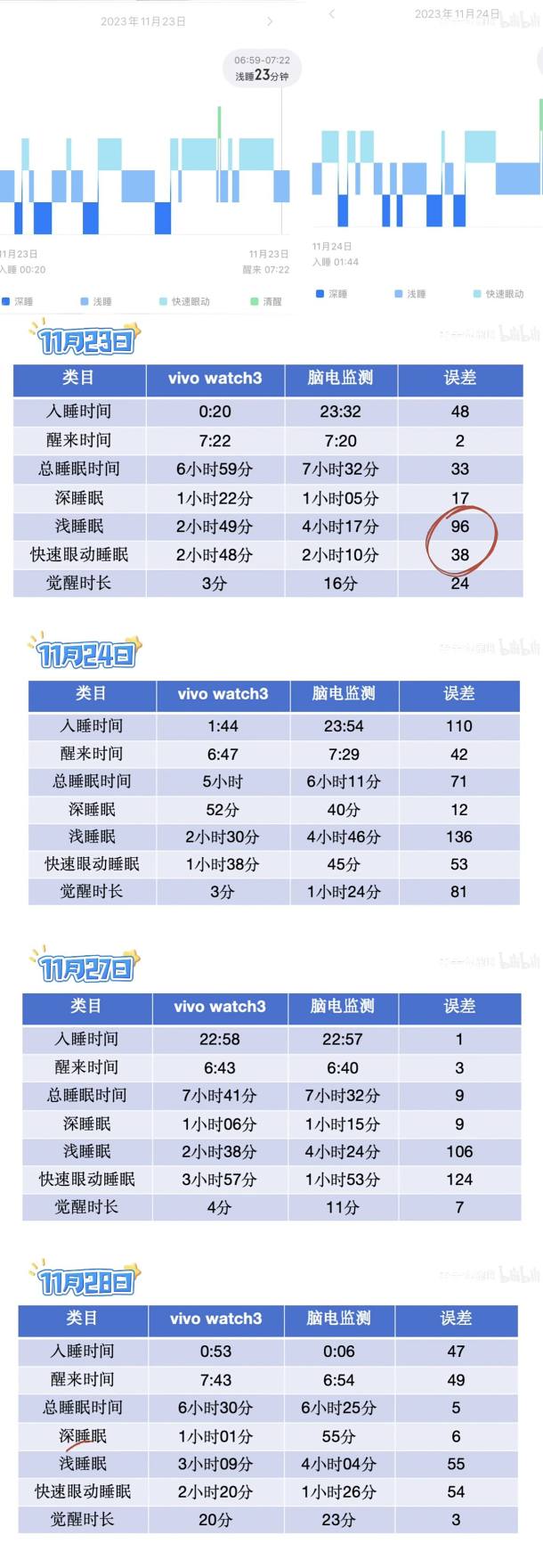
Device: vivo Watch3
Summary: The reference value is average
5. Xiaomi: No words to say, the margin of error is quite large.
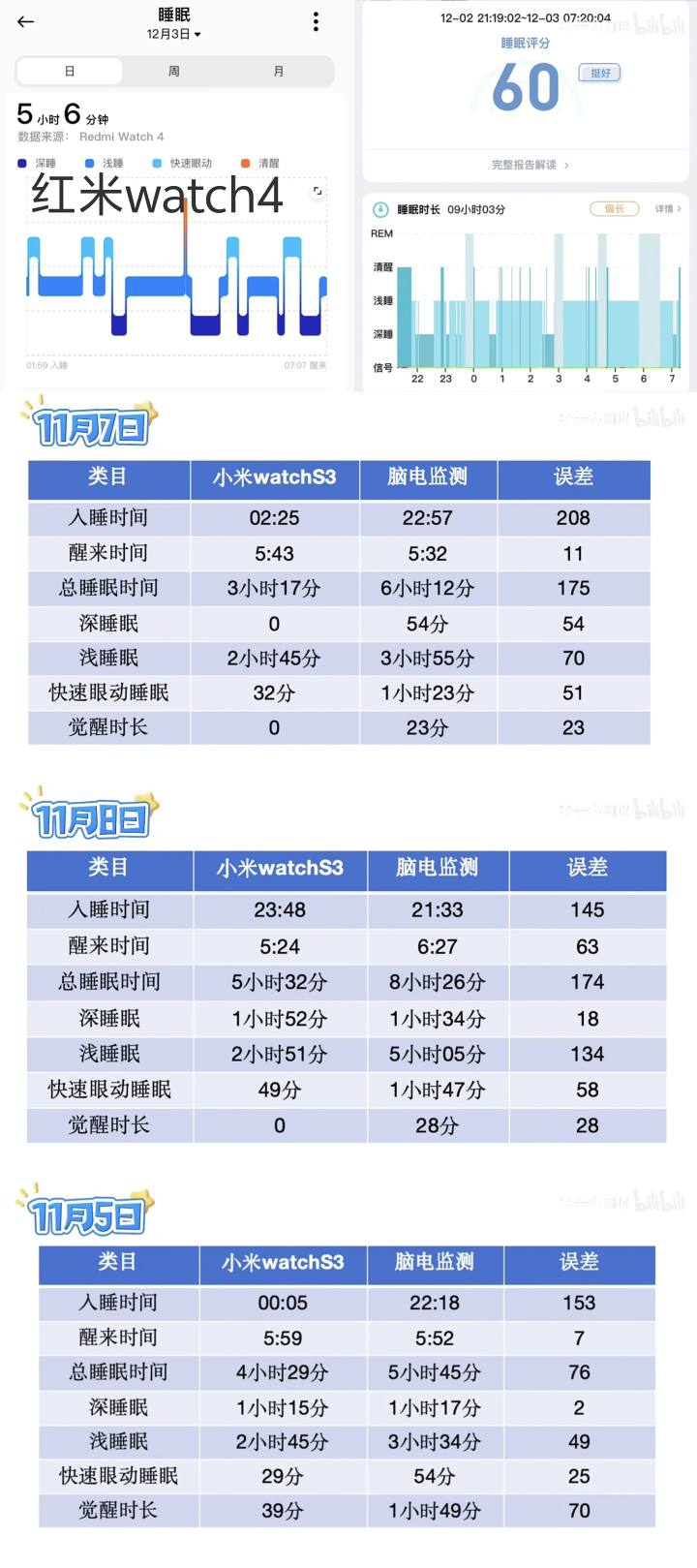
Bilibili Qiang Ge is testing his sleep
Devices: Redmi Watch 4, Xiaomi Watch S3
Summary: Just for fun
4. Summary:
Due to differences in measurement principles, there are still some errors between watches and EEG monitoring, but by optimizing sleep algorithm models, they can provide some reference value

(such as Apple and Samsung).
Good sleep monitoring is not just about accurately falling asleep and waking up, but about reasonably presenting the proportions and distribution of sleep periods, clarifying current sleep quality, and taking steps to improve it. This is the value sleep testing should provide

#OPPOWatch4Pro##vivoX100##华为WATCHGT3 #
? Original link:https://www.coolapk.com/…
![[Text and Image Summary] Summary of Terminals Currently Supporting 5G-A Carrier Aggregation --- Includes How to Check Carrier Aggregation Enabled on iOS - Baiyun Blog](https://www.bybk.cc/wp-content/uploads/2024/04/20240407140712630-e26ee861710dd3b075a1302dd00392d5e1db60a1.jpeg)


![[Open Source Reading] January 2024 ≈ 400 carefully edited book source compilation and update - Baiyun Blog](https://www.bybk.cc/wp-content/uploads/img/af867764c3780f0b7da88376fca7bf92.png)
![[Open Source Reading] November 950+ carefully proofread book source compilation and update - Baiyun Blog](https://www.bybk.cc/wp-content/uploads/2023/02/Screenshot_20230222-1001582-1024x593.png)
![[Open Source Reading] October 1300 Book Source Update - Baiyun Blog](https://www.bybk.cc/wp-content/uploads/img/1eeb6ae31cde88ab39faa2f19651638d.jpeg)
![[VMOS PRO 2.9.6 Member Edition] - Baiyun Blog](https://www.bybk.cc/wp-content/uploads/img/c303a7a50d3ebfa235cc380190db2980.png)





No comments yet