


This issue is essentialDiscussion的Big problemsIt is: What is the essence of morality?
We always hope for some standard of good and evil, right and wrong, which is the basis we use for moral judgment. Based on this, we can judge: killing innocents indiscriminately is wrong, repaying debts is right, defrauding others is wrong, honesty and trustworthiness are right, sexual harassment is wrong, respecting women is right, and so on. These moral judgments are basically the main content of our daily lives when leaving comments online, watching movies and TV shows, and even in our daily lives.
However, sometimes, after seeing it many times, we are surprised to find that there seems to be no fixed principle for the standards of good and evil, right and wrong. For example, we all know that discriminating against women is wrong. If you post some misogynistic remarks online now, you will immediately become the target of widespread attacks and be served by female fists. However, during the prosperous Song Dynasty in Chinese history, it is said to have been the most open and developed era of bourgeois society, and women had to bind their feet. At the time, everyone thought there was nothing wrong with it, and even the women gladly accepted it.
For example, people here may think surrogacy is illegal—because it is immoral, exploiting others' bodies, and violating the natural bond between mother and child. But in some parts of the world, surrogacy is actually legal. People in those places seem very tolerant of surrogacy and don't see it as immoral, which is quite strange.
There are too many such moral divisions. People here believe burying deceased relatives is justified, but in some places, they even eat the bodies of loved ones; Here, we believe monogamy is legitimate, but in some places, a man can marry four wives.
If you think the moral differences just mentioned are differences in local customs, then murder—considered the most serious human crime in most cultures—and not so in some hunting-gatherer tribes—where a grown man's social status is measured by how many people he kills, called 'chukusa.' Men who have never killed are discriminated against; no woman ever intended to marry him. Killing in these places is actually something worthy of encouragement and praise.
Does this mean that the rule banning murder is actually just a local culture? Killing is prohibited here, but when we travel to another culture, can we kill at will? From this perspective, does morality still have a universal, unchanging, and definite standard? If morality has no fixed standard, does that mean morality itself is arbitrary and arbitrary?
This brings us to a fundamental question: Why be moral? Why should we still be moral people?
If morality has no definite standard, why should we abide by it? Why should we do what is right instead of doing what is morally wrong? Is it driven by conscience, fear of divine punishment, or the avoidance of loss of profit?
The two questions just mentioned are the two fundamental questions that this Big Questions program will answer: First, are the standards of good and evil, right and wrong, universal or diverse? Second, why should people be moral? To answer these two questions, we must return to the most fundamental question: the topic of this episode's Big Questions program: What is the essence of morality? What is Morality?
What is the essence of morality?
The essence of morality
1. Are good and evil, right and wrong, universal or unique?
2. Why should people be moral?
To clarify this big question, this episode will feature four schools of thought: Thomas Aquinas's divine facultism, Thomas Hobbes' contract theory, Charles Stevenson's emotionalism, and Richard Dawkins' evolutionary theory.
1
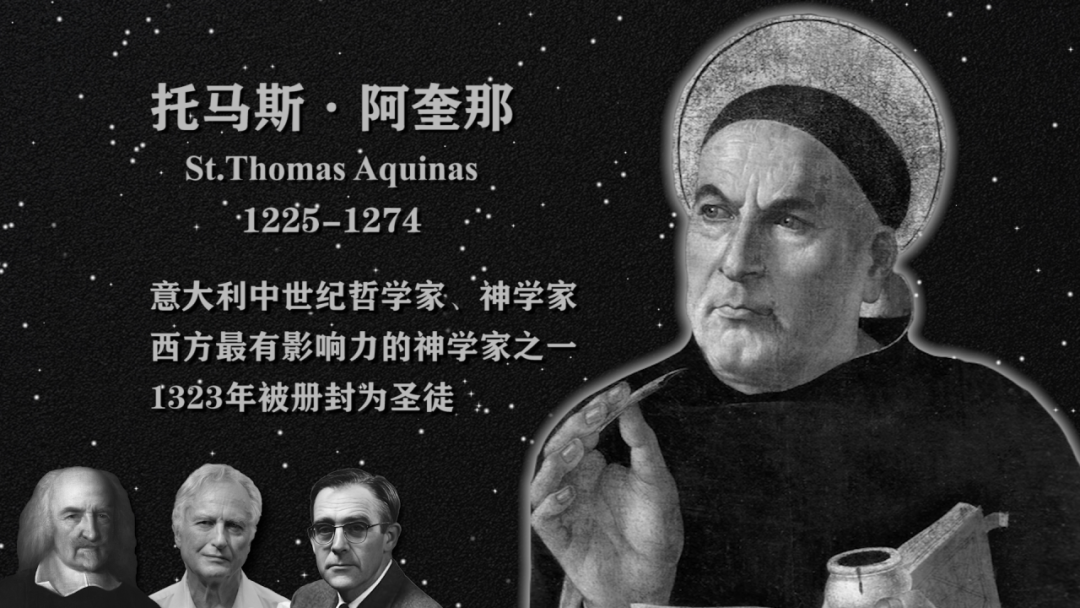
Thomas Aquinas
Divine Mandate Theory
Thomas Hobbes
Contract theory
2

3
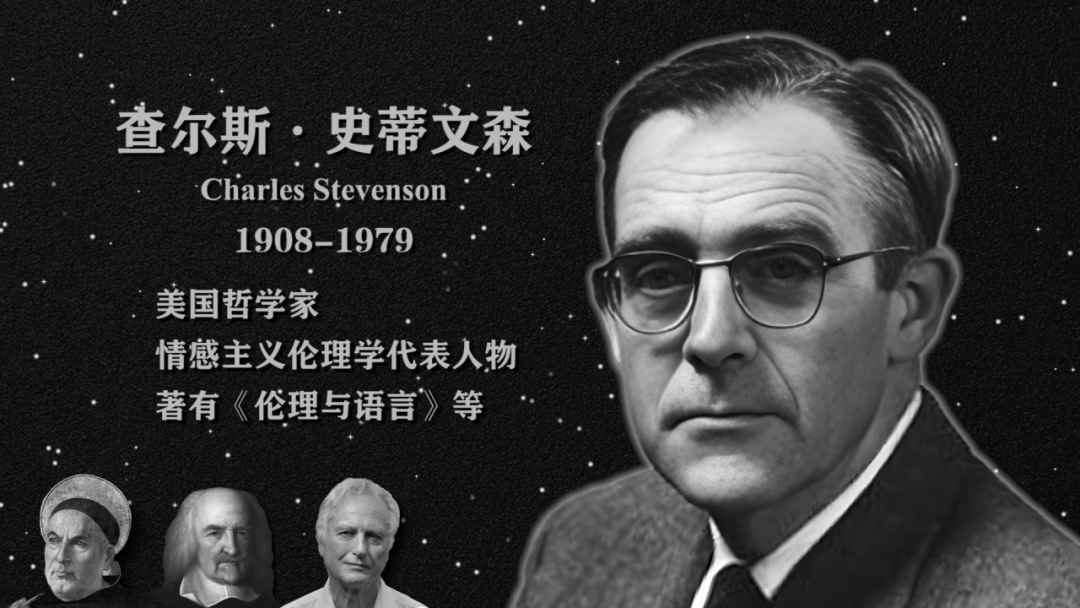
Charles Stevenson
Emotionalism
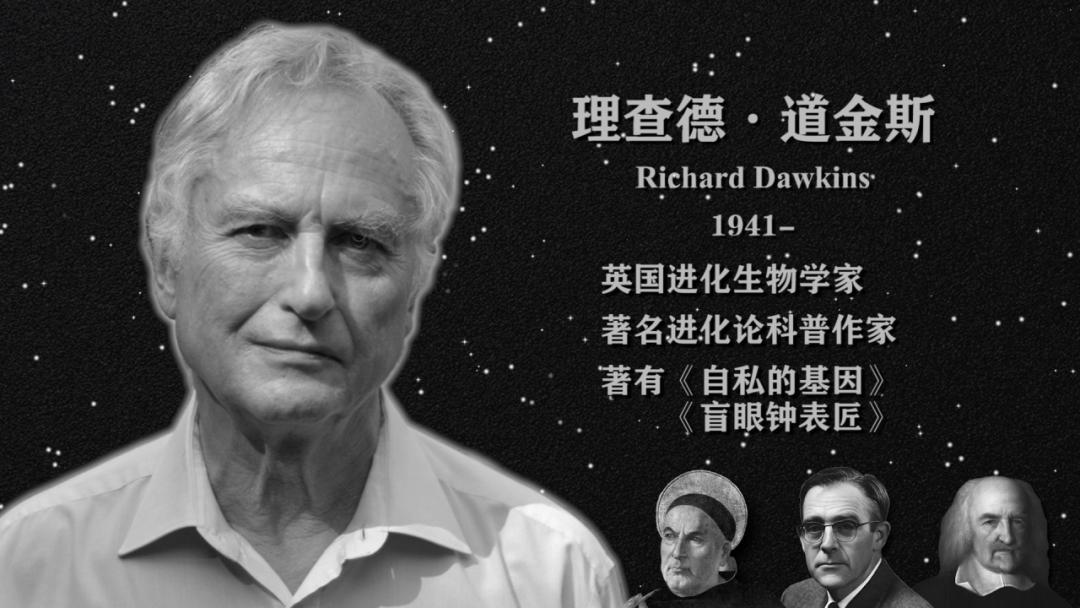
Richard Dawkins
Theory of Evolution
4
Thomas Aquinas
Divine Mandate Theory
What is the essence of morality? On this issue, Thomas Aquinas advocated a different approachDivine Command Theory。 Deuterosion states that morality is the decree issued by God. Why is killing innocents wrong? Why is it only natural to repay debts? Because these are all ordained by God.
Some people may not accept the idea of divine destiny because many of us are atheists and do not believe in God at all. Are we atheists not moral?
It is important to clarify here: we can broadly understand the "God" mentioned in theodesis rather than the God described in Christianity; it can also refer to what Chinese calls "Lao Tian Ye" or "Tian Dao." As the saying goes, "Three feet above your head, there are gods." We all say that a person must have a heart of reverence to avoid wrongdoing.
Morality comes from God. If we do not treat this "God" as a personified existence and interpret it similarly to deism, then the moral view of divine destiny tells us: the moral law of right and wrong is objective and universal, and moral law, like natural law, is universal and objective. Killing innocents indiscriminately is wrong; repaying debts is the right thing to do. We always say these are natural principles, precisely to express that, like physical laws, they are objective and unrestrained.
This is intuitive. We believe innocent people should not be killed indiscriminately, just as we believe water cannot flow from low to high. If the law somewhere doesn't make murder illegal, we wouldn't kill either. Because indiscriminately killing innocents is inherently wrong; it does not change the status of whether a place is explicitly stipulated in the law. Since indiscriminate killing of innocents is God's law and nature's law, we only feel that the laws here are inconsistent with nature's laws and consider the place barbaric and backward.
Thus, from this theodesis emerged another moral system related to thisPhilosophyand the tradition of political philosophy—Natural Law tradition。 The worldview of natural law tells us that the world itself has a rational order and laws, which include not only physical laws but also moral laws concerning good and evil, right and wrong. These are all natural laws. This world has its own purpose. God has established natural law, defining what the world should be like, and also what it should be. In nature, there is right and wrong; what is right is natural, what is wrong is unnatural. For example, wantonly killing innocents violates natural law; it is unacceptable and unnatural. And things like repaying debts and helping each other are what we should do and what is natural.
Moreover, this natural law tradition not only prescribes good and evil, right and wrong, but also an objective and unrestricted natural law. This objective and natural law is not only external but also intrinsic within our human nature; this is our rationality. God created the world and gave the world a rational order; God created humans and also endowed us with reason. Therefore, the moral laws inherent in the world itself can also be understood by our people. When we say that the moral laws concerning good and evil, right and wrong, "are only natural," we are referring to external laws. We also say "justice is in people's hearts," meaning that these moral laws are also inherent in our human nature. Our rationality and nature are isomorphic, which is the dual meaning of the Latin or English word Nature, meaning both "nature" and "human nature." As long as we examine the laws of the world outward and human nature inwardly, we can arrive at moral laws for how to act.
All of us naturally have moral concepts about what is right and wrong; we all naturally avoid good and evil. With this natural tendency to avoid good and evil, each of us instinctively knows how we should act—this is human moral conscience. Of course, this does not mean that evil deeds are absent in the world. But we all say that when someone does bad things, they do it against their conscience. We always say, you should ask your conscience whether what you do is right.
Suppose you do something wrong, such as killing innocents indiscriminately, or harming others without cause, even if no one notices or you are not punished, you will genuinely feel a sense of moral guilt. Even if no one punishes you, you will still be tormented by your conscience. This pervasive, irresistible sense of moral guilt also shows that morality is objective and natural, and that everyone has a sense of morality. This still shows that justice is not only natural and just, but also in the hearts of the people.
Therefore, this perspective of divine command and natural law explains the first fundamental question of this issue's big question: whether the moral laws of good and evil, right and wrong, are universal or diverse? The answer is universal. Because morality is objective and free, morality conforms to nature, and is as natural as the laws of nature.
At this point, someone will jump out and object: No, the moral laws of good and evil, right and wrong, are not universally applicable to everyone. As we said at the start of the topic, things that seem natural in some cultures may seem absurd in another. For example, regarding funerals, when a family member passes away, we hold a burial to ensure peace in the ground; But in some places, the bodies of deceased family members are eaten, which seems unbelievable to us. How can we say that moral laws apply as universally as natural laws? Another example is that some places consider monogamy good, while others think polygamy is good. Is there any objective standard of right or wrong here?
In response, theologian Thomas Aquinas said, "The 'universally valid' mentioned in 'moral law is universally valid' refers to some of the most fundamental axioms being universally valid, just like the axioms of geometry. Based on people's natural tendency to avoid good and evil, all of us naturally know certain good things, such as life, reproduction, social life, knowledge, and reason, which are considered good in any culture. For example, all cultures believe that indiscriminate killing is wrong, and all cultures believe that helping each other is right. These axioms are universally valid, as objective and free as natural laws.
So how do we explain the differences in cultural customs across regions? Aquinas explained that universal axioms are universal, but their specific application can vary according to the specific environment of different places. Because every specific person in our daily actions pursues specific goodness, not universal goodness. For example, I don't think about the universal principle of "helping each other" in my daily actions. Instead, when I encountered my relative Xiao Zhang in trouble today, I helped her out; Tomorrow, colleague Xiao Li is in trouble, so I helped him out—these are some specific situations. As for some local people's funerals, they are burials, while others involve eating the bodies of relatives. Although they may look different on the surface, behind them all reflect a sense of respect for deceased family members. Respect for family members is universal and unchanging worldwide, but its specific application can be flexible and varied.
So, how should moral differences be handled? According to Aquinas's view, we should sit down and see what the axioms at the bottom are. Although I think this is the right thing to do, and you think it's right, we can restore the same base kilometers. For example, my buddy and I wanted to have a meal on the weekend, and you insisted that eating fried chicken legs was good, while I insisted that ice cream was good. We had a disagreement. Setting aside these practical differences and returning to the underlying axioms, we find that whether it's eating fried chicken legs or ice cream, ultimately, our common belief is that we want to go out and have a meal with our brothers. If we reach a consensus on this fundamental axiom, the specific disagreement over whether to eat fried chicken legs or ice cream can be easily resolved.
In summary, in the sense of underlying moral axioms, there is no true moral disagreement; what is right is right, and what is wrong is wrong. As long as you use reason, you can always argue right from wrong. So in this sense, when you encounter unfair or immoral treatment, why do you still maintain morality? Why didn't you immediately turn dark after experiencing unfair treatment? Because you believe that God or nature itself is just. Heaven has eyes, and as the judge of justice, God presides over justice, punishes sin, and rewards the good.
Even if we do not believe in a personalized God, we sincerely believe that "good is rewarded for good, evil is rewarded for evil." This is a universal belief that most of us accept from the bottom of our hearts. Even if some jump out to argue that good and evil are not repaid in this world—such as "killing and arson, golden belt, repairing bridges and roads leaving no corpses"—these are all rebuttals to the simple belief that good and evil are repaid, this precisely reflects the universality of this belief. Once the situation of "killing and arson, golden belt; repairing bridges and roads leaving no corpses" occurs, our instinctive reaction is not to abandon our original beliefs and immediately turn dark, but to feel that something is wrong. We believe the world has a bug and need to fix it. We try to restore the world to a natural state, and the natural state of this world is "good is rewarded with good, evil is punished with evil."
Some might even argue that there is no such thing as natural law in this world, meaning there is no objective, universally accepted, or natural law standard of right and wrong. Why? The reason was that there were many unjust laws in the world. For example, in history, there was the slave trade law, where people could be legally bought and sold as commodities, and children born to slave women were still considered slaves by law. Not to mention the various segregation laws in history and some laws that discriminate against women. The emergence of these unjust laws shows that what is just and what is good has completely different standards across different historical periods and regions. The standards of good and evil are constantly changing; is there any universally applicable natural law?
In response, the natural law camp stated that the existence of unjust law precisely indicates the existence of natural law. Why is that? In fact, the reason we can call these unjust laws 'unjust laws' precisely shows the existence of an eternal and unchanging standard of good and evil that transcends history and geography. With this standard, we say "this is an unjust law," and we say "an unjust law is unlawful." Only then will we continuously improve our legal system and moral standards, making the standards of right and wrong closer to that eternal, unchanging, and natural law.
Moreover, the opponent just said that some unjust laws have appeared in history. Harsh laws that appeared in history are now being continuously revised. For example, we no longer buy and sell slaves, and discrimination against people of color and women is decreasing. Take our Chinese example as an example: nowadays, women no longer need to bind their feet. This shows that we are constantly progressing morally. If we acknowledge that we have made continuous moral progress compared to the past, this precisely shows that there must be a fixed moral standard as a basis for evaluating our real-world behaviors and policies. All of the above precisely illustrates the existence of natural law. Otherwise, what standard can I use to say morality is progressing?
Back to the natural law faction. The moral laws concerning good and evil, right and wrong, are objective and free. This doctrine of divine mandate later evolved into the theory of natural law, and further onward, it became the normThe doctrine of Natural Rights。 This doctrine asserts that some rights are natural and should be enjoyed, and these rights are justified, much like natural laws—they are a universal value. For example, the first sentence of the preface to the U.S. Declaration of Independence is:
This universal value tradition of natural rights is inherited from the traditions of divine command and natural law. Even the moral philosophy we discussed in the last episode, Kant's moral philosophy, which is his theory of deontology, is intricately connected to the divine destiny tradition.
Specifically, theodesics holds that moral right and wrong come from a supernatural God, and that God enables reason to recognize these natural laws issued by God. Kant also believes that morality originates from supernatural things, innate; what is right is right, what is wrong is wrong, and it does not change according to one's circumstances. However, Kant replaced this supernatural thing with God's pure, innate reason.
In short, the moral view of divine destiny tells us that the moral laws regarding good and evil, right and wrong, are a kind of "natural righteousness"—either issued by supernatural gods or, like natural laws, objectively universal. What is right is right, what is wrong is wrong, and it is universally valid worldwide.
This is the answer of theodesis to the question of the essence of morality. So, returning to the two basic questions mentioned in the introduction, how will the theory of divine destiny answer these two fundamental questions?
Regarding the first fundamental issue, theodesis holds that the standard for right and wrong of good and evil is universal; what is right is in accordance with nature, and what is wrong is not in accordance with nature. So this also answers the second question: "Why should people be moral?" Without a reason, you should be moral. Following morality is as natural as eating when hungry.
Thomas Hobbes
Contract theory
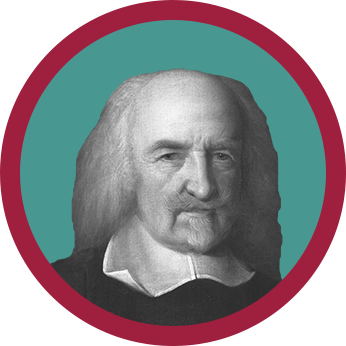
Theodes, along with the natural law doctrine, natural rights doctrine, and Kantian ethics in this lineage, hold that morality is universally valid, and that moral laws are discovered just like natural laws. However,ContractarianismHe believed that morality is not discovered, but is created by people. To be precise, it is something people have agreed upon through mutual discussion.
Contract theory, as the name suggests, advocates that moral rules are like the terms of a contract, negotiated between different parties. So why do we negotiate a contract? Its purpose—just like we enter into commercial contracts—is to protect the interests of the contracting party.
Regarding contract theory, the most famous representative figure is the 17th-century British philosopher Thomas Hobbes. It is well known that Hobbes wrote a book called Leviathan, which describes the origin of morality—that is, why we humans initially agreed to moral laws by signing contracts.
The book says that humanity did not initially live in a free, democratic, civilized, and harmonious society governed by law, but rather in a state ofState of Nature。 You can think of it as a barbaric primitive society. In this natural state, there is no universal moral law at all—such as not killing the innocent, repaying debts, helping each other—these rules are absent. People do as they please, with no rules to restrain them.
If there are no rules to restrain people, out of some evil aspects of human nature, everyone is selfish. So in this natural state without any rules, everyone, driven by selfish nature, wants to make themselves wealthy and powerful, and wants others to submit to them. Everyone is selfish. If everyone thinks this way, then this natural state becomes a jungle society, and the state between people is a state of war where "everyone against everyone."
The well-known novel "Lord of the Flies" tells the story of a group of people stranded on a deserted island. Without rules, only barbarism and violence remain between people. The only common rule in society is to fight bravely and fiercely; only those with strong fists can eat meat. It's easy to imagine that no one wants to live in such a natural state.
Maybe some people objected, deciding that I would rather live in this natural state. Because I am a strong and robust person, and if I can take on ten by myself, this jungle society is advantageous for me. I am definitely the king of this jungle society; I will have plenty of money and many servants.
But no matter how strong your combat skills are, even if you can fight like Tyson, if you spar with others for ages and are about to swing your arms, someone might pull out a pistol and knock you down with a single shot. Times have truly changed.
Of course, pistols are just one example of firearms. In the era of cold weapons, it could be like throwing stones. If I fight you up close, you'll beat me to death, but if I stand ten meters away and suddenly hit you with a brick, and I ambush you from behind and knock you into a vegetable—aren't you afraid? As the saying goes, no matter how skilled you are, you still fear being made by bricks.
Once you have the bricks, you can meet again. No matter how good you are, everyone else in society is copying the bricks, and such a society is extremely unsafe. If you neglect for a moment, your assets could be snatched away by others, and you yourself might be caught on a branch.
And even if you have high combat and defense stats, there will always be times when you fall asleep. How can you be sure no one will ambush you while you're asleep? Others will still threaten you, saying, "Don't sleep too hard at night." So you can't get a good night's sleep?
Therefore, even a strong person like Tyson would not want to live in such a lawless jungle society. In this natural state, whether strong or weak, everyone feels insecure. So, whether strong or weak, out of a fundamental need for self-preservation, they sat down and agreed not to fight anymore. Today, they signed a contract with some rules, such as not robbing me anymore—don't steal my things from my field, and don't bother with my huanghuali wood table. Of course, this rule applies to all signatories, and I won't steal your stuff. The martial world must value harmony above all else; there must be no "infighting within the neighborhood." If someone did something bad, don't seek revenge yourself. When will the cycle of revenge ever end? We handed him over to the "public authorities" and let the authorities' authorities punish him.
This process of discussing contract terms is essentially based on the attitude of "do not do to others what you do not want done to yourself." You don't want your belongings stolen from others, don't want to be killed, don't want someone to go back on a promise you made, and you want moral clauses like no stealing, no indiscriminate killing, no breaking your word. That's why almost every society has moral rules prohibiting murder, theft, and fraud.
This is why Hobbes believed we should establish rules by covenant—for the self-interest of each of us. Because if you don't sign contracts and set rules, everyone will feel uneasy. Out of self-preservation needs, we had no choice but to sit down and sign a contract to set some rules. Why is indiscriminate killing of innocents wrong? Why is it wrong to cheat others? Because it is legally required. And how did the law come about? It is something people agree upon with each other. So why do people agree on these rules between people? Because this aligns with everyone's desire for self-preservation.
Of course, Hobbes's contract theory emphasizes that political order is negotiated through contracts, meaning that government and law are signed through contracts. A contemporary contractualist philosopher,David GottierBuilding on Hobbesian contract theory, it further points out that not only political order but also moral right and wrong are all negotiated through agreement. He wrote a book called "Morals by Agreement," which means "morality negotiated."
Gottier's portrayal of human nature is similar to Hobbes's: people are guided by self-interest; simply put, people are selfish. If these selfish people are rational, then when pursuing self-interest, they find that not directly pursuing personal gain, but rather being bound by certain moral constraints, is actually more rational.
Note that the reason Gottier speaks of here is different from the God-endowed rationality taught in aspiration, nor the transcendent pure rationality Kant speaks of. Gottier's rationality is one kindInstrumental ReasonOr, strategic rationality is a rational approach made to maximize self-interest.
For such rational people, whether they live well in society and to what extent they can satisfy their own interests depends on how others in society act. So the key issue lies in what kind of agreement is reasonable for people to reach between themselves.
Gotil is usedPrisoner's DilemmaThis game theory shows that if everyone only pursues maximizing their own interests, it will not lead to maximization of self-interest for everyone. In other words, the direct pursuit of maximizing self-interest is actually self-defeating.
Most people should be familiar with what the Prisoner's Dilemma is. Simply put, suspects A and B were caught by the police and interrogated separately. If one person pleads guilty to the police and reports the other party, which is considered betrayal, while the other person remains silent and does not confess, then that person will be immediately released for their meritorious service, while the other party will be sentenced to 10 years in prison for resisting strict punishment. If both remain silent, meaning both parties adopt a cooperative attitude and neither confesses to the other, the police will only sentence both to six months in prison due to insufficient evidence. If both betrayed or reported each other, both would be sentenced to five years in prison.

So, if you are one of the suspects, what is the most direct and best strategy for you? Of course, this means reporting and exposing the other party. Because what works best for you depends on what actions the other person takes. Or, the other party stubbornly refuses to confess you. In this case, you definitely have to choose to confess because that way, you can release immediately. Or, the other party has also exposed you, and in this case, it's best to give them up as well, because otherwise, you'll become the sucker who was betrayed but still shields them, and you could be sentenced to 10 years. So whether or not the other person has revealed you, your best strategy is to do so. If both of them think this way, the final result is that both choose to betray, so the inevitable outcome is that both are sentenced to 5 years.

But this led to problems. Overall, the best strategy is for both of them to stubbornly stick to each other, so the police can only sentence them to half a year due to insufficient evidence. That is the best outcome.
So the problem is, if everyone only pursues maximizing their own interests directly, this will not satisfy their own interests. In other words, the direct pursuit of maximizing self-interest is actually self-defeating. So why does the Prisoner's Dilemma exist? The reason is that there are no rules. Without rules, your direct pursuit of self-interest leads to self-defeat.
So how do you break the prisoner's dilemma? The method is to establish contracts and establish rules. It means the two of us made a contract in advance, agreeing that if caught by the police, we must remain silent and refuse to confess. This way, we can truly satisfy everyone's own interests. If you break the contract and expose me and release yourself on the spot, you become someone taking advantage of others—in other words, a free rider. Although you can take advantage of others this time, the punishment for you is that because you breach the contract, no one will sign or cooperate with you anymore. You are forced to "quit the industry," and those who leave do not gain any benefits. Because cooperation brings greater benefits to everyone than going your own way. Since cooperation is to be done, there must be rules and morality.
People often criticize that the market economy leads to moral decay, saying that city dwellers lack morality, while rural talents are the most honest. However, Gottier will tell you that places where market mechanisms are developed and cooperation between people is ample are actually places where people value morality more. I wonder if anyone has experienced this: the more you are in a big city, the less you need to be overly wary of strangers. On the contrary, in some places where market mechanisms are underdeveloped and people lack sufficient cooperation mechanisms, it seems that strangers have no reason to be treated morally. This is not to say that city dwellers are naturally kinder than country dwellers, but rather, in a place where people can fully cooperate with one another, the more profit-driven people are, the more they will abide by morality.
Therefore, a fundamental demand of contract theory is how to enable those in society, driven by self-interest (simply put, selfishness), to abide by moral contracts, and through tactical non-selfishness, ultimately achieve the greatest satisfaction of self-interest. Therefore, morality is a compromise, retreating from the direct pursuit of self-interest to self-concession. Retreat to advance, thereby gaining greater self-benefit.
Therefore, from the perspective of contract theory, the essence of morality is that while pursuing our own interests, we also consider the interests of others. In such actions, we can actually gain more and more lasting self-benefit. So, why be moral? Why should we abide by morality? Because observing morality benefits one's own interests. If you don't follow morality, you are a fool who disregards your own interests. In the view of contract theorists, there is no such thing as "either bad or stupid"—stupid is bad, bad is foolish. This is the answer to the second fundamental question of contract theory.
So, regarding the first fundamental question, is there a universal moral standard? Contract theory does not acknowledge or deny it; instead, it eliminates this issue. Because morality is not discovered but agreed upon through negotiation.
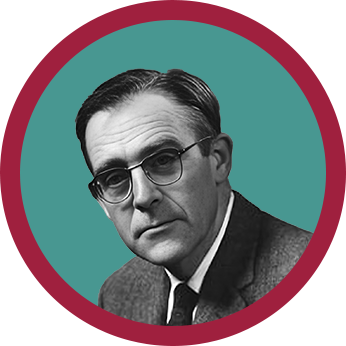
Charles Stevenson
Emotionalism
From the perspective of contract theory, morality is something agreed upon between people. ButEmotivismHe believed that morality is not predetermined; a sense of morality is innate to people, and morality is an innate expression of human emotions. For example, 'Don't kill indiscriminately' isn't because I didn't care about whether or not I would kill indiscriminately, but after discussing with others, we realized that not killing indiscriminate innocents would benefit everyone, so we agreed not to kill indiscriminately. Not at all. You don't need to discuss it with me. I was born not to like killing innocents. Even if the law doesn't make murder illegal, I wouldn't kill the innocent indiscriminately. Because killing is something that makes me feel disgusted and disgusted; it's an emotional instinct.
So, what is moral judgment for emotionalism? Moral judgment is actually a form of emotional expression. For example, if someone says "same-sex marriage is wrong," it may seem like a rational moral judgment, but in fact, it is an expression of emotion. This moral judgment is actually expressing: "Same-sex marriage?" Pah! Disgusting! ”。 If we judge morally oppositely, "same-sex marriage is right" actually expresses: "Same-sex marriage, great!" ”。 There's no rationality in this. It's all emotion.
Moral judgment is actually an expression of emotion. Therefore, this also explains why moral disagreements exist between people. Different people have different moral judgments about the same matter—some say it's good, some say not. No matter how much you argue, you can't reach an agreement. Is this a difference in your understanding of this matter? No, no matter how you "argue," you can't reach an agreement because your moral judgment about this matter is all about emotions, and emotional matters are not something that can be reasoned out clearly. It's like some people prefer sweet tofu pudding, while others prefer savory tofu pudding—it's purely a matter of personal preference.
American philosopher Charles Stevenson believed that when differences arise between people, these differences mainly have two levels: first, differences in beliefs—where different people disagree about what facts are like. Beliefs about facts are either true or false, and logic can be "explained" clearly. Another disagreement is attitude disagreement, which is the disagreement between different people about the same matter. Attitude is not about truth or falsehood, only whether you are satisfied. The two opposing attitudes are either I satisfy or you are satisfied.
Two kinds of differences between people
Two kinds of disagreement
1. Disagreement in Belief
2. Disagreement in Attitude
For example, there is disagreement between the company and employees over whether to raise wages, and this is a disagreement in attitudes: the company does not want a raise, while the employees want one. At the same time, this also involves differing beliefs: the company and employees have different perceptions of the company's profitability and payroll capacity. The company believes overall profits have declined this year, while employees believe profits have improved. This is a difference in belief about the facts. When two disagreements are involved, Stevenson points out that the essence of moral disagreement is actually a difference in attitude.
Why do I say this? We can imagine that even if both sides reach consensus on their beliefs about the facts, and by reasoning with facts, we reach a consensus on the factual issue—can the differences be resolved? For example, regarding whether the company's profits have increased this year, the company has successfully convinced employees that our profit margin this year is not 30% like last year, but has dropped to 15%. Does that mean the disagreement over whether to raise wages will end? No, it won't. However, if we set aside differences in beliefs, regardless of what the facts themselves are, "putting the facts aside," the company recognizes that raising employees' salaries can improve loyalty and efficiency, regardless of whether profits decline this year or not, the company tells employees: "Good!" Salary increase! I love you all. "Then this difference is resolved.
Simply put, moral issues are not about the mind, but about the buttocks. Is the butt problem related to rationality? Can you explain the reasoning clearly? If you can't explain the reasoning clearly, the butt issue is all about "emotion."
So, if you have disagreements with someone, especially when facing your boyfriend or girlfriend, don't just present facts or reason with them, trying to persuade them with reason. You even make 800 slides, take out a small blackboard to draw mind maps, and use syllogism and deduction—one argument after another leaves the other person speechless. You think this will resolve the difference? When you think you can resolve your differences through reasoning, you're actually close to breaking up.
In short, Stevenson believes that moral differences cannot be explained rationally. Because ultimately, the essence of moral judgment is the expression of emotion.
Stevenson also interprets the essence of moral judgment as emotional expression from the perspective of the philosophy of language. Stevenson believes that moral judgments often have two layers of meaning: one is descriptive and the other is emotional. In Stevenson's view, emotional meaning is the more fundamental meaning that moral judgment must express.
The two layers of moral judgment
The meaning of moral judgement
1. Descriptive Meaning
2. Emotive Meaning
What is the descriptive meaning of moral judgment? It means you describe doing this or that as good, good, and fair, constantly describing how good and good it is. But often, these descriptions carry an emotional meaning. What is emotional meaning? It's like, "I agree with this!" "I like this!" "This is exactly what I want to do!" "I want you to do the same thing!" ”。
Stevenson believes that moral judgment is an expression of emotion, essentially a form of self-persuasion. You keep telling yourself to do this by making moral judgments, and because of that, you want others to do the same. You describe so much of what you do to be fair and unfair, but ultimately, it's to 'PUA' me, to make me act according to your wishes.
Why is the emotional meaning of moral judgment more fundamental than the descriptive meaning? Because descriptive meanings are often vague, suggestive, and unclear. For example, during a company meeting, the boss describes a lot, and the secretary makes an 800-page PPT explaining why such bookkeeping is good, good, and fair. So you say, "Stop, boss, do you agree with what we're doing?" The leader said, "I never said I support doing this. I'm just trying to explain from a rational, neutral, and objective standpoint that this is good, good, and fair." "During meetings, the leaders are like riddlers.
It is evident that the descriptive meaning of moral judgments is often ambiguous. However, the emotional significance of moral judgment is very straightforward. No need for unnecessary talk, no beating around the bush: I want it this way! That's how it is! I support this! I want you to do the same! The meaning is very clear, with no ambiguity. Therefore, in this sense, Stevenson believes that for a moral judgment, emotional meaning is more fundamental. Ultimately, the essence of moral judgment is an expression of emotion. Its main use is not to describe facts, but to express attitudes, thereby influencing one's own and others' actions.
Stevenson means that, from an ethical perspective, the essence of our seemingly rational moral judgments is actually emotional expression; On a semantic level, when we talk about things in daily life, we are not talking about the matter itself; in fact, we are also expressing emotions, which in turn influence our own and others' actions. Do you really care about what you say or what the facts are? You don't care, no matter what the facts are, your attitude toward emotions has long been decided.
This is the viewpoint of emotionism: the essence of morality is neither pure reason in the sense of natural law or Kant, nor is it the instrumental rationality of contract theory seeking benefit; at its core, morality is an expression of emotion born from human instinct. So, returning to these two fundamental questions, since morality is an expression of emotion, there is no rational, neutral, and objective universal moral standard. Emotional expression is difficult to explain clearly, so as a moral judgment for emotional expression, it varies from person to person, just like some people like sweet tofu pudding and others prefer salty tofu pudding. So why should a person be moral? From the perspective of emotionalism, a person's compliance with morality is a response to their own inner feelings, which is inherently natural.
Richard Dawkins
Theory of Evolution
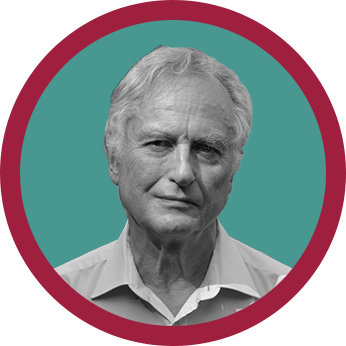
As everyone knows, Darwin wrote a classic masterpieceOn the Origin of Species, arguing that all kinds of biological species evolved through natural selection. Similarly, regarding the "origin of morality," evolutionists also say that morality evolves naturally. Why do humans have morality? Because morality benefits human survival and reproduction, it was filtered out by natural selection.
What is evolution? This brings us back to some knowledge about middle school biology. Regarding evolution, or evolution, it can be roughly summed up by one slogan—"Survival of the fittest"。 In other words, the living environment of living organisms undergoes various changes, and the organism itself also undergoes various genetic mutations. These changes and mutations are accidental, purposeless, directionless, and can transform into various forms. Organisms that cannot adapt to their environment are filtered out, while those that can adapt are chosen to stay, inherit, and amplify. Under the influence of billions of years, all surviving life on this planet has adapted to its environment and appeared vibrant.
Note, natural selection does not deliberately filter life forms to adapt to the environment. Nature has no personality or purpose, and there are no purposeful designers. Everything is just a trial-and-error algorithm. Those gene mutations that happen to adapt to environmental changes are preserved, while those that cannot adapt are filtered out. So on one hand, our survival to this day is largely due to luck, or perhaps we feel that nature deliberately arranged our evolution to this day is actually a kind of survivor bias. But on the other hand, we can also hindsight say that the various evolutionary traits (Phenotypic Traits)—the various physiological traits determined by genes and inheritable across generations—embody the ingenious solutions bestowed upon us by nature's wisdom. The term "solution" is what it meansAdaptationSimply put, adaptation means a solution. What kind of problem is that solution for? For survival and reproduction, of course, the main purpose is to reproduce.
We are full of resolute solutions, treasures everywhere. For example, why did we evolve opposite thumbs? Because the opposite thumb gives us a very strong gripping ability, allowing us to use our hands more flexibly, which gives humans the ability to manufacture and use tools, which is certainly beneficial for survival and reproduction. Another example: why do we walk upright? Because upright walking first frees our hands, and it dissipates heat better, which helps us humans chase wildebeests, antelopes, and so on long journeys, then "wear them down" and then "wear them down," giving us food. Of course, walking upright also comes at a cost—women have to have children as a problem. Of course, evolution is a trade-off of one link after another, a process weighing pros and cons, ultimately leading to a "solution" that generally benefits us humans in our specific living environment to "have children."
Of course, "having children" is just a rough expression; more precisely, it is gene replication. The ultimate goal of our evolution is gene replication. For gene replication, natural selection "arranges" us to evolve various traits favorable for gene replication. British biologist Richard Dawkins wrote a book called "The Selfish Gene." The book explains that humans are actually tools used by genes to replicate ourselves, and the traits we evolve serve the purpose of replicating genes.
Note that the "traits" we refer to here are not just about whether a person has a tail, whether they walk upright or crawl, and whether they have one or four stomachs, but also include our psychological preferences, behavioral tendencies, and emotional instincts—which is roughly what evolutionary psychology discusses. For example, humans all have an instinct to fear heights. When we climb up and look down, we instinctively feel scared and want to dodge, because this fear of heights effectively prevents our ancestors from swaying on the edge of cliffs, which is beneficial for survival. Those ancestors without this instinct liked to hang on the edge of cliffs for no reason, and were very likely to be killed by falls, so they had no descendants. And all of us living today are descendants of ancestors who had an instinct to fear heights, so we have inherited this instinct.
Similarly, human morality is also an instinct beneficial to survival and reproduction, and is filtered out by natural selection. Don't kill the innocent, don't deceive others, pay off debts, help each other, and so on—these reciprocal and altruistic morals are instinctively engraved in our human genes. Because humans are social animals, living in groups is more beneficial for our survival and reproduction than living separately. So, if humans want to live in a communal manner, humans must evolve a moral instinct of reciprocity and altruism. Groups formed by human ancestors without this reciprocal altruistic moral instinct would constantly show up as 'traitors,' constantly fighting among themselves, and ultimately leading to the destruction of the group. They couldn't even form groups or engage in cooperation between people. Compared to their human ancestors, who possessed moral instincts and could cooperate effectively in groups, they were at a complete disadvantage in survival competition and were thus eliminated by natural selection. And today, we are descendants of ancestors with moral instincts, so we have inherited their moral instincts.
Therefore, our human moral instincts—like a fish's tail fin, a leopard's leopard print, or a bird's wings—are 'solutions' selected by natural selection that benefit our survival and reproduction.
To quote Richard Dawkins, although our genes are selfish and only want to copy themselves, the selfishness of genes shapes the selflessness of human behavior. Because mutual altruism between people actually leads to gene replication.
For example, there is a famous theory about biological evolution developed by British evolutionary biologistsWilliam HamiltonProposed byKin Selection Theory, meaning we humans will selflessly help others. Who is it helping? Helping those who are genetically similar to ours.
For example, mothers may selflessly raise their children, even sacrificing their own lives to save them. Or, when siblings are in trouble, we will selflessly lend a hand. Compared to strangers with no blood relation, we are less willing to help. Why? Because their children, parents, and siblings have high genetic similarities to their own. Moreover, compared to paternal cousins, we are more willing to help our own cousins, because the genetic similarity between them is 50%, while the genetic similarity between paternal cousins and ourselves is less than or equal to 12.5%.
So biologist Holdan once said: "I would go to great lengths for two brothers or eight cousins." "It means that if a biological brother falls into a river, I might not jump into the water to save him, but two brothers combined can, because the genetic similarity between the two brothers and my own reaches 100%. If it were a cousin who fell into the river, I'd have to gather eight cousins before I could jump in to save them. Of course, this sounds a bit joking, but Holdan is expressing Hamilton's kinship selection theory—that is, the reason we act altruistically is ultimately caused by what Dawkins called the "selfish gene."
Of course, scholars have proposed different theories regarding biological altruism. It doesn't necessarily have to be kinship selection; otherwise, it would be impossible to explain some acts of courage that help strangers with no blood relation. In fact, in earlier years,DarwinIn his book "The Origin of Humanity and Sexual Choice," he proposed this approachGroup Selection Theory。
This theory suggests that humans have evolved a reciprocal altruistic moral instinct, willing to help other members of the group, regardless of their blood relations. Why? As mentioned above, without this moral instinct, people cannot form groups or cooperate effectively, and such ancestors will be eliminated by natural selection.
Of course, some criticize that whether it's kinship selection or group selection, the moral instincts are not unique to humans; animals also exhibit such reciprocal altruism. Mother dogs protect their puppies, worker bees sacrifice themselves to protect the queen bee and eggs, and vampire bats spit out the blood they suck to share with members of the group who lack food...... These reciprocal and altruistic behaviors can be done by animals on instinct, not human morality.
On one hand, evolutionists might say that human morality is fundamentally no different from animal altruism, but on the other hand, they argue that human moral behavior is somewhat more advanced than that of ordinary animals. Because humans not only have biological natural selection, but also cultural natural selection—Culture Selection。 In other words, human survival and evolution are not only about who develops physiological traits or psychological instincts, but also about the kind of culture people adhere to.Richard DawkinsViewing human culture as something similar to genes is called thisMeme。 Some human cultures and religions promote mutual help, sacrificing the self for the greater good, preaching for the greater good, repaying debts and debts with a life for a life, and in short, various morals. Thus, human groups that embrace such moral cultures and religions have a greater survival advantage, so natural selection selects and retains this type of moral culture. Of course, this also leaves behind the humans who believe in this type of culture and their genetic selection.
Of course, whether it is kinship selection, group selection, or cultural selection is still debated within the field of biological evolution and will be set aside in this issue's major issue. In short, from the perspective of evolution, morality is a human trait that benefits human survival and reproduction, so it was filtered out by natural selection. In this sense, we can compare evolutionary morality with the first two moral views, that is, contract theory and emotionalism.
Let's first look at contract theory, and we'll find that the moral view of evolution is quite similar to that of contract theory. As mentioned earlier, from the perspective of evolution, a human race without the moral instinct of reciprocity and altruism will not survive until today and will be eliminated in the survival competition. In fact, contract theory follows the same logic: without such a moral contract, human society will fall into a state of "everyone against everyone" war, ultimately scheming and killing itself until today. The difference lies in the answer to the first fundamental question of this issue: Contract theory holds that morality is something agreed upon between people for their own benefit, and does not concern itself with what morality itself is like; it eliminates this question, saying it is merely the result of calculation; Evolution holds that over millions of years of human evolution, morality has formed a moral instinct. Morality is innate to us; it is natural selection and selection, not human calculation. Since all our Earth's ancestors originated from a common Homo sapiens ancestor in East Africa 70,000 years ago, all of us on Earth today share a common ancestor, a common biological structure, and a common historical evolutionary path. Therefore, we have developed a common humanity and a common moral instinct, so our moral views are all interconnected.
Of course, some anthropologists disagree, saying that after visiting some primitive tribe on a small island in the South Pacific, they found that the people's views there were completely different from those of modern people. Not only are customs and culture different, but even some fundamental lifestyles and moral values are different. For example, there's no concept of private property at all—if you take something from someone else's home, no one cares; Another example is that women are not reserved about sex, and can have sex without any commitment; And this society has absolutely no hierarchy, and so on. Of course, that's another big issue. Overall, mainstream evolutionists believe that all people on Earth, regardless of the culture, share the underlying moral values and lifestyles.
In this respect, evolution theory is more similar to emotionalism. Emotionalism holds that morality is an expression of emotions born from emotional instinct, and morality is innate to emotionists. Evolutionary theory goes on to say that this innate emotional instinct evolved because it benefits human survival and reproduction. The difference between the two is that emotionalism holds that human emotions cannot be reasoned with, so morality born from emotional instinct cannot be communicated between people. However, evolutionists believe that human moral instinct is reasonable, evolving under the influence of natural selection.
So regarding the second fundamental question—why should we be moral—evolutionists answer: there is no question of "shoulding"; we are "born" moral animals, and evolutionists have eliminated the second fundamental question.
The summary of this seminar is as follows:
Divine Mandate Theory: Morality comes from supernatural laws, and moral laws are the natural and righteous principles.
Contract theory: Morality arises from agreements between people oriented toward self-interest.
Emotionalism: Morality arises from human emotional instincts.
Evolution: Morality is a species trait selected by natural selection to facilitate human survival and reproduction.
For more details on the above statements, you can refer to:
◆Saint Thomas, Aquinas. Commentary on Aristotle’s Nicomachean Ethics. Dumb Ox Books,1993.
◆ Hobbes, Leviathan, translated by Li Sifu and Li Tingbi, The Commercial Press, 1985.
◆Gauthier, D. P. (1987). Morals by Agreement. Clarendon Press.
◆Boisvert, Daniel and Teemu Toppinen, “Charles Leslie Stevenson”, The Stanford Encyclopedia of Philosophy (Fall 2021 Edition), Edward N. Zalta (ed.).
◆ Richard Dawkins, The Selfish Gene, translated by Lu Yunzhong, Zhang Daiyun, Chen Fujia, Luo Xiaozhou, and Ye Sheng, CITIC Press, 2019.
◆ Xu Xiangdong, Self, Others, and Morality: An Introduction to Moral Philosophy, The Commercial Press, 2007.
◆Ruse M. (2008). The Biological Sciences can Act as a Ground for Ethics[M].In Contemporary Debates in Philosophy of Biology. Wiley-Blackwell.
You are welcome to join philosophers in the discussion on this major issue. Their views have been expressed, and now it's your turn to speak. Please cast your vote and then...Message sectionShare your thoughts!
For more major issue discussions, click below to follow
Click ↓ to read the original article
Watch the video version of this seminar
Original article link:https://mp.weixin.qq.com/s/qMtuzddR1f8r3vcw6ZrXBQ





![[Open Source Reading] January 2024 ≈ 400 carefully edited book source compilation and update - Baiyun Blog](https://www.bybk.cc/wp-content/uploads/img/af867764c3780f0b7da88376fca7bf92.png)
![[Open Source Reading] November 950+ carefully proofread book source compilation and update - Baiyun Blog](https://www.bybk.cc/wp-content/uploads/2023/02/Screenshot_20230222-1001582-1024x593.png)


![[Open Source Reading] October 1300 Book Source Update - Baiyun Blog](https://www.bybk.cc/wp-content/uploads/img/1eeb6ae31cde88ab39faa2f19651638d.jpeg)
![[VMOS PRO 2.9.6 Member Edition] - Baiyun Blog](https://www.bybk.cc/wp-content/uploads/img/c303a7a50d3ebfa235cc380190db2980.png)





No comments yet