
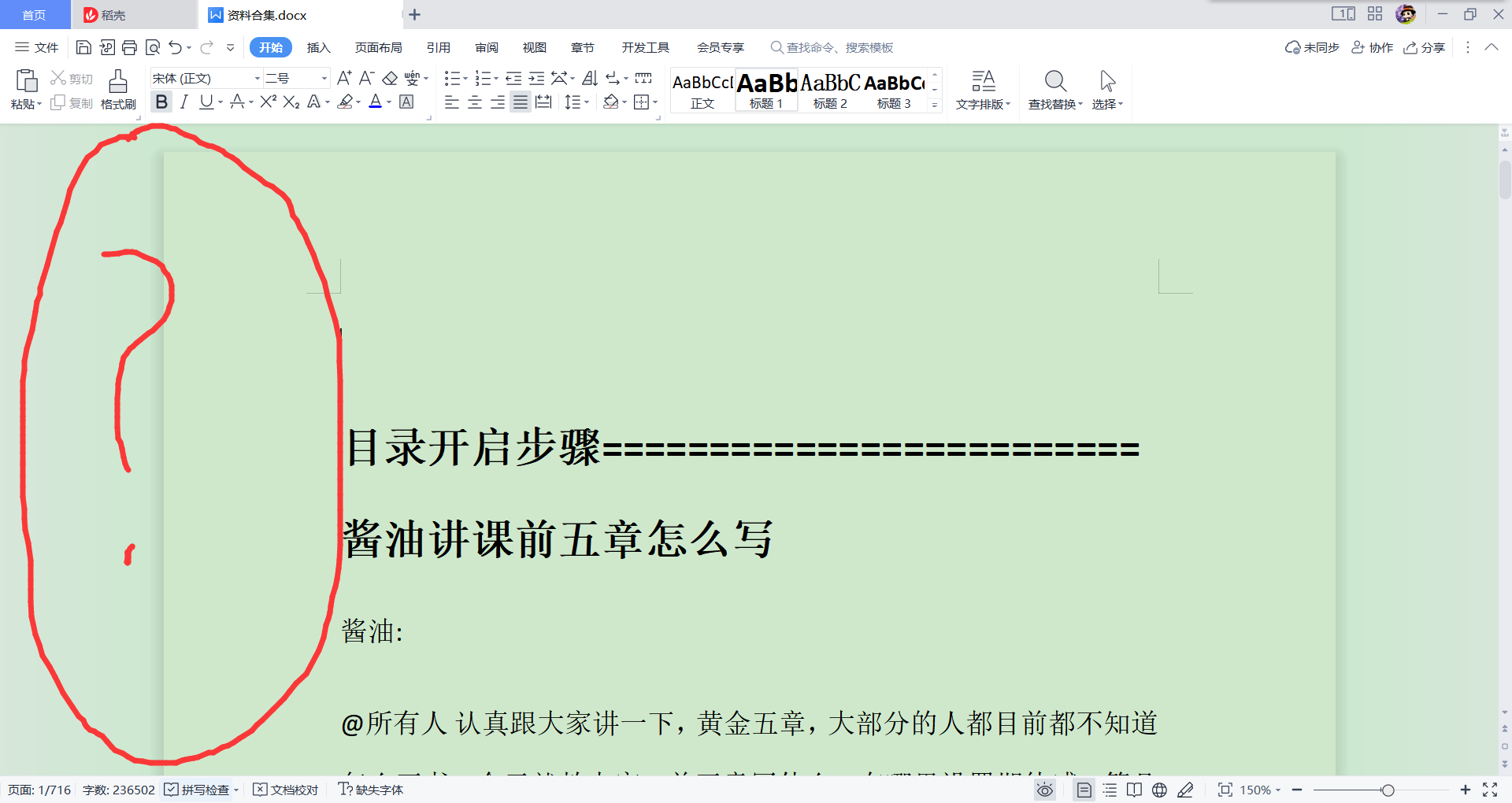
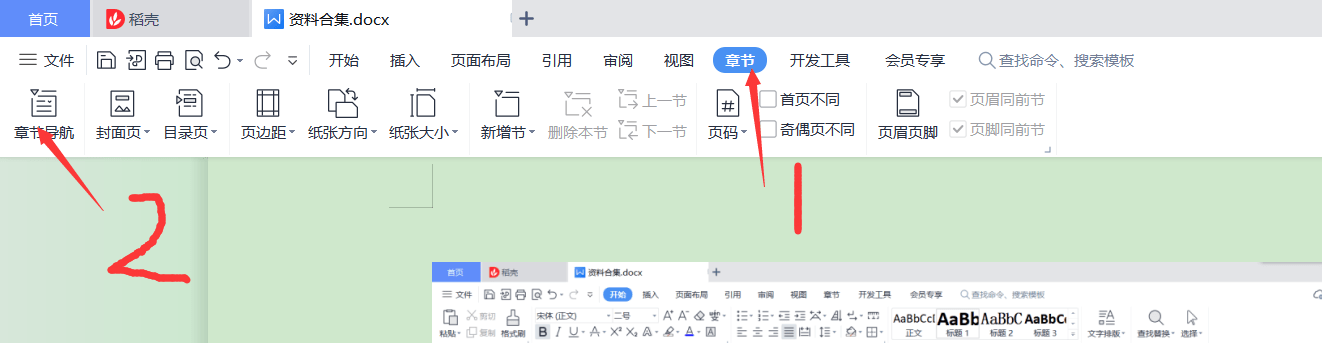

Steps to open the directory =========================
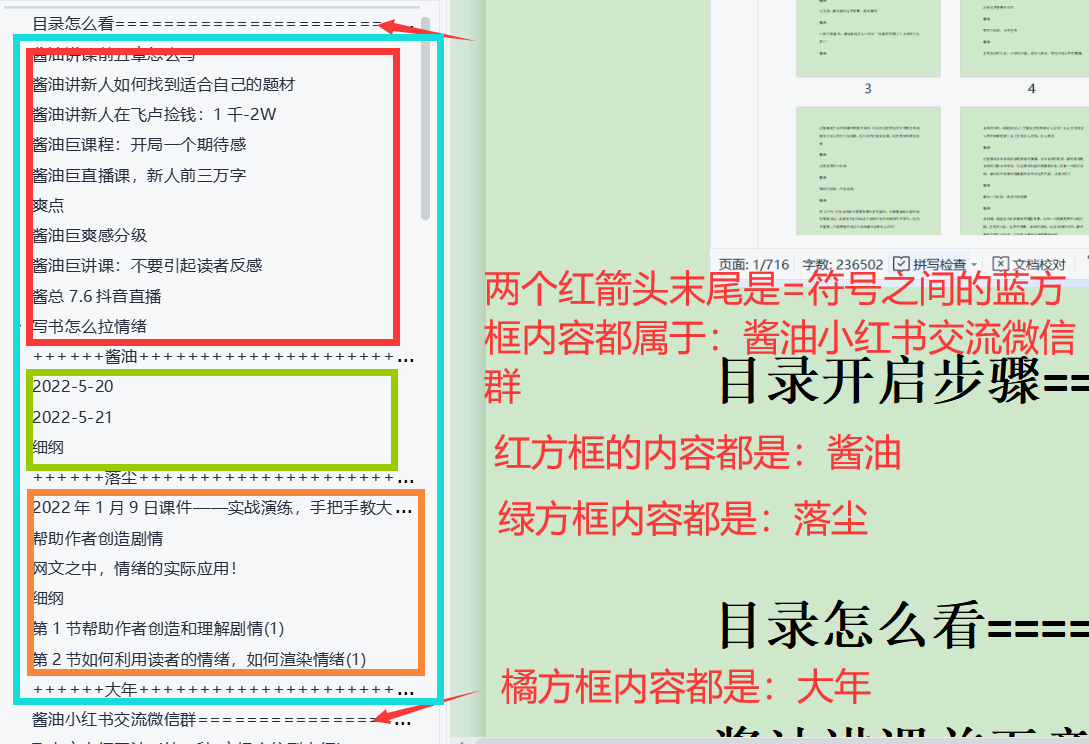
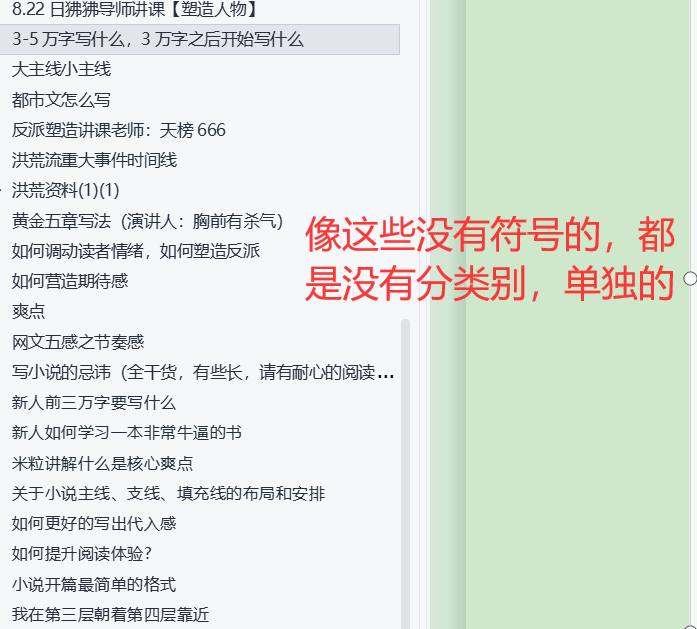
There may be some inaccuracies in the categories; I grouped them myself.
If you find anything incorrect, please judge it yourself.
How to read the table of contents ===========================
How to write the first five chapters of a soy sauce lecture
Soy sauce:
@所有人 Let me seriously explain the golden five chapters. Most people currently don't know how to start the book. Today, I'll teach you what to write in the first five chapters, where to build anticipation, which chapters will burst out, how to attract readers within five chapters, and how to finish a simple story
Soy sauce:
Listen carefully, the golden five chapters. First, let's get straight to Chapter One. The so-called Chapter One is the beginning of a book, and the beginning is roughly hereFeiluNovel websites and all other sites have 1,800 words. Based on 1,800 words, we can plan it into six stages: the first stage is the entry point, the second stage introduces the world background, the third stage introduces the protagonist, the fourth stage introduces the system, the fifth stage introduces the system, and the sixth stage introduces the story. Now I'll start discussing the six stages of Chapter One in detail, step-by-step, foolproof teaching. I can't guarantee much, but one thing is guaranteed: After watching this course, you'll be able to successfully write an introduction. Whether good or bad, you'll definitely take the first step into the online literature world. Now, let's get started in detail!
Soy sauce:
First is the first stage: the entry point
Soy sauce:
The most important thing in Feilu novels is the entry point—in short, it's where a story actually begins
Soy sauce:
When writing urban stories, is the start to make money or to show off and slap people in the face? Is history about showcasing one's talent to solve problems or communicating with various historical figures? That's the entry point. Innovation from a good entry point is crucial. A good entry point immediately sparks readers' interest
Soy sauce:
The entry point determines the specific tone of the first chapter. Before starting the book, you must think carefully about how to reasonably approach it. This is the most important aspect of a novel. If the approach is poor, readers will lose their sense of immersion and appeal, and the only final outcome is that readers will simply abandon the book
Soy sauce:
Next, let's talk about the second stage, which introduces the world background
Soy sauce:
The world background is what the protagonist's world is really like—a martial arts world. The Primordial World? City? Fantasy? What kind of world do you really want to write about, and what stories will happen in this world?
Soy sauce:
For example, the most classic world setting is the city
Soy sauce:
Most people reading books often see a sentence like, "I actually traveled through time?" Or a parallel world? ”
Soy sauce:
This sentence is simple, but it actually reveals the world background: a world not much different from what readers imagine, exactly the same as the world we live in now
Soy sauce:
When writing entertainment novels, some authors say, "This world is no different from my previous life; the only difference is that entertainment in this world is not lacking in great entertainment."
Soy sauce:
Developed
Soy sauce:
This is the world background. Once you introduce this, readers will realize that this is a world with underdeveloped entertainment. So isn't it reasonable for the protagonist to make movies and sing?
Soy sauce:
This is the role of the world context
Soy sauce:
The third stage introduces the protagonist
Soy sauce:
The protagonist's own persona, environment, identity, and experiences are all needed in the later plot. So, in relatively brief words, the protagonist writes about who he really is, his environment, and his identity information
Soy sauce:
This is the third stage
Soy sauce:
The fourth stage is to bring out the system
Soy sauce:
In Feilu, the system extraction doesn't require much wordplay; just write the system reasonably, and readers won't worry about whether the system is abrupt or not, because it doesn't matter. What everyone wants to see is what the system ultimately does
Soy sauce:
Function is the most important aspect of the system
Soy sauce:
Then we move on to the fifth stage: introducing the system
Soy sauce:
What exactly is the function of the system? What benefits can it bring to the protagonist? What kind of future development will the protagonist have? What rewards and demands did he give the protagonist?
Soy sauce:
These are all things you need to do during the system introduction stage. When introducing the system, it's best to explain its functions thoroughly and relate to the upcoming plot. If a financial management system ends up with a plot twist about a fantasy world fight, that's not right
Soy sauce:
The final stage is to introduce the plot
Soy sauce:
Ultimately, the first five stages are all about setting up the background, introducing a reasonable environment for the plot's development, the protagonist's character, the world's background, the emergence of the system, and its role. Ultimately, they serve the sixth stage and all subsequent plot developments
Soy sauce:
Doing well in the first five stages will naturally lead to the sixth stage
Soy sauce:
In other words, a good plot is what matters most. The other five stages are all designed to serve a good story. I think everyone understands what I said
Soy sauce:
Is there anything you don't understand?
Soy sauce:
Let's start with Chapter Two
Soy sauce:
Chapter Two officially begins the plot. A good story needs a clear beginning, development, climax, and conclusion. This is the specific content of the previous five chapters. Chapters One and Two mark the beginning of the story, Chapter Three is the story's development, and Chapters Four and Five are the climax and conclusion. This is just a rough plan. When writing specifically, you can add more or less, but the pacing must not be disrupted
Soy sauce:
Chapter Two, the beginning of the story, can be divided into four parts: introducing the background, introducing the characters, initiating conflicts and conflicts, and introducing the protagonist's role
Soy sauce:
The first part introduces the story background. No matter what kind of story it is, it needs a background. For example, in urban money-making novels, no matter what kind of story you want to write, you need a background that must make money. Without this background, the story you write will be awkward and unreasonable. This is the role of the story background
Soy sauce:
The second part is introducing the characters. In a story, the most important are the characters. Since it's the Golden Five chapters, it's best not to have too many characters—just introduce the most important ones. What roles do these characters have, and what roles will they play in the upcoming story? That's what you need to write in this section. If the characters aren't well done, how will the story develop next? Generally speaking, the first story, aside from stereotypical characters, is already a lot if two or three appear. Don't write too many chaotic characters; too many characters only make the story messy and serve no purpose. Achieve "making the best use of everyone."
Soy sauce:
The third part introduces contradictions and conflicts. This is a synthesis of the previous two parts. Against the backdrop of a story and with the characters already set, contradictions and conflicts naturally arise. Having these characters engage in conflict is the most important way to build readers' anticipation. If there is no conflict, what will the reader watch? Looking at the chronological records?
Soy sauce:
The fourth part is about highlighting the protagonist's role in the story. The protagonist relies on the system and his own abilities to either resolve or control conflicts and conflicts. This is the protagonist's role. How to fulfill the protagonist's role well can also make the subsequent story smoother
Soy sauce:
What questions does everyone have?
Soy sauce:
Chapter Three is the development of the story. Usually, the story goes through one or two transitions. Small beginnings, developments, and transitions are very important. If you can't do the small ones, you won't keep readers interested. You've only published the first few chapters—why should readers stay and read your book? Then it must be well written. Chapter Three can also be divided into several parts: the first part is the continuation of conflict and conflict; the second part is the protagonist's formal role; the third part is the small story with its introduction, development, and transition; and the fourth part builds up to the major climax
Soy sauce:
The first part is the continuation of conflict and conflict. In chapter two, the conflict and conflict are already introduced. After that, the conflict naturally continues. For example, when the protagonist is making money, the teacher doesn't trust him, and the protagonist must use his own abilities to accomplish it, slapping the face. At this point, how should the conflict continue? Before the protagonist shows his abilities, he continues to be questioned and mocked by the teacher
Soy sauce:
This is the continuation of contradictions and conflicts
Soy sauce:
After the continuation, the second part is where the protagonist truly takes action
Soy sauce:
Because the first five chapters are very important. Why are they called the Golden Five Chapters? Because in these five chapters, you must hold onto the reader; if you can't, they leave. In this situation, every story and every paragraph must be concise, so the protagonist must quickly solve problems, prove them wrong, and cause various impacts. This is when the protagonist plays his role. In any story, the protagonist's role must be highlighted
Soy sauce:
Then there's the small story with the introduction, development, transition, and conclusion. Here, the protagonist's role in solving the problem is refined, and then a small story is used to bring out the big climax. This small story can be understood as the starting point of the big climax, but in reality, everything before is just the groundwork for this big climax. The purpose of the transition is to make the climax feel more satisfying. For example, in the classic Dou Zhi Li third part, why add Xiao Meier in the middle? Isn't it enough to have Xiao Xun'er directly slap someone in the face? That's not satisfying enough. To make it satisfying, you have to add a story like this to make the final climax even more satisfying
Soy sauce:
Finally, there's the setup
Soy sauce:
The grand climax of the first story actually summarizes the previous events: the protagonist's grievances, others' disdain and doubts, and a sense of anticipation. The protagonist is ready to use an even more impressive way to prove them wrong
Soy sauce:
In this situation, as long as the protagonist continues to slap faces in his own way, readers naturally feel satisfied
Soy sauce:
What questions does everyone have?
Soy sauce:
The official climax is in Chapter Four, what is the climax written about? Write about the protagonist's face-slapping, the protagonist's act of showing off, the process of the protagonist using their abilities and system to control the current conflict, then the reactions of various people, the impact of the protagonist's actions on others. That's Chapter Four. As long as you do well in the first few chapters, the climax later onward is very easy to write. If someone mocks the protagonist, let them die; if someone looks down on them, make them kneel. This is a comparison with the previous one, no need for detailed analysis. What you did earlier, Afterwards, just follow the opposite of what happens
Soy sauce:
Chapter Five is the end of the story and the most important part. When readers give you data, it's all about reading this chapter. If the earlier part is well written, readers might give you data, but if Chapter 5 is well written, readers will definitely give you data
Soy sauce:
Chapter Five, ultimately, is about anticipation
Soy sauce:
The protagonist receives rewards—where can these rewards be used? The protagonist defeats the enemy, but is the enemy subdued? Is he dead? The protagonist affects everyone, but where does this influence follow? What will the protagonist do next?
Soy sauce:
If you bring out all this sense of anticipation, it will make readers very eager to see what comes next—that's what anticipation is
Soy sauce:
The sense of anticipation is the process from known to known, and of course, there is also the transition from unknown to known, but the latter part is rarely used in Feilu and can be used appropriately
Soy sauce:
What does it mean to go from known to known? For example, the protagonist earns thirty million, and he glances at the property across the street
Soy sauce:
What will he do next? Can readers not know? The sense of anticipation is when you write it out but haven't fully written it out. When you finish writing, that's when the satisfying moments explode
Soy sauce:
What does 'unknown to known' mean? That is, you wrote something completely unknown, something readers simply couldn't guess
Soy sauce:
These are the Golden Five Chapters!!
Soy sauce:
Can you write completely unknown things that spark readers' interest?
Soy sauce:
For example, if a beautiful woman approaches the other side, the reader immediately knows the protagonist is about to take a girl—that's interest
Soy sauce:
But if you write about a masked person coming across from you, can the reader even know?
Soy sauce:
Overall, the Golden Five is the first complete story
Soy sauce:
If you have any questions, feel free to ask now
Soy sauce:
If you can't write about problems like this, just read books yourself
TT:
When brainstorming, is the climax actually conceived first, then returned to lay the groundwork? Right?
Soy sauce:
You could understand it this way
TT:
Is the climax the entry point?
Soy sauce:
There are two ways to understand the entry point: the first is the form you use to enter the story, and the second is what your first story is
TT:
Got it, thank you, boss
Soy sauce:
Any other questions?
Su Jian:
I don't have anymore
Tao Tao'er:
I've recorded everything, and I want to digest it slowly
Warm-hearted Little Sun:
How to control the pacing after these five chapters? It's too fast, feels like it won't take long
Soy sauce:
Rhythm is the beginning, development, climax, and end
Soy sauce:
Then the next story begins
Soy sauce:
The next plot will be the same
Su Jian:
Understood
type:
Are these four stages weighted the same, soy sauce boss?
Soy sauce:
Nonsense
Soy sauce:
Definitely different
Soy sauce:
The climax is definitely the most frequent
Mingxi:
I want to ask the experts: do you usually write the framework or outline of the whole book in advance, or do you just write a brief outline while writing?
Soy sauce:
The Golden Five Chapters are not really asking you to write five chapters
W:
Are there any techniques for the narration in each chapter? I just write what should and shouldn't be written. Sometimes I just cram in randomly and get off track
Soy sauce:
It's about rhythm, not about writing strictly according to the five chapters
Soy sauce:
Narrator: What you're talking about should be the reactions of others
Soy sauce:
Go read this one
Soy sauce:
Read a hundred books and you'll know how to write
Soy sauce:
Writing at Feilu doesn't require an outline
Soy sauce:
Just design each plot well
Soy sauce:
The Golden Five is basically the first story
Soy sauce:
The quality or badness of your writing is in this first story
Soy sauce:
The source of creativity is reading more books, watching more videos, and watching more news
Soy sauce:
If the conflict isn't satisfying enough, it means you didn't do well enough before
Soy sauce:
The protagonist's wife is killed, and you crush your enemies to dust
Soy sauce:
Isn't that satisfying enough?
Soy sauce:
The protagonist's wife gets a glare, and you go slap the enemy—of course that's annoying
Mingxi:
If you want to have fun, the protagonist must not be merciful and must always seek revenge if there is a grudge
Andrea:
Yes
Soy sauce:
It's not easy for ID to be able to do it
Soy sauce:
Not necessarily
Patrick Cheung:
Mr. You, may I ask if the little story with the beginning, development, and transition in between is necessary? My previous four photos were all building up momentum, but can I just go all out with a big climax and slap in the face in the fifth one? Readers might find it dragging
Soy sauce:
This depends on personal writing style
Artoria Pendragon:
My reader says you have to torture the villain step by step, applying all ten of the Qing dynasty's tortures before he feels satisfied
Soy sauce:
Different essays are different
Soy sauce:
Introduction, development, transition, and conclusion are best to have
Patrick Cheung:
Oh, oh
Soy sauce:
Because the first three chapters are already a complete closed loop. You can't keep the protagonist suffering forever; you have to let the readers know the protagonist can solve this problem. Under these conditions, if you don't add a short story, the climax won't be satisfying enough
Soy sauce:
Some small scenes are just to add smoothness—you're always moved, always feeling good, constantly being abused, always rising, and eventually experiencing aesthetic fatigue
Soy sauce:
At times like this, lubrication is essential
Soy sauce:
Having grown accustomed to delicacies,
Soy sauce:
He still had to go eat some pickled vegetables
Soy sauce:
Right?
Soy Sauce Talks on how newcomers find topics that suit them
How can newcomers find a subject that suits them?
The first is to find what you like to read. Why say you like reading it? Because you like it, it shows you understand the satisfying part of the book. If you write a book and don't even know what the satisfying part is, it means you're not suited for this type at all. For example, someone becomes popular after watching Prehistoric Times and says they want to write it themselves, but what happens? But damn it, I don't even know the prehistoric system, nor the basic thrills. So what makes you think you can write a good prehistoric novel?
The second type: the hierarchy of contempt!
What is a hierarchy of contempt? It's like finding a book where the other person's grades don't need to be great. For example, a book earning twenty or thirty thousand a month, you click in and read it. After finishing, you can clearly feel, what kind of ridiculous nonsense is this? It's about your mom's neighbor, written in such a dumb way. I can write too. When you have that kind of confidence, it means you're suited for this kind of topic. Why? Because if you can see the book is trash, it means you know the core of the book. The author didn't write the core of the book, but you noticed. For example, when you play a game and see someone playing a hero like crap, even if you've never played the hero before, the first time you open your computer might not be familiar, but after the second or third play, you'll immediately feel familiar. Why? Because if you see problems with someone else's play, it means you're a good fit for that hero. Got it?
The third is advance prediction.
What does 'foresight' mean? It's like a book laid out in front of you, reading the beginning, and then guessing the general story that follows. Then, while guessing, you find that the story is almost exactly what you guessed. The process may not be exactly the same, but overall, you can guess more than fifty percent of the plot, process, and flow. Think about it—if you guess it all, what does that prove? It proves you can write this book and this topic, but you just haven't thought about it. If you were writing about it, you would write it too. The difference depends on your writing style, your knowledge, and your wording. But the stories you experience, the characters you introduce, and the subsequent developments are basically the same. In other words, you know how to write this genre. Do you understand what suits that type????
Soy Sauce Story Newcomers Picking Up Money in Feilu: 1,000 to 20,000
1: Film and TV fanfiction
2: Subject matter is trendy
3: Find trending memes on Douyin, look for those with high clicks
Soy Sauce Mega Course: A Sense of Anticipation at the Start
"Starting with a Sense of Expectation"
Key points at the start.
What does the opening mean?
It means a good grade.
What does that mean?
As everyone knows, when we write books, we at Feilu look at 24-hour results; no one says we look at 1 hour, 2 hours, or 3 hours.
So, how do you achieve this so that at the beginning, I can have a higher-level position?
So, what requirements do we need to achieve certain results?
First: Creativity!
A good idea can make your book explode and take off instantly.
Everyone knows that when inspiration strikes, all kinds of ideas come to mind.
When inspiration fades, where does all that creativity come from?
There aren't that many creative options for you to choose from, right?
At this point, it's no longer about creativity—not following the creative path.
It's about building up a sense of anticipation at the start through the story and setup.
What is the key point of the anticipation at the start?
The key is the anticipation for this opening!
In fact, sometimes whether you have an idea or not isn't that important.
But if you start off with great anticipation, even if your idea isn't very original, readers will still want to watch it.
For example, my new book, "My Apprentice Dominated the City."
So, I admit there is creativity.
But you say this idea is very creative?
Let me put it this way: someone wrote such a book a long time ago.
Like the one from One Piece's Strongest Teacher, ranked in the top three on the Heavenly Ranking.
Like the Tiandao Library.
There are definitely people like me.
I have only one thing, and here I am.
First of all, when creativity is the same, the teacher is always the best.
So how do I pull out the egg?
So, first, let's make sure of one thing: we spot the difference.
What does 'spot the difference' mean?
For the same place, I wanted to find someone more distinctive than him, completely abandoning his storyline.
I only pick one type.
What type?
Types of teachers.
I chose the type of teacher, but realistically, what is this book about?
It says 'invincible!'
Where do I focus?
Many people write about teachers, but now I am an unknown teacher.
I'm going to teach a group of awesome disciples now.
I skipped that tedious step.
If I don't write like that, I'll just write about coming out of retirement.
Just say I've finished teaching these apprentices and now I'm showing off.
I'll write directly to the places everyone likes to see.
Because in the upcoming storyline, you can still teach them.
If you train a top assassin apprentice, and then you design someone he can't beat! Then you help you get revenge.
He still doesn't seem to be much of a force in your eyes.
I can still write down the path of a teacher and strengthen you once again.
To put it bluntly, I can write both of my stories, but I still write one of them: Ding Chushan.
Why?
Because we need to grasp one thing: the sense of anticipation!
If I take this point as a decade ago, I now begin teaching disciples deep in the mountains.
I'm waiting for my apprentices to dominate the city. The anticipation for it—check for yourself—isn't that high?
Tired of seeing so many things, huh!
When we choose a theme, what should we choose?
Directly write about the core satisfying point and formula within this genre.
Because when you start by choosing an entry point,
Whether you're at your most showy moment or not, it doesn't affect your story.
Nor is it a big so-called good or bad.
It's not that if I wrote this earlier, it becomes harder to write later. Who says it's not easy to write?
If you change your mindset and mindset, you can write.
From this, it's clear that a strong sense of anticipation is essential at the start.
So where does that sense of anticipation come from?
Come on, let's grab this key!
Excitement at the start!
By what template?
First: identity.
Like in 'My Apprentice Rules the City,' all the big shots in the city are my apprentices, and my status is impressive.
The second type: the past (i.e., hatred).
Like in "Battle Through the Heavens," the protagonist was originally a genius but later fell from grace.
Third: buildup and plot.
Come on, let's analyze it!
First, identity.
Take 'My Apprentice Rules the City' as an example: the protagonist is this world
The strongest person.
Everyone, listen up to this!
First, we need to give it a front-loading point for satisfaction.
What does it mean to have a front-loading spot?
It's actually quite simple: the protagonist is the strongest man in the world as soon as he appears.
He has fifty disciples who have influenced the world.
In this situation, readers are unhappy with the first chapter.
But I look forward to it. I want to see someone like you—so cool right away. Let's see how you keep writing.
I have anticipation, but I'm not happy!!
How do I make it feel great?
Through the protagonist's "past" below.
I immediately went down to the old man on the train.
[Note: Jack Ma, the master is here, the master is here, is it true? This is still about identity. Let's write from the side about just how impressive his identity is. 】
Next came a past, and then a grudge.
Our focus is here.
In the past, some people love it, some like writing about the past—how he died, how he came to be.
This varies depending on the book.
Every book is different.
Second, what do we mean by hatred?
Immediately stirring up hatred!
What hatred?
Let me tell you something to give everyone a wake-up call!
The more clichéd the book, the better; the more clichéd the plot, the better.
Let me say something simple: if you write about a new continent, what kind of new continent can you write?
There are millions of urban novels, right? Why do you check the bestseller lists, those on major websites, and just check them out?
There are always countless elderly people.
It's always after you finish the first chapter that you know what's next.
Why?
It's not that the writing is poor, but that readers enjoy reading it.
On the surface, you say, 'I just don't like it, and are you crazy? Why are you writing such old tricks? Isn't it toxic?'
That's all for now—will it be updated yet?
Yeah, cursing while urging for updates.
Why?
As long as your front-mounted position is good enough, then the back-mounted position doesn't matter whether you're old or not.
You've been on your own show of style—what does it mean to keep playing tricks with age?
The more it proves, the happier you are!
Because everyone knows what the protagonist is thinking.
I don't know what you're doing, protagonist, but I actually don't feel much anticipation, do you?
What does anticipation mean?
Just like when I play scratch cards.
If you don't hit the first number, do you immediately lose any sense of anticipation?
But what do you mean now?
I counted first and let him hit it.
I counted the second one and let him hit too.
Right?
Actually, I guessed what it was like below, but the more I looked, the more positive I became.
I just want to see how you slap me in the face!
The same story can be a different kind of slap in the face.
What does that mean?
That incident on the train—you've seen stories like this many times, haven't you?
This is the third point discussed:
Setup + plot!
How can you turn a clichéd plot into a feel-good story?
Is it just a feel-good story of your own?
At this point, I'll teach you one thing—the most important one!
What is it called?
intertwined !!
What does that mean?
Everyone, remember this!
Every role you play will appear frequently.
And the reason he appears is always justified, pushing your story forward!
Simply put, your characters must intersect with each other!
Then, the story is pushed forward through this approach!
What does that mean?
I'll tell you in a moment what it means to be a character—a character at the start, used until the end and unchanged.
What I'm talking about now is exactly the urban secrets you wrote!
If you don't learn this, you'll never write about urban life!
If you write about the city, it's a dead end!
First, let's take my book as an example.
I set up four people at the start.
Tang Lao, Zhou Yingpeng, Xiang Shu, and his granddaughter.
These four people are still here, and I'm about to publish what I'm writing about.
Why?
Because when you choose these four, each character must have their own story!
What is the story of the self?
This self-story is connected to the protagonist, connected to the protagonist.
If the character you appear in has nothing to do with the protagonist, or is just a small-time nobody or a bystander,
If that's the case, then don't write about it!
You don't need to write about these random characters, no need!
How do you need to write?
Tang Lao, first of all, was sick—he was sick.
Through his illness, we introduce the protagonist's apprentice.
What is the role of this Donald?
Advance the plot.
Every character must advance your story!
At this moment, with the addition of Tang Lao's identity!
Tang Lao falls ill, which brings out one of the protagonist's disciples.
What's the most important point of this setup?
It's about building anticipation!
What does that mean?
You happen to be ill with Tang Lao, and the miracle doctor he hired to treat Tang Lao is also the protagonist's disciple!
But these people didn't know who the main character was.
They don't know that the protagonist is the master of the divine doctor they were looking for!
At this point, everyone feels thrilled just by watching, right?
Feeling excited, right?
The scene where Tang Lao goes to find the miracle doctor, and the doctor calls the protagonist his master.
Readers might have this thought when reading, right?
Your anticipation will come!
It has brought you a sense of anticipation!
Here's the point!
Then, immediately after, his identity.
What is his identity?
His identity is that of a founding general!
What is the role of his identity?
Showing off for the protagonist! Ultimately give the protagonist a burst!
Now, let's look at the next one: Zhou Yunpeng.
At first, everyone thought he was a villainous rich kid.
But I won't write it like that, because people are tired of seeing 'brain-dead rich second generation' or whatever version of 'rich second generation'—truly tired of it!
I set him up as the protagonist's future little brother.
In this situation, what else should I design for him?
First, he stirred up hatred.
What is it called to draw hatred?
It's called bringing in!
This is called introduction, not promotion.
Bring out this storyline.
If he doesn't make enemies, no one will be together; instead, they sit on the train, chatting about mine, you talking about yours.
So, we need one person to bring in a storyline.
You need to establish each person's identity; their role and function are to stir up hatred and introduce the plot.
The protagonist goes down the mountain and says he wants to go home, so I'm going home now.
This is called pushing the plot, right?
To drive the plot, you need one person to bring out another storyline!
In other words, what I do next is what I'll tell you.
But when I was doing this, something suddenly happened.
This sudden introduction is a sign of import.
Here, he is responsible for introducing the plot and stirring up aggro.
His later role as the protagonist's underling is a post-production skill, but let's not talk about it now, or it would get chaotic.
Now let's talk about the granddaughter.
What is her role?
The point is that she is a woman.
Because she's a woman, you have to have one—that's the standard.
No, your books are only black and white. If you have them, books will be colorful.
Even if your male lead doesn't take this woman, you must have a woman present and keep her there like raising fish.
And what are women for?
You can draw aggro anytime, but you don't have to.
I'll stay here, always stirring up hate, but I don't need to.
Why?
But I don't want to write it!
Moreover, she has another function—what is it called?
It's called the full channel!
What does that mean?
If it weren't for her, would Zhou Yunpeng still be there?
Right?
She is an omnichannel channel.
Like a brick, move wherever needed!
You must write a character like this.
Otherwise, your book will look stiff.
Come, everyone, tell me what Xiang Shu's role is.
Uncle Xiang actually didn't have a seat because he barely spoke or fought anyone from start to finish.
But why did this person appear?
Let me tell you, he's the only person in the whole arena who truly drives the logic.
You have a book, to put it bluntly,
If the protagonist needs a dog by his side, does that mean others don't need a dog?
You know what I mean, right?
If you say someone is awesome, where do you say they're awesome?
Didn't you say, hey, this person is a founding general? There are so many founding generals, what kind of trash are you?
Back then, in that era, there were so many founding generals.
Just a founding general alone can't let readers know just how impressive he is!
But the former King of Soldiers was his bodyguard!
Just this one sentence shows just how high his status was!
It can be explained in one sentence!
What is it used for?
He was there to highlight Tang Lao's (Grandpa) awesomeness.
It's simple: such an impressive old man, if he doesn't have some capable people around him, it wouldn't be right for you to explain.
Right?
His real role is mainly to set the stage for the audience.
Why arrange it this way?
Uncle Xiang is impressive, highlighting Tang Lao's awesomeness, as Tang Lao wants to find the protagonist's apprentice to treat his illness.
It makes the protagonist's apprentice look even more impressive, but if the disciple calls the protagonist 'master,' doesn't that mean the protagonist is even more impressive?
Wouldn't that make it even better!?
Effortlessly, it adds a satisfying touch to your experience!
So, what can we call this?
It's called a character arrangement!
So now, can we summarize these four people into a skill that everyone can easily understand?
First, if we want to write a good book, what should our character environment be?
Here, we need three people in total to tell the story. (Here are four, because the granddaughter is on the same level as Uncle Xiang)
Three people, who are they?
The first and most important is called the old man.
This old man doesn't necessarily have to be a real old man.
As long as it's someone impressive, with status and background.
With this status background, if you want to pursue the path of a businessman, then that person is not a person of status, but rather a person of wealth.
The first is easy: it depends on who your protagonist needs. The path your protagonist takes determines the kind of people you meet.
Second, you need someone who can always be proven wrong and bring the plot into the story.
What can this person be called?
He can play a supporting role, he can be a villain—whatever you want, it's up to you.
Third, we need someone to highlight the grandpa's impressive qualities.
What benefits does this person have?
In fact, it's not just a flashlight—it has many advantages.
What does that mean?
You can't always go out with the old man every day, right?
I'm now working as a bodyguard for that old man.
So, can we write about hypothetical businessman me?
Now the protagonist meets Jack Ma, so who is this person?
This person was a secretary at Jack Ma's company, or someone like that.
Jack Ma can't bow or scrape to the protagonist (if Jack Ma nods, the plot explodes), but his secretary can!
What does that mean?
His secretary lets you lower his status without limits to please the protagonist.
He is indeed impressive, but once he leaves Jack Ma, he simply isn't that impressive.
So, write about this person however you want. You can make them look terrible, or you can lower their posture to highlight your awesomeness.
Let me tell you again, how did you start with explosive results?
First, the arrangement of each character must be reasonable.
His reasonableness isn't the kind of reasonableness found in your book.
It's about whether he can cooperate with your work and make the following plot reasonable.
This is a character arrangement.
Alright, let's get back to the order we just left.
Let's revisit the order.
First, let's use his identity to find the thrill.
In other words, the front-loading spot is a bit satisfying.
Today, I will make this clear.
No matter what method you use, you must have a front-loading spot that feels great!
What does front-mounted satisfying mean? The first chapter is written out.
Second, the past! Let's call it hatred, just call it hatred!
Bringing out a grudge means the plot is coming out.
A plot immediately unfolds!
Third, reasonable people.
This reasonableness is not the reasonableness found in your book.
Rather, it's whether this character can fit into your work and the reasonableness of your upcoming plot.
Once I sort out these three, you'll find that whatever you write will naturally make people feel comfortable reading it right away.
At least, it was acceptable, and it looked decent!
I've talked so much today, but I've only covered one point: the groundwork!
So far, all I've talked about is just setup; I haven't told the real plot yet.
Just look at my book—after I've laid the groundwork for these people,
What happened to me afterwards?
A relative of the protagonist's parents' house.
If you say your relative's writing is terrible, then write about classmates.
Isn't this the same?
Or maybe an ex or something like that.
Or maybe the girlfriend who just dumped you.
What kind of cadre is enough for you to write?
What problems around you don't understand yet? Take the people around you as examples!
Because you've already finished writing everything and laid the groundwork. What will you do next?
Next, it's time to truly stir up hatred—that is, to build anticipation!
You just crazily build anticipation!
What does anticipation mean?
The angrier, the better!
The angrier, the better!
The angrier you make, the better!
What's the fuss?
It's not about the protagonist being with someone else or making the protagonist suffer.
It's that readers are so frustrated watching them!
Because you've already written out the points of pleasure earlier.
Write a bit more—what is this called?
This is what we call the finishing touch!
You wrote so much earlier.
It's like treating a sick person.
Actually, there's no saving it, because the protagonist didn't intervene and just said, 'Just make Tang Lao vomit and it will be fine.'
With these points, I've already gotten things on the move.
First, to sum up how awesome the protagonist is—wow, the protagonist is really something!
Next, the protagonist can show off in front of Tang Lao.
Because on your train, you don't know the other person, and you can't find your apprentice right now.
How are you trying to act cool?
When is it time to show off?
Didn't Tang Lao show up!
Why do I have to set up Tang Lao for a good time?
Isn't it just to lay the groundwork for the upcoming plot, and then immediately show off!
Looking back, after finishing this part, he went through Tang Lao to find the protagonist's apprentice.
Because you just came down the mountain, you need someone to guide you.
You can't call each one of them, can you?
And if the phone call worked, then the book would be boring!
Your setup is just a setup; he has no contact information.
He only knew the identity of his disciple, but had no contact information.
Besides, after all, it's been ten years, and since his mountain has no signal, communication via phone isn't allowed.
After staying for a full year, they were never allowed to come back, and once they did, they were beaten.
Do you understand why I designed it this way?
So, it's reasonable that he cut off contact!
What is the name of my book?
It's called Little Tadpoles Looking for Mom.
Where have the disciples gone?
Next, he went to find his disciples and see where they went.
Then, all sorts of showing off!
By now, you should have a good idea: where did the results come from the start I just mentioned?
It's about writing out the front-end highlights and laying the groundwork for the front position.
Everything you write will go smoothly below!
Everyone wants to see how you slap yourself in the face!
You lay the groundwork well, even if you say you didn't write well the first time.
But later, whenever you write a plot with a hatred value, any plot with a hatred value in your mind, it starts to prove you wrong, and readers immediately start to look forward to it!
Beautiful!
You should start by laying the groundwork; if not, how can you show off?
You start off showing off—what's the point of showing off? How do you show off?
Any plot point, including watching TV dramas, should be familiar to everyone about "One Piece."
At first, I didn't look good at all.
But I heard the Battle of Dingshan was so entertaining, I went to watch it right away.
Before the Dingshan War, 300 episodes were spent laying the groundwork!
Just think about it—that TV drama spent 300 episodes building up.
So what if you spend two or three chapters building up a single work?
Remember, before writing a novel, whether you have something to enjoy or something else, you need to lay the groundwork!
Laying the groundwork is what matters most!
The plot is a bit satisfying. Look, when I finally slapped him in the face, a whole group of leaders showed up here.
The entire village was placed on Level 1 alert!
Armed police, soldiers, air force, and snipers were all stationed here.
Because Old Tang was here, the municipal party secretary, provincial party secretary, and everyone else had come.
After visiting to thank them, they were left completely stunned.
Then, he started showing off.
This kind of plot is thrilling, I just want to watch it.
But as soon as you arrived, you wrote that as soon as he came home yesterday, he got cocky.
First, four drivers followed him, walked in from behind, and then slapped him directly. Feels good, right?
Yes, it was still kind of satisfying.
After all, elementary school students in this world still don't matter.
But don't you think it's tasteless and tasteless?
What state do you want readers to reach?
Take your meal, this book, chew it slowly, and you'll savor it all over again.
Ah, this is called awesome!
What can we do to make others feel this kind of nostalgic feeling?
First, your characters should be distinct, each with their own role.
Second, your story really takes time to think through from start to finish.
Here's one thing: sometimes don't let readers mislead you.
Your focus should be on the market, not on the readers' words.
I once said, 10,000 people subscribe to your book, but they read it without saying a word.
Twenty people say there's a problem with the plot, so you should change it for those 20 people.
Isn't that foolish?
As long as you're not writing toxic points like 'giving away girls,' it's fine.
But if you panic yourself, it means there's really a problem.
Or perhaps, all the readers are cursing.
Alright, that's it.
In the next class, we'll talk about how to show off next.
Now, with the buildup, we've finished the discussion.
Giant soy sauce live class, first 30,000 words for newcomers
[Soy Sauce Live Class: How Newcomers Can Grasp the First 30,000 Words]
Alright, now let's start the lesson.
First, according to the usual teaching rules, in today's lecture on "How Newcomers Can Manage the First 30,000 Words," the first point is to understand what beginners should write in their first 30,000 words.
No matter what the issue is, the first thing we need to consider is: what should a newcomer write in their first 30,000 words?
First, we need to learn to break it down. What does it mean?
So 10,000 words, 20,000 words, 30,000 words.
It's not about what a newcomer should write in their thirty thousand words, but rather what should be written for the first ten thousand words of the first thirty thousand words? What should you write in the twenty-thousandth character? What should you write in the thirty-thousandth character?
So we need to understand one point: what do we write about 10,000 words, 20,000 times, or 30,000 words?
We need to understand what the 10,000-word, 20,000-word, and 30,000-word words are.
First, we can understand it as the first 10,000 words as the beginning.
20,000 words: What is our name?
If we say the first 10,000 words is called the beginning, then 10,000 words is the beginning, right?
Wherever you write a novel, ten thousand words always starts with 10,000 words.
Unless it's like new media or books on big platforms, which need you to start with 30,000 words. Normally, 10,000 words is enough to see everything.
So, we need to understand this and talk about each one.
Let's first talk about what to write in the first ten thousand words.
The first 10,000 words are the beginning.
So, what do we need to have at the beginning?
Starting with the first ten thousand words, what should we master? It was in that first ten thousand words, something had to be written!
Let's not talk about all that suspense, anticipation, or hatred—let's not talk about that for now.
Let's first talk about some hard currency and rules, which are found in every book.
Let me talk to you about it: first, the first 10,000 words are absolutely must-write on Feilu Novel Network.
First, your system, commonly known as the 'golden finger'.
Second, your world and background.
Third, your character identity and setting.
Fourth, your groundwork.
Simply put, no matter what book you write, remember what I say, no matter what book you write,
First, you must understand these points:
What's your system?
What is your world background?
What is your role identity? What is the setting?
What is your groundwork?
Everyone, remember this sentence: no matter how you write, you must write the four points on me.
If you don't write it, it proves your book is a flop for you.
At least on Feilu Novel Network, you have to write like this.
If you don't write it that way, and you try to include some of your strange ideas, you're doomed to flop your life.
It's simple: for any book, the system and golden finger are key points.
Generally speaking, there are usually two ways to write a chapter one, and the first chapter must have two ways.
One is the normal writing method, the other is the reverse order method.
First, the normal writing method.
Starting with time travel. At the start, he realizes he's transmigrated, then immediately binds to a system—or rather, he discovers he's transmigrated, fuses the memories of his new body, and then binds to a system.
Basically, books priced between 60% and 70% are written this way. You can freely open them on Feilu Novel Network, whether it's a book with 10,000 subscriptions, 3,000 subscriptions, 500 subscriptions, or 100 subscriptions.
Over 60% of books start this way. Don't think the beginning is difficult, and don't think the first chapter is too easy.
Sorry, it's really that simple!
Why?
First, you wrote the first chapter like this. Although it's quite ordinary, readers won't waste time.
In the very first chapter, I knew the protagonist had transmigrated. What kind of world did you come to? The memories of merging with your new body were actually telling everyone what world you were in.
This memory of the fused new body actually tells readers which world I am, I am in the fantasy world, I am in the urban world, I am in the supernatural world.
Then, he immediately explained all the background.
Next, bind your system.
It's that simple—don't think about any flashy things, especially for newcomers.
When your subscriptions fall below 3,000, don't dwell on flashy things; just follow this template and you'll never go wrong.
It might not add points, but it won't detract from it.
The second method is reverse order. What is reverse order writing?
It's about writing the story first, then introducing your world background, your cheat code, your persona.
Let me give you an example: back then I wrote a book called 'Kidnapping a Superstar.'
The meaning in the book was that as long as I kidnapped a celebrity, I could get a reward.
A very ordinary, very, very, very ordinary topic. In this situation, how did I write the opening line?
The story starts at the airport, where the protagonist is mysterious, then fixes his gaze on a female celebrity who just got off the plane, and immediately makes his move.
Then the airport was shaken, the authorities were shaken, and they started searching for this person because the celebrity had been kidnapped.
Suppose at this point, at the start, I won't introduce the protagonist's system, nor my identity, nor everything about the protagonist—I'll just dive straight into the story.
But my pace was fast. In the first chapter, I took this female star away, and then everyone was shaken.
What is this doing? What kind of writing style does this belong to?
This is a way of writing with anticipation!
Do you understand? As soon as I arrived, I caught a reader's curiosity: why did you kidnap him?
Of course, readers already know this, because they already understand your introduction and the title, and know what topic you're writing about.
But when you come, you don't introduce yourself; when I do, I tell everyone, I'm starting to get started. I don't want to drag out, I'm jumping straight into my story.
Was it that as soon as I arrived, I tied up Ouyang Nana? At that time, I was.
Of course, this kidnapping wasn't real; as long as he stayed at home for 24 hours, the kidnapping succeeded, and he got a reward.
I write, I handle all the tedious things myself, and I get into the story.
Readers are full of anticipation, wanting to see how you handle the aftermath and what the kidnapped person says afterwards, right?
Then, under these circumstances, I wrote the second chapter. The protagonist kept staring at the clock on the wall, and when it reached midnight, the protagonist breathed a sigh of relief.
Do you understand?
Then let's begin, introducing the whole story.
This is the reverse order writing method. What is this style suitable for?
The topics that suit you are very straightforward, like "My Daughter Is a Killer."
For example, let me think about the books I wrote before. I often use a way to put it bluntly: when I write a book with good creativity, I usually jump straight into the story.
Why?
Because the idea is good, people want to see the highlights of your book and don't want to spend time learning about your creativity.
Why? Because I already understand it from your title and introduction.
So why do I need to reread the introduction and explanation in this situation?
But if I see your story as soon as I arrive. Then, as you spoke in detail, I didn't think you were impressive, and I just brushed it off, right?
My anticipation has been fully heightened for you. You first see my story, then my brief introduction, and finally see what I'm about to do.
However, if you want to write in reverse order, you must build your sense of anticipation within a single chapter.
If you can't do it, don't write it. Don't try to spend four, five, six, seven, or eight chapters writing your story and then exposing the main character. Don't worry, no one will read it.
Unless your creativity is excellent, like exposure topics, you can write like this.
You can have chapters seven, eight, nine, or ten, then reveal the main character and have the main character reappear.
But generally, for creative novels, urban novels, fantasy novels, as long as it's not an exposure story, if you go to seven or eight chapters without a protagonist, your book is dead; if two chapters don't produce a protagonist, no one will read it.
Got it? Because there's no sense of immersion, no protagonist, no sense of immersion.
Do you understand?
After listening, let's move on to how to write Chapter 2.
Today, we're going to talk to you one by one!
It's simple. We just finished Chapter 1, and we first solved 1/5, now we solve 2/5.
If the first chapter introduces the world background, then the second chapter doesn't have such divisions.
If the first chapter is written in reverse order, then the second chapter introduces the world background, and then it's the opposite.
So, what should the second chapter of the normal writing be about?
After introducing the world background and everything in Chapter One, what should we write in Chapter Two?
2/5 What should we write?
Introducing a crisis!! Desire!!
The core point is, to put it bluntly, it's just about creating a story, right?
You could also think of it as entering the story!
The so-called introduction crisis doesn't necessarily mean the protagonist must have a crisis, nor does it mean a life crisis! No need to write it like that!
But how to write it? Simply put, the protagonist has to do something.
[Someone asked] The starting worldview, crisis, and protagonist's golden finger system—should I complete it within 300 words?
[Answer] Who told you that? This is damn 2,000 words! Another 2000-word crisis! You could write three chapters just from this.
I saw villains causing trouble, trouble came knocking, don't say things like that, it's such a dumb way to write. Cerebral palsy! It's the cerebral palsy of cerebral palsy!
He stirred up trouble as soon as he arrived, and villains came knocking!
Ten years ago, you didn't write like this, and now you still do!
Nowadays, readers simply dislike seeing crises appear as soon as you arrive, things that threaten your life!
It no longer fits!
Introducing a crisis is actually quite simple. For example, in short, what man doesn't want to be famous? Who doesn't want to make money?
Solved in one sentence!
No need for any crisis!
So, it can't be called a crisis—what should it be called?
Bring out your story!
Bring your desires in!
What does desire mean?
For example, if I'm currently writing an urban novel, take 'Urban Chapter: I Have an Animal Killer Squad' and use my book as an example.
What does the protagonist do immediately after gaining this ability? What do you do next?
After introducing the background, what should I do next?
I have to make money!
Everyone understands what I meant—urban novels are all about making money!
There is no second main storyline, remember, there is no second main storyline. No matter what you write, the main theme is making money and becoming famous.
There is no second main storyline!
If you can't find a second main storyline to deal damage, then just don't have it, just don't have it!
Fantasy novel: Getting stronger and leveling up.
Historical Literature: Elevating status, officialdom.
Fanfiction: Depends on the genre. Fantasy fanfiction, historical fanfiction, with main storylines similar to fantasy and history.
The urban fanfiction is just a bit of ambiguity.
Aren't One Piece and Hokage getting stronger too!
Putting aside science fiction and other books, let's not mention them.
Online game novels have also become stronger.
Let me explain it simply. First, remember this: its core is very clear, so you don't need to overthink it!
For example, is My Animal Killer an urban novel brother?
As I just mentioned, as I just mentioned, it's either fame or money.
So what should I write? I want both!
But is everything really about a first-come, first-served approach? So, what is our protagonist's current need?
Brothers, what are the current needs? Right, money! Right! Then I need money!
Can you understand Chapter Two as me explaining to the protagonist and the audience why I did this? What is my purpose?
Because I'm as poor as a ghost right now! You gave me the system just to show off and slap me in the face, so I can live comfortably, right?
Especially after I have this system, making money becomes easy. If I don't make money, wouldn't I be an idiot?
Right?
You should understand it to readers as Chapter Two is very simple:
Clarify the main storyline!
The core of Chapter Two lies in clarifying the main thread.
The so-called introduction crisis means explaining—I want to explain to readers what my main theme is.
Why would I do this! What is the reason!
The reason is, because I lack money! I want money, right?
This is a way of writing.
This is a broad way of writing.
Another way to write it is system tasks.
Many Feilu novels, generally, if you don't have a clear main storyline or feel it doesn't make sense, just leave it to the system!
The system gives you a task!
For example, what kind of tasks can the system assign to Animal Slayer?
Please cultivate 3 A-level animals within three months.
If I'm an animal killer and can't explain why my protagonist needs money, I can just blame the system!
Usually, newcomers can just throw tasks directly at the system—the system gives you tasks, so you have to complete them, right?
This isn't going to be forced!
This won't make readers think, 'Oh, how awkward, it doesn't exist!'
The system binding tasks to them is only natural!
It's the same principle as asking for wages for work.
So in this situation, Chapter Two is simply clear—let me explain it to you in a few sentences.
Chapter Two uses the introduction of crisis to tell readers the protagonist's desires, and to clarify my main storyline!
Alright!
After that, 2/5 is over. So what should 3/5 write about, brothers?
In other words, what should Chapter Three be about?
Haven't you noticed, Chapter 3 should be about starting off with 999 yuan?
A newbie gift pack!
Haven't you thought about this point?
You need capital to invest, everyone!
What is the core of your third chapter?
It's about creating something useful for the protagonist to follow, and your story is useful!
For example, I, the animal killer, still use this phrase.
I can evolve once as soon as the protagonist starts off!
Otherwise, if you do this without anything, how high is your success rate?
Right!
Isn't the newbie gift pack given by the system when you bind it?
To put it simply, it's just like playing a game—I enter the game first, right? That's the first step, right? You need to understand which world this game is, right?
Step two: What should I do? It's simple: I've entered this game, and the point I just mentioned is clear: the main storyline is clear: I want to fight monsters and level up, right?
Step three: I get the newbie gear and go out to fight monsters!
You haven't even claimed your gear, so how can you go out to fight monsters?
Someone just said, isn't the newbie gift pack given when binding the system?
Go read Feilu's novels now—under normal circumstances, this situation probably won't happen!
There's no point in getting a newbie gift right away.
You start Chapter 3: first draw, second draw, third draw.
Look at your first chapter—after introducing the world background, it's about 1,600 words and 1,700 words to about finish.
Chapter 2: You clarify your main storyline and what I want to do.
After binding this system, what should I do?
Including my character design, I can create a setting that I can fill in.
At the third chapter, I started again.
What can you do like this?
Every chapter has its own story, and you don't know how to be waterlogged in every chapter.
Because according to what you said, you wouldn't know what to write in Chapter 3, and you'd jump straight into the story.
You could say that the third chapter also gets into the story—it's only at the very last moment of the third chapter that the story begins!
To put it simply, what can you understand?
70% of your personal statements revolve around you introducing how powerful your system is. Use stories and plot to introduce it, not just say it out loud—my system is awesome!
For example, in the lottery system, the third chapter starts with the lottery, and after you win something, your word count is about 1,000. The remaining 500 words can be written around your next story.
But you don't need to write your story; you just need to tell readers that you're about to get things done.
Then readers will see your fourth chapter.
My writing style is unified for a newcomer. Can everyone understand what I mean?
Newcomers should follow my template, and there won't be any mistakes.
Maybe you won't get extra points, maybe even say 100 points. If you write it like I do, you can still get 80 points.
But the remaining 20 points depend on your own storyline, your creativity, your abilities. You know what I mean?
Just follow this method! Because many people don't know how to write after three chapters.
Just write according to my usual routine! You know what I mean, right?
In other words, you can think of it as emphasizing or highlighting something.
Chapter Three is about highlighting the strength of your system and providing a reasonable plugin for what you need to do next.
Do you understand?
Many newcomers have a major drawback in writing books: they only offer a reward when they encounter problems.
It's just waiting for someone else to hit your face, and then ding-dong, congratulations, host, you've gained something and that.
Don't you feel embarrassed?
Do you think readers find it abrupt?
Your way of writing will make readers feel it's too old-fashioned!
When someone was attacking you with a knife, you were bound to the Golden Bell Thirteen Guardians!
So is it possible that I get an ability ahead of time, then use it to show off next?
Right!
Then, in the next 500 words, I tell everyone I'm going out, I'm going to start looking for trouble!
Everyone, get ready and watch the excitement.
Right? Do you understand?
Alright! End of Chapter Three.
What is this Chapter 4/5 about?
Chapter 4: Stirring up enmity and building anticipation.
Chapter 4: Write whatever you like, focusing on your system, focusing on your system and your plot framework.
There are two types: one builds anticipation, and the other is called 'stirring up hatred.'
So-called stirring up hatred means setting up a comeback.
Simple and straightforward.
Creating hatred is just about having a villain, so there's no need for drama.
Because you don't have a villain, how do you manage to get that hatred?
Isn't that so?
Even when I write about streamers getting along with them, I pull in that square dancing auntie, which basically brings in the hateful villain.
But this villain isn't the kind who would be outraged by both gods and men, wishing they could kill him.
It doesn't have to be this kind of villain; maybe he's disgusting, but you could also understand him as a villain.
As long as it can upset others, it is considered a villain.
Another way to write is to build up anticipation.
Maybe I don't need to stir up hatred for this genre.
For example, when I'm a streamer and I can get along, in Chapter 4, I wasn't making enemies.
I was laying the groundwork for anticipation.
Next, my brothers invited me to drink wine and drink flowers.
Then, their wives wanted to come over, so I blocked the door and didn't let them in.
This is understood as a story, called the plot buildup, the buildup of anticipation.
No matter what plot you write, you must first build up your anticipation.
There are two ways to write it: one is simply and straightforwardly stirring up hatred.
It depends on what kind of book you have, depending on the book.
Brothers, the key to Chapter Four is that it varies by book.
For example, in my Animal Slayer book, I insisted on setting up a villain early on.
If there's no villain, is it unreasonable for my protagonist to kill someone?
Do you think it's reasonable to kill a good person?
As a streamer, I can get along with it, so no matter what plot I write, I first build up a sense of anticipation.
Because I wrote the plot.
This varies by book. With your system, for example, when you want to kill, hit, or do something, you have to go against the loser style, like the traditional show-off and face-slapping style.
So, you need to draw hatred.
If you could say, your upcoming plot could be said, or even understood, as how strong my cheat is to strengthen it.
Then you head toward the plot.
Simply put, either you make me more hateful, or you lay the groundwork for the upcoming plot.
Remember the former—the former is actually creating hatred. Can I see it as a setup too?
The first way to write it includes the second way.
The second way is that I have no hatred, but I want to set the groundwork.
Do you understand?
Even if I can eat spicy food, I'll eat sweet things too.
But I like sweets, I don't eat spicy food.
Do you understand what I mean?
After that, it's time for Chapter 5, 5/5.
What should I write?
Many people probably already know!
Showing off!
A slap in the face!
Remember this sentence, brothers, if you are a Tianbang author,
Whatever you want to write, I don't care how you write it.
After all, you're a Tianbang author, and you have your own writing style.
But if you have fewer than 3,000 subscriptions, then it's simple—you need to write a book about your achievements.
Chapter 4 builds up, and Chapter 5 immediately slaps me in the face by showing off!
Don't drag it out with me!
Because of the first plot! You don't need to show off your skills.
You just need to use the story, your golden finger, slap others in the face, gain benefits, and that's enough!
For example, when I started investing money at age 8, my first main character in the story made 500,000 yuan.
For Feilu, does it earn over 500,000?
But why do so many people watch it?
Because everyone knows your story is going to be great!
In this situation! Remember, the first pressure is very simple.
Hurry up and set the groundwork, show off quickly, faster, quicken the pace!
Don't waste time!
Show off this within 4,000 times, and I'll finish writing this plot!
But if you set it well, don't pretend to be that very, very, very big story.
You just have one random little story
But remember what I said.
500,000 is not much for Feilu readers, but in reality, is that a lot?
Do you understand what I meant?
He was still feeling great!
But compared to Feilu, it's just average.
But compared to reality, it's actually quite satisfying!
500,000 yuan, huh? How long does it take to earn 500,000 in real life?
In reality, he feels great!
But for Feilu's novels, it's not much.
Can you understand what I'm saying?
In other words, no matter what type of book you write,
Whether it's making money, becoming famous, or doing anything, remember what I said.
For example, if you're an entertainment novel with five chapters opening, you can write a main character—unless you're writing a book that starts strong but fades down.
Usually, with books that start low but go strong, you can write the protagonist singing the whole song, stunning the entire audience on stage, and amazing all the spectators.
But you're not famous, are you?
What if you start invincible?
If you start off invincible, you can only start high and then retreat low—there's nothing you can do.
How do you write 'Invincible at the Start'?
If you can write 300,000 words, that's impressive!
Unless it's a revealing style!
All novels that start off invincible are exposed and go viral.
You can keep writing forever, you know?
Otherwise, how would you write if you usually start invincible?
You can't write it, right?
Alright, let's finish the last bit of chapter five.
So by the time you reach Chapter Five, your goal is that simple!
Let me tell you something!
Solved in one sentence!
With the help of the system, my protagonist managed to get a little pussy.
I gained some wealth.
I gained a certain level of fame.
The show-off plot in Chapter 5 mainly tells the reader that with your system, the protagonist has gotten a little brat.
Or rather, I gained a bit of wealth.
Or rather, I gained a bit of fame.
If it's a fantasy novel, it means I've improved my skills a bit.
Everything is a little; I gain a bit of wealth, I gain a bit of fame.
Remember this one!
We won't talk about books that start strong but fade slowly; what we're talking about now is a normal, ordinary book.
From what I just told you, isn't the first ten thousand words much easier to write? Much clearer now?
You think these ten thousand words aren't difficult, right?
Not that hard, right?
This genre I just mentioned isn't urban fiction.
I tell stories about urban, fantasy, history, and the prehistoric era—no matter what kind of story it is, that's how I write it.
Basically, different works have different needs, but their essence is the same.
So after we finish talking 10,000 words, let's talk about 20,000 words.
What should you write in twenty thousand words?
If 10,000 words are: 12,345!
So what should be written at 20,000 words?
What is 20,000 words? That is, 2.5/5 and 2.5/5.
What does that mean? So we don't need to start by introducing the world background, right?
I don't need to introduce my system, right?
Right?
I can dive straight into my story.
Half the groundwork!
Half showing off!
How so?
First, let's talk about the first 2.5. How did it come about?
The 0.5 point of setup should be called introducing a story.
What does it mean to lead a story in?
For example, if I'm the streamer and I can come out, starting from Chapter 5, what kind of story does my protagonist immediately write?
I wrote about a protagonist's friend inviting him to a drink because everyone was about to get married, and the end was a bachelor's final celebration.
Not to mention whether our book's values are truly right, and many readers say their values are not right.
But let's not talk about it for now. Regardless of whether his values are right, let's look at it from a learning perspective.
The protagonist's friend invites him for a drink, mainly because everyone is getting married—it's the bachelor's final celebration.
It ends in about 600 words.
Alright, that's the end of its 0.5 point.
Ending with a single sentence—you're just foolish. Writing novels is like spending hundreds of words on something that could be said in one sentence.
This is called writing a novel.
If it could end with a single sentence, then the protagonist goes from a loser to an invincible Immortal Lord—the story ends, right?
Just kidding!
After 0.5 ends, where is 1?
1. It's about getting into the story.
A friend invited me for drinks, and I made an appointment. I went to a bar to meet friends and sit down for a drink, while also indirectly writing down my persona—these people are all wife-slave fans.
I enter my story, friends invite me for drinks, I drink and meet and sit together, then I write down my setting.
Let's get into the story. Since I'm about to write a story, I need to set it up.
My setup is that I'm a wife slave.
Let me dive into this story first.
This alone is enough to write 1,600 words, so don't think it's slow.
Go read my original book. First, introduce the bar environment, describe the brothers' appearances and what they say, and their enthusiasm, including how each brother sits here and hugs a girl.
Then we immediately started talking about the past, how we were back then, and now we're married and it's no longer possible.
After a few words, isn't that almost the end of the thousand-plus words?
Then, the protagonist's perspective is written through the protagonist's perspective as a few of the wives and slaves.
Between 1,500 and 1,800 characters, and with more than 1,800 characters, it's basically finished.
So what's next for 2.0?
2.0 means putting your anticipation into the story—basically, your story has entered the story. What follows is, if nothing unexpected happens, then an unexpected event is coming!
You can think of it as someone saying something here, you can think of it as a crisis coming.
In this crisis, if we switch to a new book and just now talk about streamers being sociable, what if I am an investment novel?
The story begins with the protagonist arriving at an investment firm. To put it bluntly, at the securities center, sitting here and seeing stocks, everyone's stocks are falling like crazy, and no one is making money.
Then some say today is a time for a big stock market crash, a bear market.
Then lay it down—what kind of setup?
The previous setup was all about being a wife slave, so what is the current setup?
Setting the stage when several people around the protagonist tell him, don't invest, don't invest, don't invest, whoever invests is an idiot.
This entry story is where the protagonist arrives at the investment office wanting to invest, but the person next to him says not to invest.
This is also a way to enter the story!
The streamer being able to handle this book was an accident.
What does it mean to have an accident?
The protagonist discovered that the wives of several of his men had arrived, right?
So what do you call an investment post about buying stocks, 'Unexpected Happens'?
Across the board, the market turns green, and suddenly the protagonist sets his sights on a stock, which will go viral.
Do you understand?
The streamer can get along with her, what is it? The wife group barged into the bar and the main character.
Looking at this investment article, did you think of anything?
Did you think of something?
Not expecting it, brothers, have you noticed? It's actually the same as the previous three chapters, just like the first ten thousand words I mentioned earlier.
Look, a streamer can break into a bar with his wife group—basically, isn't that a crisis?
And investment articles are all about anticipation!
Do you understand?
Actually, the core is the same—it's repeated.
Moreover, this varies by book. When your book aims to write about a sense of crisis, you find it worth reading, so write about it.
If your book isn't suited for a sense of crisis, then write about anticipation.
Do you understand?
Each book has different content, but its core is the same!
There are only two ways to write it: either you feel a sense of crisis, or you feel anticipation.
What's wrong with you? Is there a third way to write it?
Can you tell me if there is a third way to write it?
Suppose it's a fantasy novel. The first point is to enter the story, and the protagonist enters a secret realm—that's entering the story.
Then why get into the story?
The second point is the emergence of a crisis.
Generally, you might say a crisis has arrived, suddenly attacked by a fierce beast—doesn't that feel a sense of crisis?
Or if you don't want to write about the sense of crisis and anticipation after entering the secret realm, then once you enter the secret realm, you'll immediately discover a diluted treasure.
Crisis arrives—there's a fierce beast.
Upon entering the secret realm, he immediately discovered a treasure, feeling a sense of anticipation.
Either it's crisis, or there's a sense of anticipation.
If you want to come to Langya Pavilion, just add me on QQ:1091061181
Alright, that's all for 2.5. Next is another 2.5 method.
When we discover a crisis and suddenly a beast attacks, you realize that the same thing as before, either you write about a crisis or write about anticipation.
Simply put, it's just a small story about getting stronger.
To sum up the first 2.5, it can be summed up in one simple sentence:
As I just mentioned, the story sets the groundwork, builds up hatred, crisis, and anticipation.
So what does the remaining 2.5 write about?
I can even think of it as, brothers, pause for a moment, even the next five chapters.
Don't be so rigid. It's not like 2.5 has to be only two and a half chapters. Don't get it wrong—if you write well, you can write five chapters.
Do you understand?
What are these five chapters included?
Strengthen hatred!
Heightened anticipation!
Strengthen your foundation!
Then he showed off and slapped him in the face!
Do you understand what I meant?
But if you feel like a newbie, who doesn't reinforce hatred, buildup, or anticipation, then you can just show off and slap them in the face.
Don't waste time, and don't overthink it, but if you think you can do it, then spend between chapters 2.5 and 5 to continue strengthening it.
For example, the streamer is still the best to get along with.
Ah, that square dance auntie incident.
First, they got on the bus, and after boarding, the chatter and chatter didn't stop. Everyone on the bus was a worker, exhausted from a whole day's work, and then they started arguing.
Is this the first aggro point?
So, in this situation, what can beginners do? A direct slap in the face!
The protagonist steps forward directly. This writing method is very simple; beginners can write it this way without overthinking.
There's no need to say whether I want to do this or not. If you can't write, then don't write it.
Just go straight to the scene!
Do you understand?
If you don't know how, just grab a hatred point and slap them in the face—don't waste time!
Two chapters is really enough for you to finish, right?
At my level, because I write books, what I consider is not what you think.
When I write about it, it's very simple. Once the first hatred point arrives, I'm very simple.
If I don't write the protagonist, what else should I write?
I write about passersby, weakening them; weakening them means weak and vulnerable people.
You know what I mean?
I write about a passerby and downplay him—in other words, it's about gaining sympathy.
Let this weak bystander debate and then escalate the conflict.
This deepens and reinforces hatred.
Deepen the sense of anticipation, strengthen the sense of anticipation!
Do you understand?
The passerby said, "Can you all stop arguing?"
Then the aunties heard this and immediately asked, "Did I disturb you?" Who the hell do you think you are?
So, in this situation, do we feel a sense of revisiting the scene?
Are you adding it? During this process of addition, you wrote 2.5 chapters, and then 2 chapters.
Right?
At this point, you can either directly slap them in the face or continue to draw enemies!
Can you understand it?
If you're not in a hurry to get enemies, as long as you don't do 20 or 30 chapters, or 7, 8, or 9 chapters, it's not a big deal.
My choice is to keep drawing aggro, because the deeper you pull, the more satisfying it will be when you get slapped in the face. Got it?
Including showing off—you can stretch it out too, but don't, don't, don't write it to the limit. I might be able to show off a lot, but after listening to your soy sauce lecture, I'll only write two chapters.
Don't be fooled by what I say; this is optional; it depends on how you write it.
Got it?
So at this point, I was too deep, getting scolded by readers for climbing over my head and still not resisting.
This is where your biggest mistake lies. The key is that you don't make good use of supporting characters, and don't bring hatred onto the protagonist.
If you pull it onto the protagonist, just go straight to the point!
The protagonist's personality is that a gentleman takes revenge and gets revenge the next second.
But at this point, if you want to pull someone else, bring them over first to take the blame for you!
This conflict is being intensified!
That's how you stir up hatred!
Don't talk about pulling the protagonist, constantly provoking him, and then never taking action.
So if you're not cerebral palsy, what are you?
You even write books!
First, remember one thing: the protagonist shouldn't go head-on to create hatred with others.
For example, in a fantasy novel, if you want to recruit a villain, you can have him challenge your father, the clan leader, or your friends.
Or, you can speak ill of your family outside, but don't talk about the protagonist.
For example, a sect—what is a broken sect? Everyone in your sect is trash.
Do you think this has anything to do with the protagonist?
It must be related!
But do you think the protagonist gets to step in? It's not your turn!
You understand what I mean, right?
But you can wait until his hatred runs deep, and then you end up provoking the protagonist. Isn't it reasonable to act then?
To put it bluntly, it's very simple, just quite simple.
You live in this building, and suppose you live in this building today.
I'm alone, and I first curse the security guard in this building, calling him an idiot. It's clearly his own fault, and even though I'm at fault, I'm the one who scolds the security guard first.
After cursing the security guard, I cursed your property management, and after I scolded the property management, I cursed your entire building.
Curse the whole building, I'll curse you!
Then you can start fighting, right?
Instead of immediately cursing the protagonist as soon as you arrive.
If you insult the protagonist, do you think he'll even get physical?
If he doesn't fight, he's an idiot, he's stupid, he's brainless.
He made a move, and your writing was way too fast!
Do you understand?
Alright!
So, did you understand the second ten thousand words?
It's not called the second ten thousand words, this is called the second stage.
Because you can write 10,000 words, or 20,000 words as well.
To draw some hatred, to put it bluntly, it's offending and insulting others.
Simply put, it's unreasonable, making trouble without reason.
Let's get straight to the point. What's the simplest sentence you can say?
Unreasonable!
Sarcastic and sarcastic!
No matter what's in the right, no one will let it go!
Don't write so ruthlessly, I just want you dead!
But these are for the people around the protagonist!
For example, supporting characters apologizing, kneeling to apologize, still not satisfied, making them crawl into a dog hole, and after that, making them eat.
Do you understand?
People like that, like those who target those close to the protagonist.
The people around the protagonist apologize first. Logically, I should apologize if I did something wrong, or maybe I didn't do anything wrong, but you think I did!
"I apologize to you, and after I do, you want me to kneel!" Alright, for safety, I'll kneel again.
If you're not satisfied with kneeling and you want me to crawl through a dog hole, then I'll go through it, and after that, you still want me to eat.
You know what I mean?
But I'm just describing it, so don't take it to heart!
I'm just describing it—to be blunt, don't take it to heart.
Of course, if you think your book shouldn't drag on such a long hatred, then at the moment you kneel and apologize, you're starting to show off.
If you were to be more direct, you would only focus on the people around you
You start showing off.
Right?
For example, if we're stuck here, kneel and apologize, and we have to show off, the protagonist should just step in and we're not allowed to kneel!
So, are you indirectly offending the villain?
Right?
Wherever you want to lag, you can do it. Don't worry about how much you understand, right?
Don't worry about so much, understand?
Of course, if you want someone like me, I'm not at the point where they eat. I won't help or come out to help.
I want to bring out my hatred, but the premise is that this is suitable for confident people to write.
If you lack confidence, don't write carelessly.
Because as you write, you end up talking to someone just now, and as you write, you start to feel sluggish.
Don't dawdle; just stay stuck in the middle.
You don't need to learn every expert's writing style; it varies from person to person.
I'll just teach you the tricks; how you write it is up to you.
So, from points 2.5 to 5, everyone should understand now, right?
How do you stretch the show of style?
Very simple, very simple.
To put it bluntly, you do the opposite.
Treat your friend the way he treats you.
Take the person who delivered the car, for example—what was the first thing you did after pulling in the hatred protagonist?
He was angrily rebuking her, making her cry!
Isn't this a slap in the face?
If I confront that square dancing lady on the bus and make her cry, isn't that a slap in the face?
When I made the first round of face-slapping, after the first wave ended, the second wave was her specifically targeting the protagonist.
At first, the square dancing auntie targets the young girl, so I can understand it as the protagonist helping the girl.
He even stood up for everyone.
The second wave is that he specifically targets the protagonist.
Calling the protagonist poor, but the protagonist's wealth is astonishing!
If the anticipation is stretched too long, it will collapse!
You can't say that, you can't say that!
Don't say it!
What about the three-year agreement?
He wrote 800,000 words and still hasn't collapsed! Battle Through the Heavens, 800,000 words haven't been released yet
Has Yunlan Sect collapsed? No collapse!
What is that?
Don't stretch the anticipation for the small plot too long!
You're wrong about that!
It's called a small plot, meaning the plot you're currently in is here. If you drag it out too long, it will collapse!
But with a big plot and high anticipation, it won't crash!
You can understand it as, if you're writing a small plot, where is the best place to control?
Newcomer Best Chapters 5-8 Completed.
What can experienced users with over 3000 subscriptions do?
Make sure to enter a storyline from chapter 8 to chapter 15.
Don't overdo it!
Do you understand?
For newcomers, just finish chapters 5-8, because you can't stretch it out.
Veterans can get it in chapters 8-15, right?
A single plot has written 100,000 words—what is the original reason?
Because you wrote 100,000 words for a single plot, it's because you're the main storyline—your main storyline is 100,000 words.
You can't call it the plot, then it's the main storyline!
About 10 chapters per story?
No, chapters 5-8.
For newcomers, 5-8 chapters means a minimum of 5 chapters and a maximum of 8 chapters.
Well, when did 3,000 subscriptions become like this? Twenty thousand words?
3,000 subscriptions means you can write however you like after 20,000 words.
Before reaching ten thousand words, don't write like this.
Including me—look at all my books—my first and second ten thousand words are basically just two stories.
You won't keep telling a story forever, got it?
Chapters 5-8: A story is about to end!
You're mistaken—chapters 5-8 end each story.
Not a short story!
Whether it's your small story, medium story, or big story, you wrap it up in chapters 5-8!
Because you don't have any small stories, you haven't reached that level yet.
You're a newcomer—how could you possibly master the big story?
That's not a small story, a big story.
That's the main thread I'll cover in the next lesson!
Main storyline, small main storyline!
Alright, let's talk about what's next.
Do you understand how I wrote this 20,000-word article?
Got it?
Understood, let's move on to the next section.
Let's get straight to how to write the thirty-thousandth character.
We just finished talking about 10,000 and 20,000 words.
I can understand it as ten thousand words as one stage.
First, these 30,000 words can be understood as three stages. For newcomers, this is 30,000 words in three stages.
But for veterans, these three stages don't necessarily require 30,000 words.
Let's revisit: what is the first stage called?
It's called the opening.
What is the second stage called?
If the first stage is called: the beginning.
The second stage is called: Main Story + Enhanced Cheat. [Through your story, you indirectly tell readers how strong your cheat is, and how you can earn equivalent income (benefits).]
Do you understand?
Because showing off and slapping faces is the core of every book, so there's no need to say more.
Every novel has a plot full of showing off and slapping faces.
But you need to understand what your purpose is at every stage!
What should you have at every stage?
Your first stage is the beginning, so the second stage must be to strengthen this. No matter what story you write, you must let readers know how awesome your cheat is!
Got it?
Then the show was showdown, I am the emperor, but I didn't understand the second phase.
Don't worry about any exposure genre, and don't treat exposure-driven genres as normal novels.
Exposure flow is a genre, and its writing style is different from our usual approach.
What I'm talking about now is every normal novel.
You can take the class I taught today, and then you can randomly click on any non-exposure novel and read it however you like.
Whether it's a creative story, a brainstorming story, a money-making story, or an entertainment story, go read it and bring my first and second phases into it.
Any kind of story can be included, as long as it's not for exposure.
Look, what I'm saying is correct? Is what others write the same as mine?
What is the third stage?
Come, everyone, tell me what the third stage is!
The third stage is for pleasure, just for the sake of pleasure!
Cool and happy, feel free and happy!
If I'm not on the road to showing off, then I'm just showing off.
Do you understand?
Normally, experienced writers usually reach the third stage between 50,000 and 70,000 words.
Beginners can write about 30,000 words, and even average beginners can write 40,000 words.
Because in the previous two stages, as you write, you'll realize you've reached 40,000 words, and you just can't control it.
Some plot points require you to write too much, and you can't finish them.
Given the fast pace of Feilu's 120,000-word release, the protagonist is invincible as soon as it launches!
Almost invincible!
In this situation, 40,000 to 70,000 words. If you follow the style of an entertainment novel, your protagonist's strength is probably that the whole country has heard your songs.
However, if you haven't become a superstar yet, your skills are probably at the top-tier celebrity level.
Do you understand?
To put it plainly, if you started with 10,000 words, pretended to be a level 1 player, and then got a level 2 item, then the second stage...
You will be equipped with a level 2-3 player and receive a reward or ability above level 3.
In the third phase, you'll jump a double and flip directly, starting at levels 4-6, plus rewards around level 6.
At the same time, because you finished writing the third stage.
The third stage can be understood as pulling out a long story, rather than actually writing thirty thousand words.
It's the thirty-thousand-word story. No matter how you write it, you have to create a long-term story for me.
This story, including newcomers, should be understood as well: your story can be divided into two stories.
However, your main storyline must be at least 10 chapters.
More than 10 chapters, more than 10 chapters, remember!
Do you understand?
Let me give a fantasy example.
In the first stage of the start, I got the system, and then I got slapped in the face.
In the second phase, I entered a secret realm, then I started receiving my rewards and became stronger.
Phase three: I want to completely prove how strong I am!
For example, in many novels, you often see the sect competition.
Whether it's Qidian or Feilu's novels.
Chapter 1: Introduction.
Chapter Two: Setting. Set the various rules for your sect's grand competition.
Chapter 3: The day of the grand competition.
Finding various supporting roles to highlight the protagonist's strength, first toning down then elevating the momentum, setting the groundwork.
When it was the protagonist's turn, he was instantly killed with one move, shocking the entire audience.
Everyone started discussing, but they felt he probably couldn't win this round. After all, last time he only fought an ordinary disciple, then attacked and instantly defeated him.
The whole audience was shocked, then everyone began to speculate, taking the protagonist seriously, including all reactions, and realized he was truly impressive.
At the same time, an eighth-ranked formidable disciple appeared, and everyone thought no matter how powerful the protagonist was, he couldn't possibly defeat him instantly.
Instant kill, the entire sect was truly shocked.
He made it to the semifinals, then the final semifinals, and was instantly defeated.
The finals begin!
Can you understand what I mean?
Pull out a plot worth writing more than ten chapters for.
I'm just giving a casual example—no, this isn't a gang plan.
I want to clearly show you this way: do you think this main storyline can be written in ten chapters?
In the third stage, including your 30,000 words, you need to find a plot that can sustain your writing of over 20,000 words.
Got it?
What is the purpose of your third stage? That's exactly the goal, everyone!
Stage three, then revisit this point and recall my question.
Why is the third stage?
So let me ask, is this just for pleasure and enjoyment?
Isn't it just enjoying it?
Is it that I'm either on the road to showing off, or I'm just showing off?
Got it?
To put it bluntly, it's not about creating a plot.
Instead, you need to create a main storyline.
So what's the purpose of this main storyline?
Suppose the main storyline of my sect competition?
It was because after all this time, there was a place that needed to be held every ten years, so the sect held a grand competition every ten years, aiming to send the elite in.
Have you seen this trick?
Have you seen this formula? Isn't that how it's written?
Of course, I'm just giving examples, not asking you to actually write like that. If you really write it this way, it's like cerebral palsy, because I've already written it to the end.
I'm just giving an example, so remember I'm giving an example.
You need to create a plot that could fill 10 chapters.
Pull out a main storyline that can be written in more than 10 chapters.
You all get it, right?
Let me ask everyone: starting now, if you start writing thirty thousand words according to my standards, do you think you can actually write it?
Whether good or bad. Can you write it out?
Actually, writing novels requires skill; don't write blindly. Let me tell you this sentence.
On the market, everyone going under the banner of training, whether charging tuition or not, mostly said blunt things and mostly talked in vague terms.
Basically, it's all about the clouds and the fog, explaining the outline, the routine, and the sense of anticipation.
Who the hell is like me, telling you what to write in the first ten thousand words, what to write in twenty thousand?
Next class, I'll first explain how to set the main storyline and what types of main storylines there are.
What is the core of each main storyline?
Including how to add your side quests when setting up the main storyline.
This is the content of the next class, one lesson at a time. Anyway, our training class is meant to teach you within three months.
For the next three months, I'll teach you one class each week and teach you slowly.
If you can't become a fat person in one go, let's first learn how to master 30,000 or 50,000 words.
Then, how do you write about going up for sale?
What is my teaching method?
I'll first teach you how to open a book, then I'll teach you how to write
Fifty to sixty thousand words, and finally, I'll teach you how to write it before it gets published.
What I want to teach, that's how I teach.
Why?
Because most of them are newcomers. Newcomers, what kind of outline do you talk about, what anticipation you talk about, what main themes or not? Who can understand what they hear?
I'll teach you to write from 10,000 to 200,000 words—at least you'll be able to write a book!
After that, it's about how to grasp the main storyline, how to write satisfying points, how to draw hatred points, and how to write anticipation.
This is what you're behind you.
What are the new trends at Feifeilu?
Let's talk about this, everyone, pay attention.
First, martial arts novels. Wuxia is very popular now, mainly in Qixia Town, which is also known as the Wulin Waizhuan fanfiction.
Entertainment is also very popular.
Currently, two genres are very popular.
One is wuxia, the other is entertainment.
His direction is here.
This trend hasn't completely ended yet; there's still some time left, and it can continue until May. After June, who knows.
The Ming Dynasty is the same, mainly because the mountains, rivers, and moonlight are bright. This TV drama has aired. The Ming Dynasty's fire isn't for any other reason, right?
What kind of essay should I write? Remember, you can write anything. I don't want to repeat myself—I can write anything.
What is the plot of the release?
Is the routine repeated?
Is it related to the main storyline?
If I finish writing this main storyline, is it possible to start a new one?
Yes, how could it not be?
But you need to remember your topic—why it attracts others. If you stray from what people expect, you'll collapse.
For example, when you write about singers in entertainment stories, you can make movies or appear on variety shows, but you shouldn't write novels or do things unrelated to entertainment.
Do you understand?
What are the highlights and selling points of military travel novels?
Military literature is actually meant to shock the commander.
It's the same logic as entertainment novels: entertainment novels shock the entire internet with their works, but you shock the entire army with your combat power.
Do you understand?
What is the core thrill of making game novels?
Tearing streamers to tears, or making them stay up late to play—it's that simple.
The thrill of making game novels is that you either make streamers cry or keep them up all night playing.
How do you set the entry point?
It varies by subject. You asked too broadly, far too broadly.
The books I write are always worth a thousand signatures, and it's really hard to get high commissions.
A thousand subscriptions means your subject matter isn't good, and it doesn't have much to do with the plot or how you write it.
That's your theme—the better your story, the better you are—even a pig could climb a tree!
Got it?
The formula is repetitive or hard to understand—won't you get tired of writing?
Which novel isn't a formula?
The same formula is just a new layer of skin.
So let me ask you a question: let's be straightforward: do you get tired of changing your wife every day?
Right?
You eat every day—haven't you been eating for over ten years? You want to see the vegetables, don't look at the food, look at the vegetables!
Is the third stage just a direct launch?
No, it's about building a high level of anticipation halfway through.
Focus on a big storyline, then finish writing it, then add two smaller plot points, and you can upload it.
Is the next lesson internally oriented?
Yes, next class will only be for my company employees and for the second session of Xiaohongshu's training class.
Thrilling
1. Sense of anticipation
2. Feelings of hatred
3. Sense of crisis
Thrill = anticipation + hatred
Passive showing off—what can you gain from showing off?
For example, when the system issues tasks and rewards them, the protagonist is obligated to show off and get things done
Soy sauce is rated for its intense refreshing flavor
You have to play with memes
Holding hands before release, kissing and touching afterwards—10 words of that, 200,000 words of that, 300,000 to sleep
Fast food writing tutorial
10,000 to 50,000 to lure people
50,000-100,000 yuan for hand-in-hand
100-150,000 rubles
150,000 to 200,000 yuan, huh
200,000 to 250,000 yuan, huh
Sleep for 25-300 weeks
Readers who still stay after 300,000 are devoted
Genre-based: 1. Exposure, 2. Martial arts (comprehensive, fantasy), 3. Live streaming
Rating: Satisfaction points are leveled
At first, it's a bit satisfying
divided into ten ranks
Fun (meme play): Level 1-3
Function: Adds word count and fills in the early transition
Showing off and slapping faces: 3-6, 6-10 and above
Faintly visible
Free = seduction
Listed = I follow
Keep seducing me, then give me around 300,000 words
Something worth 300 sells for 300,000
The book title is about creating a girl's beautiful name
Stories are about raising the point of attraction
If a girl dresses well, she can't wait
The plot increases its value and seduces
In the early stages, you can't exceed level 1-5
Available at levels 5-10 (enjoy the whole way)
The formula for mechanization before launch: 3 for fun, 2 for showing off
Two fun, one face-slapping
Coming through
How to find fun
Remember the topic
One sentence went viral
You can play with characters and memes
Nature and distinctiveness, with a strong personal nature
How to play with memes?
Centered around memes, create a short story
One or two chapters, three chapters for richer ones, just a bit of detail
Example: You know so much, you must have lost a lot of money, right?
Jokes can fit into the character
Soy Sauce Lecture: Don't provoke readers' aversion
Lecture by the Sidekick: Don't Annoy Readers. Remember [Why?] ] Clearly explain the causes and consequences, and the sentences are not coherent. 1. Accumulate knowledge by reading. 2. Focus on one aspect. 3. Build a material library. Plot and story, and if you can't grasp the key plot points, 1. Each chapter has its own message to express—what's the core? (Buildup, deepen the protagonist's influence, enhance the satisfying moments). Not showing off, just on the path to showing off. 2. There are only two issues with the buildup: (1) The ending serves as a highlight. (2) Is it the ending that stirs up aggro or is it about stirring up aggro (anticipation level)? How should you write the ending? It's about deepening the protagonist's awesome qualities and enhancing the satisfying points that others envy, but where does it start to be inflated? 1. When describing a scene, 2. Where in clothing, expression, or appearance can you avoid water? What is the chapter on psychological activities (where character character is best expressed) about? Function 1: Setup? Stirring up hatred (or anticipation)? Others think it's not good, but the protagonist thinks it can. 2. The ending? Practical Practice: How to Write Bland Excess 1. Psychological description of characters (character design) (You can summon a person alone to describe their psychological activities, in detail) 2. Other people's reactions (shock) 3. Wit (driving, etc.) 4. Setup and foreshadowing (why interview the protagonist) The three dogs in novels: Simps, Dead Dogs (enemies) Second point: Why? Explain why the protagonist does whatever they do
Sauce Manager 7.6 on Douyin Live
No. 6 is a soy sauce instructor
How newcomers can pick up money on the Feilu website
If you can understand a novel, you can write a novel, but the novel is rather terrible
If you haven't written a novel, you don't even count in this field
The concept of 'picking up money' is that I can casually write for anywhere from 5,000 to 20,000 a month,
The first type,
The simplest type: fanfiction,
Although Feilu is now suppressing fanfiction and recommending less, you don't need to worry about it
You just need to know that he can easily get you twenty thousand
Schools like Naruto Siheyuan have already formed into their own styles,
Not long ago, there was a TV drama called 'Troublesome Elite,' the hottest one, costing 20,000 to 30,000 yuan a month.
Whatever the drama depicts, it writes, and it changes the ending. The idea conveyed by the show is that problems happen in the workplace. The author just needs to add the pretentious content and follow the original work.
No need to worry about the five-year copyright issue, just how to make money,
For example, The Lost Tomb,
Film and television are the top priority; as long as the drama doesn't involve Z or H, it can be written
There is a novel, 'The Ming Dynasty Starts with *** Lin Miaoyun, and a TV drama 'Mountains and Rivers, Moon Bright' became popular. I immediately started writing it, and it made it onto the Heavenly Ranking.
For new authors, the simplest is fanfiction in film and television works,
Siheyuan, the brother living on my upper bunk, Little Reunion, Little Farewell, iPartment, Special Forces Glory,
On Feilu, as long as you write the first ten works of this work, you can definitely make money. If others spend 100,000, you can get 9,000.
If a TV drama has a beautiful female lead, just drop it; the hateful points in the drama are just copied,
Previously, the 'iPartment' novel 'Tianbang' directly copied Zhuge Dali's entrance outfit lines, but changed Zhang Wei into a 'dragon overlord' style.
As long as something has traffic, write an introduction right away,
There was a previous book called 'My Name is Yu Huanshui,' where the author changed the timid original male lead into a very impressive male lead
A Dream of Splendor, Love Like the Galaxy, and so on—the first one to write is always in high demand, and you don't need to worry about your writing style
The second type,
Following the trend, entering the point
You can't copy others' books, but you can follow the trend. Before their creativity, you add another idea to their idea,
Not long ago, a book was the poorest type, the poorest top influencer. The whole internet begged me not to donate, but later four or five books of the same type all appeared on the Heavenly Ranking.
The risk-taking type is a different approach—writing songs with her life comes from Tang Tian,
You can risk your life writing songs, doing scientific research, live streaming, and selling products.
You can't blindly follow trends; following trends is not shameful; what's shameful is copying.
You need to find a way to write something new and distinctive,
Previously, there was a book titled 'Mushroom House Full of Loyal Heroes.' Previously, four or five books exposed 'All Loyal Families,' 'Supreme Glory of the Family,' and were found on Douyin. Walking to a national pillar with many plaques, even ghosts would step in step as they passed by in short videos.
If a topic makes it onto the top chart, it means it has a market—others subscribe ten thousand, you get a thousand.
If you change your worldview, that's the simplest way to follow the trend,
Newcomers are best suited to follow trends; don't think about innovation,
The books I write,
The first book, Journey to the West villain,
The second book, 'The King of Entertainment Living Off Others,' a scoundrel in the entertainment industry who follows the crowd,
Qidian has a Super Red Envelope book, Feilu has a Journey to the West: Immortal Realm Red Envelope group, and also an Entertainment Immortal Realm Red Envelope group.
My first Heavenly Ranking was an online game titled Pokémon vs. Digimon, followed by a book titled Naruto vs. Digimon.
This is my journey from a loser to a top player on the Heavenly Ranking chart. Early on, I just followed the crowd,
Later, with the first book, the online game 'Endless Plundering in Apocalypse,' it began to pursue innovation,
Later, I realized that if I were the first to write this type, I could make it onto the Heavenly Rankings,
Therefore, the new people,
First, film and TV fanfiction; second, following trends,
- Look at the entry point,
The entry point is to find Douyin's famous TV drama scene clips, popular memes, and lots of liked little stories.
With hundreds of thousands of likes,
For example, if the bride price is doubled, I might marry my brother-in-law's goddess,
Xu Song's concerts require fans to come of age before tickets can be held,
If you see a video full of hatred or infuriation, you can use it to write an introduction,
This is just a gimmick to attract traffic,
Don't worry about the later ones for now. As long as your earlier subscriptions are high, you can only write about the world setting afterwards. That's why Feilu has many books that start strong but end weak.
Feilu 500 fixed price, no crash, 8,000 words updated daily, monthly profit around 15,000
My cousin's 'Yue Lao Ren' was disconnected, last month he got 30,000, used this as the beginning, and then continued writing urban novels as usual.
Feilu gains a thousand new users daily; if you read a bad book to new users, they can keep reading,
So your readers are new authors.
Behind the scenes is the story, exposure is the emotion,
Which is the Ming Dynasty or the Three Kingdoms? The Ming Dynasty or the Three Kingdoms fire,
Which is more popular, martial arts or spirit novels? Spirit novels.
How to Write a Book to Lift Your Mood?
— Soy Sauce Expert's 6.5 Class Notes
1. What is emotion?
Reader's emotions + the emotions within the story.
The emotions of the story drive the emotions of the readers; the two are connected.
2. What is the reader's emotions?
Reader emotions are those where you can evoke various emotions in your readers through your words
For example: anger, sadness, joy, refreshment
3. How can you make readers feel angry?
Set up an unjust story, set up a disgusting villain.
Write these two sentences as rules and rules!
4. What is the injustice?
The simplest way to learn: open Douyin and News, and look for videos that make all the comments curse.
(Special note: Do not write politically sensitive news)
5. Find the core point: What is the emotional point? Why do emotions arise?
Starbucks incident: A Starbucks waiter drove away a police officer sitting at the door eating, saying it affected the store's image
Because police are role models for the people, heroes who serve the people. Such a hero was driven away.
Sixteen characters for emotional emergence: (Positive character) noble status, small matters, (Villain) unreasonable, evoking sympathy:
· Examples of noble identities:
Sanitation workers, farmers, philanthropists, rural teachers and volunteer teachers who would rather endure hardship themselves than charity workers, and respected people who serve the people
· Example of specific plot 1
· Rural teachers take a boy with piano talent to the city for a competition, but the staff refuse the boy because the boy had come from the mountains, crossed mountains, and had dirty hands, thinking the boy would dirty the piano
· The core point is: not receiving the respect you deserve; as a person, you should have the respect you should have. Children in the mountains are human too!
From the very bone, heart, and dignity, trampling on each other! Whoever bullied him or hit him wasn't enough to get upset. Humiliation, not beating! To kill and stab the heart!
· Example of specific plot 2:
The elderly man had been lining up for a long time to register. At this time, the wealthy person cut in line and didn't call their number, but the rich man's child only got a skin scrap. Rich people (sense of superiority) You poor people are tough and thick-skinned, what's wrong with waiting? My child has delicate skin and tender flesh, and since he has to participate in a piano competition, of course he has to come for treatment first! Someone spoke up for the elderly man, but was mocked by wealthy people. The doctor also said: The old man is fine and won't die! Just quietly line up! Wait, it won't die! In fact, the old man is a veteran, a hero who hides his identity.
· Why is it a small matter?
Because only when something is small enough can readers truly empathize!
· Why is it unreasonable:
You can't write it. From both sides' perspectives, if you think you're right, you have to write it—the villain is completely at fault! Ridiculous! Villains must be arrogant and domineering, unable to bow their heads! Be unreasonable; that's how you can escalate conflicts and heighten the satisfying moment!
· Why do we need sympathy?
Only by making readers sympathize with positive characters can we hate villains even more! Boost your mood!
6. Set up a disgusting villain
(1) What kind of people do people dislike?
In daily life and online:
Roommates who don't pay back debts, mama's boys who steal my things, freeloaders, 'I'm doing this for your own good' to manipulate your relatives, gossiping behind your back, tattling on others, square dancing aunties, people who stand on the moral high ground and pointing fingers, lemon spirits, those who repay kindness with ingratitude, look down on my girlfriend and mother-in-law.
Characters from TV dramas and novels can also be borrowed
The character designs in "I Don't Play by the Rules" are the same as everyone in "The Deer and the Cauldron."
Note:NoWe should write about 'there are no absolute good people, no absolute bad people; everyone is neutral.'Absolutely, purely bad guys!
(2) Applying character designs (no need to create oneself)
For example: the lofty saint, the goddess you can't win over.
For example: writing villains. Put those people you dislike into the above.
(3) How can readers quickly know what kind of persona this is?
I want to describe someone who is very handsome:Indirect description (based on others' reactions): for example, walking down the street, many women come to ask for WeChat, and young girls shyly hand over love letters, but the male lead doesn't care at all. She has a face that makes many men jealous.
I want to describe someone who is bad:Mental description, verbal description. Showing off superiority over trivial matters, looking down on service staff, flaunting wealth and showing off, speaking in a sarcastic manner. Instead of writing in the narration about how bad he is, he writes about the character's traits, personality, and labels in a hundred or so words.
++++++ soy sauce +++++++++++++++++++++++++++
2022-5-20
Luo Chen:
The first question, a lingering question from last time, is how to fully write the satisfying points.
Luo Chen:
Let's clarify a concept: what exactly is a satisfying point?
Luo Chen:
In my view, a bit of excitement means anything that makes readers interested in reading on—like money, women, power, rewards, or cultivation improvement
Luo Chen:
These are all satisfying moments, right?
Luo Chen:
So how do you write 'Thrill Point' thoroughly? My personal advice and experience are to analyze a satisfying point from multiple angles
Luo Chen:
For example
Luo Chen:
I did a good deed, this is the plot, so where's the satisfying part? Actually, it's not part of this plot, right?
Luo Chen:
After doing this good deed, what are the next satisfying moments? Let's consider multiple perspectives
Luo Chen:
The first perspective is self-improvement
Luo Chen:
I did a good deed, the system rewarded me, improved my cultivation, and acquired some skills
Luo Chen:
From this perspective, there isn't much to write about, and Feilu readers don't really value it
Luo Chen:
The second perspective, from others' perspectives, can be broken down further
Luo Chen:
For example, if this is a live broadcast article, isn't the angle of the live room a more satisfying direction?
Luo Chen:
If the audience sees me doing good deeds, will the comments start praising me? What they say and the comments they send are just a way to get a sense of satisfaction
Luo Chen:
Another example is the perspective of a passerby. If passersby see me doing a good deed, would they come up and praise me a bit?
Luo Chen:
Isn't this the point of satisfying the moment?
Luo Chen:
Could passersby also film a video to help promote it?
Luo Chen:
Isn't this a satisfying angle?
Luo Chen:
Other people have many perspectives. In prehistoric literature, the biggest thrill is what the protagonist does and then triggers reactions from the big shots—what Nuwa thinks, Hongjun thinks, Taiqing thinks, and the Dragon King thinks
Luo Chen:
This is the human perspective
Luo Chen:
The third perspective is the objective one
Luo Chen:
Objective perspectives can also be subdivided
Luo Chen:
For example, from the perspective of data
Luo Chen:
I did a good deed, and the livestream room became popular—1 million, 10 million, 300 million, 500 million
Luo Chen:
Weibo's popularity is rising, with millions or even tens of millions of topics
Luo Chen:
Videos of me made by others went viral, countless people shared them, and the trending topics dominated the list
Luo Chen:
It's all data
Luo Chen:
Another example is the perspective of influence
Luo Chen:
Because I did this good deed, countless people rushed to imitate it, and they went to do good deeds too. Isn't this a satisfying direction?
Luo Chen:
Because I did this, the world was at peace, and the war in Syria stopped
Luo Chen:
Isn't this a satisfying angle?
Luo Chen:
How to fully capture the satisfying points is a rather mystical question
Luo Chen:
There are many satisfying points that can't be categorized, so I've summarized over thirty satisfying points myself. For any matter, I can come up with more than thirty angles to find the satisfying points, focusing solely on one particular event
Luo Chen:
Does this count as being thoroughly written? Actually, it's not that bad, because besides these thirty-something, there are more than three hundred or three hundred
Luo Chen:
However, if one thing is thoroughly written in a book, I personally think that just three or four perspectives are enough to cover it all
Luo Chen:
The key is to capture the core point of this matter when writing!
Luo Chen:
I did this, and it was a good thing. What was the core point of this matter?
Luo Chen:
It's a "good thing"
Luo Chen:
So how should the core of "good deeds" be written? So look for what else could trigger something else because of this incident.
Luo Chen:
Other people's reactions, changes in other things, changes in other objective factors
Luo Chen:
This is a way to fully capture the thrill points.
Luo Chen:
When I'm teaching, don't talk for now. Talk when I ask questions, otherwise it might disrupt my train of thought
Luo Chen:
Writing this point thoroughly with 'Pleasure' means not just writing one point; straightforward narration makes readers feel satisfied.
Luo Chen:
Take a chestnut
Luo Chen:
I saved a stunning beauty
Luo Chen:
Isn't saving a great beauty itself a bit satisfying?
Luo Chen:
Count
Luo Chen:
But is it satisfying enough?
Luo Chen:
Not enough
Luo Chen:
Why?
Luo Chen:
Because it wasn't fully covered
Luo Chen:
How to write thoroughly?
Luo Chen:
Keep writing from other perspectives!
Luo Chen:
Can my rescue of a beauty be exposed?
Luo Chen:
Did saving the beauty improve me personally?
Luo Chen:
Did my rescue of the beauty have a positive impact on social morals?
Luo Chen:
When I save the beauty, will she fall for me?
Luo Chen:
After covering these points, are the satisfying points enough?
Luo Chen:
Enough
Luo Chen:
This is the satisfying depth of writing. It's hard to say, but it's just a bit of a spread
Luo Chen:
No plot can have just one thrilling moment
Luo Chen:
Think from the heart of this matter, then spread outward
Luo Chen:
Wherever it spreads, that's the same angle
Luo Chen:
Alright.
Luo Chen:
Everyone, do your homework
Luo Chen:
Xiaohong was hit by a car while out on the street
Luo Chen:
For this matter, everyone made Xiao Hong the main character, wrote about the satisfying points, and wrote four or five stories
Luo Chen:
Five minutes, next question at eleven
Jinlin:
Xiaohong is fine, but the car is broken
Sugar-Free Cola:
Let's break down a thrill point—that is, break it down—and think about how to build it up to make it even more enjoyable
Sugar-Free Cola:
[Animated Emoji]
Luo Chen:
Is that hard to imagine...
Jinlin:
It was exposed in a short video
Sweet potato seedlings:
When the car crashed into her, Xiaohong jumped and flew over the roof. The onlookers were shocked—she was actually a parkour expert
Sweet potato seedlings:
Some people filmed videos and posted them online, which brought a bit of popularity
H.:
Xiao Hong was hit by a car, and the car was completely wrecked. The incident was filmed by a passerby and posted online, trending everywhere. A nationwide search revealed that Xiao Hong's family was actually a martial arts family
Zz:
Xiaohong was hit by a car, the protagonist reached out to help, but the culprit accused Xiaohong of trying to stage a scam. The protagonist had a golden finger to solve the problem, and the truth was revealed. The beautiful streamer was just a passerby. When exposed, her fan base surged, and fans spontaneously reposted the video. The protagonist became famous, and the streamer received many gifts. She liked the protagonist and pestered him for a romantic relationship.
Luo Chen:
This is fine. Although it's not fully written, it's already pretty good
H.:
This sparked a nationwide craze for martial arts training
Star:
1. Xiao Hong is fine; the strong force actually damages the car
2. It turned out the car's brakes were broken, and Xiaohong blocked the further accident
3. In addition, there was a pregnant woman in the car, and the driver lost control in a hurry,
4. Xiaohong saves a pregnant woman and takes her to the hospital, causing the incident to escalate
Luo Chen:
You can tweak the details. What about Xiaohong's own gains? The car owner got out of the car and made arrogant remarks—couldn't Xiao Hong just slap her in the face? Everything else is fine
Zz:
Hahaha, Xiaohong is the protagonist who didn't read the question
Luo Chen:
This one is relatively complete
Little Raccoon:
1. The system becomes stronger when hit, improves strength, and improves itself
2. If you get hit while rescuing someone, a passerby happens to capture this scene, sacrificing yourself to save someone and boosting your fame
3. The protagonist is from a martial arts school, praised by the school, noticed by the school's big shots, has good character, and is very capable
4. The person I saved was the relative of a martial arts school boss
Jinlin:
Shocking: My vibranium bones have been exposed
Noah:
Then Bangzi Country came forward to claim it was false, claiming only their karate was the best in the world. As the buzz builds, other countries join in, and when the time comes, Xiao Hong appears and easily defeats her opponent, shocking the entire internet
XZ:
Xiaohong was hit by a car, but she was unharmed, but the car was wrecked.
Why was it hit? Because the driver took revenge on society
Because of this, Xiaohong saved many people from making social news
Luo Chen:
The subsequent fermentation process can continue to bring out the satisfying points, seize the moment, expose it forcefully, and hype it up from every angle
Blooming Wealth:
Brothers, today let's take a look at how expensive that so-called most expensive restaurant in Magic City really is.
Xiaobai picked up his phone, grabbed his phone stand with his right hand, and was livestreaming for his viewers.
But just as Xiaobai was crossing the street, he saw a stunning woman being loaded into a luxury car.
……
"Damn!"
"Someone on the streamer got hit."
……
The live chat was filled with wildly chatter.
Xiao Bai rushed to the scene immediately and helped the beauty up.
"Are you alright?"
Xiao Bai looked at the beauty before him and asked.
"It's nothing, just a bit of pain in my leg."
The beauty pointed to her already scraped foot and said.
……
"Streamer, hurry and take the beauty to the hospital!"
"Streamer, hurry up! Don't waste time. ”
……
The viewers in the livestream became excited.
H.:
Because of this, Xiaohong wrote secret manuals and became a teacher, and for a while, Hongbian was on the red side
Jinlin:
However
Luo Chen:
This is also possible, but it can continue to diverge
Sad pig intestines:
1. On the way to an interview, I was hit because I was trying to save a child who was almost hit by a car. 2. Car owner: My dad is Li Gang, who tried to flee the scene. Xiaohong was exposed across the entire internet during a livestream, and the villain being imprisoned was very satisfying. 3. Receive compensation. 4. The child's parents are senior company leaders. The interviewer makes things difficult for the male lead, and his parents come to slap him in. 5. Because the male lead's dodging skills are so skilled, he shocks the martial arts masters, who will provide him with some help in the future
Patrick Cheung:
Xiao Hong was hit by a car, system notification: Body Strength +1+1+1+1. Ding! Congratulations to the host for upgrading to Indestructible Body! At the same time, the car broke down, leaving both the driver and passersby stunned. The ambulance came to rescue Xiaohong, but found she was completely unharmed. Damn, the person they were trying to save was the driver. At the same time, this scene was captured and went viral across the internet, trending on social media. The whole internet was searching for who Xiaohong really was. At the same time, some secret organizations have set their sights on Xiaohong, secretly hoping to befriend her, invite her to join, or even become her disciple. At the same time, the female streamer who photographed Xiaohong clung to her, insisting on clinging to him to uncover his secret.
Luo Chen:
This kind of thing is very scattered and doesn't hit the mark; it's really just one exposure
Luo Chen:
I don't know what you're doing
Luo Chen:
No problem, just three or four satisfying angles are enough
Women's Workwear Phone Cases:
When Xiao Hong saw the green light come on, she crossed the street
The car sped and crashed into him
The delivery guy hurriedly grabbed Xiaohong
Xiaohong fell.
The speeding car scraped into the delivery guy's motorcycle
The delivery guy fell.
The speeding BMW was scratched.
The second-generation rich kid speeding down and squeezing in.
The delivery rider had to pay for it
He even resorted to physical violence
Alarm.
The police arrived. Handling matters.
Coincidentally, a livestream team recorded the video
Pinching the head and the tail. Play the video
The headline is 'Delivery Riders Ignoring Safety.' Racing against time. Traffic accidents, and so on
Criticism across the entire internet
Afterwards, the police released the video, contradicting the video, and so on
Luo Chen:
That works too
Luo Chen:
。。。 Awesome
Luo Chen:
Alright
Luo Chen:
Let's talk about the next point
Luo Chen:
Next question
Luo Chen:
What does Chapter One write?
Luo Chen:
Chapter 1 introduces the world background. If you have a system, pull out the system; if not, pull out the characters or story setup that will appear in the upcoming plot
Luo Chen:
You can just hit the moment the story begins
Luo Chen:
Who the hell asked this question?
Luo Chen:
I wasn't very sharp yesterday, so why answer the question of what Chapter 1 is about...
Luo Chen:
What else can be written about Chapter One? Chapter One can't even be singled out!
Luo Chen:
I think I've already mentioned what the first five chapters are about—everyone should look for course representatives
Luo Chen:
Let's continue. Next question: how do you sweep the rankings?
Luo Chen:
To sweep the rankings, you first need to clearly understand what state you're in
Luo Chen:
What...... Stage
Luo Chen:
If you're a complete newcomer, don't worry about anything else—just read, just read and get familiar with Feilu's style. Read the first 120,000 words of each book, and after reading a hundred, you'll be familiar with Feilu's style
Luo Chen:
It's a bit better than a complete newbie. If you want to start your own book and understand the Feilu style, then go read the first five chapters
Luo Chen:
What should you watch in the first five chapters? Watch the pacing, the timing, and see how these five chapters are laid out and connected to the story. It's best to read these five chapters word by word
Luo Chen:
After reading thirty or forty books, you can roughly write a readable opening
Luo Chen:
If you can write the beginning but can't write the next parts, then look at the details—the first 120,000 words, reading word by word
Luo Chen:
I recommend focusing on key points: how to express the most meaning in the simplest words, because Feilu's first 120,000 words can't be watered; Connectors: Every plot and every paragraph contains connectors. Using them well makes the connection smooth; Word count: in each plot and in each part, how many words are used—for example, how many words are used for setup, how many for climaxes, and how many for transitions
Luo Chen:
These things are pretty much done; the beginning is written well, and the rest is pretty much the same
Luo Chen:
Then go look at the theme and core thrills—where to look? See the title and introduction
Luo Chen:
The book title and synopsis—these are the most crucial parts of the subject. The first thing readers see is the title and synopsis. If it's not attractive enough, no one will click into your main text
Luo Chen:
I can't really comment on the genre, but if you think you've mastered the earlier ones but can't handle the theme, I suggest messaging me privately on Jiangzong online for collaboration. Jiangzong is the king of Feilu genres
Luo Chen:
During these stages, everyone should take their own perspective. If you don't understand....... you can't even grasp your own position, then you're a complete newcomer
Luo Chen:
That's all for today
Luo Chen:
The remaining issues will be discussed tomorrow...
2022-5-21
Luo Chen:
Continuing yesterday's question, the first question is how to write an introduction
Luo Chen:
The question at the beginning is actually the first five chapters
Luo Chen:
This question seems like I don't need to explain. Last time I gave a lecture, Jiang Zong already covered the first 30,000 words
Luo Chen:
Let me briefly share my own thoughts
Luo Chen:
The opening roughly captures the biggest feature of this genre, using half a story to write it down
Luo Chen:
So meticulousness is essential
Luo Chen:
For example, when writing history, at the very least, you need to introduce who your historical story is about, what the background is, what the story actually happened, and what your core pleasure is
Luo Chen:
The first five chapters are actually designed to grab the reader's attention, so you must highlight the core satisfying points
Luo Chen:
Chapter One usually introduces the world background. If there is a system, it leads out the system; if not, it brings out the core satisfying points. The timing is stuck at the very beginning of the first plot. Chapter Two is the plot, focusing on the core satisfying points—write quickly. Chapters 3 and 4 focus on the core satisfying points and write hard. Chapter 4 hits the most anticipated spots because that's when reader data is needed. Chapters 5 and 4 are similar, mainly depending on how many chapters you start.
Luo Chen:
There's not much to say about opening the introduction. Just scan the rankings and dozens of books, and you'll roughly know how to write an opening. Some people subconsciously fill in the words, while others don't know what to use to fill in the word count. Everyone is different, it depends on the individual.
Luo Chen:
The second question is how to stabilize the plot.
Luo Chen:
First, let's clarify one point: what is a plot?
Luo Chen:
The plot is basically filling in around your main storyline, your core satisfying points, and your story structure, right? This is the main content of your novel; every plot must highlight the core satisfying points and push the story structure forward
Luo Chen:
Wouldn't that make things easier? How do you keep the plot steady? Grab the core satisfying point!
Luo Chen:
Take a chestnut
Luo Chen:
For example, a book—I can just imagine it, but the fact that I can fly was caught by NASA
Luo Chen:
What is the core thrill? It's your ability to fly, your strength, and your cutting-edge technology
Luo Chen:
Then just focus on this core satisfying point and push it down step by step. For example, if your abilities are fully exposed and you suddenly feel the plot can't hold steady, what should you think now? What do readers want to see? Want to see the core thrill, right? So what's the core thrill? It's my strength, my ability to fly, and my cutting-edge technology
Luo Chen:
Since strength has been exposed, why not bring in new strength or new cutting-edge technology?
Luo Chen:
Staying steady is actually about how to advance and how to keep moving without going off track during the process
Luo Chen:
The former is about focusing on the core satisfying points and pushing the story. As long as your plot revolves around the core satisfying points, it's solid. The latter, how could it not be off-topic? If you only write about the core and the satisfying points, it definitely won't go off, but it won't go further
Luo Chen:
Therefore, new storylines need to be designed, but new plots must also revolve around core thrilling points
Luo Chen:
As for how to design the plot and what the core satisfying points are, I've already explained that before
Luo Chen:
The class representative can post it later......
Luo Chen:
The third question is how to set up a small climax.
Luo Chen:
Let's clarify a concept: what is an orgasm?
Luo Chen:
The climax is when the thrill reaches its peak, when it finally comes out and makes readers feel genuinely happy and excited to watch. The buildup and the suppression are just foreplay; only the climax is what readers want to see
Luo Chen:
So, what exactly is a mini orgasm?
Luo Chen:
A small climax is about giving readers some sweetness after the satisfying points you design
Luo Chen:
For example, my biggest thrill is that I've become immortal
Luo Chen:
So, what is a small orgasm? Does every level up during my journey to immortality count? During my leveling up, I killed many enemies. Does that count? These are all minor highlights
Luo Chen:
As for how to set it....... I personally think a satisfying point should be gradual. If you suddenly find you can't break it down while pursuing this feel-good point, and there are no other satisfying points during the process, then that's a small satisfying point
Luo Chen:
Otherwise,
Luo Chen:
All the major thrills can be further subdivided
Luo Chen:
How to break it down is to look for it through the process
Luo Chen:
I don't know if the students asking this question are the ones I answered, but since you've asked it, you should at least know what an orgasm is
Luo Chen:
The fourth question
Luo Chen:
How to write core satisfying points
Luo Chen:
Actually, it's better to talk about what the core thrill is
Luo Chen:
Haven't I ever said that?
Luo Chen:
Let me take a look...
Luo Chen:
Hiss
Luo Chen:
It seems like it really wasn't mentioned
Luo Chen:
Then let's talk about it
Luo Chen:
I believe the core satisfying point is the soul of a work, something that must be grasped throughout the entire text
Luo Chen:
Basically, it's about the theme, golden fingers, world genres, and so on. If you create the core satisfying points and capture the core satisfying points, then readers will enjoy your book
Luo Chen:
Take a chestnut
Luo Chen:

Luo Chen:
A randomly found novel
Luo Chen:
[Exclusive signed novel on Feilu Novel Network: Sci-Fi War, starting with an upgradeable spaceship]
Jiang Fan unexpectedly transmigrated into a sci-fi world.
At this point, Earth's coordinates had been revealed.
Interstellar warfare has begun.
A devastating blow could strike at any moment.
All of humanity is in a state of anxiety.
In a moment of despair, Jiang Fan unexpectedly activated the technology system.
On the first day of sign-in, you receive an upgradeable spaceship and embark on the path to the rise of the human race.
Two-way Foil, Light Particles, Time-Space Wormhole, Subuniverse—no big deal.
The time-space annihilation cannon, the cosmic annihilation bomb, the time machine, and time travel were all arranged.
A million warships set sail, spanning time and space.
Destroy all non-humans and create the strongest multiverse empire.
"Your legion hunted down the evil god."
"Your starship will destroy the enemy's motherspace."
"Your troops hunted down the transmigrators."
Luo Chen:
Here is the introduction
Luo Chen:
What is the core satisfying point of this book?
Luo Chen:
It's a technology system—the protagonist uses his own technology system to lead all humanity into war
Luo Chen:
Emmmmm, how should I put it?
Luo Chen:
The core thrill is that you can tell from the beginning and the book title
Luo Chen:
Take this book for example—it's basically about using the protagonist's tech system to build tech and objects, and that's all there is to war
Luo Chen:

Luo Chen:
Find another one, just random
Luo Chen:
The mysterious disaster "Honkai" corrodes the world. Humans infected by Honkai become mindless, only destructive "death warriors." Together with the giant monsters born from Honkai, the "Honkai Beasts," they pose a tremendous threat to this world.
In that city where stage plays have been performed hundreds or thousands of times, Hua Yi reached out his hand to Karen Kaslana, who had risked her life.
"Are you willing to come with me?"
"Mm, I'm willing."
What he received was a positive answer from the girl, along with a smile as radiant as a flower.
Standing at the pinnacle of human power, Otto, the Archbishop of Destiny for five hundred years, looks at the protagonist Hua Yi with confidence and authority.
"I expected that you could make Theresa come to her senses and make Fu Hua and Rita turn away from my plans. But if that's all there is to it, I still have more trump cards."
Hua Yi sighed.
"Trump card?" I don't have many trump cards, it's just...
Luo Chen:
Here is the introduction
Luo Chen:
It's fine, what kind of gossip is this? Why can't I see the core satisfying point?
Luo Chen:
Switch to another book
Luo Chen:

Luo Chen:
While his parents were on vacation, Jiang Qing guarded the repair shop his parents had entrusted to him alone.
Just as he was worrying about how to survive better,
[Ding! Awakening the modification system! 】
As long as it's a technological product, anything can be modified!
"Driver, help me modify my car, as fast as I want!"
"How fast as can you be?"
Jiang Qing pointed at the fighter jet engine in the corner,
"This should be fast enough, right?"
"Mr. Jiang Hongyuan, your son has been detained by relevant national authorities for illegally modifying a motorcycle. As his guardian, if it's convenient, could you please come over and sign the documents?"
One phone call stunned Jiang Hongyuan and instantly exploded the Zhuangba project team.
Just as he was rushing to the detention center, he found that the small detention center was filled with experts.
Head of the Zhuangba rocket project team: "Is there a problem with him modifying our rockets?" ”
Jiang Hongyuan: "I told you to watch the shop, but you saw Long Science Institute go there?" ”
Luo Chen:
The core appeal of this book is the management of the book
Luo Chen:
The core thrill of hosting is Langya Pavilion's creation, with the first book being the one hosting the Jie Sect
Luo Chen:
Actually, it's all about contrast, right?
Luo Chen:
The core pleasure is that you ....... you .......?
Luo Chen:
But on closer inspection, the main thrill of this book is actually the cutting-edge technology
Luo Chen:
The core satisfying point in these kinds of books is just the sense of anticipation. By the time this book finishes, his dad probably won't show up either.......
Luo Chen:
The core satisfying point is the point that keeps readers engaged and keeps reading
Luo Chen:
The types I personally understand include: high expectations, reusable cheats, and fanfiction elements
Luo Chen:
The fifth question: how to make conversations less foolish.
Luo Chen:
Dialogue is really a matter of immersion
Luo Chen:
For example, if you're writing about a man, put yourself in his shoes. If he's a mechanic, then treat yourself as a mechanic. If you don't know what to fix tools, then you should look it up on Baidu Baike, right?
Luo Chen:
Put yourself in the speaker's shoes, and use your own reading and life experiences to understand and imitate how they should speak. In this process, you need to consider the relationship between speaker and listener, as well as the environment they are in
Luo Chen:
Let's try pushing forward and pushing backwards to see how it looks
Luo Chen:
The first is the direct push
Luo Chen:
Just randomly add two personas: a man, a mechanic, 40 years old, family-loving, with a lovely daughter. Female, president of a listed company, 20 years old, wealthy and beautiful, a scheming heiress.
Luo Chen:
Let's casually set up a reasonable scenario
Luo Chen:
For example, a mechanic in the CEO's office fixes the female CEO's air conditioner
Luo Chen:
Man: Hello boss, may I ask where to repair the air conditioner? (Be cautious, because wealth is unequal, status is unequal)
Woman: Didn't say anything, just pointed casually (so cold, no need to talk to the mechanic)
Man: Alright, let me take a look. Boss, let me tell you in advance, if it doesn't work out, we'll have to pay a 50 yuan door-to-door fee. (The Value of Money on Small People)
Female: Got it. I'll have the finances transferred to you later.
Female: Xiao Hong (Secretary), come over and handle this matter.
Luo Chen:
Isn't this a reasonable conversation?
Luo Chen:
Not stupid, right?
Luo Chen:
For example, go a little deeper
Luo Chen:
Man: Boss, your air conditioner vent is clogged. Is there a hammer? (Normal conversation)
Woman: Frowning, then continuing to call out to Xiaohong (The CEO can't handle something like this personally, right?)
Then the woman worked while the man repaired it. While repairing, something happened to the woman. Feeling a bit of a headache, she took two pills, which the man saw.
Man: (cautiously), Boss, why are you taking this medicine?
Woman: (frowns) What's wrong? Is there a problem? (aloof, impatient)
Man: (smiles) It's fine, it's fine. It's just that my daughter is about your age, and she also took this medicine for some reason.
Woman: Her expression softened, then she spoke. Your daughter, what's wrong with her too?
Male: Worried and troubled. Yes, sigh, her mom is worried sick.
Woman: How about I recommend a doctor to you? (From that moment on, she was able to have a normal conversation because she understood the man's experience and brought in the topic of his daughter.)
Man: Really? Thank you, boss...... We're all worried sick, that girl is really worrying!
Female: Comforting.
Man: Sigh, okay...... Thank you, boss. The air conditioner is fixed, so I don't need to pay for it. Thanks.
Woman: How can that be? Xiaohong, come over and pay the bill, that...... Uncle has it tough, so give him 500 yuan more. If our company breaks down in the future, we'll just ask him to fix it.
Luo Chen:
Isn't this just stupid? Is it being pushed down step by step?
Luo Chen:
This is a direct push
Luo Chen:
Then we push it in reverse
Luo Chen:
Man: You damn well have to die today!
Woman: Haha, shameless boast!
Man: Hand over the medicine quickly!
Woman: Wishful thinking!
Man: Do you think I'm joking with you?
Luo Chen:
Are these few lines of dialogue stupid? Mentally challenged
Luo Chen:
But if you add a reasonable persona, then you're not stupid.
Luo Chen:
The man was a notorious bandit, but when he stole something, he was caught by a woman and poisoned by her. He was stronger than the woman, and after chasing him back and forth, he ended up at a dead end
Luo Chen:
The things the woman and man stole were her most precious possessions, the kind she would never give up even if she died. The antidote was in her hands, and she was a chaste and virtuous woman, cold and aloof, speaking briefly
Luo Chen:
With this persona, doesn't the dialogue not feel dumb?
Luo Chen:
So when it comes to dialogue with the idiotic issue, you have to match the character, put yourself in the persona's shoes, and consider from every angle whether a sentence fits the plot and the character
Luo Chen:
Although it sounds complicated,
Luo Chen:
But in the end, it's all about muscle memory. You can read more books and briefly analyze from which angles their dialogue is drawn out, why they don't seem dumb, and which character traits they match. That's enough
Luo Chen:
One last question
Luo Chen:
How about hydrology
Luo Chen:
I'm sharing a secret my mentor told me
Luo Chen:
First, the first 120,000 words—not a single word is filled with water
Luo Chen:
After launching
Luo Chen:
Each chapter is over 3,000 words; if you spend over 2,000 on anything, the last 1,000 words just focus on the protagonist and the core satisfying point, then it's considered a successful achievement
Luo Chen:
Back when Feilu didn't require each chapter to be under 3500 words,
Luo Chen:
A large chapter of ten thousand words, with the first nine thousand words written just by nonsense
Luo Chen:
The last thousand words are carefully written back to the protagonist, and that's it...
Luo Chen:
Hydrology is a natural talent
Luo Chen:
There's no way to teach this
Luo Chen:
Hahaha
Luo Chen:
That's all for today's lecture!
Fine outline
Azreal:
The detailed outline means what you need to write in the next 5-10 chapters
Azreal:
Ultimately, the outline is your design for the upcoming plot, right?
Azreal:
To clarify one more concept, newcomers shouldn't write outlines; just write detailed outlines and settings. A detailed outline should let newcomers know what to write in the next few chapters. If you write an outline, your thinking will become rigid and won't be able to handle it later
Azreal:
Everyone's ideas are boundless. You can control the plot of the next 5 chapters, but the 200 chapters can't be controlled. So don't write an outline—just write a detailed outline
Azreal:
So, what elements are needed in a detailed outline? My personal understanding is that it's characters, events, thrilling moments, inspiration, and mastery of the current plot as well as the groundwork for the next one.
Azreal:
First, if you want to write a detailed outline, you need at least some prior text, right? If it's the outline at the beginning, at least you should set up a main character and a supporting character, right?
Azreal:
That's the character—someone who helps the plot, helps with the thrill, helps with the development of events.
Azreal:
For example, if Zhang San goes to play mahjong, how should I set up the detailed outline?
Azreal:
Playing mahjong—this is an event. We first build the characters. He can't play alone, so he needs three characters: Li Si, Wang Wu, and Zhao Liu. I plan to create a satisfying moment in this event. For example, if I want to win money, it has to be a rich person. If I want to win and enjoy it, then the rich person must be despicable—he has to be a villain, right?
Luo Chen:
Alright, the characters are set up now: the protagonist Zhang San, the supporting Li Si and Wang Wu, and the villain Zhao Liu. As the author, we can set up our own identity: What is Zhang San's identity? What is the identity of Li Si and Wang Wu? What is Zhao Liu's identity?
Luo Chen:
Because he wants to be thrilled, the protagonist Zhang San is just a small character, because everyone likes the rise of small people; Because I need some salted fish to call me 666, Li Si and Wang Wu are stereotypical characters—they don't matter and don't need introduction; Because he needed a villain, Zhao Liu had to be a wealthy, handsome, flashy kid who could attract hatred, and a good card player
Luo Chen:
Alright, the character setup is set.
Luo Chen:
Speaking of events
Luo Chen:
The events are simple, but not so simple, because this involves the thrill points. The events or plot are the essence of the thrill development, right?
Luo Chen:
For example, in my setup, Zhang San plays mahjong with Li Si, Wang Wu, and Zhao Liu. Because Zhang San is a transmigrator and has the ability to see through other players' cards, he makes money—two million, and all of it is Zhao Liu's earnings. Zhao Liu is furious and insists on playing another match with Zhang San another day
Luo Chen:
This is the main body of the event, right?
Luo Chen:
After thinking about the incident, go think about the more satisfying moments.
Luo Chen:
Here's a clear concept: a thrill point doesn't exist in isolation. Every thrill point is set up based on the plot, characters, character settings, events, conflicts, and conflicts.
Luo Chen:
Take our example, for example
Luo Chen:
What are the best points? I can imagine it—Zhang San wins money, that's a bit of a thrill, right? Li Si and Wang Wu shouting '666' for me—this is a thrilling point, right? Zhao Liu started off showing off, but I slapped him in the face and he got furious. That's a bit of a thrill, right? During this process, because I made money, the system rewarded me with a "God of Gamblers BUFF"—that's a satisfying point, right?
Luo Chen:
Alright, that's all for now—four satisfying points are set
Luo Chen:
Then let's talk about inspiration.
Luo Chen:
Let me first explain what inspiration means......
Luo Chen:
I think the inspiration comes from those "brilliant moments, sentences, and outstanding behaviors that might appear in this plot, and the little ideas that readers will find visually appealing."
Luo Chen:
For example, in this plot, I wonder: can the protagonist, after winning money, shake off his trench coat, put on sunglasses, and act like a gambling god? Readers, upon seeing this, might think I'm super awesome? That was one of my inspirations. For example, can I help the protagonist win money, and the store just happens to be playing the music of the God of Gamblers? Readers, upon seeing this, might they find it amusing?
Luo Chen:
Alright, two inspirations have emerged
Then there's the control over the current plot, which is a matter of pacing.
Luo Chen:
Because when writing a detailed outline, usually only 5-10 chapters, you have to arrange what each chapter should cover.
Luo Chen:
Here, I'll just talk about the architecture I use myself. If you have better ideas, use your own
Luo Chen:
The structure I use is "first setup, second buildup, plot, buildup, climax."
Luo Chen:
The first setup is the protagonist's actions and logic. For example, Zhang San is a poor boy who wants to make money, and Zhang San happens to meet Li Si, Wang Wu, and Zhao Liu.
The second setup sets the stage for the behavior and logic of the villains and passersby. For example, Li Si and Wang Wu are Zhao Liu's lackeys, Zhao Liu provokes Zhang San, Zhao Liu shows off with his car keys, and Zhao Liu says sarcastic remarks.
Luo Chen:
The plot is the essence of the event. For example, four people start playing mahjong, take their seats, and everyone starts playing cards
Luo Chen:
Pulling up is a way to "pull" the climax. For example, during a fight, a few people suddenly realize how good Zhang Sanpai is. What's wrong with him? Zhao Liu was stunned.
Luo Chen:
The climax is the kind of satisfying outburst. For example, when the four of them settle the score, wow, Zhang San made two million, and it all belonged to Zhao Liu. Li Si and Wang Wu started praising Zhang San, and Zhao Liu was furious, driven to death! Then the protagonist smiles slightly. Not only did he make money, but the system also rewarded him with the "God of Gamblers buff."
From this point on, we've already entered the stage of formally writing detailed outlines, right? Because of these two setups, one plot builds up the other, the other climaxes—doesn't that make five chapters?
Luo Chen:
If you think of the previous five chapters, don't you think they're actually not that difficult? They're all things they've already thought out—can we just add them in?
Luo Chen:
After discussing the current plot control, let's move on to laying the groundwork for the next one
Luo Chen:
Foreshadowing is very important. It involves whether the pacing of a novel will be interrupted, whether the plot will be finished and readers will stop moving on to the next one
Luo Chen:
So, how do you build the groundwork? When should it be laid out?
Luo Chen:
First, let's talk about the timing of the setup. I think it was set up before the previous plot climax even began.
Luo Chen:
This is a reasonable timing because readers don't care much about the nonsense you say because they want to see the climax. So this setup neither feels watery nor distracts the reader's thoughts
Luo Chen:
When the climax ends, you naturally bring out the next plot, and readers remember, oh, before the climax, the author already told me the next plot is this
Luo Chen:
After discussing timing, let's talk about how to lay the groundwork
Luo Chen:
This should be based on the current plot. What is the next plot you have in mind? Use that point. For example, if the next plot I have in mind is the China Gambling King Tournament, I use Zhao Liu to introduce it. He just needs to casually say, "Hmph, so what if you're lucky?" Can you really win the championship at the Gambling King tournament? With just one sentence, does the next plot come out?
Luo Chen:
If you can't think of what the next plot will be, then start by deducting from the current characters. For example, what kind of character is Zhang San? I set the story that Zhang San has an elderly mother at home, so since he made money, shouldn't he go back to see his mother? The next plot is to return to his hometown to see his mother. For example, if I set up Zhao Liu as a rich second-generation heir, he went out to play cards today because his father beaten him up. So in the next plot, I had Zhao Liu invite Zhang San to support him. Naturally, Zhao Liu transitioned from a villain to a "connection point between the plots," right?
Luo Chen:
This is the groundwork
Luo Chen:
Alright, now that we've covered these elements, let's return to the previous question: how do you write a detailed outline?
Luo Chen:
Now it's clear, right?
Luo Chen:
We have characters, events, plot, conflicts, thrills, groundwork for the next plot, and even inspiration—do I still know how to write these five chapters?
Luo Chen:
Two setups, one plot point to build, one climax
Luo Chen:
This is a rough framework for my five-chapter outline
Luo Chen:
Let's go through it again
Luo Chen:
Chapter 1 Setup: Zhang San transmigrates and obtains the God of Gamblers system. The system rewards him with a skill and requires him to gamble and make money. But Zhang San only has a few thousand yuan in capital. What should he do? The poor kid had no choice.
Luo Chen:
Chapter Two Setup: Li Si, Wang Wu, and Zhao Liu arrive. They happen to be showing off everywhere, run into Zhang San, and then Zhang San goes gambling with them. Here, just write that Zhao Liu is a rich second-generation heir, right?
Chapter 3 Plot: The setup is complete. It's just a poor boy and three villains' conflict. It's simple, so let's write the plot. Zhang San wins money with his skills. At first, the three didn't notice, but then the chips in front of them dwindled, Zhang San's side gained more and more, and finally, Zhao Liu lost everything!
Luo Chen:
Chapter 4: Opening up: This is Chapter 4, and the next chapter will bring a climax, so I'm going to lay the groundwork for the next plot here, right? Alright, so what should I write on this one? Zhao Liu was incredulous, and Li Si and Wang Wu were also scared stunned. They started to suspect Zhang San was cheating, but the result was nothing, nothing, just a loss. The three were stunned. Finally, Zhao Liu said fiercely, "Just you wait! If you have the guts, come back in a few days for the King of Gambling tournament and I'll crush you to death!"
Luo Chen:
Chapter 5: Climax: The climax is the thrill, right? Just write about the thrills. For this chapter, I'll write about Li Si and Wang Wu's betrayal on the spot, which made Zhao Liu so angry he was stunned. In his frustration, Zhao Liu smashed his phone. Just then, the shop started playing the Gambling King background music. Li Si and Wang Wu put a black trench coat over Zhang San. Doesn't that give off that Gambling King vibe? Then he wrote that Zhang San received a system reward, and finally spent the money to buy a car and watch.
Luo Chen:
Could these five chapters be outlined as well?
Luo Chen:
To sum it up in the end
Luo Chen:
A detailed outline is actually the plot. Once you have thought through the plot for the next five chapters, arrange them reasonably, that's what the outline is
Luo Chen:
If you can't think well of the plot, you can't write a detailed outline; if you want to do it well, you need boundless imagination, solid fundamentals, and a large reading volume.
Write more, read more, and use formulaic methods to create detailed outlines. This will help you write without lag, and the plot will be more reasonable and interesting...
++++++ settles into the dust +++++++++++++++++++++++++++
January 9, 2022 Courseware—Practical Exercise, Step-by-Step Guide to Creating Exciting Storylines
Hands-on drills, teaching everyone step-by-step how to create exciting storylines.
1. Find the source of emotion from the starting point of your new book!
2. Demonstrate how to create a detailed plot outline of 120,000 words.
3. Boosting the rankings!
4. Rich and full novels, creating objective first subscription rates.
First, everyone needs to understand what the order acceptance ratio is.
What kind of book has a very high and explosive subscription rate?
Usually, we just instinctively know it's about to go live, and we want to get the climax alive.
But the reason for building a climax is to create enough anticipation.
The climax is exactly what readers have been eagerly awaiting for most!
I want to see how the protagonist shows off and how he slaps people in the face.
Don't think showing off is a bad thing; showing off is a good thing, and it's the norm among online authors.
To better understand showing off is to better understand high-level status.
When we grasp the thrill, we are grasping our own style.
A practical example!
Lesson Premise:
Getting older, could you answer tonight's class? Multiple female leads and single female leads.
Does it mean the male lead only shows affection for the female lead, and no matter how much the supporting female character shows affection for him, he remains unmoved? And in the end, they end up together—is it a single female lead?
Then the male lead shows affection for many women—how many female leads are there? Or is it only when she marries multiple wives and concubines in the end that she counts as a true female lead?
The protagonist is simply in love, and with a woman—a (yes) male reader—he's actually very devoted! Because when your heroine is portrayed successfully, readers want to treat her well!
Other women around him may like the male lead, but he can't be ambiguous; he must only be good to the female lead!
Multi-female lead novels, where the protagonist comes to take in women, dating one by one, while simultaneously stepping on several boats (which is fine) the three no's: no initiative, no refusal, no responsibility! With so many women, you only take one. You flirt with the others, but you don't take them! Readers will think this woman will definitely become someone else's woman! = Readers have been cheated on!
Absolutely avoid: The protagonist is the single female lead, then flirts with various other women, and doesn't accept any women (not allowed!). )
Giving up a girl—a big taboo! For feel-good novels, these are all taboos!
How to write a farming story. (Nowadays, on any website, simply writing farming stories can easily fail.) Find a better entry point to write. )
How to capitalize on winter holiday traffic! (Now, immediately, immediately, open the book!) At the peak of winter break, the top student ranks first, with a daily income of 20,000-40,000 yuan multiplied by 0.888 in tax. No waiting! )(Tianbang 50-day earnings 4000-5000!) )
How to design a grand background. Feilu's 100th place earns 1,200 yuan per day!
Why not write about taking in women? It's easy to write yellow. Early the next morning, the bed was a complete mess!
"I!" The Strongest Companion Boyfriend is written with the main thread of promoting women!
If you want to cheat others, don't trick me!
After finishing the post, I realized there should be a plot point added earlier! Online literature is the art of regret and creation!
I don't know what the protagonist should do, and the plot just won't progress. (First, your sense of anticipation may already be gone!) )
(Your main storyline may have been unclear from the start; you just picked a gimmick as a theme, but it's not the main theme!) )
(Generally, themes have a main storyline, satisfying moments, and core, but the earlier authors use a cliché to throw them out with a flop!) )
(Insufficient buildup prevents the plot from unfolding!) )
"I, Chaoyang's Strongest Security Guard!" When Li Yundi is arrested, there is no follow-up to your book!
Setting the stage isn't about stirring up hatred; stirring up hatred is a kind of setup!
The foundation is design—designing what you want to write later!
When writing a book, you are always laying the groundwork!
Any recommended books for cute kids?
To sum up the points readers dislike: a complete list of toxic points!
The thoughts of male readers, the content they want to see!
Tomb Robbing: Starting from the Underwater Tomb! 1.5W
Ten thousand subscriptions. Feilu only has this many people watching tomb raiding. I booked, I said it.
15,000 subscribers! "Tomb Robbery: My Wife is the Queen of Jingjue"
I understood—turns out the reader group is not the same kind of person as me! He's not the same kind of person as you guys!
No matter what kind of book you read, people will read it. It all depends on whether you can find readers who will enjoy your taste! Tomb Robbery: My Wife Is the Dust Pearl Spirit
How many times has he failed!
A roundup of exposure streams! So I'll combine the classic Huaxia collection, combined with the exposure and inventory stream, and make a living! This soy sauce book costs at least 200,000 a month!
Some review history, some highlight iconic anime scenes, and some showcase fantasy powerhouses.
First, let's review the entertainment industry: who's bad at acting, who's good at it—fanfiction! (Suddenly, an official account appeared on Weibo!) Now, let's start a roundup of the nation's worst actresses! Angelababy, Yang Mi, and Ju Jingyi are panicking! )
But it seems no one has compiled any LOL esports novels yet! Let me take a look!
Fantasy: I achieved the Great Dao, but my son's bones were dug up!
Chapter One: A Brief Introduction to How Amazing a Protagonist Is, Then, He Has Nine Sons. A son, divorced (Xiao Yan); a son, bone-drained (Little Stone)
Chapter 2: Enemies Come Knocking, Doing Bad Things!
Chapter 3: The protagonist receives news and is back! (The God of War goes to war, the daughter lives in a doghouse!) )
Chapter 4: The protagonist returns, then the massacre begins—enjoy the whole journey!
Enjoyed 120,000 words, published, emotions are so consistent, numb!
Let the anticipation smoothly shift from "exposure!" "Excessive to the point of revenge!"
What does exposure mean! The protagonist is powerful—readers know, but the characters in the book don't. They gradually discover how powerful the protagonist is!
The protagonist starts off by angrily confronting Metamorphosis, resonating with readers, and then transitions to the protagonist's identity as a tech mogul, which is exposed by the X-Changes production team!
The protagonist's livestream wife has exposed her husband's wealth rivaling that of a nation!
The grasp of anticipation, the main storyline, and the novelty of the plot!
The writing is average, but it's okay; the plot is average, but it's okay!
As long as there's a sense of anticipation, you can seize it! You can make money! This is the website
Helping the author create the plot
Helping the author create the plot
The three key elements for plot extension: how to enrich everyone's writing!
Why is it recommended that newcomers write books and always have a high V finish! It can help newcomers and give them a boost in the theme!
No matter the genre, even if it's not that great, it will still achieve some success!
How can you get flowers?
When anticipation and excitement are met, as long as you have both, flowers don't have to worry.
The outline is great, but the details are boring
It's not that we're not suited to write novels, but rather that our understanding of current online literature is insufficient!
How can I keep going? I don't dare write the plot too intensely, afraid there's nothing left to write later.
Never think you want to leave exciting things or plot behind!
The first part fails to attract readers, and the latter part is even less engaging!
If you attract readers earlier, they will develop a reading habit. Even if what you write now doesn't have a great start, readers will still read it habitually!
If you do a little good at every step, the whole process will improve a lot!
The character is unlikable! Do you know enough about the site's vulnerabilities?
I think I wrote well, but when I posted it, the data was poor and the characters' personalities were unclear. What are you writing about! Feilu's books, modern power fantasies, are written around thrilling moments.
But if you write a book centered around suspense, it naturally won't sell well!
It lacks continuity, is too narrow, and doesn't drive the plot forward
How do you choose a book title based on popularity!
Difficulty switching from female channels to male channels.
How to write an author bio!
When I think about it, it feels great; sometimes it's just plain. Can't design it!
How did he earn over ten thousand a month? Meet a few requirements.
Updating 10,000 words a day, treating writing as if it were work, and then understanding enough of it.
If your experience is long enough, even if your talent isn't outstanding, you can still earn over ten thousand a month!
Hard work determines the minimum income at Feilu, which is 10,000 yuan per month!
And talent and luck determine the income ceiling—it could be tens of thousands, even over a hundred thousand!
This belongs to multi-threaded storytelling!
Parallel Montage
1. Extended character perspectives and scenes—whether main or supporting characters, these characters can provide the author with a continuous stream of plot!
Looking back, when we were writing our own books, did we deliberately bring in a character who could help us continue the story? Director Huang Haonan, for example, the director of the Huaxia Institute of History and Culture, Deputy Director Wan, and Tony's livestream rooms overseas!
Director Huang, Director Wan: The scene from CCTV!
Tony: Scenes from overseas.
Dean: The scene from the History and Culture Institute!
The protagonist visits the First Emperor! The protagonist's three actions shocked Qin Shi Huang! A 6,000-word plot!
———1 CCTV Highlights ———————— 1 Cultural Park ———————— 1 Overseas Live Room—Finale!
The protagonist ended the live broadcast. (Public opinion after the incident)
How will CCTV react? (Quickly call the lead and tell him he's popular. How will we promote it from now on? How will we do it? Let's do it! )
How did the director react? (Get dressed, let's go! Go find this young man, because he's just too amazing! )
What is the reaction overseas! (Chinese people saw this: Weibo followers skyrocketed, different people received calls from overseas friends, and they kept hyping up the protagonist!) )
What the protagonist brings is more than just thrills!
And the plot!!!!!
The protagonist ended the stream and just breathed a sigh of relief.
Immediately after, the phone was overwhelmed! The plot is coming to you!
……………………
Dear readers, please send flowers and support!
Readers here will surely feel secretly thrilled!
The protagonist doesn't know what will happen next, but the reader does! Looking forward to the director calling and telling the protagonist, 'You're famous, everyone wants to see the protagonist's reaction!'
2. Extending character settings: characters choose their own stories, which is a mysterious feeling. The author feels that the characters they create have souls!
About the character design.
A sufficiently complete character setting can handle all related storylines.
All we authors need to do is make the event happen!
Then the character design drives the plot!
"My Own Swordsman" is a character design that drives the plot!
All the author needs to do is add one more event! For example: Shopkeeper Tong's father has come to Tongfu Inn!
Everyone's persona is already distinct and ready!
When Dad arrives, a series of events unfolds!
Arrange the order of appearances! The father was sneaking around to investigate his daughter!
At this moment! Yan Xiaoliu is here! This episode, submit your script!
3. Extending the satisfying point: how to write a satisfying point, enrich it, and then use it to add more plot for the author!
Take celebrities on the run as an example!
I wrote a satisfying point, and that's it. That's it, I'll write the next story!
In my view, the thrill is everywhere and always exists within the plot.
If I'm not writing about satisfying moments, then I'm writing about anticipation!
In the first 120,000 words, you won't find any useless plot clips! With 500 subscriptions, monthly income exceeds 10,000; with 10,000 subscriptions and stable uploads, monthly income can exceed 300,000.
If the protagonist faces all the geniuses in this world and begins to flee,
The practical application of emotions in online literature!
1. Why is my book so plain and plain!
2. What emotions can be expressed!
Patriotism, love, friendship, mutual respect—even ordinary people can be passionate enough to defy the heavens.
Anger, joy, and exhilaration.
3. Techniques for Evoking Emotions!
When we write books, we need to develop good habits!
Always think about stirring readers' emotions. We need to consider what emotions we can guide next!
If it's happy, then even happier.
If you're angry, then you're even angrier! Enhance through stories!
The author's husband is very handsome and is with a piano teacher!
The emotion behind this was anger!
Piano lessons: 800 per lesson, total 80,000.
This money was deducted word by word from the female author; her editor was devastating, while the female author kept smiling. The keypad keys were broken, but she couldn't bear to replace them and gave money to her husband.
(Readers will secretly feel both angry and hopeful.) )
When the husband and this piano teacher have an affair, readers' anger will escalate!
Stories that must be told behind the collection of China!
He only wrote a 7,000-word beginning, without thinking about what to write next.
The results are quite good. Favorites are 2500V, monthly votes 13, 3 tips, 20 comments.
Write with confidence; readers are patient and can tolerate our mistakes.
Fine outline
Chapter 7: Continuing to expose the protagonist, letting everyone know that once the protagonist makes a move, the villain is doomed—and the death is extremely tragic
Chapter 8: Bringing the conflict back, a more powerful and poisonous poison appears, but now the villains are jumping up more and more like clowns (continuing to escalate hatred, humiliating the main character at the center of the conflict).
In Chapter Nine, the protagonist's side suffers even greater humiliation, leaving readers furious
Chapter 10: Continuing to expose the protagonist—greater exposure, stronger strength
Chapter 11 is still revealing the main character, and every reveal is a thrill for the reader
Chapter 12: Continuing to reveal the protagonist's strength, heightening anticipation
Chapter 13: Revealing the protagonist's strength, and letting that sense of anticipation unleash
In Chapter 14, the protagonist's side continues to be humiliated. This time, they can't keep the readers hooked. The protagonist's strength is used to complete the first show-off plot in his place. But this power will inevitably be suppressed by the current villain, yet still shock everyone.
Chapter 15: Before the first show-off moment arrives, keep applying pressure to make the protagonist suffer even greater humiliation
Chapter 16: The First Show-Off Moment Arrives! The first time he made a move, he had to shock everyone and be amazed!
Chapter 17: Shock! Write down everyone's reactions, but don't expose the main character
Chapter 18 continues through the female lead's perspective, revealing the protagonist's strength. The first flashy point that introduces the story is just a small amount of the protagonist's strength, but it's enough to shock everyone and heighten the satisfaction
Chapter 19: Continuing to reveal the main character
Chapter 20: Revealing even stronger strength
Chapter 21: Exposure and Memories
Chapter 22: Continuing to Reveal the Main Character. Before publishing, you can treat this book as an exposure story, exposing it from the female lead's perspective
Chapter 23: Further Exposure. All the exposed content can be revealed through the protagonist's daily life to indirectly reveal his impressive abilities
Chapter 24: Exposure
Chapter 25 is still being exposed, but it gives readers the illusion that we are about to meet the protagonist
Chapter 26 describes the reaction at the center of the conflict, extending on the shock of the first flashy point
Chapter 27 drags out the extended follow-up content, describing everyone's shock at the female lead
In Chapter 28, the villain begins to suppress the first satisfying moment, so when the first satisfying moment arrives, the satisfying point written must be suppressed by the villain
In Chapter 29, the first satisfying point is completely suppressed, and the villain gains the upper hand again, leaving readers annoyed—after all, this is just a bit of the protagonist's strength
Chapter 30: The villain gains the upper hand, continues to stir up hatred, pushes it to the extreme, and at the same time, through the female lead's perspective, reveals the protagonist's identity—such as some powerful figure, or the universe's most dazzling god guarding chaos
31: Deepen the influence on readers, continue to expose the protagonist, and at the same time, make readers mistakenly believe the protagonist is about to make a move
32. The female lead gets the protagonist's treasure and goes out to show off. At the same time, she writes about the protagonist's current environment, the respect other top experts have for the protagonist
33. Keep elevating the protagonist's status, making the villains outside feel like clowns
34. Elevate the protagonist's style to a truly unique level, enhancing the sense of satisfaction
35. The female lead returns to show off, shocking everyone at first
36. The female lead exposes the protagonist, but is mercilessly mocked by the villain. The harsher the villain mocks her, the more satisfied the readers feel. After all, in the eyes of readers, these villains are nothing but grasshoppers after autumn
37. The villain continues to mock, the female lead Lei Ting intervenes, and the second wave of showing off is here
38. The female lead takes action to suppress the villain
39. The villain strikes back fiercely, the female lead is suppressed, and the first wave of excitement is about to arrive
40. The main villain makes his entrance but is held off by the female lead—that's the first thrill
41. The female lead's performance shocks everyone
42. The conflict between the villain and the female lead escalates, while also expressing the protagonist's concern for the female lead
43. The female lead reveals her strength, shocking everyone once again
44. The female lead slaps the villain in the face, shocking, and the satisfying moments come together, but she angers the big boss behind the villain
45. The villain's powerful figure strikes, and the female lead is suppressed again
46. The female lead makes another move, shocked again by the male lead's endless tricks
47. The female lead shocks everyone
48. The villain's mastermind appears, raising anticipation and a sense of crisis
49. Even when the villain's mastermind appears, the female lead refuses to back down, continuing to slap the villain in the face and heighten the satisfying moment
50. The protagonist celebrates how impressive the female lead is, but the villain's mastermind is about to make a move, raising anticipation
51. The villain's mastermind strikes with thunderous force, and the female lead loses!
52. The biggest climax of the release, the female lead gets crushed! Everyone is looking forward to the male lead's move!
Readers know the most anticipated part has arrived—the protagonist is about to make his move! At the beginning, there is anticipation that Zhu Yuanzhang will not know about the protagonist's role, and later on, the transition perfectly transitions into the grandfather-grandson bond!
Helping the author create and understand the plot (1)
Hello, this is the same outfit again. I should change clothes. Ming Ge (phonetic) looks handsome again. You can tell he's a longtime Bilibili fan. Let me wipe my face first to clear my head. Everyone here has spent money, so we need to be more serious. Unlike Bilibili lecturing, which is so reckless and does product promotion, right? Okay, the tissue in my hand isn't an ordinary tissue, but something made from specific ingredients. I don't know what alcohol or various ingredients it contains. Wipe your face and you'll feel sober. Is the course the same as Bilibili's? It's different—the essence is the same, but the actual content is different. The actual content is different, because in today's lesson, I mainly want to talk to you. Just now, I looked at my lesson preparation document, which mainly helps you create plots. Also, because many of us write books, especially recently when I'm teaching others, I've noticed that many people end up writing plots while writing, but this is the case. Every author encounters this, but from my perspective, it's because everyone hasn't done enough homework and groundwork in the early stages. As a result, when I'm writing myself, I actually feel like my story hasn't been written in time—each plot piece is packed to the brim. I don't know if anyone can understand this, but I did enough groundwork beforehand, which is why I can't write it all now. So busy, now I need to write this line, then I'll follow that line at the same time, and then there's an even smaller line, right? This thread by thread actually doesn't require worrying about plot issues. This lesson mainly focuses on another issue I forgot to write here, but I want to talk about another issue: how to enrich the content everyone is familiar with. We often notice that some people write a plot, like a father selling his son, and he might write a couple of sentences, right? Two or three hundred words: How did a father sell his son? But some write plots, and the father sells his son. He could write 20,000 or even 30,000 words about this storyline. How did others manage to do it? For this lesson, we'll mainly talk about two requirements: just started the lesson, just started the lesson, and there are still 4 minutes left until 8:00. We still have 4 minutes to joke around. Don't say things like 'Brother Nian is handsome' or 'I've turned on beauty filters, see?' If beauty filters are enabled, why turn them on? It's not just to guarantee your New Year's image, but just because you look good. If you don't turn on whitening, or because I turn on the lights, it won't look like whitening. I bought a livestream light. Once upon a time, I thought I'd have such a complete set of things. These eye bags have been with me since childhood, essential for web novel authors. Yes, having them since childhood boosts my writing speed by 20%. Let's wait a bit. We start right at 8 o'clock, and we start right at 8 o'clock. For those without aegyo-sal, if you want to write a good web novel, hurry up and get a cosmetic surgery to get eye bags. Try writing a novel, and if you have divine help, you'll look more haggard than last time. People are like this—I've aged a lot more than before. I want to first ask, how many of us are male authors who went undercover on Xiaohongshu? You don't spend a day properly browsing erotic images in the male author group, but instead you come to the female author group and put on a show, right? Before we start this class, I want to ask first: for those who have written books and received royalties, let's send a post. Let's see who gave me a gift. Thank you, big brother, for the gift. If you get paid for it, send a post. Let's take a look and understand what kind of situation everyone is like. So many people get paid for their manuscripts. Fine, just focus on writing your books. Why are you here to attend a class? If you already have a royalty, does the signing bonus count as a royalty? Signing bonuses count as manuscript fees. We can join a group, which is the Xiaohongshu group for this class. Some in-class materials from this class will be posted in our group. Everyone should know, if we can earn one, two, or three yuan from the online literature industry, it proves we can write books in this industry. This shows that writing books is read by people. What are we afraid of? The real worry is that you write for 3, 10, 5, or 8 years, but you don't earn a cent, right? You haven't actually entered the industry yet. As long as you earn a dime, you're considered one of them. In my opinion, if you have an old course group, you don't need to join, but how do you join paid groups? The paid group is me: soy sauce (phonetic), melon seed (phonetic), and qinglou (phonetic). The four of us have already started classes, and it's been over three months since the class. Some of the authors inside might have already made it onto the Heavenly Chart. A couple of days ago, they even sent me a 1000 yuan red envelope. Then I thought about it and decided to return the red envelope. I found it was transferred directly to my QQ wallet. In the end, I accepted it with a smile. Don't bother looking into it yet; if you want to understand the paid group, we've already been blacklisted much more by Hollow-Out (phonetic). A lot of people are criticizing us, saying it's like 'cutting leeks' or whatever sort of thing. Anyway, people keep saying this, so you don't need to worry about paid groups for now. Plus, our paid groups are about to reach 80,000 yuan a month. The previous paid group has been about to expire for three months, so currently, about a dozen or twenty people have contacted me on WeChat asking if I have any and when the next session will start. I always say to wait a bit because everyone needs time. The last time I started a course, I had finished writing and had time, so you really don't need to rush. If you understand, and if you do, you can gain a lot from our Bilibili lecture videos. I don't even know how many authors have started writing books or started making money on Bilibili alone. Alright, let's start class at exactly 8 o'clock.
Before class, I did a product promotion for everyone. This pillow is very practical. After buying it, I really liked it. It's useful for writing and sleeping too. Even better. I recommend everyone buy it when you have time. It's really great. I like it. Look, you can wear it on one hand—whether it's clipped to the cervical spine or thigh, it's very good. You can give it a try. We just learned that some people already have manuscript fees. What I want to know is that some of us have manuscript fees earning over 10,000 yuan a month. Are there any authors who already earn over ten thousand yuan a month in royalties? If so, please share one, because I need to understand this. Talk about the thighs—they're very comfortable. Do you all sleep with blankets under your thighs? Monthly income over ten thousand yuan, right? Then just say directly: How much do you make per month? How much do you earn per month? It's fine, there's nothing wrong with that. Even the author who ranked first in Tianma (phonetic) came to attend the lecture. Don't say they earn over 10,000 yuan a month; the top scorer on the Tianbang list earns at least 150,000 yuan a month, yet still attends the lecture. There's no helping it—this is the strength. This is the strength of our Nanchang Sibiao (phonetic) school. 1.8 and 1.1 just surpassed 10,000 yuan. Alright, and is there anyone who hasn't taken our beginner course? Got carried away and signed up for the advanced class? I didn't watch the beginner class at all, didn't have time to watch it, and then signed up for the advanced class directly. Are there really a lot of people? Because our advanced class mainly aims to cover some very basic knowledge about understanding online literature in the beginner class. The first and second classes are covered in this class. This advanced class mainly focuses on practical application, and everyone will have some questions. These problems are to be addressed in this series of courses. What is Bilibili more like? To be honest, if you talk about completely letting yourself go, it's already very similar to crosstalk. Bilibili calls it an online novel author, and if you search for 'veteran online writers' (phonetic), you'll find all of them.
As usual, let's start by asking questions. Let me help you record some of the recent issues you've been asking. Because only when you ask questions do I know your current level. You can also outline some long-standing questions you've been struggling with. For example, I'm working in a studio, teaching people every day. Honestly, when lecturing to others, sometimes the author doesn't understand. Actually, it's not important. What matters is to explain yourself clearly. I don't know if everyone understands this explanation, but there are many things. Maybe if you ask others to explain it, they might think I only know but won't say it out loud. But for us, teaching like this every day, when we teach a lot, we develop our own teaching system. See, the plot moves too fast, nothing to complain about. By the end, I forget the earlier plot and how to get flowers. The details are boring and a bit flat, the plot a bit flat. Poor mindset (00:15:28), how can you persist? This is a newcomer's promotion. I don't dare to write the plot too intensely, afraid of the later parts. The general meaning is that there's nothing to write later. The character settings are hard to write, so how do you figure out exactly where you wrote well? You think your writing is good, and the data is good. You think your writing is good, but the data is not good. The characters' personalities aren't clear, the flexibility isn't good, and the female author can't get the male satisfying point. It's my fault. (00:16:55), the emotions can't be conveyed, and that's the next lesson. Next lesson I'll talk about how emotions can't be rendered, (00:17:09), there are a lot of dialogues, lots of chatter, isn't this not good? Yes, it's not good. (00:17:15), it's hard to switch from female to male audiences. Okay, there are other issues, so many questions. When I think about them, it's really satisfying. Once I write them, it's very bland. This kind of situation does happen, thank you. Compared to Qidian, Tomato, or other sites, (00:18:15) just set the main storyline. Yes, yes, yes, we'll cover this lesson. How to earn over ten thousand a month? Whether it's the first or second lesson of our beginner course, we've already analyzed with everyone how to earn over ten thousand a month. Talk more about the female audience. Honestly, I don't know much about female audiences, but I do know storytelling. Today, both male and female audiences are pretty much the same—they're all telling stories. The key is how to tell a good story. If you're talking about female audiences, you need to understand female audiences. For example, if I don't understand the pronunciation (pronunciation) of male audiences, I don't understand the strengths, weaknesses, or satisfying points of male-oriented content. You can write about female-oriented content. Everything we're discussing today applies to female-oriented content, just in the story, because we can write what we can write about female-oriented content. If submissions are rejected, the story progresses too slowly, and a lot of plot points are written, not knowing how to revise them. This should be the key point. You think your focus is this, but the editor might think the focus might differ from what you're currently writing.
Alright, let's get started. First, I'll answer everyone's questions, then we'll begin the lecture. If today's content solves this problem, we'll just delete it and listen while you lecture. I have to say, Xiaohongshu's live streaming can't cast directly from a computer, which is a bit problematic. I hope they can improve it later. If that's the case, it will cause a problem. I think everyone's comments should be tilted and watched. These are the two main topics we're going to cover in today's lesson. How to write an outline? We'll demonstrate in the third class, which will be a key focus and a real demonstration. The plot moves too fast, no complaints, and you forget the earlier plot later on. I can fix that, but if you forget the earlier plot later on, I think you're a real talent. How could you possibly forget what you've already written? If you write seven or eight hundred thousand words and forget the previous plot of over a hundred thousand words, I can understand. But you're writing an entire story, and the plot is one thing. The earlier and later plots need attention. That's what I'm saying: if everyone can truly master this lesson, in my opinion, to write a book with results—regardless of whether the subject matter is good or bad—writing a successful book isn't very difficult, because I recommend definitely ending the V with high scores. It's because this topic can help newcomers. The subject gives us an extra boost, allowing us to achieve 500 (audio) before our level reaches 500, and then gain something. If everyone really understands this lesson, no matter the topic, even if it's not that great, there will still be some achievement. This is a matter of the reader's own strength. Today, our lesson is about the author's own strength. Is there no voice? Yes, one is the first answer about how to get flowers. I mentioned this on Bilibili and in the last beginner class, how to get flowers. When your anticipation is posted in the group, both the anticipation and the thrill will bring flowers. If both are present, that's even better; if both are present, that's even better.
大纲很好,细节展开很无聊,剧情有点平,节奏感的掌握,我们今天这节课讲会给大家分析清楚,大纲很好,剧情展开很无聊,这个大纲很好,你也要判断的是你自己觉得大纲很好,还是公认的大纲很好,有的时候我们自己我们说人永远赚不到你认知以外的钱,是因为不是我们写小说赚不到钱,而是我们对写小说的认知不够。我不知道这么说大家能不能理解?我标红一下,大家一定要知道,我们经常会有新人在坚持一段时间之后坚持不下去,觉得自己是不是不适合写小说,我们讲新人的那几个几个,三个套路,第一写小说太难了了,第二我就是个废物,第三我不适合写小说,其实如果你没有上过天榜,如果你没有写过一本一两百万字的书,你是没有资格说你自己不适合写小说的,因为你都没有入行,所以如果我们写的不好或者成绩不够,一定是我们对网文的认知不足够,而不是因为我们的自身的实力有什么问题,我见过这么多的人,我见过这么多的,线下教过这么多的作者,150多个作者里面只有两个人是我真的觉得没天赋的,其他人都是可以靠小气要说赚钱的,咱们在上一次公开课的时候讲过。心态不好,写不爽,没脑洞,期待感拉不足,这节课会讲,写不出人物的性格,这节课也会讲,因为我们这节课有一个内容是人设的延伸,延伸什么,延伸的都是剧情,人物视角延伸剧情,人设延伸剧情,还有爽点延伸剧情,这是这节课的内容,所以这个会讲,怕后面没得写,我在这里其实跟大家说一下,我标红字的基本上都是我认为比较重要的,所以目前在飞路(音)这也是为什么我们看当今的爽文,不管是起点的那些爽文,还是番茄的那些前期爆炸的爽的,或者是非卢峰(音)的这些爽文,所有的都是开局爆炸,主角开局无敌,主角开局怎么怎么样,开局怎么去装逼,或者是让自自己变得很爽,这些是一个就是说白了是一个头铁不铁的问题,当我以前会觉得为什么我们以前看网络小说,玄幻小说都是主角,刚开始被欺负,对吧?然后被折腾,恨不得逃命,被人追得像狗一样,到处逃命,亡命天涯,到最后在这个过程中慢慢变强反杀,可是现在没有这些东西了,现在作为新人我们来写的话,最好的方式就是把你所有精彩的剧情尽可能的放在前面,吸引读者,因为如果你前面不吸引读者,后面没人看,如果你前面吸引了读者,读者会有阅读惯性,这个阅读惯性会促使读者继续往下看,哪怕你现在写的。我不知道大家能不能搞懂,我们来看,以一个理智的角度去看待这个问题,如果我前面不好看,我把好看的剧情留在后面,可能前期数据差到你好看的剧情永远都写不出来,可是如果你前面把好看的剧情放出来了,读者到后期哪怕你的剧情没有那么漂亮了,读者依然会习惯性的阅读,这样的情况下,这种很显然会比这种更赚钱,对吧?我的偶像周星星(音)说过一句话,大概是这个意思,了解了啊,这个问题是一个思想的问题,是一个想法的问题,人设不讨喜,有可能是关于你是不是足够了解这个网站的毒点,这是我关于这个问题的回答,你为什么要写一个不讨喜的人设,说明你自己对于这个人设的不讨喜,可能从写的时候是不自知的,那就说明你对这个网站的毒点不了解,你比如说你在飞卢(音)写一个绿帽子对吧?你写一个人设,主角的人设喜欢人妻,对吧?像曹操一样喜欢人妻,飞卢(音)的读者如果不喜欢这个人妻,你完全没必要写,如果你写出来了,一定是你不了解飞卢(音)这个网站,大家理解了,觉得自己写得很好,但发下来数据很差,人物性格不鲜明,还是一个问题,了解,是不是足够了解?另外自己写的很好,也有一个问题,你是围绕什么来写的?我们这个问题从我的角度会怎么去理解它?有回放的,咱们今天的直播课是有回放的,我举一个例子,今天如果你来写一个剧本,你写一个目前爱奇艺上比较火的谁是凶手,那部电视剧的剧本,对吧?你肯定是怎么样有反转,我的作者的创作的核心想法是这个电视剧的剧本如何有悬念,我如何去写,可是我们在飞卢(音)的书要求是怎么爽,我来怎么走剧情吗,所以如果你围绕的点是错的,哪怕你写的再精彩,放错了位置,理解吧?我不知道这么说大家能不能理解?目前我看到的很多新人就是这样的,他写书写的你说不好看,剧情什么的都有,可是他不是围绕着爽点来写,大家可以理解吗?怎么没人回复延伸性不好,太狭隘,不会推动剧情,女作者抓不到男人的爽点,这个女作者抓到男人的爽点,咱们就是说白了,不了解,我们这三节课会慢慢的讲,慢慢的去让大家去了解延伸性不好,太狭隘,不会推动剧情,这节课会讲,热度高的书名怎么取,这个我们完了专门可以尝试一下,我们去扒一下书,怎么抓重点,从女频道转换到男频道,抓重点这节课也会讲,不想看飞卢(音)的文章,你想去看哪个网站的书,你想去看哪个网站的书,你决定在哪个网站去写,因为如果你连飞卢(音)的书看不下去,咬着牙也看不下去的话,我刚来飞卢(音)的时候我也看不下去,可是咬着牙看,慢慢就能理解了,如果看不下去证明你实在不适合,那你适合哪个网站的类型风格你就去看,去把那个网站的风格去了解的足够清楚就可以写了。简介怎么写完了,我们会举一个例子会举酱油(音),我的酱油(音)的简介,我的简介,瓜子(音)的简介来给大家说简介怎么写,想的时候特别爽,一写就平淡,这是,原因是在于大家不会设计剧情,我们要知道所有的期待感,所有的爽点,所有的剧情的构建全部都是设计出来的,要养成一个会设计的想法和思路,如果不设计,谁也不可能把一个爽点写得很爽,所以我们这节课也会讲,怎么月入过万,我们讲过,在这里再讲一遍,因为有些人是新人,没听过,我们耽误大家一分钟的时间,再给他们讲一下,怎么样月入过万做到几点要求,第一,在飞卢(音)我不说在其他网站,你说在起点你要想要做到月入过万,可能需要付出的难度更大,而飞卢(音)的话,关于这个大家有没有什么不理解的地方,如果没有的话,我们就开始讲正课了,好,理解,好,大家是相信吗?不要有人觉得说来上课,因为现在很多的人都会说,今天这个自媒体博主说教大家月入过万,明天那个自媒体博主说月入过万是一件很轻松的事情,跟我做,只要做到这三步,同样也能月入过万,可是我说实话我是不信的,为什么?因为我就是不相信,但是我在这里打的这行红字是真真实实存在着的,所以如果不相信,其实你可以去了解一下飞卢(音)的各个群里面,如果你相信的话,我们再开始去讲下面的内容,就是ok了,因为月入过万的很多,真的很多,前两天我看到小红书上,同样是一个小红书上的作者,大概它的水平应该就是月入过万差不多,他和他女朋友一起写书两个人每每年的稿费收入大概是在20万到25万之间,然后他里面说到一个问题,说90%的网文作者是不赚钱的,它里面是这样说的,说90%的网文作者是不赚钱的道理对不对?是对的,90%的网络作者都是不赚钱的,可是问题是这些不赚钱的网文作者,他并没有把网文当做是工作去做,7年统计的网文作者的人数是800万,大家理解800万是个什么概念?中国人12亿人,800万人在写网文,不可能的。起点他统计的是在他后台,起点他统计的是在他后台开过书的所有的注册过账号的这些人数,而真正实际上对目前实实在在在通过网文把它当做工作,每天勤勤恳恳认认真真码字的人数并不多,我不知道大家理不理解这个概念,你说算不算网文作者,算,因为为什么呢,我之前写过一个开头发了大概2万字没有签约,所以我觉得写网文不赚钱,我还做过直播,我能说直播不赚钱吗?你看看人家李佳琪,对不对?人家那些,所以你没有真实的走进门槛,你不能把它算作是这个行业里面的人数。而据我了解到的是在飞卢(音)有一些没有天赋的作者,没有大家想象的那么努力,但是他日更过万是做到的,一年可能也就写个三四本书,每个月月收入是过万的,这是一件很简单的事情,我希望大家的概念里面把这个想好,月入过万是很简单的一件事情,在飞卢(音)写网文的人数也不在少,他不是说100%个人里面,只有10个人可以通过在飞卢(音)写小说月入过万,不是的,是10个认认真真在飞卢(音),真真实实的踏入进来,勤勤恳恳的码字,笔根(音)不错的这样的作者,基本上我觉得月入过万的程度大概是在50%左右,甚至是50%以上,就是你只要在这个行业里面沉淀下去,沉淀的时间足够久的情况下,这样一个比例我认为才是正常的,没有99%的作者不怎么样,那个数据是有点吓唬人了,有点吓唬人了,
然后咱们这些都没有问题了,我们开始今天的一个讲课的内容,咱们今天的讲课会以实际来举例子,然后也希望大家去可以互动起来,这些板书,我刚才写的一些板书完了会发在微信群里面,如果目前还没有加到群的,买的课没有加到群的,大家不要着急,一会我会发二维码,一会我再发二维码,发进去之后大家再进,还没开始,刚才说的是网文的一个现象,是告诉大家不要那么的觉得这个是多难跨越的一件事情,很简单的,但前提一定是大家动起来码字,码字,好的,还是关于剧情有这么几个方式,我们可以来举例子,也可以去分析我为什么会在这里面把它分为这么三个视角呢,待会我们去打开一本书可以看一看,一边看一边学习,人物视角的延伸是什么意思?我解释一下,可能这么写大家有点迷茫,人物视角的延伸是无论是主角还是配角,我们一会会有举例,而人设的延伸是人物自己会选择自己的故事,当然也不用觉得有多玄妙,就很正常,经常会有这种感觉,角色会帮助大家去走剧情,如果我们的这个人设计的足够好的情况下,这个角色它会为我们的剧情提供大量的帮助,我们作者会对这些人是有感情的,爽点的延伸,我们先从哪个开始讲?姐妹们,大家先想要从哪个地方开始讲?人物视角的延伸,人设的延伸,还有爽点的延伸,先从三是吧?按顺序,好,我们按顺序,我举例子,举完例子,然后我们接下来实际操作一下,让大家去了解这些例子是如何在实际当中应用的,我先来举例子,人物视角的延伸是我们回头去看,我举例就以我们大家都看过的书来举例,典藏华夏(音)大家看过吧,典藏华夏(音)里面有很多的人物,比如说台长黄浩南(音),比如说华夏历史文化研究院院长,你知道我为什么要每次写他的时候这样写吗?因为可以水字数,别人的名字黄浩南对吧?而一写到院长的时候我就可开心了,因为一水水好多字数,所以水文是在细节之中,兄弟们,我不说你们其实可以去,你们看的时候可能没有发现,但说了之后你们可以完了回去重新看一下,我写他的时候我一定会写全名,一定会写全名,反正那么几个字,对吧?比如万副台长,比如在海外的托尼的直播间,这些人物在刚开始写的时候,我拉出来一个黄浩南仅仅是为了让他来震惊,然后拉出来一个院长仅仅是为了让主角在做出某些事情的时候被院长看到而产生震惊,对吧?然后万副台长是为了增加和黄浩南(音)的对话,就是我为了水字数而去时常让黄浩南(音)和万副台长去讨论对话,然后去可以把字数写起来,同时这也是水床点(音),我们说了水不一定水的全是没有意义的东西。有有很多的作者会发现,有的人水文水的也很好看,但有的人水文就水的很无聊,所以像万副台长和黄浩南(音)这样的人物,在后期的时候,我在设计他们这些人物出场的时候,他们后来都会有一些用途,比如说黄浩南(音),万副台长的女儿,后来可以和苏晨(音)发生一系列的关系,他可能在国外怎么怎么样,然后在海外可以去帮助典藏华夏去做一些推广,那么海外的托尼直播间对吧?我可以用一个新的场景去水这边的字数,而场景等于我增加了这么几个人物,实际上我增加了什么?黄台长,万台长,增加了什么?增加了央视的场景,而托尼增加了海外的场景,而华夏历史文化院院长增加了历史文化院的场景,在写同样一个剧情的时候,比如说我们今天写主角采访秦始皇,假设是这样一个过程,然后中间主角做出来三个举动让秦始皇震惊,对吧?正常的我们的作者写书,我们只会写这一条线,主角干嘛?主角问,秦始皇回答,而忽略了这些东西,我在写书的时候把这个加进去,主角做出来一个举动,我们看过电影,爱奇艺的电影,或者有经常男作者可能会去p站,他们是有假设这条线是进度条,然后他会在这里有一个标记,会在这里有一个标记,在这里有一个标记,结尾,那么我们假设安排主角的这三个让秦始皇举动的节点是在这儿,那么每到比如说到这个节点的时候,我会安插央视的场景进来,对吧?剧情是不是充实起来了?央视的这些人震惊,然后在这个场景的时候,我拉了院长和文化院的场景进来,放在这,然后在最后结尾的时候,我来描述海外的华人们看到了中国的这样一个节目,然后他们的感觉放在了这里,这样整体而言,我我我问一个问题,问大家,黄台长,托尼,院长每一次他们出现的时候在那疯狂去夸奖主角多么牛逼的时候,我们大家爽不爽?好像是有延迟啊,等于我做了一件什么样的事情?我拉了这么几个人物,从人物的视角去延伸剧情和爽点,即使他们现在出来,对于我的作用是爽点,央台,央视,爽点,文化院,爽点,然后再到这儿,海外直播间爽点对吧?我等于频频就是这样的一个普通的爽点,我们正常的作者会写,可能写个两三千,可能写个三章,结束了,6000字,这是一个6000字的剧情,我想把这个缩小一点,但是我又怕大家看不清楚,好,看得清楚,这是一个原本6000字的剧情,我在这里加了央视的爽点是不是2000字了?加了文化院的剧情是不是2000字了?对吧?文化院里面肯定不能院长一个人在这说话吧,院长还有其他的人物会在这探讨主角的这一部行为究竟厉害到什么程度,他对于秦始皇的理解是什么,然后院长是如何感动的,被主角而感动的,对吧?这样的话,我们整个这样一个剧情是不是丰满起来了?对吧?我们整个剧情是丰满起来了,到了结尾的时候,写的套路是,主角结束了直播,央视会是什么反应?院长什么反应?海外什么反应?在这里我强调一下,姐妹们,主角进入,做了这样一个剧情,那么央视肯定会有什么反应?央视的反应是赶紧给,赶快给主角打电话,告诉他火了以后我们怎么去推广,怎么去对吧?这是央视正常会有反应,大家都上过班的,对吧?院长的反应是什么?院长在节目结束之后穿上衣服,然后喊上自己的徒弟们走,去哪?去找这个小伙子对吧?因为他太厉害了,对吧?海外什么反应?华人们看到的,可是海外的华人们看到了之后,觉得不能直接给主角带来什么样的剧情,对吧?那么带来什么?微博粉丝暴涨,对吧?然后海外的华人们看到了之后还会怎么样?不同的人收到了电话,海外亲戚的电话,对吧,这些不都是故事吗?这样一写,你仅仅光是一个事件结束事件,就能水多少字,而且水的全部都是爽点,因为主角牛逼,这些全部都是爽点吧,姐妹们,我不知道大家能不能理解,理解完了之后,这些场景也好,黄浩南(音),院长,海外的Tony也好,他们会给主角带来的不仅仅是爽点,还有剧情,剧情这不就来了吗?如果我们在写书的时候,只写这样一个剧情,而不涉及他们三个场景,如果我们没有设计这三个场景,那么我们就没有这事后的爽点的丰富和多样性,微博也暴涨,对吧?引起了文化历史院这些大佬们的震惊,然后主角本身的领导开始要舔主角了,要捧着主角了,平时领导都是什么?高高在上的样子对吧?现在主角牛逼了,我们要怎么怎么样对吧?这些全部都是爽点,而爽点结束之后,主角这边会发生什么事情?主角下播,刚刚松了一口,紧接着电话被打爆,一件事情,接着一件事情的找上主角,剧情主动送上门来,这个概念大家可以理解了吧?你要是按照这种方式写,后续的剧情会没有吗?后续的剧情是让你忙不过来的,仅仅咱们设计了这三个场景和三对人物对吧?我们仅仅设计了这三对人物,如果可以的话,我们还可以设计3对4对对吧?典藏华夏(音)里面不仅仅是3对,我这里是给大家举例子,简单举这样一个例子,然后紧接着主角有可能会去院长这边做演讲,然后主角有可能会在央视里面受到领导的夸奖,然后央视出一个表彰的会议,然后整个的央视如果你之前写了有人看不起主角,在电视台里看不起主角,那么你甚至可以在央会上面设定一个表彰大会,对吧?然后你的海外甚至可以说有海外的华人直接开始筹集金钱,汇款2000万也好,3000万也好,5000万也好,直接汇款到了主角的账户上,对吧?如果不让汇我直接汇款到了央视,指名道姓这些钱就是用来拍典藏华夏的,而且,还有一点,读者在这里,因为当你的书写到这里的时候,读者是可以想象到接下来,这里面有一个什么样的逻辑啊,主角不知道接下来会发生什么,但是读者知道,所以读者拥有一个比主角更高级别的层次的认知,所以他们会期待,主角现在放下了,摄像,关掉了摄像机之后,心中有一个忐忑,不知道这一节这次直播效果怎么样,对吧?读者会有一个强烈的期待,期待台长打电话过来和主角说你火了,大家想要看主角的反应,这就是期待感,所以当你把剧情卡在这的时候,当你把剧情卡在这的时候,读者一着急什么都会给你,了解了吧,姐妹们,这是关于人物视角场景,从某种角度上来讲啊,这属于,我不知道这些咱们目前的学员里面有没有学电影的或者是了解电影的,这叫什么?我们看电影里面经常会有同一个时间线,不同的人在发生事情,故事线和故事线互相的交融,到最后产生源源不断的剧情,等主角在这儿写完这一系列的故事,哇塞,那剧情可能又1万多字又走了,走了之后,我们现在该跟大家聊一下人设的延伸,当我们做好人设之后,我们的剧情会如何延伸?对的,很典型的就是疯狂的石头,很典型的就是疯狂的石头,我抽根烟,喝口水,关于人设,这个我们之前,我不记得有没有讲过了,再讲一遍也没事,这样一写,大家应该脑子里面可以大概的构想到,我举一个我举过很多次的例子,武林外传,咱们在初级课里面有没有给大家举过这个例子,举过武林外传的例子?讲过对吧?武林外传里面,是人设推动剧情,为什么他百看不厌呢?佟掌柜有佟掌柜的人设,老白有老白的人设,大嘴有大嘴的人设,秀才有秀才的人设,然后作者要做的事情,比如佟掌柜的爹来了,佟掌柜的爹来了,就这么说啊,这个剧本好像是宁财神写的,我们只要学习他的一个核心的思想就好了,同福客栈的所有的人设都已经做好准备了,当爹来的时候就会发生一系列的,而宁财神在这个时候所做的事情是什么?仅仅只是一件事情,他仅仅只需要安排这样一件事情,剧情就自然而然发生了,比如说如果说佟掌柜的爹来了同福客栈,一进门,对吧?假设是老白先看见的佟掌柜他爹,对不对?老白可能会上去,怎么怎么样,发生一些关系,紧接着当佟掌柜在看到自己的爹的时候喊一声爹,然后老白的脸上的表情变化,剧情就出来了,对吧?对,先给他点住对不对?点完之后一顿嘲讽,嘲讽完之后当佟掌柜回来说爹,然后老白就开始要哭了,对吧?这样而言剧情是自然而然出来的,就是因为这些人设我只需要做故事,然后给他爹加一个人设,然后安排出场顺序,剧情自然而然层出不穷,然后当我在这个时候,假设因为前面的故事让老白觉得这位佟掌柜的爹是,因为我们假设这么说,抛开同福客栈,就原本的剧情,假设爹为了调查自己的女儿,所以鬼鬼祟祟,这样一来老白就自然以为这个爹是他自己的同行,因为老白是盗圣对吧?他会认为是同行,然后假模假样的怎么怎么样?这个时候燕小六来了,对吧?捕快来了,这样的话剧情又会发生一个变化,然后当下一个出场的假设,如果是无双,会是一种剧情的发展,如果是邢捕头,又会是另外一种剧情的发展,所以人设能够带给我们的好处是有一个足够完整的人设可以推动所有的人产生一个一连串的连锁反应的相关故事,当这些人物出场,并且最后得到一个结果,作者就只需要的是安排人物出场顺序,然后看作者看这个结果是不是自己想要的,是不是自己满意的,如果不满意我再调换,调一个出场顺序过来,让这个结果按照这些人物合理的选择,来达到我自己满意的一个结果,这一集就交稿,稿费拿到,对吧?然后宁财神就出去,该怎么舒服怎么舒服了,大家理解了吧?这是人设会推动剧情的,我们待一会儿,实际去给大家做一个例子的举例,我们现在只要知道当我们的人设做的足够清晰的时候,我们的剧情会随着人设让他们去选择的,我们解决的只是发生什么样的事件,这是我们要解决的一个事,而另外一个事就是剧情的顺序,怎么样来安排,作者只做这两件事情足够了,如果大家都理解了的话,大家对这个问题有没有什么不理解的地方?如果没有我们就来讲这个问题,宁财神进监狱,这个咱们不去探讨,可能人家压力大了,好,我们开始最后一个剧情了,最后一个举例说明,什么叫爽点的延伸,以明星逃亡来举例,一般情况下我们目前写书写到了一个爽点,我们通常对这个爽点的处理方式是什么?就这样就,但实际上这是一种最错误的方式啊,这种方式是最错误的一种方式,正常情况下,我不知道大家写书铺垫一个爽点需要多久,在我看来,这是一本万订书(音)的要求,万订书(音)的要求。在这里跟大家说一下千订书(音)和万订书(音)的区别,500订(音)稳定上涨的话,月入过万,万订稳定上涨,有错别字大家不要介意,我们图讲的快点,这是500订和万订(音)的区别,而我现在跟大家说的,我现在跟大家说的片段是如果大家都做到了的话,这是一个万订水平的书,应该有的,我感觉,就是在前12万字大家可以去翻啊,无论是典藏华夏(音)也好,乡村直播(音)也好,我写的这本书我们不以其他人的书来举例子,仅仅以我写的那几本书来看的话,那三本书单月最高稿费都是在30万以上的,仅以这三本书来说,前12万字我们大家是找不到任何一句没有用的剧情,我这个剧情如果不是在写爽点,那么就是在写期待感,因为爽点是无处不在的,我们就以这个来说,我会时时刻刻的把爽点拆解分散在我的剧情当中,然后我走剧情的时候也是有爽点共存的,就是爽点会被我无限的拉开放大,然后当我继续写下面的一个铺垫的时候,我会写的是期待感,你看这一段的文字的内容,或者你去看每一章,如果这一章不是在写爽点,那么这一章就是在写一个强烈的期待感,否则的话这一章我不会发的,以明星逃亡(音)来举例,如果说明星逃亡(音)这本书,可能有很多人没看过,有没有没看过的明星逃亡365天,没有看过的姐妹,看过的其实可以不用说,有吗?我大概跟你说一下明星逃亡(音)是个什么故事,就是主角面对这个世界所有抓捕天才,开始逃亡,简单的来说就是这样一个故事,有这样一个综艺,综艺节目是为了让大家去理解和意识到犯罪的成本,犯罪究竟有多么的恐怖,就是你犯罪之后这个世界上对你的抓捕会有多么的严峻,可是因为主角成为了这个逃亡者,然后他开始面对这些所谓的天才,去跟他们进行一个对抗,这样的一个故事,说白了主角是是这样一个剧情,那么我们很简单,它的爽点,这本书的核心是什么?核心只有一个字,我们通篇要围绕着写主角如何逃亡,对吧?这是我写这本书的主要目的,可是它真正的爽点核心是什么?核心爽点是主角的对手要足够牛逼,然后即使这样,主角依然可以智商碾压,戏耍对手,对吧?那么在这种情况下,一般来说,我也教过其他人写逃亡流的这种书,一般情况下他们写逃亡写到什么程度就OK了。自己对自己的一个认知啊,主角成功逃脱算不算爽点,算爽点,可是他们写到这就够了,不动了。然后开始铺垫下一场逃亡,但实际上如果是我自己来写的话,当主角成功逃脱之后,这仅仅只是一个开始,我不知道这么说大家能不能意识到啊?主角成功逃脱之后,爽吗?爽,可是我脑子里面的第一句话是不够,还不够。还要主角继续碾压,然后爽点之后要增加爽点,然后再爽一番,主角成功逃脱,对手气急败坏,对吧?说对手气急败坏,说你们为什么这么废?如果是我的话,怎么样怎么样对吧?在这个时候如果写的内容是首相递给了这个对手一张字条,字条上写着的是刚才这个对手所说,所,对吧,这感觉有点东西了,是这个意思吧?就是我的苏晨(音)已经了解到你的对手,你以为只是你的下属被人气爽了吗?不是,实际上从一开始而言,你的所有的所作所为都在我的预料之中,并且我还能告诉你,这个英文我不知道,应该是想你或者我喜欢你的意思,因为咱们网文作者水平比较低,也可以是我可以看见你对吧?我预判到了你的预判,对吧?然后如果我觉得还是不够,对吧?我会继续再增加一层,对,或者说我懂你也可以,对吧?主角说我懂你对吧?这样的话很讽刺,然后对手的气急败坏对吧?再爽一番,然后紧接着这个人物的内心的变化就会很多了,如果主角是这样搞的话,他内心变化很多了,他会想我们在想剧情的时候,主角这条线剧情也好,动力也好,感觉不足够的时候。就是主角,感觉到主角这条线行动力不足的时候,从他的,这么说大家能理解吧,比如说主角现在开始已经逃亡完了,对吧?然后并且戏耍了对手,那么主角这边的行动线感觉动力有点不足,因为我已经逃亡了,对吧?我要去下一个地方,我的目的是哪里?比如说我要去坐船,主角开始往那边走,主角在去搞什么事情的,这种内动力感有点不足,可是这个时候我们从他的对手这条线上面开始走,他的对手受到了羞辱,受到了侮辱,那么他的对手会去做一系列的事情去施加给主角,那么让主角被动的去接受剧情,主角是有主角的人设的,主角在接受这个剧情的时候,他会采取反制的措施,也就是说我们的剧情还是会源源不断,大家可以理解吧?所以我们经常可以看到我写书是这样,我写书是这样,卡文,我写主角逃亡完了之后卡文,卡文完了怎么办?我换一个视角或者场景,顺着从这些场景,往下接剧情,接完了再换一个场景,直到我觉得这些事件足够主角开始做出反应或者剧情了,我会重新切回,大家可以去看明星逃亡也好,或者看典藏华夏也好,都是这样一个套路,一成不变,一成不变,三种不同类型的书,一种是,一本书是逃亡流,讲的是悬疑脑洞,一个是乡村支教老师讲的是,老师科技这一系列的书,一本是典藏华夏,跟古代历史人物对话,三本完全类型不一样的书,可是实际上在延续剧情的时候,我的写法都是一样的,大家可以理解了吗,我们这样写书的时候,我们的剧情是多的写不完的,又该给大家看,我美颜过后的素颜了,为了今天直播还专门刮了一个胡子,大家理解了吧?你这样写书的话,你的剧情是源源不断,写不完,你的故事主线里面又有配角和人设给大家做剧情,你的还有你的在爽点的进行的过程之中,你还有其他的铺垫,所以在我写书的时候,我会有一个什么样的感觉?什么样的感觉,就是我的主角现在写到了我的主角,切换到了我的主角的视角上,我会先帮主角去理一下思路,接下来主角要干嘛,紧接着要干嘛?就像我们每天早上起来之后想一想,今天9:00好像要拿一个快递,11:00好像要出去一趟。中午12:00,我爸昨天晚上给我打了个电话,说让我取一下什么什么信用卡,然后晚上的时候又怎么样,我们会把所有的事情安排起来,这样的话,我这整整一天的时间是十分忙碌的,可能忙到晚上11:00,我一看表,11点了该睡觉了,可是还有好多的事情没做完怎么办?明天做,可是明天又会有好多的事情,是这个意思吧?明天的事情又有好多,所以你每天你写出来的书,你的剧情也好你的内容也好,你的节奏是非常紧密的,因为你知道如果今天我作为主角,我可能信用卡这个事我爸让我取信用卡我不写了,为什么?不重要,剧情不重要,我可以不写,为了把我觉得今天重要的剧情扩充起来,所以在读者的观感上来讲,我们写的书是一个事情接着一个事情,紧密有序,而且还好看,然后讲到这儿,我们回头再跟大家讲一个概念,再跟大家讲一个概念,那个概念我那天公开课的时候讲过,可能有很多的人没有看,我找一下,如果找不到,没事我们重新写,好,找不到重新写,很简单,举个例子,我们刚才举的那些例子,刚才我们说过,在分析娱乐明星逃亡的时候,我们这样说了,核心是逃亡,这本书的核心是逃亡,可是爽点核心和核心是两个概念,大家要理解,当我们今天写一本书的时候,因为我们现在所有人都是新人,我觉得有必要讲一下这个,新人在开书的时候,我们的思维顺序应该是什么样的,这个是我给大家的一个建议,把这个搞懂,大家在开书选择题材,或者是在想剧情的时候,按照这个方式写,会有效果,当然也不妨碍我知道肯定会有一部分人头铁,怎么头铁我还是按照我擅长的,或者说我习惯的思维方式去搞,可是我讲了大家可以听,如果觉得有用可以尝试这么去做,我之前做过建议,首先我们新人写书,先推荐大家写同人,娱乐,对吧?然后推荐大家去跟风,因为我们目前新人想象,很多新人后台给我发消息说年哥能不能帮我看一下这个题材行不行,帮我看一下那个题材行不行,当我看完之后我会发现这不是个题材,网文从十几年前到现在,题材就那么多,终归而言我们是换着不同的皮去写那么几个相同的题材,我不知道大家能不能够理解,我们换着,今天我们写爱情,就是罗密欧与朱丽叶,我们写复仇,对吧?就是王子复仇记,对吧?我们是逃脱不开这些东西的,而题材你比如说像我们飞卢(音)的作者知道的摊牌流,曝光流,对吧?还有什么?普通的我们以前认知的成长性废柴流,对吧?退婚流,所有的都是新瓶装老酒,最近目前飞卢(音)天榜(音)的那些赚钱的书,实际上八九不离十,回过头来还是这些内容,回过头来还是这些我们很早以前已有的写作的套路,最近飞卢(音)上不是有一个叫什么?旅行青蛙(音)对吧?把旅行青蛙放成了一个题材,可是旅行青蛙是什么题材?它的(01:35:50)的核心是主角穿越到了都市,发现自己有一个旅行青蛙,然后这个旅行青蛙每天会给他带回来好东西,比如房产证,比如车,比如一个女人的很关键的东西,对吧?我们回头来看这个东西,这个题材其实是什么题材,看上去很新颖,可实际上是都市,我每天抽奖,我可以每天抽奖,对吧?也可以是都市我每天签到,对吧?它的本质这都是我可以每天无限抽奖,这是多少年前的题材,三四年前的题材了。可是现在有人加了一个旅行青蛙,给的东西还是房产证,车,美女的好感度,对吧?内容还是这些东西,可是都市我有一只旅行青蛙就可以上天榜(音),你现在再去写都是我去搞什么?每日抽奖,你就上不了天榜(音),因为读者看腻了,看看履行青蛙,还挺好的,可是实际上本质而言都是这个本质,完了我们可以分析一下天榜,我们会发现天榜上所有的书都是三四年前我们已经看过的书,我希望大家能理解,新人创造出一个题材的可能性是几乎为0的,我们大家知道啊,我们想象出来的题材,创造出来的题材可能性是为0的,一个题材要具备什么?它是要有这种东西的,今天我们来随便写一个题材,放出来之后里面缺一不可,而我们平时写就像我平时写书啊,我写一个开头,发上去,看这本开头火还是不火,如果说这个开头火,我的心路历程是,好我找一个老题材,把这个爆火的新书开头,嫁接在,这么说大家理解了吗?有没有人看过我那本乡村直播,在飞卢(音)的,应该有吧,有没有人看过?对吧?那本书实际上它的核心是什么?它的开局是怒怼变形记,开局是怒怼变形计,可是实际上这本书的本质是我科学家的身份被曝光,我们看过的人都知道是这回事吗?所以本质上我写的还是一个曝光流的书,而不是我原创的一个题材,原创题材是一件很难的机遇的事情,有可能一个作者像哪怕是我或者是酱油(音)也有可能是三年甚至是两年才能创造出一个题材,甚至有可能5年都创造不出来一个题材,对吧?更别说是新人,发这个开头怎么样判断火不火,它在什么数据就可以继续写,我记得好像上一次有讲过的,上次有讲过典藏华夏(音)也是我想到了这个题材之后,然后我先写了7000字,写完7000字发上去,我先看他成绩火不火,我都没想后期会怎么写,大家理解吧?我没压根没想后期要怎么写,然后等这本书的开局火了之后,我一看,第二天一看2000多V收,十四五条评论,十二三张月票我觉得嗯可以写,然后我坐在电脑前打开典藏华夏的后台,然后我开始思索,我应该接下来往哪个方向写,把这个题材尽量的去靠向一个我更了解,已经有了核心的爽点的这样一个题材然后我,把它给延续起来,写长写赚钱,而不是我先想好后续这个故事有多么精彩,20万字的时候会有多么的爽,40万字的时候会有多么爽,然后我再去写开头,这样的话我们得到的结果是,我们想了,做了大量的功课,想了好久,最终有可能发了7000字,直接铺了(音),我们所有的工作全部都白做了,不划算,我待会找一下,我看百度云盘里面好像是有的,然后可以分享一下。上节课说过的,61817011,没有,我完了发给大家一下,好吧,我完了发给大家一下,这理解了吧?我们现在来说我们新人开书思维顺序是什么?第一,我希望大家去尽可能的选择这两个题材。目前我们以前的老群里面一共有我估计这个月会有4~5个人月入过万,这4~5个人写的题材全部都是同人和娱乐,没有例外,这是对新人而言,就是我在这里说的是肺腑之言,我没有任何要去害大家的意思,我说的是肺腑之言,这两个题材的新人写出成绩的概率会很高,如果大家相信我的话,不要头铁,去写大家脑海里面的故事,去写那些原创,这是最快的方式。然后我们开始想象要写这样子输了对吧?我们去跟风,我们找到这本书的爽点核心,找到这个书的核心,我举个例子,大家看了这个题材,觉得这个题材的核心是什么?爽点核心是什么?这个题材,核心是互动对吧?那我再问,这个题材的爽点核心是什么?爽点是什么?这个题材的核心是什么?爽点是什么?我们要去跟风,要去看别的书,看的是什么?这本书之所以赚钱,卖钱,我要知道它核心是什么,要不然如果我们不知道核心,开局坑哭曹丞相,我觉得应该是主角上去在三国发育比较好,那么你偏离了你的核心,这本书的核心是和曹操互动和三国的名人互动,对吧?然后它的爽点核心是互动的时候还能体现主角的强大,对吧?主角好处,尽归于主角,对吧?大唐摊牌了我是李世民,这个的核心是什么?是不摊牌,是互动,但是不摊牌,因为这本书本来是酱油(音)写的,他叫摊牌了,我是什么皇子,然后他前5章的时候就已经摊牌了,瓜子(音)看到之后觉得说我觉得酱油(音)这样写前期成绩是很好,但是好像有点不太对,我能不能不摊牌,从此以后所有的摊牌流在作者写的时候基本上都不摊牌了,为什么?因为只要不摊牌,就有什么?姐妹们,只要不摊牌,就一直有期待感,读者会始终看什么时候摊牌,对吧?我们王者荣耀我发育路的阴间大神,这个题材的核心是什么?可能很多女作者不知道,这是核心,好多人写撸啊撸,全力以赴在那打比赛,写操作,读者来这是看你操作的吗?不是,读者来这儿是要看,比如说这是撸啊撸,因为王者荣耀我不是很熟,读者来要看你是怎么打哭Uzi的,我要看你怎么样打哭EDG,我要看你在什么时候打哭EDG对吧?我要看的是这些东西,这是它的核心,而爽点核心是主角变出名,主角获得了他们的好处,对吧?所以我们来看新人写书,找准核心,在这里,期待感我们讲过很多次叫读者欲知,千万一定要记得期待什么叫期待,就是读者预知,核心是核心,而爽点,这是一本书的关键,我们刚才讲过的,有一个读者预知,对,在这里,主角不知道接下来会发生什么,但是读者会知道,就会有期待感,是这个意思吧?所以回归过来我们可以再举例子,什么叫期待感?叫读者预知?所有的期待感千变万化,都是随便举一个例子,比如说女频(音)的书,那种钓马甲(音)的书,咱们班女作者多,女频钓马甲(音)的书,她的读者预知是什么?读者知道女主有很多的身份,但是男主不知道,或者配角不知道,期待感在哪里,是这意思吧?什么时候期待感最强?马上要曝光的时候,对吧?我们看韩剧,这个国家的这种爱情的偶像剧,不得不说人家做的的确是好。我们看韩剧最难受最有期待感的时候是什么时候?就是明明男女主角之间一句话就可以说得清楚的误会,对吧?但是怎么样?两个人就是不说清楚,是吧?这个时间周期在多少?在大概两三集左右,对吧?互相看不见,急死人气死人,可是一直有期待感,简单来讲,假设男主在厕所里面上厕所蹲坑,对吧?然后女主可能在外面的洗浴台上洗洗手,对不对?男主在这个时候啪提醒裤子刚要起来,然后推开厕所的门,可能一推开厕所的单间的门,就可以看到女主在那边洗手,对吧?就在这个时刻关键时刻期待感起来了没,女主,因为这里面的读者预知在哪里?读者预知只要推开门,就两个人可以见面,两个人见面就能把误会说清楚,对吧?可是关键时刻男主又蹲了下去,为什么?他想起来屁股还没擦,然后等男主收拾好东西,推开门,发现女主已经走了,读者心里面好纠结,这个时候男主在洗手的时候突然低头发现,在洗浴池上面可能放着一个女主的耳环,对吧?可能放着女主的一个耳环,男主拿起这个耳环之后微微一思索,紧接着韩国的音乐一烘托对不对?又起来了,起来之后,大家会觉得快点追上去,追上去,女主还没走远对吧?男主紧接着刚要去追,就在这个时刻男主的电话响了,对吧?他妹妹打电话说来欧巴什么?妈妈可能住院了,然后男主怎么样?把耳环放起来,然后开始赶紧要出门去救他妈妈,而这个时候女主可能已经站在了街边,对吧?男主从商场的门口出来,两个人就隔着人山人海,可能,但是没法看见,然后男主开始往女主的那个方向走,读者们的心又提起来了,对吧?要见面了,要见面了,要见面,他们俩肯定要同时打车对吧?他们打车的时候就要见面,一见面话就说清楚了,两个人抱一抱什么事都没了,就在这个时候男主看到了女主,对吧?比如说男主喊一声秀恩(音)啊,女主回过头转过来两个人嘴唇互相凝视,两个人嘴唇互相动了动,刚要说话这个时候一辆豪车从马路旁边开过来,然后车窗摇下来,男二戴的墨镜,把墨镜一摘,然后很帅的说了一声秀恩(音)啊上车,对吧?然后女主抿了抿嘴,坐上了男二的车,扬长而去。男主在这边看着心情难受,你看短短的这么一点点时间,他把期待感玩明白了,我不知道这么说大家能不能理解,这就是期待感,就是同样一个期待感,这里面的期待感是什么?就一个,两个人见面说句话,读者预知的就是两个人见面说一句话误会就能解除,可是就不跟你说明白,可是不但不说,我还把这期待感在这拉着玩读者玩观众,理解了吧?如果你这个时候让两个人在厕所里面,假设男主没有擦屁股,出门了,看到了女主了,两个人直接互相拥抱了,吧唧,亲让读者的心愿一了,这两个人太甜了,磕了磕了,爱了爱了,好了,不看了,理解吧?这就是为什么说韩剧是怎么玩期待的呢?所以我们回过头来,刚才有人说港剧,我们要看港剧学习的是什么?学习的是你看那些TVB的职业,空姐、牧师,什么金融对吧?什么警匪,对吧?电台主播,他们有很多的这种职业剧,这些职业剧我们目前其实都可以在起点或者是飞卢(音)上面看到这些职业剧,TVB那些人是什么人,香港的当年的人精中的人精,那是整个香港的电视的黄金时间,电视电影的黄金时间,他们已经把我们现在网文所写的那些职业的精彩的地方早都玩明白了,他们写的这些地方如果转换成网文都很好看,我不知道这么说大家能不能理解,这些职业,我们都可以在网文里面看到,空姐什么最早期的那种网文,我和什么空姐什么爸爸生了个女儿还是什么,律师文飞卢(音)有吧?天榜第一的书我们自己搞的,自己公司有人写的,那本张三普法对吧?金融的那种神豪文(音),警匪的逃亡文不说了吧,电台主播的,典藏华夏,我不知道这么说大家清晰不?所以期待感是读者预知,我们要做的事情是看到一个题材,找到这个题材的核心,剧情走向,比如说我典藏华夏,假设啊,典藏华夏(音)的剧情走向是主角不断和历史人物对话,然后他的爽点核心是怎么样读者和什么,对吧?这个是很清晰的吧,我们新人写书的所有的想法,我来给大家这么说大家就懂了,今天就以典藏华夏来举例子,就以典藏华夏来举例,主角可以直播完上厕所,也可以打电话,也可以玩手机,这主角能做的所有的事情,对于我们而言都是剧情,大家可以理解吧?就我的主角可以做很多的事情,主角接下来早上起来抽根烟也是剧情,他为什么要抽烟,主角接下来吃早饭也是剧情,可是我们选择什么样的剧情去写呢,选择围绕着我们剧情核心的东西去写,也就是说我们不是没剧情,我们是有很多剧情,我们在写的时候,一定要紧紧的围绕着我们的这本书的剧情核心,比如说你要跟曹操互动,你就没有任何一点点闲暇的余地,你主角所做的所有的事情都是跟曹操在进行互动,比如说我的主角是跟古代的历史人物来对话,那么我主角所做的所有的事情的终极目的都是为了跟大家去对话,所以我的剧情是有重点的,如果这个剧情和我的剧情的核心是有冲突的,那么这个剧情就不是我要的剧情,可以理解吗?爽点核心是什么?爽点核心是我们的剧情要围绕着爽点来的,今天我们可以写无数个剧情,假设我们今天写白夜追凶,我们要增加我们剧情的悬疑感,翻转感,我们不追求爽感,因为他是白夜追凶,我们看白夜追凶没有,读者说看白夜追凶的时候看的话好爽对吧?主角好厉害好牛逼好爽,没有吧?可是我们会说剧情好精彩,怎么怎么样?因为作者在写的时候他不追求爽点,它的主要的核心是为了增加这个案子的刺激程度,而我们今天写的是一切是为了爽点来出发的,举个例子,看清楚了吧,剧情就这么一个剧情,然后我们来设计一下两种不同的方式,两种不同的方式,第一,我们让读者知道这一切,我们让读者知道这条信息,那么在写作的时候,当主角杀皇帝的时候,我们的弹幕会说,这个时候读者有没有期待感,姐妹们,期待皇后跟主角说,你别动手,为什么?因为那是你爹,然后主角脸上的表情是什么样?读者的期待感是在这的,可是如果我们读者不知道这个,没有这个提前预设,只有你作者自己一个人知道,如果是这样的感觉,读者没有一个提前的预知,只有你作者自己一个人知道,那么当在这个时候主角要杀皇帝,然后皇后说,主角要杀皇帝,你觉得这会的时候读者会有期待感吗?没什么期待感,因为我读者什么都不知道,对吧?你要杀皇帝你就杀了,对吧?但是,这个时候皇后,站出来说,这是你的父亲。然后主角震惊脸,蒙圈,对吧?这个叫什么?这个叫反转,所以我们在写书的时候,我们要开始设计,当我们设计让读者知道什么,我们要思考他的期待感会在哪里,如果我们不是,不让读者什么都不让读者知道,那么我们这本书是为了翻转而写的,是让读者一直看到结局的时候,对吧?假设这也是个韩剧,然后主角的剑已经拉在了父皇的脸上,对吧?这个时候皇后站出来说不要,那是你父亲,然后这个时候皇帝的表情和主角的表情,两个人同时原本是这样的,突然间互相对看,对吧?这个时候画面停住,对吧,然后音乐开始响起,大提琴拉起来,这种感觉,读者在这个时候,我的天,原来是这样,期待感是不同的,期待感是不同的,所以要我们在写书的时候要分析清楚,我们接下来做的主要的这个事情的内容是我要为了爽点去写书,还是为了反转去写书,无论怎么样写书,没有对错之分,只是是不是我们要达到的效果,当然了,你也可以在这个故事里面加入,既加入期待感,又加入反转,这样是最好看的,我不知道这么说大家能理解吗?对吧?你既加入期待感,你既有读者已经知道的事情,又有读者未知的事情,比如说明星逃亡里面,读者已经知道主角成功逃亡了,他们的期待感是看到这些对手们脸上的表情,同时还有读者不知道的,直到主角停下车,站在了追捕小组的会议室面前的时候,读者才会觉得头皮发麻,我的天哪反转了,为什么翻转了?因为主角居然去了抓捕小组的老巢,对吧?这样的话越有期待感,越有反转,内容是更好的,所以我跟大家讲,我们在写书的时候一定是要设计,设计是很重要的一件事情,我们围绕着,我们让我们的剧情围绕着核心走,然后我们的剧情围绕着爽点走,然后在写所有故事的时候,要增加读者预知,我们要增加读者预知,只要有了这玩意,我们的期待感就是足够的,一旦,我们很多作者写书,写什么内容,他说年哥(音),我写书我发现我写着我感觉自己写的,我感觉自己写得好无聊,不知道主角去干嘛,如果你作者都不知道主角去干嘛的时候,你怎么可能会让读者预知到主角去干嘛呢?如果读者没有预知到主角去干嘛,你就没有期待感,没有期待感,你就没有鲜花,我告诉大家期待感的重要性,你这本书可以,因为只要有期待感,就有人看,你可以没有什么文笔,你可以文笔不好,你可以剧情很拉胯,你可以你的套路非常的老套,可是只要你这本书有足够的期待感,就有读者愿意为你花钱买单,所以期待感是跟我们的钱息息相关的,期待感是很重要的一件事情,这么说大家理解吗?我们写书要想好期待感,要随时随地的去布置期待感,设计期待感,然后我们的主角可以走所有的剧情,可是我们为什么要走这条剧情?因为他走这条剧情最符合我们对于核心的,他是走在核心的爽点上的,对吧?也只有这样做,他能跟曹操互动,理解了吧?
那么大家对于这节课,现在已经10点了,咱们按道理来讲,两个小时的直播课已经差不多了,我们再聊半个小时,跟大家解读一下,因为之前我看有人说课有点短,但是讲两个小时我觉得已经不短了,昨天练了腿,今天腿有点痛,大家还有没有什么关于这节课的疑惑,关于剧情的一些问题,因为我很怕的是什么?怕的是我们听课的时候大家觉得好理解吗?好理解,可是在自己写的时候会发现脑子理解了手没理解,这个南方姑娘之前是做什么职业?这种在我的脑子里面叫返场(音),为什么在你的脑子里叫家中(音)呢?就离谱,剧情老套,其实我们今天来讲,你剧情老套,脑洞,剧情老套,脑洞别人说我好像没有脑洞,说白了什么叫脑洞?大家可能觉得大年(音)有脑洞,但是在我看来我们大家都是一样的,所谓的脑洞只是我见过的题材足够的多,我看过的书足够的多,其实我也没看几本是实话实说,写了网文之后三年的时间我们基本上没看过什么网文了,就没有像读者一样沉下心去一章一章的往后看啊,但是我见过的题材足够多,我发现的问题足够多,导致在遇到同样困难的时候,我能够想出来一种解决办法,并不是因为我的脑洞天生比大家的大,而是因为见过的解决方法有很多,我不知道这么说大家能理解吗?我们今天去上学,语文老师说,数学老师说这很简单对吧?可是我们觉得不简单,为什么?因为数学老师比我聪明吗?不是,因为他教的比较多一点而已,仅此而已,所以脑洞不够,这些问题都不是很重要的问题,只这是我们能够弥补的,这不是说我们是经过努力没有办法去弥补的,多线式叙述如何自然的转换视角,我建议大家可以去尤其是新人,当我们在开始写书的时候,我建议大家去找一个你喜欢的作者,你去按照他的这种方式去模仿他的文风去写书,这是最好的,最快的一种方式,比如说我刚开始写书的时候,我模仿九把刀(音)的文风,然后再写书,或者说我们公司的有新人来对吧?我会推荐他,你如果你可以选择你想要去模仿酱油(音)的文风去写书,还是想要模仿我的文风去写书,你可以去尝试,你喜欢哪个就走哪个,模仿的最大的好处是我们现在刚才有人问,刚才有人问说多线叙述如何自然转换视角,这种东西如果把它变成理论,我说出来了,大家就会好理解吗?好理解,可是实际上在自己写的时候依然感觉到有点滞涩,可是当我们开始去找一个自己喜欢的作者,并且这个作者是赚到钱的,然后去模仿他的那种感觉的时候,我们自然而然模仿,一本书可能5万字、6万字10万字左右,自然而然就知道怎么样转换了,因为他就是这样转换,原来是这样啊,我也可以这样转换,当我们模仿这个人模仿的多了之后,你会发现他的手法已经从某种角度上来讲,潜移默化的成为你的手法。要同时想好几个剧情,然后做好衔接吗,不是的,我刚跟大家说的第一个那种方式,人设,不是,人物和我看一眼,对人物视角的延伸,还有场景的这些延伸,拿他们出来的时候,我也不知道他们会有什么用,也没有那些剧情,只是在事情发生一点,然后我来去写下他们的反应,写一下主角的反应,然后事情再发生一点,这些人又会有一个反应,然后在读者看来它是一个剧情,可是实际上我只是在站在主角的角度推动了一个事情的进展,而合理的给了这些人其他的反应就ok了,发本书数据不好,直接不写了再发另外一本,编辑不会发吗?7天写一本不会被拉黑吗?在飞卢(音)是不会的,我们大家要知道,虽然写小说是没有成本的,可是我们最大的成本是时间成本,我们要在尽快的速度赚到钱,拿到成绩,然后来给自己增加一个信心,我们有了自己的信心,比如说我今天还新人从来没写过书,我现在一本书就有100个人看,证明不是我写不了书,而是我有些东西没有掌握对吧?我下一本书必然赚钱,在飞卢(音)是可以一直发开头的,你发的开头越多,编辑越喜欢你,没有数量限制,一个号发书是没有数量限制的,是吧?然后我们大家关于累积(音),我们看的韩剧是累积(音),我们看的动漫是累积(音),我们看的国产剧是累积(音),看的什么沿袭攻略也好,还是什么甄嬛传也好,这都是我们对于故事的累积(音),当我们在前期,我给新人所有的新人就是在我手下写出的新人,来公司说年哥(音),以后我说我来教你对吧?对于这些新人他们刚开始写书,他们写什么题材,想什么内容,我觉得都不重要的,我会建议他们先,这么说可能又会被人断章取义了,已经被人搞怕了,我会建议他们先,大家自己参考,我会建议他们去先去学习,写一本上架的书,这本书就是为了扑街而去的,12万字花不了大家几天的时间,这本书就是为了铺街而去的,铺完了街我觉得就入了门,因为你铺了你知道你自己的错误出现在哪里,你也自己开始已经习惯了网文作者的一个写作的套路,大家要记得千万把这个东西当做是工作,而不是去兴趣,没有500也写下去吗?不写,到500个以上再写吗?到500订以上再写上去,浪费不了多少时间,而且写书是没有白写的,我们今天花钱做一个项目,我今天花钱投资一个小卖部,赔本了,我可能白做了,对吧?但是写小说,我今天写了上架了,写了12万字扑街了,我觉得你赚到的比你失去的要多很多,因为你失去了也就这么几天的辛苦,可是你赚到的是一本书写到了12万字,有的时候不要大家不要那么聪明,不要那么去,想到我所有的路线是怎么走怎么走,再怎么走,学会走一步算一步,心理压力会不会很大?V收是什么?V收是收藏,V收是付费用户的收藏,普通收藏是付费用户和普通用户加起来的收藏,我真的会建议大家一定要去尽快的去赚钱,然后要去尽快的努力,不要把自己吊在那,今天写3000字,明天写8000字,后天忘了,大后天再回头写,回头洋洋洒洒过去一看,去年这一年一共写了12万字的书,他说了年哥(音)骗人,大年(音)骗人,为什么大年(音)说写12万字有收获,我写了12万字,什么都没有,对吧?是不是大年(音)骗人?不是的,我没有骗人。你如果按照一年的这样的时间走的话,对于自己不好的原因是在于你会失去兴趣,会失去兴趣,所以最短的时间内在这个行业里面最快的取到一个效果,比如说我们今天做自媒体。做小红书(音)对吧?我抖音发了20条视频,一个人没人看对吧?偶尔有一个大爷给我点个赞,有一个大妈跟我说小伙子挺帅,对吧?给你点个赞,而且这大妈点完赞之后也没关注,结果我一发小红书发现居然有300多个人加我了,关注我了,然后我再去发小红书,又能关注我了,是因为我很擅长做自媒体吗?不是,而是因为可能在这个时期,不是,我就举个例子,这不是真实的案例,我举个例子,在这样一个时期,在这样一个状况之下,我能够快速的在小红书这里见到成绩,然后我才会真正的把自己的心思去放在小红书上面,然后从而取得更好的一个效果,是互相之间的一个反馈得来的,为什么不建议大家去提前写书?因为你写20万字30万字没有读者跟你互动的,你感觉自己像一个,每次一写小说就感觉自己好像去了火星一样,自己发出来的书是没有人回的,这样的话不利于咱们新人去入行,适合老人去熬对吧?我有信心,所以我希望大家一定抓紧码字,快速度的码字,快速度的从这个行业里面取得多少一点成绩,哪怕100块钱500块钱50块钱,我们之前的课程里面已经有一个小伙子今天发书和今天的日收,单日收是2000块钱,过两天有可能马上上天榜,还有那么四五个女孩子大家都写的童同人,然后有一个人写的是娱乐,一天的日收虽然不算多,四五百800,700也有,在番茄写书,日收过千的,对吧?也有这样的情况,就是达到这样的效果,我觉得就算是入行了,他们花费的时间大概是两个月到三个月的时间,两个月到三个月的时间,刚开始他们也是一样觉得日外(音)很难,如果日外(音)实在大家觉得精力不够的情况下,可以去番茄写,先写,来试试,当有些人有一定的条件,手速有足够的情况下,可以来飞卢(音)写,有人说我这么给飞卢(音)打广告,是不是在飞卢(音)给我钱,飞卢(音)什么都不给我是吧?飞卢(音)什么都不给我,但我为什么这么去说?因为,目的很简单,我希望大家能够快速的从这个行业里面去取得一点成绩,飞卢(音)太抠了,不是飞卢(音)抠,飞卢(音)可能不知道我这么友善,好吗?还有没有什么问题了?咱们这节课10:30结束,有啊,今天作者,日收2000的作者发了一个小红书,然后还帮我卖了几节课回来跟我说,年哥(音),你看我帮你卖了两节课,我谢谢,刚是第三节课,咱们的内容第一节课是帮助作者创造剧情,然后剧情的一些延伸的方向,然后第二是网文之中情绪的实际应用,第二节课,第三节课是建立剧情细纲(音),第三节课是这样,实战演练,飞卢(音)现在写都市比较好是吗?不是的,所有新人都建议从同仁和娱乐开始写,因为新人的都市,现在的都市要找好切入点,要找好切入点。三个月课开的时候会发小红书招生吗?我要跟酱油(音)一块商量,三个月的课我们要一块商量,然后确定好大家都能够有时间,然后再去开课,然后到时候开课的话,酱油(音)和我上都会讲,对了,酱油(音)也在,小红书注册了一个账号,大家看到了吗?酱油(音)还发起了一个挑战,大家可以去关注一下啊,大家可以去关注一下,酱油(音)的书改成都市的原因,是因为他之前那本书可能书的书名可能涉嫌违规,所以才改成的那个样子,大家可以关注一下,看一看酱油(音)到底多少天就能够赚够100万。他刚进来直播间了,酱油(音)在哪里?他在长白山,明天就回来了,然后今年新的一年,我希望大家借着劲,新年的劲,(02:26:00),酱油(音)还在吗?酱油(音)在,为啥不给我刷礼物?他直播我都给他刷礼物,我们,我和酱油(音)那些我们三个月的全是会监督着大家一起写的,但是不着急,那个要如果是那样的是一个群的话,必须要对大家要负责任的,所以我们得腾出时间来,你比如说像我典藏华夏(音)写完了才会去开这个班,然后如果没有时间的话,就不建议这样这样弄,要对大家负责任,完了如果要开的话会说的,到时候很多人会说我们割韭菜,(02:27:00),天天喷,对吧?天天说我们南昌4个人,南昌四表(音),然后有这个黑的那个黑的,包括昨天我还在小红书那边看见有人说过怎么割韭菜割到小红书上来了,怎么怎么样?我想了想觉得很欣慰对吧?黑红也是红啊,对,我真的希望大家去赚到钱,因为对于这个行业而言,我个人认为门槛相对而言比较低,门槛低的,还有一个前提是大家没有把这个事情当做是正儿八经的事情去做,有很多的小红书是很多女性的用户,有很多女性她有要带孩子要跟老公怎么样,就会导致他每天写书的时间特别碎片化,对的,这个作者说的是对的,不被人黑都不算是一个成功的作者,看到很多女性作者的时间会比较碎片化,所以新年如果说趁着放假或者趁着什么时候,大家集中精力去好好的去码字。在咱们这个群里面,进阶课的群里面,所有的人进群之后,我们也会时不时的在群里面问问大家几天了,写了多少字了?我希望大家是有有效率的,因为听课,今天我们来听这节课,和你月入1万来听这节课,还有和你月入5万10万来听这节课大家的收获是不同的,我不知道这么说咱们信不信?不是因为我讲的有多牛逼,只是说就这样的一种写作的方式,在飞卢(音)写过天榜第一的作者,听了和大家目前作为纯新人听一个字没动的人听,和已经月入1万的作者去听,完全是两个效果。
How do you post several openings at once? The next day, just pick the one with the best results and cut out the others. Pick the best-performing book to write. If two or three books get about the same score, then pick the one with the highest potential. Also, as an independent author, you can't post several openings at once. You definitely publish one book at a time, one book a day, and 7 minutes left. Is everyone okay? We male authors don't want it. Male authors can join, but note that WeChat groups are not QQ, and posting color images can get your account banned. It's fine to take a few days and bring it back to write. I know Feilu (phonetic) has an author who posted a beginning, then after half a year, looking back and thinking about that opening, it seems the results were pretty good. Six months later, some even put that book on the Heavenly Ranking again. In entertainment novels, there can be no celebrities appearing; entertainment novels can be without stars. Now, if your entertainment novel doesn't contain homophones for celebrities, you can recommend it. If your writing mindset isn't good, you might not want to write if you don't see any reviews for a day. That's normal. But in my opinion, everyone needs to understand this mindset. You have to adjust your mindset. Writing novels with a different mindset is something we jokingly call defying fate. If your mindset isn't good, you can't write. So instead of that, you can even ask your mom to help you publish the manuscript. Don't read it every day, just grit your teeth and write it, right? You have to have a good mindset. Our company has an author who wrote the top book on the Heavenly Ranking within a month of joining. Soy sauce (phonetic) gave him a topic, and he wrote a book ranked number one on the Heavenly List. From then on, his mindset exploded. The author's name was Dayi (phonetic). His mindset exploded. A newcomer author who had written the top Heavenly Ranking book was full of confidence after finishing that book. He felt he would write books in the future and understood what writing means. Then he realized that for the next whole year, Not a single book with achievements has been written—do you know what that means? Because whenever he writes, he feels his grades aren't as good as my top-ranked book, so he can't keep writing. The more tangled his mindset, the harder he can keep writing, creating a vicious cycle. This makes it hard for him to calmly and seriously write his book. As long as the data doesn't move, his mindset explodes; as long as the data doesn't move, his mindset explodes, right? But do you say the author is a bad person? No, nothing. It's just that no one can say it. I've told him before, you need to keep a good mindset, or maybe you just stop reading and try every method. But if he doesn't adjust himself, no one can persuade him, no matter how much advice he has, it won't help. Later, now, he tells me Nian (phonetic), 'I'll definitely be better next year.' Besides, I've been down for a year. That day, I saw an author say, 'If just a couple of casual sentences can stir up emotion, why would I write a book to stir up others' emotions?' I don't get it, I don't get what the author means. Feilu (phonetic) writing online games and esports is already a well-known online game. For example, like Genshin Impact, Glory of Kings, and Honor of Kings, these are all acceptable. The early novels are too explosive, but the later ones tend to crash. I've been in decline for nearly seven or eight months now. He plays games every day and then gets discouraged, but I believe he will come through it. When he really can't hold on, he will grit his teeth and publish a book, then his grades will be poor. If not, he will recognize his own strength, break free from the illusion of being number one on the Heavenly Ranking, and then steadily start writing step by step. Only then can he keep improving. Everyone's path to writing is different. Some people may be lucky and immediately write on the Heavenly Ranking, while others may not be so lucky. At first, they fail 17 books in a row. Some people might write one and succeed one after another, then the next one succeeds and the next fails. Everyone's path is different, and in the novel industry, the path is different. But no matter what, those who persist will achieve results. To put it more plainly, let's imagine using three years as a benchmark. If we make one today, go to a class, even if it's very popular on Douyin, right? If I work at ByteDance, my monthly salary is over 10,000 yuan, or the monthly salary is 15,000 or 20,000. So, which company are you working at ByteDance? What is the intensity, right? It's not much easier than writing novels. You spend three years at ByteDance, then spend the same diligent effort as you do. In the novel industry, your concept is completely different, and I won't give you anything afterward. But in the novel-writing industry, after three years, whether it's the books you've diligently accumulated, the resources you've accumulated, or your understanding of the internet industry, it's a skill you can make decisions about making money on your own. Instead of leaving ByteDance and wanting to earn another 20,000 yuan a month, you have to go to a new company and watch the pricing set for you. That's a different concept: having the initiative in your own hands and having it in someone else's hands But all of this depends on hard work. It's not easy. It's definitely not easy. Anyone who can write a book is definitely not easy, okay? That's it for this class. So when is the next class? The 5th, right? The next class seems to be on the 5th, but I forgot. I'll check it later. The next lesson we'll cover the practical application of emotions in online literature.
Why is my book so plain? What emotions can be evocated? What techniques are there to evoke emotion? Then I'll post what we wrote today, even if it's my own courseware, in our WeChat group, the Xiaohongshu Advanced Group, and later I'll repost that number in our group, okay? Our green mountains always flow like clear waters. Everyone, work hard, make your own decisions, and don't waste your time. Bye-bye.
How to Leverage Readers' Emotions and Evoke Emotions (1)
It's just a regular livestream, no worries, no worries. If the live class is a regular live broadcast, there will be no recorded broadcast. That's right, wait a moment. Is it better now, ladies? Sorry just now, nothing happened just now. You could say it's the current Heavenly Ranking Book. Sure, but we'll talk about it later. Today, we'll analyze the practical application of emotions in online literature. Before that, let's first address everyone's questions. Who is Little Chongchong Feicui? He often gives gifts, and I think maybe he needs to maintain his presence offline, otherwise there won't be any more next time. Let's talk about the siheyuan. Don't lie to me, my looks do stand out among web novel authors, but in the world of young fresh meats and handsome guys, we still have self-awareness. and discussed literature. Alright. Literature, courtyard houses, sweet romance novels. I don't understand history, so in this lesson I'll share some undeniable secrets behind my Collection of China: how exactly I prepared for Collection China, and what I did from the beginning to the next steps. This is a lesson worth 5888, this is the hidden secret behind the treasured Chinese culture, worth 5888, not 399. So, do you have any questions, whether about the last class or this one? Before we start this lesson, everyone should first understand whether we have discovered or incorporated some emotional applications in web novels when writing books. He might have already tried it, but it wasn't quite as comfortable as he had grasped it. There's also a book with emotion and one without—what exactly is the difference between it? Because for newcomers, 70-80%, or even 90% of our books, we probably don't really use our emotions. Why is it that the more daily updates, the more money you make? I'm going to find a book's backend to analyze with everyone why the more daily updates you make, the more money you make. Should you draw a mind map when writing? This is something female authors generally like to do, but to be honest, male authors aren't very good at making a very cool image first, because we're actually writing a book. If today we're going to write a novel to attract investment, and then the investment is secured, then we start writing a novel, I think you should create a very cool, beautiful, good-looking, and clear mind map to show investors. Investors will see it and say it sounds very professional and can pay you. But no matter how well your mind map is written or drawn, the key lies in how well we tell the story and design its structure well. It only writes around suspense, not on the thrilling moments. How should you write the transitions and transitions between the two storylines? Sports themes are fine, but Feilu recently has a book about track and field. What if you don't understand men's pleasure points? When will the author engrave gold on himself? Gold engraving is a discipline; some people make no profits or losses, while others lose money however they want. How to seize the peak winter break season? If data is poor, is changing the name, cover, or bio reposting useful? Useful. Because we looked at the beginner course, we mentioned that the most important reason for poor data is the problematic title—the title isn't attractive, the introduction isn't engaging, and your theme and core points aren't clear enough to immediately grasp the reader's understanding. So if you change the title and the introduction and the opening is exactly the same, it's possible that the actual first-day data for two books with the same content could be worlds apart. Trying to plot wastes a lot of time. Can the protagonist be an alien? In Feilu, the protagonist can be a husky, but don't even ask if the protagonist can be an alien—yes, it is. The protagonist is a husky, a panda, a fly, a mosquito, and Flathead Brother—all of these have made it onto the Sky Rankings on Feilu. After finishing the entertainment plot, my mind went blank and I had no nerves. 20,000 posts per month—how long does it take to write in a day? Updating 20,000 a month is not easy either. Writing several hundred words a day should be about 20,000 a month. If you update 20,000 a month, I think about it, you must write at least a few hundred words a day. That would be exhausting. Earning 20,000 a month is easily achievable by signing a contract; signing up for 10,000 daily updates is easy. If you sign and want to earn more per month, and you post 15,000 yuan a day after signing up, it will actually be more than 15,000 more than you. If you write 666 characters a day, you wouldn't dare to write carelessly—you might accidentally exceed it. A high school student writing an essay of 800 words is required. Are there any other questions?
We actually need to seize the opportunity, because making money by writing novels is a very ideal situation and thing. It's just that everyone sits at home, typing up every day, and still earns money—whether it's 10,000, 20,000, or 5,000 or 8,000 yuan. For example, in a previous group, there was a female author named 'Is Orange Sweetness Sweet?' You can find it on Xiaohongshu. It's been about two months since I met her, and she's written a book with over 400 subscribers for the first subscription. Today, she's ranked 6th in the popular list on Feilu App. If she's in 6th place, last month's royalties were 5,000 yuan, and this month's fee should be around 20,000 yuan, which isn't low. With such results, she's posted 15,000 words a day. When I was talking with him about this book today, my suggestion was to take a half-month break after finishing the book, or even a month, because he was resting, but the book kept helping him make money. I don't know if everyone can understand that. Even if he rests for a month, just for this one book, next month's manuscript fee might still be over 5,000 or 6,000 yuan—at the very least. That's what I call a bit conservative. Then, after the following month, he will start writing new books. As long as he accumulates three such books a year, he can earn about 10,000 yuan a month in one to two years, even without working. Just these three books are enough. So under these circumstances, everyone must seize the opportunity: writing novels is a good thing for ordinary people. Of course, it's hard work. He managed to update 15,000 words daily, and secondly, he wrote an opening that was put on the shelf, then another opening and then another introduction. During the time he was paving the street, he wrote about two to three hundred thousand words, but all of those were written for nothing, thrown away. But from another perspective, were these two or three hundred thousand words really written for nothing? No, these two to three hundred thousand words are worth it. Through these two to three hundred thousand words, he gained the foundation and depth for writing novels, and at the same time began his book. Everything was laid by the foundation. It's the same now. Today we have a course like this. If I were a newcomer, I would cherish this course very much. I would record all the questions in it and practice writing extensively. After the class, I would practice writing, and then I would submit my posts. I'm a pretty smart person, but I won't be smart about this matter. That way, everyone will gain a bit more. Everyone believes that if someone in our course makes it onto the Heavenly List or makes money writing novels, I'm 100% super happy. Even though I'm not making money myself, happiness is the same. Will you stop at Feilu next year? Surely, I will live and die with Feilu.
Alright, let's start today's lesson. First, let's briefly discuss these questions, and if you have any questions, you can check them here. As a subject (14:23), whenever I think of a topic, I instinctively think of posting it. I'm afraid of following the crowd and going off track. How do we analyze the satisfying points others say and use them ourselves? It seems Gua Tiandi has run away; Guazi was originally the author of Qidian. If the pace had been a bit slower, would there have been any results at Feilu? There are achievements, but Feilu has its own pace. And now, I don't write original works on Feilu anymore because it's essentially a fanfiction site. Its pace is too enjoyable, which makes readers less patient with original content. So everyone should try to write fanfiction and make money. If you earn 10,000 yuan a month writing original content, and write stories you want to write, and then earn 100,000 yuan a month by writing fanfiction, do you think the stories you want to write still matter? Not important, right? I write whatever readers want to see. Is a Collector's Edition considered original? Archive is considered original in terms of Feilu's classification, but is it actually a fan work? It's a fanfiction, because it includes Qin Shi Huang, Zhu Yuanzhang, Li Bai, and these things. Feilu's registered phone number was canceled. It is still usable. The author's current pen name, Feilu, cannot be changed. If you do, you just need to register a new account, it's fine. Now, let's talk about the core satisfying points of sweet romance novels. Generally speaking, on Feilu male-oriented sweet romance novels, boys really enjoy these kinds of romance stories, because after all, men have their own players, women have their scumbags, and everyone is pretty much the same bad. It's not that only men are bad and women aren't, nor that only women are bad and men aren't. Everyone is the same, so men and women are essentially the same. Girls like to read sweet stories about dating handsome guys, and boys also enjoy those kinds of flirtatious romances with beautiful women every day. I once saw a sweet romance novel on Feilu, and all the comments below were written by male readers. After reading it, I feel like men have become quite feminized nowadays. It's all about 'so sweet, it's so sweet' and that's it. I was reading 'I was rubbing my feet back and forth under the covers in the middle of the night,' and 'Please be alone with the female lead,' 'Please be with so-and-so.' These are all comments from male readers, so boys also like sweet stories. Don't think that reading sweet stories is just a trait of women—if you like it. But in Feilu's sweet romance novels, one thing to note is, first, he needs a side storyline. Do you understand? It's just that a sweet romance story where two people fall in love can't serve as the main storyline of a book. For example, in Korean dramas, when the male and female leads fall in love, the most important part is that the male lead always has a subplot: either he's a master thief, or he's a prison doctor, or he might be something, and the female lead has her own main storyline and goals. For example, sweet pets focus mainly on sweet pet interactions, supplemented by making money, which is acceptable. Focusing on interaction, supplemented by family feuds, is acceptable. That is, the protagonist must have an action structure.
Let me give an example: let's say we read a female-oriented book. The female lead has worked hard all her life for her child, family, and husband. When she is 60 and old, no one cares about her, and she sits on a sunlit lounge chair, reflecting on her life, feeling utterly a failure. Then, this old lady suddenly traveled back to her youth, and when she woke up, she found herself 17 years old—the most beautiful and beautiful period of youth. We know that the upcoming female-oriented novels will mainly focus on romance, and the main content will definitely be about romance. But this old lady who has become a young girl again has a single main thread: she will think, in her previous life, she worked hard for her dog husband, for her unfilial son, and devoted her entire life to these families. Living this life again, I want to prove myself and do what I love. Then, suppose the author gives the female lead a dream—a fashion editor or a fashion villain—then I want to be a fashion villain for life—from 18 to 68. After making this decision, the female lead basically has her own main storyline. She does everything—whether it's dating or pursuing her career—she lives a beautiful life. She walks this path and then falls in love. You can make romance the main part. But the female lead does have a purpose in life, and readers know that. If the female lead were to go back to 17 today, act impulsively, and decide that in her past life she only married a dog man, it would be such a waste. If I want to be a playboy in this life, you can just have a good romance. But from the reader's perspective, your sense of purpose and the main storyline feel a bit weaker. So the core of sweet romance is usually interactions with the male leads, or if you're the male lead, the main focus is on interacting with the female leads. Secondly, you need a route that continues your storyline. Today, let's talk about Siheyuan. I haven't watched the Siheyuan TV series, I've never watched it, but I've watched one or two of Feilu's Siheyuan, mostly a few chapters. My explanation may not be the most professional, because if I were writing about a courtyard and making the 'Heavenly List' today, I could analyze it with everyone. I think I can make the final call, but I have never written a 'Siheyuan Tianbang' (Heavenly List), nor have I collaborated on a book about siheyuan. I will only share my understanding of the siheyuan. First, the siheyuan is a very suitable environment for the protagonist to survive. Feilu has many variety show genres, like those popular variety shows on the market, like Go Fighting! Detective Detective, and a few days ago, as well as popular shows like Qi Pa Shuo. On Feilu, we've tried all these variety shows, and the hottest is 'The Life We Long For.' On Feilu, the evergreen presence—'The Life We Long For'—as long as it's 'The Life We Long For', the collection keeps moving upward, which is very similar to the 'Siheyuan' genre. I don't know if you've seen this variety show—it's Huang Lei. Anyway, everyone just relaxes in a small rural place, and celebrities keep coming over to interact with them. When these celebrities come to live here, their daily work is to harvest vegetables, catch fish, and enjoy the lifestyle that wealthy people aspire to. To be honest, I don't think the life they long for is what I long for. I hope you can understand. But this kind of environment is especially suitable for the protagonist to show off here, since he's livestreaming. Similarly, siheyuan is the same, because if you are in the life you long for, who is the star beside you? Huang Lei, Kris Wu, all of these celebrities are celebrities. Because of the protagonist's strength, the songs you sing today shock the stars, you dance today, the stars are shocked, you go catch fish, and then you show off some special and powerful qualities. Then you go out to pick mushrooms today and ask what mushrooms are they, what mushrooms are poisonous, what can they treat? When they return, these stars are shocked, because he gives the protagonist a great environment to show off.
The same goes for siheyuan. Because of the subject matter itself, whether due to the limitations of the era or human selfishness, everyone watching this drama feels very frustrated. But when you write about Feilu and your protagonist starts seeking revenge or revenge, in a way, it's like in today's female-oriented universe, where we ourselves transmigrate into Empresses in the Palace, facing the women he once disliked, saying, 'I'll take care of them all today,' and then vent his anger. To put it bluntly, his original novel had many regrets. The protagonist entered, and these characters were very distinct. The people beside him were Qin Huairu and Shazhu. The characters are very distinctive. After the protagonist enters, they interact with them and do certain things, making it easy to show off, giving the protagonist a chance to shine. I wonder if you understand now? So the popularity of a siheyuan was unexpected, but if you think about it carefully, it was also expected. Siheyuan is still viable today. Although there are no recommendations, its popularity remains high. If writing a siheyuan novel is good, it can be revealed. Don't think that siheyuan isn't profitable. Next, we'll see that a siheyuan can earn 30,000 to 50,000 yuan a month, which is quite normal. If you want to make over a hundred thousand, there might be siheyuan that doesn't need recommendations at all. If the writing is good, the siheyuan's popularity alone can make that much money. The protagonist is not a character from the original Siheyuan novel. Let me tell you about this too, because many newcomers ask if I can directly transmigrate into Jay Chou. Can I directly transmigrate into Cao Cao? Can I transmigrate directly into Li Shimin? After you mainly transmigrate into these characters, who do you interact with as your main character? The protagonist can also transmigrate into a character from the original novel. For example, there was an early book in the courtyard called 'Siheyuan: I Became Shazhu'—that's also possible. How you write that depends on how you write it. Generally speaking, we don't recommend transmigrating into an existing character from the original novel; you can add another character. Of course, if you write well, if you can, you can also play the character themselves. But it's not recommended to write a public opinion essay and transmigrate into Jay Chou; Jay Chou has no regrets. It's like writing a LOL story—when do you think it's best to write a LOL story? It is best to write when he has regrets. For example, in 2017, when the Korean team won the championship in China but the Chinese team did not, then writing at that time is better. But later, in 2018, IG won the championship, FPX won the championship. During those original championship periods, writing about LOL doesn't really mean much. I don't know if anyone can understand this statement. It's like writing about the national team's start and winning the World Cup, and if the national team really won today, you write about the two concepts: one is that I didn't meet my expectations, and the other is that I already got it. What's the point of writing this for me? That's the difference.
Villain novels, from a certain perspective, have several inherent advantages. First, the protagonist is omniscient. I don't know if everyone understands the concept of omniscience and omnipotence. I know everything that happens, and I call all skills and abilities omniscient and omnipotent. What kind of environment does this usually occur? Suppose I traveled back from the modern era back to the Tang Dynasty, then of course I know exactly when Li Shimin would kill his brother, at the Xuanwu Gate Incident, when Li Yuan would die, what things Li Shimin would do, when the Turks would invade, when at the Weishui Gate—I know all of it. I'm called Quanzhi. This is a golden finger that every modern character in a time-travel history novel carries by the protagonist himself. If today we say it's just a simple rebirth novel, I'm 30 now, and I've been reborn to when I was 18. All I know is the environment around me. I know when the stock market will rise, when housing prices will rise, when Bitcoin will rise, when Bitcoin will fall. Everything I know is omniscient. My advantage over others lies here. This is the innate advantage that all rebirth kisses and protagonists who travel back in stories possess. What does 'all-powerful' mean? 'Omnipotent' means I know all the protagonist's skills. You get it, right? For example, you have a book called Feilu's divine book that says I'm trapped in the same day for 1000 years. Right from the start, the protagonist is trapped in this world for 1,000 years. On the same day he was trapped in this world, a full 1,000 years. Every day during these 1,000 years, time resets, and every day he returns to this day to live 24 hours, and then another 1,000 years have passed. During these 1,000 years, through this day, he met countless women and prominent figures in the city. He had basically met and chatted with everyone in the city, and he knew all the relationships among the people in the city. During these 1,000 years, he even learned firearms skills, swimming, and filming out of boredom—he mastered every skill he had. After finishing the first five chapters, by the sixth chapter he found he had escaped, and that chapter had already passed. The next day, this person walks down the street. He recognizes everyone he sees, every beautiful woman he sees, and he knows what she will look like when she strips naked. Because it's 1000 years, right? Today I'm dating you, tomorrow I'll date him—he's already dated every girl in the city, and he's done dating. So he basically knows all the hobbies of these women: this girl likes cats, that girl likes dogs. How can I win him over? I just need to tell him how you are. I know her bank card number. It's that he already has a satisfying pre-play experience—that's called omniscient. All-rounder means today, this girl says, 'I really want to find a golf master,' and the protagonist hits a world-class play with a single stroke—he's all-rounder, that's what it means to be all-rounder. Basically, when all the villain protagonists arrive, they are all-knowing and omnipotent, because in every storyline in the book, the protagonist does what the protagonist does, what the supporting characters do, everyone's emotions and preferences. The villain protagonist knows everything about the side and main storylines, and then starts stealing the protagonist's original women, their aura, the protagonist's strengths, reputation, and prestige. He starts to overshadow the original protagonist from a god's-eye view, which is a very satisfying thing. This is the core thrill of villain stories. I don't know if everyone understands it.
Is it okay not to write a female lead in the default story? Yes, you can. Let me remind everyone again: when writing a book in Feilu, if you don't understand the key points, it's best not to write about the female lead. Because it's very difficult for male authors to write about women, maybe female authors find it a bit easier to write about men. Women are very difficult to understand, do you know? If the woman in the book isn't portrayed well, it might become a reading point. Moreover, men naturally have a controlling desire over women. I don't know if everyone can understand that. You wrote about this girl today, shaping her very (34:18). In the reader's mind, even if she is not the protagonist's woman, you cannot let this beautiful girl sleep with the villain. Everyone understands what that means, right? So once you create a girl who doesn't want the protagonist, and the woman sides with the villain, readers think it's really toxic. What you wrote annoyed me. I can choose not to be the protagonist, but you can't give away women. You can't give my woman to another man. Whenever a woman is mentioned, it easily offends some male-oriented reading points. If you don't understand or grasp the psychology of male readers, try not to write about women. This is the most important point in avoiding writing reading points in male-oriented genres: if you can't write about girls, never write about women, because writing about them can easily lead to reading points.
Then there's Yu Wen Wen. Yu Wen Wen currently has recommendations. As long as you don't write homophones for celebrities, Yu Wen Wen is recommended. Original recommendations for public opinion papers were recommended, but later everyone started writing them, which forced Feilu to cut off his recommendations. Later, because Feilu appeared in many 'Siheyuan' books, Feilu had to cut the Siheyuan House. To counter the popularity of Siheyuan, Feilu proposed that 'Talk' papers could now be recommended, meaning Feilu had to fight poison with poison. You get it, right? So now public opinion papers are recommended again. That's right, you can't have all the books on one website share the same theme and genre; that's a terrifying thing. From then on, people would say that Feilu wouldn't be called Feilu anymore, but a siheyuan. Yes, so the celebrity run was not recommended at all. Popular Literature Rankings: If you visit Feilu's total collection list, there are many Official Articles on Feilu. Public opinion papers can now be written, and his popularity is slowly returning. The popularity of Feilu is like this: it has a certain period of time. Any author who has been observing Feilu for a year will notice one thing: Feilu's Tianbang is a sales ranking that has a certain period. It's a cycle, just like fashion. Maybe most of the month is historical fiction—Ming Dynasty, Tang Dynasty, Qin, Three Kingdoms, and so on. All are historical novels, and historical stories dominate the list. Then, in another two or three months, you might not find a single historical text on the Heavenly List; all the list's list is public literature, and in another two or three months, the list will be filled with siheyuan (courtyard houses). It's one wave after another, so sometimes we have to follow the trend and keep up with it. Why did this happen? Let me explain to everyone: recently, a bunch of historical novels appeared on the Heavenly Ranking. Why are there historical stories? With its explosive popularity, if you want to collect Chinese historical literature, the top book on the Heavenly List, that Ming Dynasty is 'My Grandfather' was Zhu Yuanzhang or whatever, it's a history novel. Then the authors noticed that historical novels seemed to be gaining popularity recently, so everyone started writing historical stories. In other words, every time a genre becomes popular, it's inevitable that a popular book will make the whole genre go viral again. And the next time, if a hugely popular public opinion paper is published—say, after a month, the Heavenly List is dominated by a public opinion paper—for about a week to two weeks, or even a month—then Feilu's public opinion papers will regain momentum, and there might be more than a dozen public opinion papers on the Heavenly List. Just like during the 2019 New Year, the top entertainment star on the Sky List fled, Sky Net's second was the 'Entertainment Emperor' specialist, the third was the national team, and all three top three were all 'Yu Wen'—that was the most flourishing period for 'Yu Wen'. At the beginning of 2020, it was also the last time Yu Wen Wen appeared so hotly on the Heavenly List. Since then, it has remained silent for two years. Now that Yu Wen has recommendations, everyone can give it a try.
We've covered these literary styles. Why do the more daily updates you make, the more money you make? Does anyone have doubts about this matter? If you have doubts, you can open a book's backend and analyze it live to clearly show everyone why the more daily updates you make, the more money you make. Want to see it? Alright, let's take an example of a book with 500 subscriptions, which is a book with 600~700 or 500 subscriptions locked up to the top and bottom. Let's take a look at this book with 500 subscriptions for the first time, which has reached 500,000 words. What is its total backend royalties, and what is the reason for its income structure? The book contains a total of 580,000 words, and it was published on November 1st, so it's been two months since then. This is the first month after launch, which lasts about a few days, then the second month begins, which is one of the four days of income, and this is one of the books. Let's look at the subscription numbers for this book. This is a book with 500 or 800 initial subscriptions, and the daily word update is about 15,000 words. As I've told you, if the first subscription for this book is about 800~900 hundred or 500, your monthly income might be about 10,000. If your subscriber count grows to around 1,000 subscribers, then your monthly income is roughly between 20,000 and 30,000. But why is the highest monthly royalty for this book 37,000? Because he was recommended and updated his word count quite a lot. If this book were updated daily with 20,000 words, his monthly royalties might be around 45,000. I don't know if anyone can understand, or if there's anything you don't understand. I just don't understand why there are so many words to write. Let me say this: on Feilu, every book gets exposed for a certain period. Today, I'm a pure new author. I'm here to read your book—it's 200,000 words. Suppose it's been 7 days since it was released, and you wrote 70,000 words, while I wrote 140,000. The same reader comes to see your book, and by the time I see it, I've already read 140,000 words. Of course, I'll read a bit more. To put it bluntly, it's that simple. Evaluate what you wrote. The content of this book is written like crap. Why do I say there is a word limit? Today, I recommend this book, and my paid chapter has 100,000 words, while yours recommends it, and your paid chapter has 200,000 words. If we recommend it on the same day, of course you're making money. So, the faster you get the more words in paid chapters, the more you want to go. It's like holding an event today: I stocked up on 100,000 yuan worth of goods, while you only stocked up on 50,000 yuan. Then today, when you go to the event, readers come in and rush in to buy. Although my products may not be as good as yours, I have a lot of goods, so naturally I sell more than you, and I earn a little more money. You can understand, right? That's why the more daily updates, the more money you make. How to make the most of the peak winter vacation season? So are you waiting for payment to start and then add more content? Yes, after you start paying, increase the number of updates. After you start paying, try to increase your word count. You can even allow yourself to slightly lower the quality of your story. You can add a bit more water, and you can extend the original 10-chapter story to 13 or 15 chapters. Readers won't mind, because they have developed the habit of paying and reading. They develop feelings for your protagonist and want to see what happens next. Unless your writing is bad enough, they won't abandon or save the book that quickly.
OK, let's analyze the other issues we just mentioned. Thinking about the plot wastes a lot of time, and after finishing a story, my mind goes blank and I can't connect the content. In our last class, we talked about not doing well in the early stages, and newcomers shouldn't overthink the plot—find a fan. Why do I recommend everyone start by writing fanfiction? Because first-tier fan-made players tend to get good results. Let me share my own real experience. The book I started writing was called 'Entertainment: The Discipline Inspection Commission,' The Urban God-level Discipline Inspection Committee. When I was thinking about the plot, I couldn't think of anything. My mind was filled with plots from other people's books, so I plagiarized. But it's not really plagiarism—it's called a high-quality imitation. Relying on my memory, I retold the tenants under Giddens Blades in my own words, adding my protagonist's storyline. Because I don't know how to write the plot, I don't know how to write it. I always feel that whenever I do, I think of the deeply memorable Giddens Ko storyline or some other storylines I've seen. I won't create my own original storyline. So what should I do? I wrote a book called LOL. What is LOL? Fan Renwen. All worlds are already constructed—the real world. Later, some comments under that book accused me of plagiarism, saying the author was shameless and plagiarized, and I want to see how much you can copy. I was so angry inside. I said, 'I can't even write books myself, what am I supposed to do?' But I also feel that the reader is not wrong—I am indeed right. Do you understand? I can't think of what I can do? But since I still have to write, I'll start with his plot first. Later, I wrote LOL, but I realized I had nothing left to copy—Giddens Ko had never written LOL before. Then, all the story and content of the LOL world will continue, aligning with urban development. In January 2017, who played against whom in League of Legends; in February, who played against whom; in August, who won the Summer Split championship; in September and November, who played in person at Worlds Championship. Who ultimately won? This is the storyline they had already set. I don't need to think about the plot; I just follow the original storyline of their League of Legends world. It's like today when we write iPartment. I traveled back to the first episode of iPartment, and then I started having relationships with these characters. I'm talking about the relationships related to this event, and I started having relationships with the main characters in iPartment. It's like I transmigrated into My Own Swordsman. It already has a storyline, but I just had my protagonist change the plot within it, so I avoided the weakness I thought was a weak plot. Because newcomers are supposed to train and learn how to create their own storyline, which takes time—not very difficult. So by writing that LOL book, I wrote about 900,000 words. After writing 900,000 words, I realized I might be able to create original plots. Following his events, I could create original plots. So after finishing LOL, I wrote a book called 'Crying Down on Girls,' and then came my own original storyline. Your growth is visible bit by bit. Because I told everyone directly that plagiarizing my first book was perfectly normal. Who could come up with their own plot when they first started out? Can you fully write your own storyline? Aren't they all just people holding other people's stories in their heads? Of course, I don't encourage people to plagiarize, but I say many people have no choice. For example, I had no choice back then—I was deeply in debt and had to write. And now, as I write this, the plot I think of is exactly the plot from his book. If I don't write his plot today, what if I can't write a single word? Just write it and come back, it makes me feel so sad. But it's all a process. Grit your teeth and break through this process, using fan books to teach us how to create our own original storylines. Make money first, then write your own storylines during the process. Gradually, our storylines will change, and we've learned to create our own stories.
Alright, today we'll talk about the application of emotions. Did I make money copying? No money at all. I copied Giddens Ko's book, got 14 subscribers after it went live, and I was so happy. I thought the first subscription was the sum of all the subscriptions, so I told my editor, 'Boss, my book has 44 subscribers.' Then the boss said, only 14 people paid to read your book, and each person got 0.2 yuan after deducting the platform's commission. Today, you made just over 1 yuan. I said good, and said goodbye. Have you ever felt that your books were plain and plain? Because this is an advanced course, not just for newcomers, in the future, some authors who have hit a bottleneck in their writing may have already started writing books, and after writing two or three or four books, or even completed the 'Heavenly Ranking Book,' they still feel that their writing is plain and uneventful, and their plot shows no ups and downs, making it seem like plain water. Let's think about the reasons: why is your book so plain? Where is the reason? Conflict is one of the issues. I don't know if anyone has ever dated someone who is particularly boring. Have you ever dated someone who is extremely boring? If you chat with him on WeChat and add him, the things he says to you are baffling and hard to continue—he's extremely boring. Writing is the same—not about having been in a relationship with a boring person, but about chatting with those boring people. They might come craving your body, but you think they're out of their mind. Basically, that's the process. Then, in such an awkward state of conversation, what he says just fails to interest you. Right? That's it. I have a point that if we want to make our own books look good today, Can you build the plot and work backwards? Constructing the plot in reverse is possible. Everyone writes books—I write, soy sauce writes, sunflower seeds write books—basically the same genre, basically the same method. The plot is pushed backwards. We covered this during the beginner class when it was more satisfying, so I won't repeat it here. Now, back to the topic we just mentioned—we want to talk to readers about romance. I don't know how many people can truly understand this sentence. What does it feel like to fall in love with your readers? When you're in a relationship, whatever your partner says, you smile knowingly. Then, the moment you send him a message from your WeChat editor, you can already imagine what his expression is like when he sees that sentence in his mind, and how he would respond. And if you want to talk to him about something deeper and more private, but you can't bring yourself to lose face and feel the atmosphere is off, you need to start guiding your partner toward him. Then you start trying to play a little bit of a borderline, then start to rub it and observe their reactions. If their reaction is to you, they start moving in that direction too. Then you keep going back and forth with them bit by bit, probing and probing. When the other person finally talks to you about deeper topics two hours later, as you wish, what kind of actions have you actually taken? You made a move where you took control of the conversation. I don't know what this means—can everyone get it? It's that the day they chat with you is under your control, you attract them to talk about what you want to talk about, and ultimately achieve the result you want. Then you keep him in a very high interest throughout the conversation with you. I don't know if everyone can understand that this lesson isn't about dating, nor about how to date in this dating class, but that's the point. So writing online novels is exactly the same feeling as chatting with people on WeChat. When I write this sentence, I can immediately imagine what kind of emotions readers feel when they see it. To put it bluntly, holding this pen, I tell you to cry, you cry; I tell you to laugh, you laugh; I make you happy, you are happy; I make you uncomfortable, you feel sad; I tell you to feel desolate, you feel lost, you leave me with a sense of loss. This has been discussed in the basic course, and here we will delve deeper into the use of emotions. PUA。 To me, this word is a good one. You control others' emotions, but if you use it to do bad things, that's not good. Learning PUA can be used to write books and make money, which is a wonderful thing. We need to control and guide them. Today, we are the authors, we are the content contributors. We must control readers' emotions. This is the fundamental reason why a book can have ups and downs. Because your mind isn't just about writing books or plots—your mind is stirring your readers, and when your mind moves them, your readers get swayed by you. It's that simple. If you only write a normal story, then when you write it, you have no intention of interacting with the reader, and naturally, your readers won't feel you're interacting with them. Have you seen Stephen Chow's movie? Secret agents from within the palace sent scattered messages. His wife told him, 'But husband, when I was acting with you just now, I couldn't feel any interaction between you and me.' Stephen Chow was so furious.
Let's find the reasons behind this, and then discuss what emotions can generally be amplified and utilized when writing a book. Have we ever considered what kind of emotions are worth expressing and utilizing when we write books? It was used in the Collection of China, mainly driven by patriotism. We feel national pride as Chinese, proud of China, proud of 5,000 years of civilization, proud of the spirit of countless ancestors from Qin Shi Huang to the present day over 2,000 years. This is the patriotic sentiment. We won't go into the main lecture, because of patriotism, many books cover it. And did any friendship move everyone? Right? And then did they truly appreciate each other? Heroes cherish each other. When we watch movies and TV dramas, we see good moments and scenes of heroic characters sympathizing with each other. Why can't we try to bring this emotion into our novels? This creates a sense of mutual respect between the protagonist and their rival. In Collector's Edition, Fang Jianguo, Fang Pangzi, and the protagonist look at each other—one is Number One from the fugitive group, the other from the capture team. When two people are both in a battle of wisdom and wisdom, there's no right or wrong. There aren't that many good people or strictly bad people in this world; we're just standing from different perspectives, doing our best to pursue our own goals. This sense of mutual appreciation moves readers as well. So when I realize there will be a sense of mutual appreciation here, what should I do? I want to expand this sentiment a bit. At this point, my plot follows this direction, but in reality, once the author realized this issue, I began deliberately guiding the reader's emotions, turning the understanding among masters into tacit understanding. Fang Jianguo traded one of his arms for the hostage's life. All the things the protagonist does deserve praise to Fang Jianguo, because China needs police like this. These are some touching things Chinese police do when protecting ordinary people in daily life. At this moment, the sense of tacit understanding is something I want to re-emphasize, emotions are dramatic. We've never heard of emotions being forced into awkward conversations, right? Emotions must be staged. And the emotions of Collector China are also a form of drama—you can understand, right? When I realize there's a sense of patriotism here, I'll temporarily set aside my upcoming plot and instead amplify that emotion even more here and again. For example, when the Chinese archive finished writing about Qin Shi Huang as the nation's powerful weapon or weapon, why did I create a new scene to depict the people's soldiers standing guard in the snowy mountains all year round, unable to return for the New Year? When their faces, beards, eyelashes, and eyelashes are covered in ice shards, standing in the snow in a small, dilapidated house at the sentry post, watching the blurry TV screen, then seeing the protagonist speaking to Qin Shi Huang, and Qin Shi Huang, we all of us in later generations are like dragons. Rendering the scene at that moment is meant to amplify the emotion even more—this is the rendering. You have these emotions—any normal author would experience them. You encounter all kinds of emotions all the time, but when you encounter them, do you try every possible way to deepen or amplify them? That's the fundamental reason for the success of your book.
We'll explain the rendering method in detail later, and there's another kind of emotional rendering—a kind of fun that even ordinary people can enjoy. This kind of thing happens often when we write novels. If I say it like this, it should help everyone think of some cases of this kind of emotion. It's not necessarily about wanting to be complete. For example, in a tall house, I don't know what it's called, but I know Li Chaosheng or something else. He used all his strength to approve that item. Stephen Chow accidentally kills his father in the film. Let me give you a well-known example—you've seen Naruto, right? In Naruto, Kai Huang kicked the Eight Gates with a kick that almost ended the showdown, and then Pain said, 'I'm willing to call you the strongest.' An ordinary businessman, and when he gave his life, at that moment he burned all his life and potential. He knew that kicking this kick would mean death, but he had to kick it out too. The kind of passionate energy that even ordinary people can defy the heavens. Of course, writing the plot like this is pointless, but if you amplify the emotions and embellish them, and then magnify and re-elaborate, you can write something especially good. Readers will cry for you, the author, and be moved by you. When readers see that moment when the strongest man in the Naruto says, 'I want to call you the strongest,' they slam the table and cry their eyes out. Can the passion of ordinary people influence readers' emotions? When writing novels, have we tried to make readers cry? Have you tried to make readers smile knowingly here? Have you tried to tempt readers here? It has a strong atmosphere—emotion, atmosphere, and atmosphere.
How to create atmosphere? Today I'll give an example. We'll try it out in person later, and you'll see. Don't rush—let's talk about the ways to create these emotions. How do you render the atmosphere for a hypothetical scenario? Let's give an example: most of the authors here are women. Suppose one of our female authors spends money, then scrims and saves herself, doesn't dare buy clothes, wears only Pinduoduo, and buys designer brands for her husband, dressing nicely. Then she said, 'Honey, I want to raise you to be the most handsome husband in the world.' The female author works hard every day until her life is dull and gray, then earns money for her husband, saying, 'Honey, why don't you learn piano? I think men playing the piano look especially handsome. I want to treat my husband well.' Then her husband signed up for a piano class, where he met a female teacher who taught piano. She was very pretty, had a great figure, and was very uninhibited. Then when her husband came back, he told the female author, 'You look dull and sallow, I've found true love, I'm not lying to you, I'm not lying to you, I've already had something with the female piano teacher.' Girls, isn't that infuriating? Is this feeling coming? We even wondered, if the female author posted about this on Xiaohongshu at this time, how would the other sisters respond? Under Xiaohongshu, ahhhh, so mad, I'm already immersed, I'm leaving a comment here to follow up. I want to wait for follow-ups; everything below is for follow-ups. See, the emotions have already been lifted; everyone must be furious, right? So, when we write the story next, have we thought about how to make your readers angry and create a strong sense of immersion? It felt like I was the one who took my husband out to the piano room and met a beautiful piano teacher. Suppose this is a book, and you can get readers to read this far—will they be left in frustration? No, readers will see how this female author starts to fight back. Here's what you want to see, you know? When will readers get angry and leave? It was your female author who walked into the piano classroom and was slapped by the female piano teacher. After the slap, she took out a box of heartfelt lunchboxes from her bag and gave them to her husband, saying, "Honey, I'm worried you're hungry. I'm worried the piano teacher can't cook. Her hands are the hands used to play piano, so she definitely can't cook." And look at my yellow, flowing hands—I'll make you a love lunchbox and bring it over for you to eat. That way, readers will be driven away, do you understand? At this moment, are you making readers angry? As a female author, are you even a woman? drowned him. But after your female author goes up, she causes all that kind of trouble—so frustrating. But before that, readers are angry, but they won't abandon the book; they want to wait and see the heroine react enough. The readers are furious—have you captured their hearts? I can already feel the immersion and atmosphere from the comments and chats—so frustrating, so frustrating. Women generally empathize deeply with these kinds of things, but let's think about it: today, look at the books you wrote today, the words you wrote today—see if you have such a strong feeling within you, whether you have manipulated the reader's emotions. If you don't, then you deserve not to retain readers, deserve your book to be mediocre, and deserve to be a flop when launched. Everyone, listen carefully in class and stop thinking about how to get back at that scumbag. I see everyone below is full of rat poison, dying people, and drowned by him. Let me give you an example: don't be angry, calm down, calm down, we're going to anger others, not ourselves, understand? This is the use of emotions. When we're here, the heroine must embark on a path of comeback, comeback, and decisive victory—that's what a feel-good story really means.
Alright, the atmosphere and joy. Joy: Today, tell a story to make everyone happy and joyful. And there's the sense of exhilaration. Just imagine, imagine the female author's exuberant revenge—getting better, more beautiful, more beautiful, more powerful, and more impressive. If you could instantly write that exhilarating feeling here, and then make the female piano teacher deserve it, making that scumbag pay a bloody price. Everyone, stop putting yourself in the same situation. I'm just talking about something that easily makes women angry, but the sense of immersion is just too strong. These emotions are actually just being staged, and then let's go back and actually demonstrate them, okay? I know you're joking, and so am I. When we write books, we usually don't have this viewpoint. Normally, people would say it's an encore, but he says it's a middle tone. Let's give an example: let's say the story of the female author just now helps everyone understand more clearly. I want to ask, we already clearly know that the emotion here is anger. If we want to increase the degree to which this story makes people angry, how do we increase it? From which areas will it increase? Right now, we're also stirring up this angry atmosphere. Stirring it up—isn't that enough for you? How do you increase it? Look at the husband's scumbag, the piano teacher's arrogance—these aren't the things that make me angrier. I'm adding them here. Think about it: if we want to increase this anger, increase the money aspect, the female author keeps smiling, then works hard and gives it her all to get the money, gives it to her husband, and might not even want to buy a single keyboard herself. At times like this, readers secretly feel both angry and expectant—you get it? I'm working on this here, and when it turns out later that the husband is having an affair with the piano teacher, the reader's anger will escalate. You can understand, right? Maybe the female lead hits the spacebar once and often drops it, then she presses it and keeps typing, right? Hope sparkled in his eyes. The only image in his mind was that this year, after her husband learned piano, she would take him back to her parents' place. Their parents didn't approve of their scumbag husband, thinking marrying him was a waste of time. And when she returned home with her husband for the New Year, he could play a piano piece, and perhaps the family's attitude toward her husband would change and be accepted. When he puts the spacebar back in place, glues it back on, sticks it on, and starts typing, if a storyboard shows her husband playing piano with the female piano teacher over there, and their hands touching, ladies, don't you think that's frustrating enough? This feeling of misplace. What is Wang Leehom in his mind? Isn't that enough for you? Yes, the reader knows the female lead is unaware, and when this incident breaks out in front of the female author, what we imagined is inevitable—like the piano teacher's bragging and the male lead's shamelessness. If the two of them are together, maybe the female author slaps the female piano teacher, and then the male lead slaps the female author in return, saying, "Don't touch my woman." Wow, just thinking about this is so frustrating. This is the usual strategy for female-oriented audiences, not the Feilu trope. But I'm just going to talk about how to re-emphasize anger from the perspective. When did you start to highlight anger? From where you write down the spacebar on the keyboard. We imagine a scene from a movie, and then how do we switch shots? When I pressed the spacebar back onto his and pressed it again, the scene shifted from the piano key, and the female pianist's hand happened to rest on the scumbag's hand. With these two steps—one pressed by the spacebar and the other played on the piano—this transition creates two scenes, and the lively atmosphere is enough to elevate it to the top level. Next, readers will feel a strong sense of anger, and they'll be desperately anticipating the heroine's revenge.
Shall I consider writing something female-oriented? I won't consider it—the female-oriented genre is too deep for me to grasp, but let me give you a general idea. Is today a storyline? We didn't tell any plot, and I don't recommend anyone write the book in Feilu this way. I'm just using this story as an example. If I wanted to exaggerate the readers and make them angrier, what would I do? This way, readers get angry at a higher level. Similarly, here we talk about the atmosphere and atmosphere. If we're talking about mutual appreciation and love, it's the same for sweetness and exhilaration. Think of a story, and then we feel it has a basic emotional foundation. For example, male-oriented leveling novels have already started to level up, with basic emotions and exhilarating. So how do we make this exhilarating emotion strong enough so that readers can truly feel it? Just now you said you wanted to explain the treasure of Huaxia, right? They've all forgotten. Is there a formula? There is no formula; this is just a concept. When we write books, we add a habit: when we feel there is a certain emotion in a place, we should be good at amplifying that emotion. We need to think about how readers can feel it more strongly when they perceive it. Let me give another example: suppose it's a story about patriotism, and we want to promote this patriotism, let's say we write about those who went against the tide during the pandemic. Love works too, but I don't really understand love—no female author does. Suppose we write about the pandemic, the most beautiful people who go against the tide, then these nurses, then these hospital doctors. If we want to write about how hospital doctors give for their patients, then what should we write about? When writing about medical drama, we need to add that initial anger, and then when the patients look back, they realize that's what doctors really are. Of course, some annoying patients might not understand and, in a fit of anger, slap one of the attending doctors and the young girl, saying, 'You people are just having enough and are just messing with us patients.' After a slap, it was discovered that the medical staff's mask had been knocked off, and then marks left by the mask were found on their faces. Then, while running to grab a seat, for example, they tore off a female medical worker's pants—the protective suit they were wearing—tearing a slit through the opening, and liquid leaked out from the opening. When everyone saw this liquid, they asked, 'What is this thing?' Why was this liquid in his pants? Because it was urine—our case is real. Some medical staff wore their clothes and kept seeking medical care without time to urinate, so they urined inside protective suits. When the patients saw it, the whole scene fell silent. Then the female doctor might tear her pants right away, putting him at risk of infection, and at the same time, he would suffer from misunderstanding and feel a bit embarrassed. Because I'm a woman, I feel embarrassed after I pee. But at the same time, what kind of reaction can all patients see? What kind of reaction did the police maintaining order at the scene react upon seeing this? What kind of reaction did the hospital director have when he saw this? This emotion is highlighted, and you highlight a sense of patriotism. These doctors who go against the tide don't understand the illness and persist in this state. You see a pair of pants torn apart, fluid flowing out, then the scene goes from noisy to quiet, then to emotional amplification. Suddenly, readers are moved by you. This is what really happened. Of course, please don't write about the pandemic. We can talk about the pandemic in lectures, but don't write about it when writing—it's very sensitive and could get you locked down. On Feilu, don't write about the pandemic; just use examples here, which will move everyone.
Let me give another example: there was a time when a book appeared on the Feilu Tianbang and performed exceptionally well, reaching first place. That book was about the Snowpiercer Country, wrapped in the Snowpiercer Train skin, but it actually tells the story of China's great power infrastructure, building a building every seven days. They said they wanted to build a railway to the Qinghai-Tibet Plateau, but countless people died on the plateau due to altitude sickness or other reasons, and then a railway to the Qinghai-Tibet Plateau was built. Americans don't understand, Indians don't understand, Indians say Chinese people have the same population as ours, and that we're about to surpass China. They think that's exactly what they think. And Americans think this is impossible, not resting? No need for vacations? Is this how Chinese people are? However, we Chinese act for our own nation and our country, and that's how we do things. From 2,000 years ago until now, the diligence of us Chinese people has been the result of our efforts. When you try to amplify this emotion at this moment, what kind of feelings do readers have? Pride. I feel proud to be part of the Chinese homeland, proud to be part of China. I have a civilization strong enough, a civilization passed down for thousands of years. Our Chinese faith is called 'ancestors.' I have the diligence and effort of our Chinese people. We believe China will stand at the pinnacle of the world. When you write this, when you praise it, to put it plainly, there is some praise, but it is also the reality: we can build a hospital in seven days, and we Chinese can isolate the epidemic beyond the borders. I mentioned this while chatting with others that day, and it was strange. You say the pandemic is like a ghost—invisible, intangible, just a disease. But China managed to keep this ghost-like thing outside our borders. What is this called? This is called 'Forward China, Gods Forbidden to Pass.' Don't even talk about flies, cockroaches, or ghosts can't get in—China has become this powerful. So if you put this stuff out there and put it in your book, readers will feel a surge of national pride. Are you afraid your book won't sell for money? Have we tried to apply these emotions? Have you tried applying these ideas to inspire this passion in any Chinese person? Although this may not be ideal, we do need this kind of emotion. What is the purpose of reading novels today? Isn't it all for these emotions? The pandemic is truly undeniable, but this sense of national pride and patriotism can be written about. If you can write about the infrastructure of a great nation, why cannot? You Americans have to wait a whole month to build sewers, but what about us in China? A highway bridge can be completed in 7 days, a hospital in 5 days, and countless people are starting to rush upward. Aerospace can be written about great powers' technology. For example, a very popular joke on Douyin a couple of days ago was about Jiangyou (phonetic) having someone teach a book about China's pharmaceutical bargaining system. When our Chinese pharmaceutical representatives negotiate with various pharmaceutical companies, they ask if this drug can be cheaper. Can the medicine be lowered a bit? You've already made enough money from this medicine. Can you go a bit lower? After it became popular on Douyin, I, Jiangyou (phonetic), found someone to write it into a book, it made it onto the Sky Ranking and trending topics. What is he doing? This has caused problems for our Chinese patients. You Americans hear that before a patient faints, they don't dare call an ambulance, but in China, you can call for ambulance. It seems like your American has a thorn in your throat, and you have to wait in line for a whole month at the hospital, right? In China, no matter what illness you have, you can be admitted to the hospital immediately, on the spot, and doctors will help you with treatment. Our doctors don't have to rest, and your doctors even have to take vacations—all these kinds of comparisons. Because I said the core of the thrill of a ranking post is contrast—this is the most obvious kind of contrast. I don't know if everyone can understand—without comparison, there's no sense of satisfaction. Just now, we talked about the female author and the female piano teacher. If you want to create that atmosphere, you have to create the feeling that makes the reader angry. Why break the spacebar on this female author's side, then switch to the male lead and the piano teacher's piano keys to press and play? Essentially, it's a contrast. Your romantic life, your sweet love life, but for me, it's all about hard writing. You guys are sweet over there, while I'm thinking about how to write properly. That's the contrast. When we watch Stephen Chow's 'King of Comedy,' he often uses contrasts to tell a story. Let me give a simple example: in Stephen Chow's movie, he was with Cecilia Cheung. Stephen Chow and Karen Mok danced on the dance floor because Stephen Chow had already landed a powerful role, while Karen Mok was drinking with the boss at the nightclub. Mo Wenwei asked Stephen Chow, 'Do you have a girlfriend?' You haven't, have you? Then Stephen Chow was stunned for a moment and said he didn't have a girlfriend. At the same time, the scene switches to a nightclub, where the boss kicks Cecilia Cheung in the stomach and asks, 'Are you coming with me today?' Cecilia Cheung said she really wasn't feeling well today, so she didn't want to. Why is that? Because I fell in love with a man. This kind of contrast and mood stirring up emotion—I don't know if everyone can understand it. This contrast makes the emotions stronger and fuller.
Then let's take a look at the untold stories behind Classic China, okay? 10 minutes worth 5888. As I said, when I was writing this book, I only wrote the beginning, and I didn't think about how to write it afterward. The day after I posted it, I saw the results were pretty good: 2000 favorites, 12 or 13 monthly votes, roughly like this: 3 tips, 20 comments, about the same numbers. Then I realized this was a book with the potential of a fire book, and what did I do? Some authors say, 'I write books, but I don't understand history—what should I do?' I write books, but I don't understand fanfiction—what should I do? Here, I want to say something to everyone: write with confidence. Readers are patient and can tolerate our mistakes. When I first started writing LOL, I didn't really understand LOL at all. I made many childish mistakes. Readers would comment below, 'Author, you made mistakes here, where is what is here, where is what is here?' Then I read it and corrected it, learned from it. In this situation, readers should continue to read this book, so rest assured. After reading that book, I first made a few actions, telling everyone to be smart. I first checked Douban. This is a variety show that preserves the true realities of China. To be honest, this show is quite impressive. Why am I going to Douban first? Let me see what readers are saying—how should I write this book? Then on Douban, there's something called 'Hot Comments,' and I saw the most liked sentence: 'Passing down the meaning of a thousand years, burning the lamp of eternity.' Let future generations read the classics to understand the foundation of governance by the sages, understand the rise and fall of dynasties, and grasp the essentials of personal cultivation. Does this sentence sound familiar? Anyone who has read 'Treasure China' has seen this phrase, right? This phrase is the core of my collection of China; it is my central idea: to pass down the meaning of a thousand years of classics and burn a lamp for all eternity. Let future generations read the classics to understand the foundation of governance by the sages, understand the rise and fall of dynasties, and grasp the essentials of personal cultivation. Then I opened 3579 entries. Do you know what these 3579 items mean? This means that 3,579 comments from the comments I wrote this book are real. I don't know if everyone can understand that. Because we are online literature authors, we have some viewpoints that we need to refer to and understand together. By combining all these people's comments and analyzing their materials, if we have our own ideas, we can add our own. This is a tool we can use in writing novels—why not use it? Then I went to Douban and finished reading 'China in the Classics', and searched for something else—Zhihu. I want to see how these people praise the actors after watching this, and how amazing they are. What do audiences want to see? What do they praise when they praise this book? Do I have people and actors to praise? You get it, right? Not just this sentence, but many others. Have you seen this sentence? What is China as one body? Since ancient times, they have been one and the same. This saying is also used. Qin Shi Huang asks the protagonist how to respond. The protagonist tells him that China has always been one and the same. And below, there is the grandeur of 5,000 years of China—who else can I tell you about? Every time I read history books, I feel a certain and such a thing. These are all exciting comments, far more impressive than the ones we came up with ourselves—'Wow, wow, wow, amazing, awesome' or 'awesome'? Of course, there are negative reviews, some bad reviews, some positive ones—just let's go and watch.
Let me tell you, everyone has watched rural livestreams, right? Zhihu, how do you evaluate Hunan TV's 'Transformation Plan'? Some viewpoints and vivid examples are more directly moving than the false things online novelists imagine sitting at home. Why should I resist the Transformer? Then I clicked in to see how to evaluate it. I can use it as a reference, and I can also use it as some real examples. Then there's a line I don't know if you've seen it: I could have endured the darkness if I hadn't seen the sun. For those who have watched rural livestreams, I don't know if you remember this phrase; it probably appeared around chapter 6 or 7. 3,953 agreed—so many people agreed, so many people felt the same way, which shows that writing can have emotion. We don't really think every author knows everything, that their mind is all-encompassing, right? Our ancestors had a saying: 'All articles under heaven are a great copy; see if you can copy or not.' But where are we supposed to copy from? Where do you start writing? How can we turn these things into our stories, into our own words? How should it be evaluated? First, I criticized The Transformation to mislead the public. The reason children fall into decline is not because the family is wealthy, but because of poor upbringing. Second, the view that the rich are corrupt and degenerate, while the poor are hardworking and kind. Third, inciting class antagonism. These are some of our tools. If I were to write a public opinion paper, just to give an example, suppose I write an ordinary road today. On ordinary roads, I start by singing an ordinary road song, which goes viral online. Suppose this is an example of a public opinion paper, so where do we go? NetEase Cloud, then search for 'Ordinary Road,' and find Pu Shu's single. Click to take a look—these are our bullet comments, heartfelt courses, and some of the hot comments inside. Let me give another example: Beyond the Boundless Sky. Stories, heartfelt content, these live comments—once I've finished my busy life, I'll go see Ka Kui's concert. When your novel contains a line like this, that kind of artistic conception. It's not like we're saying 'ahhh' today, the song the protagonist sings is so good, this kind of comment section can't compare. Why was it that even eating peaches felt cold and cold? So what everyone needs to understand is that today we're going to write a book. When I thought it was worth writing about 'Immersed at the Start of Collecting China,' I looked up variety shows from various sources, learned about their content, and then gathered the thoughts and concerns most people online have about us. I remember my idol, Giddens Ko, who wrote a book called 'A Travelogue in Kenya.' What do I think is the most interesting part of his book? At that time, I was still young. He was a Taiwanese author. He said he had gone to Kenya with a few friends today and traveled there somehow. He wrote so well that I once thought he really had gone to Kenya in Africa, and then this happened. He describes a young Black man, describing various things. By the end, he said sorry, but I'm an online author, and I'm just sitting at home. The reason I wrote this book is simply to prove that a 20th-century internet author can stay home and use only Google—he refers to Google. But because of the foreign internet for Taiwanese people, we can think it's Baidu and use some Wikipedia to make everyone believe I truly traveled through Africa and Kenya. He played a prank with such a short film that made us think he had gone to Kenya. I think that's how it is. Today, writing books is the same. No one has so much knowledge or a vast amount of content. We are web novel authors, staying at home every day, never stepping outside. But we output 10,000 words of content daily. Without enough content to supplement us, we can't write truly impressive books. So we need to learn to use the tools at hand—Zhihu, NetEase Cloud, Douban, Baidu, Bilibili—any of them that can be used for us. It was enough for me, an author who doesn't understand history, to write a book related to history for someone who's never written historical fiction. This information is enough for an author like me, who knows nothing about the Ming Dynasty except Zhu Yuanzhang, to write a book about the Ming Dynasty. I started writing from Chongzhen, then to Zhu Di, and finally to Zhu Yuanzhang. Perhaps readers might think, wow, this author is amazing—he actually knows so much I didn't. In fact, I found out about it while searching on Baidu.
Let me make this 5888 yuan tuition even more worthwhile, so you can clearly see where the 5888 is spent, right? If no one agrees, then I'll just let it go. Let's just do 5888 and that's fine. I said the value was 5888. After attending this class, everyone spent over 300 yuan, but instead earned more than 5,000 yuan. Let's take a look—everyone knows which platform this is? Bilibili. Then click 'Most', search for 'Zhu Yuanzhang', and the 'most' bullet comments. Take a look at this book. Now let's look at the comments. Horses trampling Jinling, the Five Treasures Grassland, the King of Yan sweeping north, domineering—this must be something treasured from China, right? Then the scene where Zhu Di scouts into the Forbidden City is the last chapter of Zhu Yuanzhang. Everyone has seen this scene, right? Since ancient times, the land of Yan has produced heroes and knights; let them ride wildly with the King of Yan. This saying is also relevant in China, right? For future generations, even if they look down on me, they should at least show some respect. Isn't it in Classic China? Then let's look at the comments: starting with a cannon, 'Sun and Moon Reshine', 'Rivers and Mountains Rebuilt', isn't it in 'Collection of China'? A giant cannon from the Yongle period of the Ming Dynasty—surely preserved in China? The sun, moon, mountains, and rivers will endure, the Ming dynasty will endure, the Ming army might be mighty, right? Next, let's look at what is called dislocation space-time. That night, I had a dream that a hundred years from now, Chinese athletes would win gold at the Olympic Games. I, the Chinese warriors, come to the meeting alone, hoping you all will bravely move forward. This prosperous era is as you wish, Liu Changchun. We are no longer fighting alone; behind us stands the power of 1.4 billion Chinese soldiers. The Five-Star Red Flag will illuminate the entire century. We saw it earlier, right? It's not that we should write smartly while we are creating emotions. The convenience the internet brings us is not just that we can publish books online and sell them for money, but that we can incorporate a lot of fresh knowledge. We need to constantly gather knowledge every day. After finishing 'Classic Huaxia', if I write about the Ming Dynasty, I won't need to look up any materials. Is that what you mean? All of this was something I looked up when I was writing about Classic China. Normally, I write 20,000 words a day, which would take about 13~14 hours. When I was writing about Treasure Collection of China, the hardest times were probably 15~16 hours a day. Why is that? Because I have a lot of time searching for all kinds of information online—I look them up, and then these comments and bullet comments. Maybe I thought of a plot because of a comment above—do you all get it? For example, if I take 30,000 people to 1918 or something similar, that was the era when Chinese people first participated in the Olympics, I would take 30,000 people to watch that era win gold medals. That scene was inspired by a certain comment on the screen, and I suddenly realized I could do this. I could give it a try. So everyone should use these tools. Once used well, both the writing materials and academic performance will greatly improve their performance. This is the hidden secret behind the collection of Huaxia, a secret that must be revealed. Some authors might say, "Nian Ge (phonetic), I used to think I was well-read and had countless deep feelings in my heart, but now that you say that, I think you're totally low-class. I never expected that with your thick eyebrows and big eyes, you too betrayed the revolution." But actually, there was none.
Personally, I think admiration isn't very useful. The important thing is that everyone feels this course is worthwhile. In this industry, through the experiences I share, people can quickly write about achievements and make money. In the future, when others criticize me, Chen Danian, I can stand up and say he's not as bad as you imagine. That's basically the idea. That's basically it for today's lesson: the application of emotions. The next lesson is a practical lesson, focusing on the main content: practical training to create exciting plots and evoke emotions, as well as the entry points for new books, how to find sources, demonstrating how to build a 120,000-word plot outline, and how to fill in our own storylines. This is the content of the next lesson. On January 9th, we will teach this lesson. This lesson might last a bit longer because it requires practical practice. If anyone makes money in this industry in the future, you can treat me to a cup of coffee. If everyone makes money, they can try offline group games in the future, go out for a meal together, and chat. There wasn't much blackboard writing in this class; after it's finished, I'll post it in the group for everyone to read. Thank you for your hard work. As long as everyone thinks the course is worth it, that's fine. If someone asks how these courses are, people just say they think it's okay, the courses are quite substantial, and that I'll just get a small certificate for a top ten on Xiaohongshu. The green mountains endure, the clear waters flow on. See you again on January 9th, bye-bye.
++++++ Danian +++++++++++++++++++++++++++
Soy Sauce Xiaohongshu WeChat group =================
Feilu Outline Writing Method (Type 1: Market Positioning Outline)
Section 1: The Importance of the Outline
Preface 1:
First, let's say that when writing a book at Feilu, before a book is released, it's not recommended to write an outline first.
Because there are three possible scenarios.
1. Maybe after writing the opening book, after the first ten or twenty thousand words were published, the first-day data was too poor and it flopped.
2. I don't understand the Feilu Gao V writing method; every time I write, the beginning is always about risking my life.
3. Genius authors with unique thinking and countless ideas—don't make outlines to restrict your thoughts in advance.
Preface 2:
So, when writing a book on Feilu, I personally suggest starting with ten or twenty thousand words, planning the title and synopsis, preparing the cover, and then sending the book directly.
When you decide the first day's results are worth writing, if you feel you can write smoothly without an outline, with lots of stories in your mind and climaxes, and at least enough to support writing 300,000 to 500,000 words, then it's better not to write an outline and just write freely.
If you think your story in your mind is at most thirty to fifty thousand words, or at most a hundred thousand words, it's best to start outlining it early!
Because preparing an outline in advance, especially writing a content outline, allows the author to write more stories and write longer.
Relying solely on fragmented memories in the mind, the plot won't last long. They might even forget or fail to connect the story midway, causing writer stuck.
Writing an outline allows fragmented memories to connect into a single storyline, allowing the author to write smoothly.
At the same time, these storylines may also extend into new narratives.
At the same time, by thinking ahead about the plot to be created, even if the initial memory is fragmented, by outlining it, these newly generated fragmented stories can be further integrated and connected into new stories.
Naturally, the content outline prepared in advance means that authors who could only write 30,000 to 50,000 words can now write over 100,000 words, or even more.
Moreover, if you use certain techniques to create a content outline, the plot you can write in a book can be several times greater.
This time, I'm going to talk about some techniques I use when writing book outlines.
Preface 3:
Feilu has 120,000 words on the list. If you can't even write it to the point where you can write it up, that's just too pitiful.
After all, you only make money after listing—at the very least, write until it's listed, and see how you perform.
Moreover, after release, the more VIP chapters you have, the more money you can earn. Writing longer is certainly best.
An outline can make up for the obvious shortcomings of having too few stories in mind and not being able to write long. Naturally, in such situations, making an outline is essential.
Preface 4:
At the same time, making an outline in advance not only allows the author to write longer. At the same time, they can anticipate the future plot development of their book in advance, so they can think ahead and identify which stories aren't engaging enough to make improvements.
Or the climax in the content outline—which stage should be laid out, whether it's a single buildup, double buildup, or multiple buildups—all can be planned clearly in advance.
Or they set the stage in advance to push a certain plot climax to a more intense level.
Or deliberately toning down certain plot climaxes to prevent the book's plot from collapsing.
Or, decide on the main and subplot in advance to prevent the subplot from becoming the main plot, or the main plot becoming a subplot, with the style of the story changing too much and resulting in chaotic writing.
Or perhaps......
When preparing the outline, although you can't predict all the problems you encounter, you can anticipate some in advance, which is definitely helpful for the creation of a book.
One more thing:
The premise of making an outline is that you don't have enough stories in your mind. If an author has enough stories in mind, active thinking, and abundant creativity, then the outline may become a tight curse for genius authors. So it depends on the individual and their own situation.
Preface 5 (End of Section 1):
Personally, I think the outline of Feilu Wen differs from that of other sites, so 90% of what I've discussed this time is suitable for Feilu Wen, as well as the outline I commonly use.
The following is best suited for Feilu, but not entirely for all authors. Maybe some are suitable for external stations, some may not.
Just use the author's reference as a reference; don't apply it exactly. If it's suitable, it can be a huge advantage; if not, it might be redundant.
Section 2: Outline Writing for Feilu Essays
First, the outline of Feilu Wen should be kept as simple as possible, with various settings kept as concise as possible, focusing mainly on the content outline.
Similarly, when writing novels at Laifeilu, the most important thing to focus on is the story, keeping all settings as simple as possible.
For example: worldview, faction background, power level, character settings, etc., keep things as simple as possible and not overly complicated.
Because Feilu readers value the thrill of the story, they don't like complicated things and mostly prefer simple settings.
If the setting is too complicated, readers may become impatient or confused about the situation, which can lead to discouragement.
At the same time, because the setting is too complex, it takes up too much text in the text, naturally slowing down the plot and disrupting readers' smoothness, since most Feilu readers are not very patient.
Finally, the setting is too complicated, and the author needs to expend too much effort. If the book is published at the beginning and during the normal update period, it might affect the book's updates, which would be a loss for the sake of gain.
So, to sum up, the core of a Feilu outline lies in—the content outline.
This time, I'll focus on the main focus of the content outline, explaining the nine common outline writing methods I personally use.
They are:
1. Market-oriented outline
2……
1. Market Positioning Outline
Market-targeted outline: This outline is based on the current online literature market of the website, namely the settings, tropes, memes, and content favored by most readers.
This is easy to understand: when we go to a website to write a book, we first need to find out what types of works the site promotes and which types of novels make the most money.
Then, by analyzing some writing styles, plot pacing, and formulaic settings, you can infer the site's readership.
Once you identify the popular categories most readers like, you need to understand the online literature market of the corresponding website.
Finally, select one of the most popular topics to identify the mass reader group.
Using this as a foundation, I began to consider outlines favored by the general public.
Using Feilu as an example:
Through major rankings and the main categories promoted by the website, we analyzed—
Ninety-nine percent of Feilu's readers are male readers aged 10-30, and those aged 15-25 make up 80% of this age group.
The upper audience of a book determines its high income ceiling and the probability of achieving results.
The more audience a category has, the higher the audience ceiling.
If you choose the other 20% (15-25%), even if all readers are attracted to this part, the upper limit is still low.
But with 80% of the choices, even attracting only half is enough to earn ten thousand or even twenty or thirty thousand subscriptions per book.
At the same time, choosing the 80% category means that the initial data for a book can grow much faster than 20%.
After all, the audience base is not on the same level.
So, if we come to Feilu and want to make money faster and more, naturally we want our books to attract a large number of readers.
So, first, we need to understand the preferences and mindsets of teenagers and young adults in the 15-25 age group.
For example, popular games enjoyed at this age include: Genshin Impact, Game for Peace, Honor of Kings, Naraka: Bladepoint, League of Legends, and more.
Other examples include apps like Douyin and Bilibili.
For example, this age group enjoys all kinds of popular dramas, anime, and high-grossing movies, as well as hit novels.
At the same time, there are some ways of handling things at this age and prominent personality traits.
Trendy, passionate, childish, impulsive, straightforward, patriotic, overflowing with national pride, but somewhat weak in endurance......
Not fully understood, but at least a little.
After understanding these points, we still need to keep reading.
By reading Feilu Highly Commissioned Tianbang books and analyzing the climax stories in the book, you can identify settings, stories, tropes, memes, and genres that most readers like.
For example, Feilu's urban livestream novels have always been popular, with several Heavenly Rankings published every month, some with thousands of subscriptions, and countless hundreds of subscriptions—it's commonplace.
Nowadays, short videos are popular, such as Douyin, Kuaishou, Xiaohongshu, Bilibili, and so on.
Ninety percent of the most popular people on these apps are doing live streaming.
Or live streaming on Douyu and Huya.
It's not that Feilu Urban Live is a hot topic; readers watch the live stream and then watch it.
It's because millions or hundreds of millions of people love watching livestreams, with teenagers and young adults accounting for over 60%.
And these young people make up over 80% of Feilu's reader group, so naturally, they prefer urban live-streaming novels.
So, when we understand what they love, we cater to what they love, and then choose that category.
Keep ......
Feilu historical novels have been very popular in recent years, second only to the most popular urban genre.
From the early days when the Tang Dynasty was the most popular, with hundreds of subscriptions for writing about the Tang Dynasty and making it onto the Heavenly Rankings, to the later Qin Dynasty where ten thousand subscriptions were everywhere, a regular on the Three Kingdoms Heavenly Rankings, and now Ming has become the strongest in history.
Why is that?
Or is it the reader's choice?
Feilu's early readership was the biggest fan of fanfiction works, but as it developed, fanfiction was no longer the hottest of Feilu. But after all, it had a huge readership back then.
If half of the original readers had now left, just this half of the fanfiction-favorite readers alone could still hold up over ten thousand subscriptions per fan.
Feilu fanfiction features a fixed worldview, fixed characters, and a fixed plot of major events, leading to a wealth of original stories.
Feilu's historical writing is based on a fixed dynasty, fixed historical figures, and several fixed historical events, leading to a wealth of original stories.
Comparing the two, you'll find that the two ways of writing actually overlap endlessly.
So, for example, Naruto can attract a huge number of young manga enthusiasts, and naturally, Naruto fanworks can draw a large number of readers.
When various Ming dynasty films and TV dramas were booming, young readers preferred this Ming period, so writing Ming historical novels at this time naturally attracted more readers.
Qin Shi has always been popular, and with the popularity of 'Qin Dynasty' TV dramas, young readers naturally favor 'Qin Dynasty' at this stage. Similarly, at this time, the Great Qin novel will attract more readers to enjoy and read.
For example, now, the popularity of the Ming Dynasty is still high, with various short video videos on Douyin trending around, naturally attracting more young people to enjoy this period of the Ming Dynasty and want to read its works.
At the same time, there is one more crucial point.
China's rapid rise!
The national pride of contemporary youth is growing ever stronger.
When we no longer envy foreign countries but instead identify with our own country. The dynasties that once exerted authority at the time were especially captivating, making people want to explore their past glory.
Qin Shi Huang's unity of carriages, writing, and ethics—the grandeur of unifying the realm......
Emperor Taizong of Tang and Emperor Taizong of Tang came to pay homage, looking down on the world in a prosperous era......
The Son of Heaven guards the nation's gates, gaining fame both at home and abroad, the most principled Ming dynasty......
The Three Kingdoms of the Three Kingdoms, where warlords vie for supremacy, famous generals and strategists abound, and the realm is divided into three parts......
Combining the present
So, all these things ignite the passionate feelings of young people.
Therefore, this love is love for China, a love for the melodious and profound history.
Because of this love, many young people have a preference for historical literature.
Keep ......
Currently, besides live-streaming novels, Feilu's most popular urban novels include entertainment, cutting-edge technology, creative urban novels, military novels, entrepreneurship novels, and disaster novels.
All of these caters to the love of a large number of readers, which is why these works have become so popular.
And why are historical novels the most popular among the Tang, Qin, Ming, and Three Kingdoms periods? It's because these four periods are all at their strongest, making people yearn for them.
Other periods, such as Han, currently have fewer film and TV dramas but are considered a promising stock.
Similarly, the Song Dynasty and the Qing Dynasty also had Heavenly Ranking Lists, but they were relatively few. As for the reason, everyone should understand why. These two types of achievements cater to the love of a large number of readers, naturally helping the protagonist rise in the era he lives in!
Still the same sentence—
Ignite the passion of youth, clash with spears and horses, fight on the battlefield, and spread your might across the land!
As for what comes next, I'll briefly explain without going into detail—fanfiction, games, mythological prehistoric worlds, sports, competitive, supernatural, apocalypse, detective stories.
That's the summary......
First, we need to understand a website's readership, then ideally select those favored by over 80% of readers. After establishing market positioning, use these preferences as a foundation to create an outline.
The following examples are just my personal outlines for certain types of books. They may not be suitable for everyone, but just for reference.
Example 1:
For example: I now know that Feilu readers prefer live streaming novels, so this time I want to create a live streaming novel.
First, I need to consider three points.
1. Is my live stream post positioned as a real live stream or a fake live stream?
2. What kind of live streams do you like to watch for readers?
3. What kind of live streaming content is more attractive to readers?
First, some people might not understand it, but in reality, it's quite simple.
Nowadays, some books have protagonists livestreaming, but in reality, they don't count as livestream stories.
For example, in the national luck category, one or several people from each country enter another world to begin training, and their experiences are broadcast live to people all over Blue Star.
Or the protagonist may travel to a certain historical period, or in fanfiction worlds like Naruto or martial arts, and start livestreaming their experiences.
Or the protagonist livestreaming ghosts and monster fights.
These are just books with a live streaming function; the actual stories have nothing to do with the live stream, and are fake live streaming texts.
The protagonist lives in a modern city, almost like a normal person as a streamer, doing live streaming—it's a real live streaming story.
Why distinguish between them? Because the differences between these two are quite significant.
Urban live streaming stories are those set in modern cities, 99% of which are real live stories, and generally urban stories centered around live streaming.
Of course, urban livestream stories also have stories that aren't actually livestreamed; in other respects, these are also fake livestream stories.
But since it's an urban livestream story, naturally, when outlining it, you need to understand the basic livestreaming features, as well as the popular livestreaming terminology and the common phrases used by fans.
Fake livestream posts cover too many issues.
For example: doing a live stream during the Ming Dynasty is considered a historical live story, but the core is the historical story. The live stream is just an additional feature, serving as an outline for the historical story.
A national destiny story, and the live stream is just a setup; the outline focuses on the otherworldly genre.
Ghost-catching livestreams are just a setup; the main focus is on supernatural ghost hunting.
and tech livestreaming, initially gaining fame through livestreaming, later focusing on cutting-edge technology development.
This time, I plan to write an urban livestream story, let's set aside the truth for now.
After analysis, the content is determined to be real or fake.
Continuing to the second step—
Second, what kind of livestreams do readers like to watch?
I checked out Douyin, Huya, Douyin, and other livestream rooms, and finally found that some streamers have huge followers.
Game streamers, beautiful female streamers, livestream sales streamers, comedy streamers, talent streamers.
A beautiful streamer?
I write about male-oriented content, so if I want to cater to the audience of beautiful female streamers and write cross-dressing live streams, this is one direction.
But I lost my because the ceiling for this type of writing isn't high—even if it's done, it might only get one or two thousand subscriptions.
A comedian?
Funny live stream posts? Jokester live stream? Or a livestream that plays with memes?
This is good. Recently, on the Tianbang show "This Streamer Has a Bit of Conscience, But Not Much!" is quite interesting, but unfortunately I don't have much sense of humor. The few jokes and jokes in my head can't hold up a whole book's story, so forget it, just let it slide.
Game streamer?
I've played Honor of Kings, League of Legends, Genshin Impact, Game for Peace, and others, but unfortunately, I'm not a top player. At the same time, the protagonists in these books have to interact with game competitors and learn a bit about these characters, which I don't know enough.
To write this, you first need to know a bit about the game, some esports players, and some of the hottest game streamers. This one takes a bit longer, but it's still a clear direction and one of the filing options.
A livestream sales host?
This is a good choice, currently very popular, especially with some emerging livestream sales methods. For example, selling products with refined language, conducting strong product trials, or performing comedy with matching crosstalk—these are considered part of the livestream content filing.
Talent streamer?
There is much more to write about: live singing is a talent, live makeup is a talent, live black technology research is a talent, live carpentry is a talent, live carving and ink painting are talents, and live outdoor adventure is also a talent.
In summary, singing live streams is the simplest and can also connect with entertainment novels. Currently, Feilu's entertainment novels are the hottest and one of the most popular options.
Live streaming of cutting-edge technology research, high-end, and Feilu's cutting-edge tech content often appears on the sky-level chart, one of the filings.
Currently, I have four registered records, and in the end, I chose to be the main character as a talent streamer specializing in cutting-edge technology research.
Currently, Feilu black technology novels are among the easiest topics to top the charts. At the same time, those that strengthen national power and emphasize patriotism are more likely to have ten thousand subscriptions, and exposé-oriented works are also more likely to hit the top charts.
There aren't many authors who write about cutting-edge technology, but books like this are still quite innovative on Feilu, and it's easy to showcase eye-catching potential.
Fourfold combination: Urban Black Technology Live Streaming Story. There are two types of this: one is real livestreaming, which focuses on livestreaming; the other is based on cutting-edge technology, where livestreaming is just auxiliary fake livestreaming.
In the end, it was decided to be—I chose a fake livestream urban tech livestream novel for the sake of more stories.
Third, what kind of livestream content attracts readers more?
Currently, what type of live streaming is more likely to make it onto the Sky Rankings at Feilu?
First, let's look at the Tianbang (24-hour sales rankings, 24-hour subscription rankings), "Live Modification, Turns Out the Tank 300 Is a Car," "This streamer has some conscience, but not much!" "Daimei Picks Up the Ghost Seal, I Protect the Ultimate Exposed," "Genshin Impact: Live Q&A, Starting with Ganyu's Social Death"......
Then look at the recommended positions, then search for the terms "livestream" or "host." The top ones are usually the best current results and some books that have previously made the Tianbang list.
To summarize roughly: black technology live streaming (fake), meme and funny live stream (real), exposure tomb-raiding live stream (fake), Genshin Impact famous scene live (fake).
So, to sum up.
Currently, livestream content and comedy are still popular, while famous scenes and exposure stories remain popular. Therefore, using livestream settings will amplify this appeal. Finally, there are live tech stories about cutting-edge technology, which are very popular.
So, this proves that my second point is correct.
Next, let's start working on the outline......
Market positioning is the foundation; the book I wrote aims at young readers aged 15-25Strong sense of national pridePatriotism, hoping the country will grow stronger and its national strength will continue to improve.
At the same time, they liked itExposureThey also enjoy stories that bring sudden explosive exhilarationHigh-class classThe plot. I also like all kinds of thingsShockedThe show-off plot of Sifang.
At the same time, they also enjoy some interesting moments during live streamsFunny comments。 It's also easy for the host's behavior to be influenced by certain behaviorsMovedWhether excited or impulsiveEmotions。
At the same time, they are also fascinated by various mysterious technologiesCuriousOr mysterious technologies that exist in reality but are unknown to many.
Or perhaps scientists predict that what will be realized is high-tech that many believe will inevitably be realized, or future technology proposed by others, or a highly popular technology from film and novels.
Once these are confirmed, the outline I make next is created to accommodate these needs.
First, the basic outline setting:
1. Worldview, 2. Faction background, 3. Main characters, 4. Key characters, 5. Core elements, 6. Role
1. Worldview: A modern city (alternate) set in a parallel world, corresponding to contemporary technology.
2. Background of power: divided into two types
(1) World-class major power background: Set in the current world (must be alternate).
(2) Small force background: celebrity groups, celebrity fan groups, Y Technology Company, University A, well-known streamer (internet celebrity) groups, expert groups, Z Technology Alliance, main character haters, main main character loyal fans,
3. Main characters: cheat code, background identity, appearance, personality, hobbies, goals
4. Key characters: Female lead, protagonist admirer, friend, rival
5. Core elements: (1) Collect at least twenty types of technologies that many people most hope to achieve, or technologies that can change national power and cause a qualitative leap. (2) Basic live streaming settings.
6. Positioning: (1) Enhance national strength through cutting-edge technology, achieving patriotic passion. (2) Exposure achieves a shocking effect. (3) Incorporate as innovative yet widely disseminated black technology as possible to spark readers' immersion and curiosity.
For these six points, 1 and 2 (1) and 6 do not need preparation.
Step one: Gather information and prepare 5.
This is simple: learn from various cutting-edge technologies in short videos, animation, American blockbusters, and some novels—just search on Baidu.
Step two: Set up the main character and prepare 3.
For a high-tech livestream story, the golden finger doesn't need to be overly innovative—just serve as an auxiliary part of the story. So just make it simple and easy to use.
Or the protagonist possesses memories of various future technologies. Or the protagonist has a tech system, so basically, you can provide him with cutting-edge technology to develop cheat codes.
My setting—
(1) Golden Finger · Fantasy Simulator:
a. The host has 1,000 fantasy simulation opportunities per day, allowing them to develop and experiment with the technology they imagine in the simulated world. Hosts can obtain unlimited quantities of existing materials from Blue Star in the simulated world, but these are only for experimental research and cannot be brought into reality. In the simulated world, death does not truly die and does not affect reality.
b. Each time the host successfully develops a future technology, based on their speed and product completeness, they will receive different values of fantasy points. Then exchange some materials from the fantasy simulation space to make them appear in reality.
c. A randomly generated fantasy technology crafting method each week, which may not appear.
Reason for creating this cheat code: Simulators are popular nowadays, so I follow the trend. At the same time, each invention follows a development process, highlighting the protagonist's persistence and hard work. Through research, the protagonist continuously improves, further emphasizing the sense of upgrading and achievement, making the story richer.
(2) Protagonist's background: A senior student at XX University of Science and Technology, with an ordinary life. His parents are ordinary employees, and he has a beautiful younger sister in her freshman year at XX Drama Academy.
(3) Appearance: somewhat handsome
(4) Personality: Homebody, strong-willed, quite diligent, does not indulge anyone or things that displease him, and after becoming famous, his style tends to be strong.
(5) Hobbies: Various dramas, games, plus futuristic tech enthusiasts.
(6) Goal: To develop the future technology of our dreams and make China the strongest.
Step three: Think of an engaging opening story. Then, the story development is designed according to the market trends favored by readers.
1. Comparing ordinary everyday stories with intense conflicts, young readers naturally prefer the latter, as intense conflicts attract them more. Naturally, my opening story prefers a beginning with intense conflict.
2. At the same time, in the past two years, Feilu readers have favored exposé-type novels.
3. In high-tech 'Heavenly Ranking Stories', 90% have used shocking stories, indicating a broader audience.
4. Previously summarized to promote patriotic and protective sentiment.
5. Guide readers to be passionate and excited.
6. Immersion in familiar futuristic technology and curiosity about mysterious black technology.
It's hard to highlight all six points at the beginning, so you can first highlight at least three of them.
Let's start with the outline of the opening content—
First, the chapter titles, then the stories
Chapter 1: Useless Inventor Livestream, Fantasy Simulator
Chapter 2: Is this glow stick and a lightsaber for this? Can you cut tofu?
Chapter 3: No way? This lightsaber is real!
Chapter 4: Investigate, You Must Get to the Bottom of It!
Chapter 5: Visual Effects? Or real technology?
Chapter 6: Countless Mysterious Materials! Li Yun was shocked
Chapter 7: Live Room Reopens, Today We're Building Mechs!
Chapter 8: Streamer, Are You an Inventor or a VFX Artist?
Chapter 9: Wow! Are mechs really in the world?
Opening story (10,000 and 2 words): Write the first small climax, aiming for impact—conflict, exposure, shock
Chapter One
The protagonist, Li Yun, was a passionate technology enthusiast in his previous life who accidentally traveled to a parallel world, lived for eighteen years, and is now a senior at Yannan University of Science and Technology. Although he loved various technologies, unfortunately his talent was mediocre. In eighteen years, he achieved nothing, and during his time at university, he did not produce a single successful scientific paper. However, he remained passionate about inventing all kinds of things, which led to ridicule from relatives and classmates, who thought his brain was a waste of time for scientific inventions. (To elevate and restrain, the first layer of suppression serves as the foundation.) )
As graduation approached, Li Yun was advised by his younger sister, a freshman at Yanbei Film Academy, to open a livestream room, hoping to earn some extra money and cope with possible unemployment after graduation. Thus, the "Feicai Inventor Live Room" opened, and every few days Li Yun invented something, but the inventions he made were all useless (Reference: Handmade Geng, highlighting familiarity).
This went on for half a year. As graduation approached, his livestream room showed little progress and was even called the "useless inventor livestream" by viewers. Each livestream, only a few dozen people watch, and they were mocked for being a comedian in the invention world. (Continued, second layer of oppression)
The above is the early introduction to Chapter One, which will be written in about 500 words.
After the brief introduction, the story officially begins. On this day, Li Yun was about to start streaming but unexpectedly got a power interruption and activated the cheat "Fantasy Simulator." He first received a newbie gift pack, randomly gifting him the "Simple Plasma Lightsaber Manufacturing Method" from various fantasy technologies he possessed. Afterwards, Li Yun began simulating the development of lightsabers in the simulated space. After more than three hundred attempts, he finally succeeded in developing the first basic version—the plasma lightsaber. The first chapter ends around 2,000 words, with the lightsaber succeeding and the live stream about to begin (the first layer of anticipation, making readers look forward to the upcoming live stream showing a slap in the face).
Chapter Two
To boost the popularity of his livestream, Li Yun often invites people to compete in livestreams. Although each time he's just inventing things and explaining how to invent, he's in his own little world of invention. Even when scolded or ridiculed, he still refused to respond directly and insisted on his invention. Compared to those singers, comedians, and beautiful hosts, he naturally never beat them. But because of his PK battles, his useless inventions attract the fans of the other streamer, and he occasionally receives some tips. These are brief introductions in one or two hundred words. (Laying the groundwork for the first conflict)
Just as they were preparing to start the broadcast, Li Yun's mother called to ask if he planned to continue pursuing graduate studies or look for a job after graduation. She mentioned that a relative's son works at a state-owned enterprise and planned to introduce him there, since he was a college graduate. That relative's son once mocked the lead at a gathering. The mother earnestly tried to persuade Li Yun to quit inventing after graduation and to go back to work. On the other end of the phone, his father shouted for Li Yun to choose for himself and wanted to invent something. He still supported his son, but then his mother scolded him a few times, telling him not to say more. She also said that Li Yun's father had a lung infection at work, and if he didn't quit soon, he might get seriously ill and had to quit. He and his sister's tuition and household expenses were mostly earned by his dad's part-time jobs, while his mother was just an ordinary supermarket cashier, earning only 1,500 yuan a month. Here, the emphasis is on the mother's good interests for the protagonist, but in reality, she believes the protagonist's invention has no future and might as well give up early. The main point is that the father has always supported the protagonist, but his health is poor and he can barely afford Li Yun and his sister's tuition. Highlighting the difficulties at home. It almost pushes the protagonist to the end of the path of giving up on technological invention.
This section will be written in less than five hundred characters. (Third layer: oppression. The second layer of anticipation is that the protagonist's cheat starter gift pack is given to Future Technology, which serves as a way to build anticipation. )
Then he started livestreaming, and Li Yun noticed someone was chatting with him—it was rap streamer KY Gouge, who had over a million followers and was somewhat famous. The protagonist was slightly surprised to see a top streamer actually PK with him. But he didn't think much of it. This time, he started saying he was going to build a lightsaber today, just like in a sci-fi movie. Then Li Yun explained while beginning the experiment in the simulated world. He described the real process, but the live comments were full of claims that he spoke as if it were true, but in reality, he was just deceiving people, skeptical, and calling him a scammer. KY Gouge's original goal was to use the success of "exposing fakes" to increase his follower base and enhance his "sense of justice" image. Naturally, he also said Li Yun was incompetent in various ways, trying to fool people and so on. KY even bet with the protagonist, saying that even if Li Yun was created, it would be fake. If he could cut through tofu, he'd eat bricks. If it was fake, the protagonist apologized and was shut down from the livestream from then on. KY Dog Bro looks like he's going to expose the fake and make sure the protagonist is doomed. His fans also looked down on him in various ways. (The fourth layer is oppressive, and also the third layer of anticipation, making readers look forward to the protagonist's show-off.) Also, the conflict between the protagonist Li Yun and KY Dog Bro began, marking his initial conflict with the rap scene and laying the groundwork for the ultimate major conflict. )
The ending is naturally the protagonist building a lightsaber, but KY Dog mocks him as a glow stick. That's it, and the chapter ends.
Chapter Three
The story continues. Various viewers mock the protagonist for making a glow stick to trick people, KY Dog Bro mocks the protagonist, acting like a professional anti-fraud and demanding an apology, then shuts down the livestream. These ridicules could be written in over a thousand words. (Suppression is stacked, hatred and conflict are stacked, and anticipation is added.) )
Then the protagonist told everyone to wait, went to the rented fridge, grabbed a piece of tofu, and cut it open with a lightsaber.
KY Dog was slightly stunned, and so were the viewers watching the livestream. Then KY Dog said there was steel wire in the "glow stick," which was fake. His fans also shouted that the story was fake and told the protagonist to cut wood. Li Yun sliced a corner of his wooden table with a lightsaber. Everyone was still stunned. Some believed it was a special effect, asking Li Yun to cut the iron blocks he usually used, and everyone started shouting, saying the protagonist wouldn't dare.
Then, Li Yun continued to cut through the iron block with his lightsaber, leaving everyone dumbfounded. KY Dog bro couldn't keep his face up. Li Yun suggested that it was his turn to eat the bricks. KY Dog Bro threw out a line: 'All special effects, I don't believe your ass.' He disconnected the connection. (Originally, he wanted to expose the fake and seek justice, but because of this embarrassment, KY started to hold a grudge against Li Yun.) )
News that the protagonist had built a lightsaber spread from Dog Bro's fans to every livestream. Feeling embarrassed, Dog Bro began secretly spreading rumors that the protagonist's special effects were fake and that slandering him was a fraud. Coincidentally, the main character was watching the livestream, including Wang Dalong, who had some conflicts with Li Yun over the campus beauty Liu Qing. He also convinced the protagonist was lying, found evidence against him, and started making three rounds in the class group. The story reached Teacher Li Yun (the homeroom teacher), and the chapter ended here (the Dog Brother conflict officially established).
Chapter Four
The homeroom teacher learned that Li Yun was building a lightsaber and thought it couldn't be true. After all, technology hasn't existed yet, and Li Yun has always performed well among students, but his talent doesn't mean he's a good student. He also assumed it was a special effect. Offline, he called Li Yunfa, earnestly advising him, basically saying that if the invention wasn't good, it wouldn't matter, but don't use nonexistent technology to trick people with special effects, or it might affect graduation. In short, he decided not to believe Li Yun's invention. Some of his classmates in the group said Li Yun was a bit crazy and started using special effects to deceive people. The incident is brewing......
On a certain tech forum, a fan of KY Gou Ge posted that a scammer made a lightsaber but was actually a special effect, tricking people into tipping and exposing fake posts. But unexpectedly, this was seen by an academician specializing in plasma lightsabers from a certain academy and confirmed that this technology was most likely real! Then he had the students quickly investigate Li Yun's identity. (This creates anticipation, but also causes a half-shock, plus a conflict with Brother Dog.) )
Chapter Five
Li Yun received two hundred in tips during this livestream, happily went to sleep. There are videos of people using fake lightsabers and various special effects videos on various websites. Everyone is used to it, but actual live streaming of the production process is very rare. His video was uploaded online and caused quite a stir.
Some people claim that the fight is a real "expert" and claim his production was a mistake, while a few question whether it might be real, but 99% say it's fake. Almost one-sidedly, they claim Li Yun is doing video effects. Although it's unclear how he did it during his livestream, most people assume it's a special effect.
The academician's student couldn't find out Li Yun's details, but the academician did find his old military friend, who discovered Li Yun's identity. During their conversation, the military boss learned that Li Yun's skills were probably very likely real. Shocked, he planned to confront Li Yun but was stopped by the academician. He said he'd wait and see what happened next. Then, coincidentally, Sun Luoming, the granddaughter of an academician (a beautiful female lead and cosplayer who loves cosplayers), happened to be by their side. She brought up the topic of Li Yun's rap streamer KY Gougouge's dark and dark side. The military boss frowned and didn't say more. The ending here is Li Yun waking up from a nap and discovering that the weekly future technological invention has started to randomly occur. He is then given the "Pocket · Land-level Mecha Manufacturing Method." Since the initial development speed is relatively fast, Li Yun gains fantasy points and plans to start exchanging them for materials to build mechas. This card ends (this shocks the scientific community and the military, signaling Li Yun's rise to great heights). At the same time, it lets readers know that Brother Gou is about to be dealt with, sparking anticipation. There's also a beautiful woman, making readers guess if she's the female lead, creating anticipation. )
Chapter Six
After looking at various materials and briefly introducing them, Li Yun began simulating the construction of the mecha...... In the simulated world, during the production process, he died instantly, and the process was written as more tragic. At the end of the chapter, Li Yun was about to succeed in developing it, and then it ended.
Chapter Seven
Use fantasy points to exchange for materials to build mechs, then the protagonist's livestream opens to suggest crafting mechas. Because of the incident's fermentation, the number of fans skyrocketed hundreds of times. The second shock began.
The above begins with the three goals set by readers and market trends—shock, exposure, and conflict
Thus, a new beginning was created.
Small climax: Li Yun creates a real lightsaber, slapping rap streamer KY Gou Ge in the face.
For the following story, my goal effect is the six points above. So, to reach those six points,
As for future storylines, my plan is:
1. Shock, excitement, and curiosity
Li Yun uses his golden finger to keep experimenting and researching new technologies, constantly coming up with all kinds of futuristic black technologies.
1. Various scientific papers published have shocked the scientific community.
2. His cutting-edge technology enhances national strength and people's livelihoods, highlighting patriotism and stirring excitement.
3. Various mysterious black technologies spark readers' curiosity.
2. Exposure and high-end status
1. Li Yun was admitted to graduate school and doctorate, and was awarded the title of youngest professor...... Entering the Supreme Academy of Sciences means a different status than it is now. To lay the groundwork for future exposure of his high status, it also elevates the protagonist's prestige.
2. With military assistance, Li Yun begins conducting mysterious research, acquiring certificates of honor and other credentials, further strengthening his identity, paving the way for future revelations and further highlighting the protagonist's high status.
3. Also, when certain events occur, Li Yun's mysterious future technologies are repeatedly exposed, outshining contemporary foreign scientists and becoming a face-slapping rebuttal.
3. Conflict
1. First, he had a conflict with KY Dog, then was looked down upon and smeared by certain rappers, escalating the conflict.
2. Li Yun suddenly rose to prominence, leading to some debates and conflicts with certain experts from certain universities.
3. Strengthening their own national power will inevitably make foreign countries have ideas, and then start a covert tech competition with Li Yun. Then Li Yun's technology made foreign countries back down, secretly playing games in conflicts, highlighting the country's strength. The older generation at home was excited and happy to see such rapid growth. Highlighting protection, patriotism, and excitement.
To achieve these six key special effects, we created these general plot points, then began using some cutting-edge technology to connect the story, forming the following content outline.
That concludes the example.
Summary:
A market-oriented outline means writing a type of article. First, you need to understand the market trends of that type, set the market trends in advance, and identify what a large number of readers prefer. Then, to achieve the most suitable effect for the general public, start creating an opening and extend the content outline of the article.
Similarly, just like the Ming dynasty in historical literature, the Ming historical stories from the eras of Zhu Yuanzhang and Zhu Di have the most 'Heavenly Lists', so they position the historical period in advance and then target readers' preferred features. How Zhu Yuanzhang (Zhu Di) interacted and helped build the Ming dynasty stronger. These two are the ones readers love most, and the outline is set with this as the goal.
For example: to determine the period of Zhu Di, you must first prepare all the information about Zhu Di and clearly define his character and working style. Then he prepared for the princes, empresses, important ministers, and important events during Zhu Di's reign. Then, to achieve interesting interactions with Zhu Di and strengthen the construction of the Ming dynasty, he began drafting content outlines.
There are many more categories to come, but I won't go into them all. Let's draw analogies from one example.
This concludes the explanation of the market-positioned outline.
There will be at least eight more outline writing styles to come—stay tuned...... (Just to add, I'll be explaining the next eight sections in detail during a live stream on Douyin.)
Radiant =================================
Lesson 1 of the Gua Tiandi: What standards must a book with a thousand subscriptions meet?
Brother Da Dong 20:53:33
@全体成员 Class is starting!!!!
Brother Da Dong 20:53:41
Let me start with a brief introduction.
Brother Da Dong 20:54:52
All lecture content is my original course + exclusive! If you wish to repost, you must ask me and get approval! If anyone is found selling lecture content for money, I won't be able to sue in legal proceedings! But I will spray!
Brother Da Dong 20:55:49
There are definitely studio alt accounts in the group, using explanations to teach newcomers and such. If anyone notices this, please help maintain it! After all, selfless dedication is my personal issue, but I absolutely don't want others to profit from it! If I'm going to make a profit, I'll be the one to do it first!
Brother Da Dong 20:55:54
May I ask, who agrees? Who opposed it?
Da Dong Ge 20:56:13
No one spoke, so we just pretended everyone agreed.

Brother Da Dong 20:56:28
First, I'll give everyone some toxic motivational tips, then I'll give the lesson.
Brother Da Dong 20:56:50
Online literature has developed for so long, and for those who succeed, both [talent] and [diligence] are indispensable.
Brother Da Dong 20:57:06
Those without talent can make up for it with diligence. They may not make big money, but they can definitely support their families!
Brother Da Dong 20:57:37
Those with talent should work even harder; otherwise, wasting talent and ending up with a game or a dream is just a dream.
Da Dong Ge 20:57:59
Not to mention Qidian, not to mention Feilu, fallen masters are everywhere.
Brother Da Dong 20:58:22
Whether you're a master or a failure, you must always maintain a sense of reverence and a spirit of learning. Times are always changing, and online literature follows the times.
Da Dong Ge 20:58:26
If you can't keep up with changes, you're destined to fail.
Brother Da Dong 20:58:36
If you seize the changes of the times, you can become a trendsetter
Brother Da Dong 20:59:32
The first lesson today was titled [What Requirements Must Be Met for a Book with a Thousand Subscriptions]
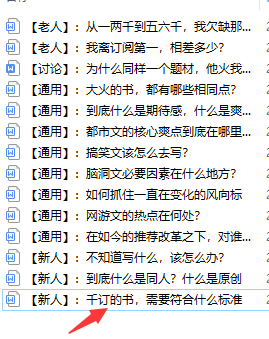
Brother Da Dong 20:59:48
Ninety percent of those who join the group—I believe ninety percent of people are newcomers.
Brother Da Dong 21:00:18
I don't really like talking about the basics, but if I start off with something profound, it's hard for everyone to get used to, so I started from the basics to the deep.
Brother Da Dong 21:00:41
One session for newcomers, one for seniors, one for general audiences, lasting two months, with 1~2 lectures per week. I hope this is helpful to everyone.
Brother Da Dong 21:00:56
[What requirements must a book with a thousand subscriptions meet?]
Brother Da Dong 21:01:52
In my view, to write a book with a thousand subscriptions, you need to meet three key elements!
[Writing]—[Plot]—[Popularity]
Brother Da Dong 21:02:14
Many authors would say this.
Brother Da Dong 21:02:28
Damn, sunflower seeds, are you trying to fool me? Long Kong already said that Feilu's writing doesn't need writing skills!
Brother Da Dong 21:02:38
You can just grab the sack and come over to make money.
Brother Da Dong 21:02:55
I've already bought my sack, and now you're telling me you want writing skills? If I have writing skills, would I come to Feilu? I already went to Qidian to attain the Dao.
Brother Da Dong 21:03:13
I can say this very clearly to everyone.
Brother Da Dong 21:03:16
At Feilu, writing skills are crucial.
Brother Da Dong 21:03:38
But this 'writing style' doesn't mean you can write anything extraordinary or witty.
Brother Da Dong 21:03:46
Rather, at the very least, storytelling skills
Brother Da Dong 21:03:51
What is the problem of storytelling?
Brother Da Dong 21:04:14
It's just an introduction, a story. Within five chapters, you can simply and clearly write the story you want to express.
Brother Da Dong 21:04:34
I've met many newcomers, and the reason I don't want to teach them is that
Brother Da Dong 21:04:46
Newcomers always feel that what they lack is creativity! What I lack is experience! What I lack is a blockbuster theme.
Brother Da Dong 21:04:53
In fact, the most important thing is writing style.
Brother Da Dong 21:05:01
The first hurdle in writing online novels is writing skills.
Brother Da Dong 21:05:13
Your writing can be simple, simple, or even a bit dumb.
Brother Dadong 21:05:17
None of them are problematic.
Brother Da Dong 21:05:33
But [Bai] is not an idiot.
Brother Da Dong 21:05:49
I'll write two sections on the spot for everyone to experience
Brother Da Dong 21:07:16
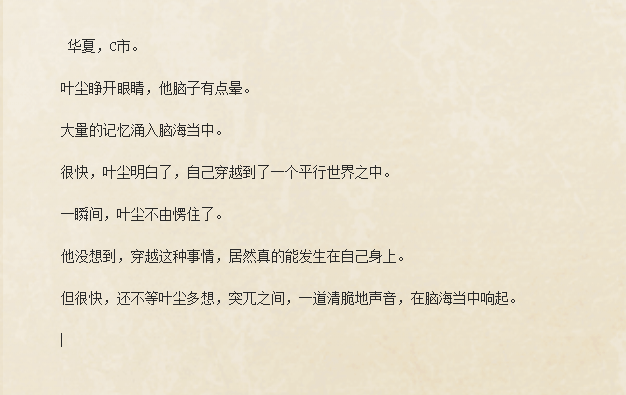
Brother Da Dong 21:08:20
This part is a very simple beginning.
Brother Da Dong 21:08:23
There's hardly any writing skill to speak of.
Brother Da Dong 21:08:46
But the start is simple, direct, and clear.
Brother Da Dong 21:09:02
And what is the beginning for most newcomers?
Da Dong Ge 21:09:08
I just tried to write it down, but couldn't write it.
Brother Da Dong 21:09:13
So I'm giving you photos of Feilu live.
Da Dong Ge 21:09:14
Let's look for it
Brother Da Dong 21:10:11
If you have any, send them directly to me
Brother Da Dong 21:10:13
Let me make a comparison
Brother Da Dong 21:11:07
Brother Da Dong 21:11:08
Found it
Brother Da Dong 21:11:32
No, actually, this kind of thing is actually not bad
Brother Da Dong 21:11:42

These days, is it really that hard to find someone with a terrible writing skills?
Brother Da Dong 21:12:54
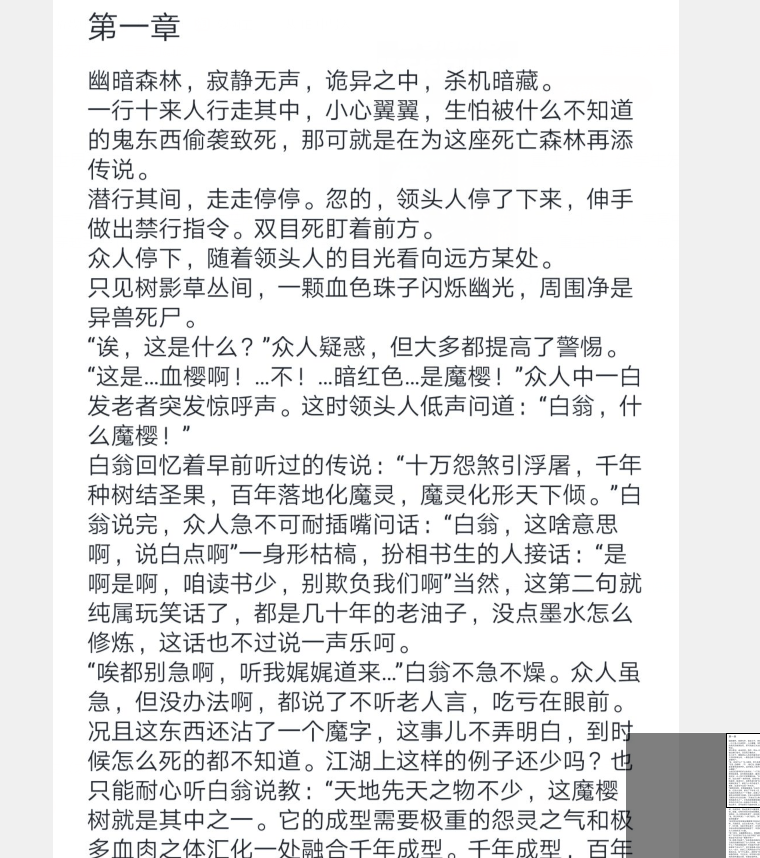
Brother Da Dong 21:12:54
Found it, found it,
Brother Da Dong 21:12:57
Everyone, come and take a look
Brother Da Dong 21:13:03
That's exactly it.
Brother Da Dong 21:13:34
Back to the main topic!
Brother Da Dong 21:14:08
The importance of writing lies in the first five chapters, where you can make a story thoroughly [explain] and [explain it clearly]
Brother Da Dong 21:14:14
Reader patience is zero!
Brother Da Dong 21:14:29
He might not be too focused on your writing style.
Brother Da Dong 21:14:38
But if the first five chapters, or even the first one, he couldn't understand them.
Brother Da Dong 21:14:40
I don't understand.
Brother Da Dong 21:14:44
No fun can be found.
Brother Da Dong 21:14:58
Then he will immediately blacklist your book.
Brother Da Dong 21:15:02
Especially in Feilu.
Brother Da Dong 21:15:06
Don't talk to me about post-production.
Brother Da Dong 21:15:10
And don't tell me how good your ideas really are.
Brother Da Dong 21:15:18
Everyone, remember.
Brother Da Dong 21:15:25
Whether on Qidian, Feilu, or on Tomato or Zhangyue.
Brother Da Dong 21:15:44
The moment you release your book, you'll face hundreds, even thousands of peers, all launching a new book together.
Brother Da Dong 21:15:57
Starting from the moment you upload the first chapter.
Brother Da Dong 21:16:06
You have already joined the war.
Brother Da Dong 21:16:31
So, for the first five chapters, you don't need to be thrilled! No need for creativity to take it slow!
Brother Da Dong 21:16:49
But at the very least, in the opening first chapter, you need to make the reader understand what you're writing.
Brother Da Dong 21:16:52
What are you trying to express!
Brother Da Dong 21:16:54
What are you going to say!
Brother Da Dong 21:17:05
Then the importance of writing comes into play.
Da Dong Ge 21:17:18
[Streamlined] - [Clean] - [Smooth]
Brother Da Dong 21:17:23
Even if your story isn't that exciting.
Brother Da Dong 21:17:30
At the very least, the reader understands what you want to express.
Brother Da Dong 21:17:35
Readers will understand that what this book is really writing is...
Brother Da Dong 21:17:36
What?
Brother Da Dong 21:17:55
Thus, at this moment, readers will make a [choice]
Brother Da Dong 21:17:59
Choice 1: Not my type! I'm out!
Brother Da Dong 21:18:15
Option 2: Put the food you can swallow on the bookshelf!
Brother Da Dong 21:18:21
Option 3: It's my type, so you can keep watching.
Brother Da Dong 21:18:27
This is the first step! It is also the most important step.
Brother Da Dong 21:18:53
So, when Longkong and places like Qidian say Feilu novels lack writing skills, they don't need it, just carry a sack to make money.
Brother Da Dong 21:19:03
People like this either have cerebral palsy or malicious intentions.
Brother Da Dong 21:19:12
Many people look down on the writing style of a beginner's novel.
Brother Da Dong 21:19:20
But have you ever thought about it?
Brother Da Dong 21:19:35
The survival of online literature doesn't depend on how prosperous it is now.
Brother Da Dong 21:19:44
It depends on how many newbies enter the market.
Brother Da Dong 21:19:56
There are no novels that attract a large number of new readers.
Brother Da Dong 21:20:22
Can those Lao Bai authors really make a million a year with just a few thousand nitpicky and sharp-tongued Lao Bai? Can annual revenue exceed one hundred million?
Brother Da Dong 21:20:37
But Bai! That doesn't mean it's terrible writing.
Brother Da Dong 21:21:10
Whiteness is actually another level of writing expression.
Brother Da Dong 21:21:13
Streamlining.
Brother Da Dong 21:21:16
Directly.
Brother Da Dong 21:21:18
Smooth.
Brother Da Dong 21:21:30
I can understand it.
Brother Da Dong 21:21:41
I understand.
Brother Da Dong 21:22:27
So the importance of Feilu's writing lies in being [direct] - [concise] - [fluent]
Brother Da Dong 21:22:39
Direct, as the name suggests, means saying exactly what you want to write.
Brother Da Dong 21:22:41
Don't hide it away.
Brother Da Dong 21:22:46
It's not like it's a five-million lottery ticket.
Brother Da Dong 21:23:04
If you want to show off, hurry up and do so. Being shy and pretentious suits seasoned authors, not newbies.
Brother Da Dong 21:23:38
Streamlining and removing excessive unnecessary words.
Brother Da Dong 21:23:41
What does 'too much nonsense' mean?
Brother Da Dong 21:23:48
Many authors might not understand, but I don't think I'm just making nonsense
Brother Da Dong 21:24:04
I can show you this
Brother Da Dong 21:25:18
[Detailed Explanation]
Brother Da Dong 21:25:34
What does 'nonsense' mean? It's when you're afraid readers won't understand what you're trying to say
Brother Da Dong 21:25:39
So you specifically explained this sentence.
Brother Da Dong 21:25:44
Afraid readers are brainless.
Brother Da Dong 21:25:48
I can't understand what you're writing.
Brother Da Dong 21:26:03
In a sense, most readers are argumentative.
Brother Da Dong 21:26:06
Not that foolish.
Brother Da Dong 21:26:35
Moreover, unless it's a book like 'Lord of the Mysteries,' most readers won't be so careful to immerse themselves in your world.
Brother Da Dong 21:27:11
A lot of nonsense, a lengthy story—all for its own sake. I'm filling my plot, my character, and my story.
Brother Da Dong 21:27:33
I can only post this picture
Brother Da Dong 21:27:43
Would it be better to be full?
Brother Da Dong 21:27:57
A newcomer who needs to think so much all day?
Brother Da Dong 21:28:17
Hollywood invested 300 million USD—does it plan to make it happen?
Brother Da Dong 21:28:32
You can move in that direction.
Brother Da Dong 21:28:37
But first, you should position yourself in your situation.
Big Dong Ge 21:28:51
You're a newbie! Monthly income under 10,000! Do you want to become a legend in one book?
Brother Da Dong 21:29:02
Besides the earliest days, there are also examples of people becoming gods with a single book.
Brother Da Dong 21:29:03
Is it still available now?
Brother Da Dong 21:29:16
If you want a book, you have to talk about Tianyi?
Brother Da Dong 21:29:22
I can tell the truth. Ninety-five percent of Tianyi authors.
Brother Da Dong 21:29:26
Keep switching things up, and it's just those guys
Brother Da Dong 21:29:39
Occasionally, a few newcomers really do get hit by a single theme.
Brother Da Dong 21:29:46
But when someone publishes a book, they might have 5,000 or 7,000 subscriptions
Brother Da Dong 21:29:59
Someone's Thoughts After Listing: I'm a Newbie! Wuwuwu, if this book flops up, I'll have to go to work.
Brother Da Dong 21:30:13
Do you know what it means to be one face to face but another behind your back, one in Shanghai, one in the background?
Brother Da Dong 21:30:37
So, the fundamental meaning of 'streamlining' is:
Brother Da Dong 21:30:42
Can you explain it to me in one sentence!
Brother Da Dong 21:30:45
Just explain it clearly!
Da Dong Ge 21:30:54
If you can't make it clear in one sentence, try to keep it short.
Brother Da Dong 21:31:02
You can add [character expression] - [character thoughts]
Brother Da Dong 21:31:54
But don't add anything. The protagonist slowly raised his hand. There were still some brick chips on his nails. Because he had moved bricks yesterday, he forgot to wash his hands. He originally planned to wash his hands directly, but unexpectedly, he was pulled over.
Brother Da Dong 21:32:06
In a word.
Brother Da Dong 21:32:14
The protagonist's hands were a bit dirty and hadn't had time to wash them.
Brother Da Dong 21:32:24
The first five chapters are about bayonet fighting.
Brother Da Dong 21:32:56
Even the big shots have already started playing, starting with three chapters; Uh.
Brother Da Dong 21:33:01
Three chapters draw readers in.
Brother Da Dong 21:33:05
It leaves readers wanting more.
Brother Da Dong 21:33:18
Every line, every paragraph, is the essence.
Brother Da Dong 21:33:32
You all wasted it for nothing.
Brother Da Dong 21:33:39
In short, if this isn't a flop at all, then who is?
Brother Da Dong 21:33:56
Third
Brother Da Dong 21:33:58
[Smooth]
Brother Da Dong 21:34:13
What does 'smooth' mean?
Brother Da Dong 21:34:19
Guazi Boss, I think my writing is pretty smooth
Brother Da Dong 21:34:20
If you don't believe me, don't take a look.
Brother Da Dong 21:34:22
What the hell are you looking at?
Brother Da Dong 21:34:32
Brother Da Dong 21:34:44
What is 'smoothness'? Is 'smoothness' just because the story is happening?
Brother Da Dong 21:34:50
The essays written by elementary school students are also very fluent
Brother Da Dong 21:35:01
What is true smoothness? It's a smooth, flowing comfort.
Brother Da Dong 21:35:10
How can this be achieved?
Brother Da Dong 21:35:20
It's simple, almost as streamlined.
Brother Da Dong 21:35:31
Simple!
Brother Da Dong 21:35:32
Simple!
Brother Da Dong 21:35:33
Simple!
Brother Da Dong 21:35:39
Five chapters.
Brother Da Dong 21:35:49
Don't drag things into this or that
Brother Da Dong 21:35:57
Don't start by giving me a bunch of set titles
Brother Da Dong 21:36:03
I'm begging you!
Brother Da Dong 21:36:07
Don't treat Feilu readers as brainless.
Brother Da Dong 21:36:10
They really aren't brainless.
Brother Da Dong 21:36:13
You don't need to explain.
Brother Da Dong 21:36:19
Please, I feel sorry for the Feilu readers.
Brother Da Dong 21:36:27
I also read books in my daily life. And I saw a lot. 、
Brother Da Dong 21:36:35
Some books don't make it onto the Heavenly List—they really deserve it
Brother Da Dong 21:36:41
You start with a bunch of Bibi Lai.
Brother Da Dong 21:36:55
Then, I talk about things here, talk about things there, and when there's nothing to do, throw me two settings
Brother Da Dong 21:37:02
Big brother, is this classical Chinese?
Brother Da Dong 21:37:04
Or is it an expository essay?
Brother Da Dong 21:37:19
It's already 2022!
Brother Da Dong 21:37:29
Can you get some things from the living world?
Brother Da Dong 21:37:50
The beginning is such an important place—would it kill without setting it?
Brother Da Dong 21:38:02
Family, Dou Shao the Heavens, Covering the Sky, Yang Spirit, Eternal Life
Da Dong Ge 21:38:05
So many hit books.
Brother Da Dong 21:38:11
Laying the foundation for your setup.
Brother Da Dong 21:38:19
You can probably explain it clearly in one sentence.
Brother Da Dong 21:38:24
He insisted on explaining every realm in detail
Brother Da Dong 21:38:29
Then, one thing becomes unclear.
Brother Da Dong 21:38:36
The protagonist gets proven wrong at the start, and you insist on some schemes
Brother Da Dong 21:38:41
Show off your intelligence.
Brother Da Dong 21:38:50
I always feel like I have quite a few personal interests
Brother Da Dong 21:38:58
Always thinking about letting readers feel your thoughts
Brother Da Dong 21:39:01
You are God!
Brother Da Dong 21:39:03
You are the author!
Brother Da Dong 21:39:06
All the stories are in your mind
Brother Da Dong 21:39:09
You must find it interesting.
Brother Da Dong 21:39:18
The director of Shanghai Fortress also thought it would become a huge hit.
Brother Da Dong 21:39:39

And what happened?
Brother Da Dong 21:39:59
So, take a notebook and take notes.
Brother Da Dong 21:40:35
Writing style = direct introduction, concise narration, simple storytelling
Brother Da Dong 21:40:42
This is my understanding of writing style.
Brother Da Dong 21:41:22
Next comes the second plot
Brother Da Dong 21:41:31
You did well at the beginning.
Brother Da Dong 21:41:40
So, that doesn't mean you've won this invisible war.
Brother Da Dong 21:41:50
Because you have to face the second challenge
Brother Da Dong 21:41:53
[Listed]
Brother Da Dong 21:42:07
Readers will also have three choices
Brother Da Dong 21:42:28
First: I'm freeloading, not watching.
Brother Da Dong 21:42:34
Second: Is this book worth subscribing to?
Da Dong Ge 21:42:43
Third: Good, really good. Author, are you dead? Hurry up and add an extra chapter.
Brother Da Dong 21:43:04
Think about it.
Brother Da Dong 21:43:13
If everyone shops at a mall,
Brother Da Dong 21:43:18
Do you buy everything you see?
Brother Da Dong 21:43:20
Not picky eaters?
Brother Da Dong 21:43:27
There are such people, but they are pitifully rare.
Brother Da Dong 21:44:14
In most cases, shopping has a purpose: Do I need it or not! (Is this my type?) Is the product good? (Is the book good?) ), Should I buy or not? (Subscribe or not)
Brother Da Dong 21:44:29
There is no work that can make all readers pay!
Brother Da Dong 21:44:56
"Great Tang: I Laid My Cards on the Table, I Am the Emperor" has 35,000 subscriptions, arguably the most subscribed book in Feilu. Frankly, it was written by someone from my company.
Brother Da Dong 21:45:12
But what is Feilu's daily active users? Starting at a million, paid!
Brother Da Dong 21:45:27
In other words, with such staggering numbers, your highest subscription is only 35,000, and so far it's never reached 40,000.
Brother Da Dong 21:45:56
So, when genre choice is important, genre sets the ceiling, and writing and story set the lower limit
Brother Da Dong 21:46:29
When your opening is done, it's simple, clear, and direct.
Brother Da Dong 21:46:35
This allows readers to keep reading.
Brother Da Dong 21:46:39
The remaining 110,000 words.
Da Dong Ge 21:46:45
You can use water.
Brother Da Dong 21:46:53
After all, for a newcomer, it's impossible not to be waterlogged.
Brother Da Dong 21:47:04
But within these 110,000 words, you must have a complete storyline
Brother Da Dong 21:47:15
Everything you do revolves around your [central point]
Brother Da Dong 21:47:39
Plot: The central point.
Brother Da Dong 21:47:42
What is the center point?
Brother Da Dong 21:47:46
You start with, 'I have a sign-in system!'
Da Dong Ge 21:47:52
So, you need to keep using this check-in system
Brother Da Dong 21:47:55
Even if the writing falls apart.
Brother Da Dong 21:47:59
Even if the system is broken by you.
Brother Da Dong 21:48:04
But you have to write around the sign-in!
Brother Da Dong 21:48:21
You start off and get proven wrong by a certain Holy Son.
Brother Da Dong 21:48:30
Your upcoming plot will revolve around how to slap people in the face and write about it back.
Brother Da Dong 21:48:39
120,000 words, allowing you to make two mistakes.
Brother Da Dong 21:48:46
But you absolutely cannot afford to make more mistakes.
Brother Da Dong 21:48:49
Because readers aren't that patient.
Brother Da Dong 21:48:51
You can use water.
Brother Da Dong 21:48:55
But the water is also written around this.
Brother Da Dong 21:49:02
You need to sign in.
Brother Da Dong 21:49:09
During your trip, you have lost ten chapters
Brother Da Dong 21:49:11
I can tolerate you
Brother Da Dong 21:49:15
Because this has already generated anticipation
Brother Da Dong 21:49:19
I look forward to your check-in
Brother Da Dong 21:49:36
But I don't want to see you, to gamble on jade or fight
Big Dong Ge 21:49:41
Departure from the main storyline.
Brother Da Dong 21:49:45
This is the biggest problem of newcomers
Brother Da Dong 21:49:48
You have a lot to write about.
Brother Da Dong 21:50:00
But as you write, you drift off your main line.
Brother Da Dong 21:50:04
As I was writing, oh wow! Totally messed up.
Brother Da Dong 21:50:13
Some authors are even quite clever.
Brother Da Dong 21:50:22
Before I finish writing the next point of anticipation, let's lay the groundwork in advance
Brother Da Dong 21:50:32
Yet it can be laid as a base, like the silent rain
Brother Da Dong 21:50:35
It's not about awkward pride
Brother Da Dong 21:50:37
Spread
Da Dong Ge 21:50:49
To create a sense of anticipation for the next event, the ground has been continually set
Brother Da Dong 21:50:53
After the laying is done.
Brother Da Dong 21:50:56
Readers lose patience.
Brother Da Dong 21:51:02
As I said before
Brother Da Dong 21:51:06
This is an invisible war.
Brother Da Dong 21:51:14
When you go astray.
Brother Da Dong 21:51:17
while others pursued the victory
Brother Da Dong 21:52:21
So, you can make mistakes
Brother Da Dong 21:52:25
But your mistakes must be fewer than others'.
Da Dong Ge 21:52:38
As long as you're not the slowest one, at least you win
Brother Da Dong 21:53:01
Always revolve around your main storyline.
Brother Da Dong 21:53:21
Can't stop!
Brother Da Dong 21:53:23
It cannot be cut off!
Brother Da Dong 21:53:27
Once it's cut off, it's discouraged
Brother Da Dong 21:53:31
Once discouraged, he pounced on the spot.
Brother Da Dong 21:53:55
Writing is done in one go
Brother Da Dong 21:54:19
The center point must be clear.
Brother Da Dong 21:54:24
Why did I write this plot?
Brother Da Dong 21:54:30
Does this plot revolve around the central point?
Brother Da Dong 21:54:38
You must think it through clearly
Brother Da Dong 21:54:57
The third point, which is the most important point
Brother Da Dong 21:54:58
[Popularity]
Brother Da Dong 21:55:17
The biggest problem for newcomers is not knowing what popularity is!
Brother Da Dong 21:55:22
What is the heat?
Brother Da Dong 21:55:29
Popularity is something everyone knows.
Brother Da Dong 21:55:46
But that doesn't mean you can ride on any kind of hype.
Brother Da Dong 21:55:52
Myth: Starts off by angrily confronting Yi Xiaochuan
Brother Da Dong 21:55:58
This is the popularity of film and TV dramas.
Brother Da Dong 21:56:00
Where is the hotspot?
Brother Da Dong 21:56:03
The hot topic is on Douyin
Brother Da Dong 21:56:31
Many netizens commented: When we were kids, we all liked Yi Xiaochuan, but as we grew up, we realized we were all Gao Yao
Brother Da Dong 21:57:16
Hundreds of thousands of likes on Douyin
Brother Da Dong 21:57:18
Millions of likes
Brother Da Dong 21:57:20
That's the heat.
Brother Da Dong 21:57:23
Because everyone agrees.
Brother Da Dong 21:57:28
Something everyone agrees on—that's popularity,
Brother Da Dong 21:57:33
The mighty Heavenly Dragon!
Brother Da Dong 21:57:37
World-Honored One of the Buddhist Sect!
Brother Da Dong 21:57:46
This is a typical novel under the heat wave
Brother Da Dong 21:57:52
Of course, the author's writing, skill, and plot arrangement are top-notch.
Brother Da Dong 21:57:57
If you can reach Tianyi, that's impressive!!!
Brother Da Dong 21:58:08
Heat is all around you
Brother Da Dong 21:58:16
This is something at the core of all the major studios.
Brother Da Dong 21:58:19
Why are studios able to find heat?
Brother Da Dong 21:58:22
Because they are good at discovering
Brother Da Dong 21:58:25
Why can't you find any buzz?
Dad 21:58:27

I watched Luo Xiang on Douyin, then Tianyi appeared
Brother Da Dong 21:58:28
Because you keep an eye on Feilu every day
Dad 21:58:35
I saw someone angrily cursing Yi Xiaochuan on Douyin
Brother Da Dong 21:58:37
Eat what others have leftovers.
Dad 21:58:38
Tianyi
Da Dong Ge 21:58:39
What is the significance?
Dad 21:58:50
I saw people on Douyin commenting on Xu Song, saying that only adult fans can become popular singers
Dad 21:58:52
Tianyi
Brother Da Dong 21:59:15
The emperor specialist is someone I watched Chen Daoming perform on Douyin and commented, "Chen Daoming is really good at playing emperors—no wonder he's an emperor specialist."
Brother Da Dong 21:59:30
To put it bluntly, other studios wouldn't dare to mention these things.
and daily amassed great wealth by increasing a million. Join this group.
If you don't believe in Destiny, Long Xuntian joins this group.
I love Huang Huabai, join this group.
Radiant Brightness has joined our group.
Brother Da Dong 21:59:44
Many studios quietly eat their own food, but a book becomes popular, inspiring countless people to follow the trend.
Brother Da Dong 22:00:02
I dare to speak up with soy sauce because we're not afraid! Because we know the market needs to be hyped up by everyone.
Brother Da Dong 22:00:08
Now, the fantasy is like a stagnant pool.
Brother Da Dong 22:00:11
It's not because fantasy has lost its popularity.
Brother Da Dong 22:00:14
It's that no one writes fantasy anymore.
Brother Da Dong 22:00:18
After writing and going, it still ends up being a '遮天 fanfiction'
Brother Da Dong 22:00:48
So, as mentioned earlier, some of the hype can just be ridden
Brother Da Dong 22:00:55
This sentence means:
Brother Da Dong 22:00:59
You need to be suitable for riding this wave of popularity
Hotpot Longbao has been added to this group.
Brother Da Dong 22:01:03
You need to understand what makes this hype so satisfying
Brother Da Dong 22:01:15
It's not just someone complaining about Yi Xiaochuan doing this and that, then you start by angrily snapping at him, and that's it.
Brother Da Dong 22:01:22
What is the core point of Yi Xiaochuan's book?
Brother Da Dong 22:01:24
And it's a historical story!
Brother Da Dong 22:01:28
Or is it the Great Qin Struggle for Supremacy?
Crab Roe Castle secret recipe has joined this group.
Brother Da Dong 22:01:37
Not really, just keep cursing Yi Xiaochuan
Da Dong Ge 22:01:52
Yi Xiaochuan: Just curse a bit, but keep cursing? Is it fun?
Brother Da Dong 22:02:04
To put it bluntly, still.
Brother Da Dong 22:02:06
You have to use your brain!
Brother Da Dong 22:02:08
Think carefully.
Da Dong Ge 22:02:12
Why is this one gaining attention?
Brother Da Dong 22:02:19
Why did he become popular?
Brother Da Dong 22:02:27
What do you think?
Brother Da Dong 22:02:29
[Resonance]
Brother Da Dong 22:02:52
Why do people like this? When we were young, we all liked Yi Xiaochuan, but only when we grew up did we realize Gao Yao was the real good person.
Brother Da Dong 22:02:53
Why?
Brother Da Dong 22:02:57
Because there is resonance.
Ashes joins this group.
It's hard not to enthusiastically join this group.
Da Dong Ge 22:03:09
Gao Yao, for the sake of his brothers! At all costs.
Brother Da Dong 22:03:13
This is our humanity.
Brother Da Dong 22:03:21
Yi Xiaochuan—how many people did he sacrifice for this so-called nonsense history?
Brother Da Dong 22:03:28
Who but a sage can be without fault?
Brother Da Dong 22:03:49
When the beneficiaries become ourselves, all perspectives become very subtle
Brother Da Dong 22:04:05
If you want to understand why a [hot topic] becomes a [hot topic]
Showing the sharpness of the pen joins this group.
Brother Da Dong 22:04:10
The first thing is resonance!
Da Dong Ge 22:04:14
You feel a resonance!
Da Dong Ge 22:04:25
Only then can you get to know it better.
Brother Da Dong 22:04:33
Then think about it.
Brother Da Dong 22:04:40
What book should I write on this hot topic?
Brother Da Dong 22:04:42
What kind of book should you write?
Peach has joined this group.
Brother Da Dong 22:04:56
All manner remain inseparable from its transformations
Brother Da Dong 22:05:05
No matter what kind of writing you are
Brother Da Dong 22:05:07
Unable to escape
LB has joined this group.
Da Dong Ge 22:05:16
Fantasy, urban, history, sci-fi, online games
Brother Da Dong 22:05:22
Under these major themes,
Brother Da Dong 22:05:27
So, you want to write this type of book.
66 Great Cool Guy~ Join this group.
Brother Da Dong 22:05:38
you must understand the core points of these genres.
Brother Da Dong 22:06:20
What is the core point of historical writing? A prosperous era that licks the emperor! Save the nation in times of crisis! Qing Dynasty is MOUFAN!
Brother Da Dong 22:06:36
Failing to grasp the core points.
Yuexia Tu has joined this group.
Brother Da Dong 22:06:40
Even if you really write a very good opening,
Brother Da Dong 22:06:44
A very gimmicky opening
Brother Da Dong 22:06:47
What else can be done?
Brother Da Dong 22:06:50
Those who follow the crowd have surpassed you.
Da Dong Ge 22:06:55
That book, I was reborn as a corpse.
Brother Da Dong 22:07:01
Results are not as good as those who follow the trend.
Brother Da Dong 22:07:11
I half sympathize, half think it's normal
Brother Da Dong 22:07:21
Why is it normal?
Brother Da Dong 22:07:26
As I always say, this is a war you can't see.
Brother Da Dong 22:07:30
Starting from the very first chapter of your book.
Brother Da Dong 22:07:33
The war broke out.
Brother Da Dong 22:07:39
In war, there is no such thing as benevolence or morality.
Brother Da Dong 22:07:45
If you can't do it, I'll do it!
Brother Da Dong 22:07:48
I can't do it, you go in!
6 Ears joined this group.
Xiao Wu has joined this group.
Da Dong Ge 22:07:58
Don't complain about this or that.
Brother Da Dong 22:08:03
No one will pity you.
Brother Da Dong 22:08:06
And no one will sympathize with you.
Brother Da Dong 22:08:18
All you can do is strive for your own progress.
Brother Da Dong 22:08:23
No one has ever followed the trend of my books or surpassed me.
Brother Da Dong 22:08:26
That's my confidence.
Brother Da Dong 22:08:41

Brother Da Dong 22:09:10
Let's start the summary
Monsters join the group.
Wandering bugs /d join this group.
Senbei has joined this group.
Sunflower has joined this group.
Brother Da Dong 22:10:36
First writing style: A direct introduction, concise paragraphs, and a smooth story!
Brother Da Dong 22:11:03
Second plot: Identify the central point, keep circling around it. Don't think the reader is sick of it, or that you're the one who throws up, and the reader has already left.
Wen Pangzi has joined this group.
Joining this group for lifetime and lifetime.
Eat candy and join this group.
Big Brother has joined this group.
Brother Da Dong 22:11:32
Third: Finding the resonance point of the popularity and carefully thinking about how to turn this point into a topic suitable for you.
Brother Da Dong 22:11:37
Finally, a few simple words.
Brother Da Dong 22:11:40
[Film and Television]
I can't do without you joining this group.
Brother Da Dong 22:11:51
It's very popular on Feilu; if you want a thousand or two thousand subscriptions, you can write for film and TV dramas.
Brother Da Dong 22:11:54
Other studios dare not say so.
Brother Da Dong 22:11:57
Let me be straightforward.
Brother Da Dong 22:12:05
Film and TV dramas can follow the plot completely.
Brother Da Dong 22:12:08
Think about it with your brain
Brother Da Dong 22:12:11
Others invest tens of millions, even hundreds of millions.
Brother Da Dong 22:12:18
The plot is simply the perfect of the best
Brother Da Dong 22:12:21
You damn well don't use this?
Brother Da Dong 22:12:25
Do you really have to create your own original content?
Cooks join this group.
Brother Da Dong 22:12:33
Would you rather fail for three years than make some quick money?
Brother Da Dong 22:12:37
Those studios that write films and TV dramas
Brother Da Dong 22:12:51
You can randomly find a newcomer with a monthly salary of 3,000 yuan, copy from TV dramas, and get ten to twenty thousand a month.
Brother Da Dong 22:12:54
Do they dare to say it?
Brother Da Dong 22:12:56
They don't dare to speak?
Brother Da Dong 22:12:58
I dare say so.
Brother Da Dong 22:13:00
Because I'm not afraid!
Brother Da Dong 22:13:13
But if this kind of thing gets out, people probably hate my studio even more.
Brother Da Dong 22:13:20

Think carefully, everyone.
Brother Da Dong 22:13:21
Use your brain!
Brother Da Dong 22:13:23
Use your brain!
Brother Da Dong 22:13:24
Use your brain!
Brother Da Dong 22:13:38
The popularity of film and TV dramas, the recent 'Trident', and Zhang Yishan's new drama
Brother Da Dong 22:13:46
Add a suitable subject and it's absolutely explosive.
Brother Da Dong 22:13:51
[Secret] This TV drama.
Brother Da Dong 22:14:00
You write a book titled [Beginning: Zhang Dongsheng Invites You to Go Hiking]
Zha Cha joins this group.
Heiy has joined this group.
6. Join this group.
Brother Da Dong 22:14:11
Just randomly use a check-in system
Brother Da Dong 22:14:16
Signing in at the crime scene.
Brother Da Dong 22:14:21
Receive the reward for solving the case
Brother Da Dong 22:14:29
Half is just a TV drama plot!
Brother Da Dong 22:14:38
Half of it is a plot with a bit of Conan
Da Dong Ge 22:14:42
Whether there are any recommendations or not, let's not talk about them for now
Brother Da Dong 22:14:47
Is there a flood of fanfiction?
Daddy 22:14:53

Papa 22:14:57
Climbing mountains means death
Brother Da Dong 22:15:06
Isn't it tempting?
Brother Da Dong 22:15:14
Bringing sacks to carry money
Brother Da Dong 22:15:16
Earn money with your brain.
Chu Xingchen joined this group.
Brother Da Dong 22:15:23
Think carefully.
Brother Da Dong 22:15:28
Many things are very simple.
Brother Da Dong 22:15:34
But the premise is that you have the writing skills I mentioned.
Brother Da Dong 22:15:38
At the very least, don't make any mistakes!
Brother Da Dong 22:15:47
Then, this group is a place for everyone to communicate.
Brother Da Dong 22:15:53
I hope everyone doesn't argue.
Brother Da Dong 22:15:58
And don't let screenshots happen.
Brother Da Dong 22:16:05
And don't learn something and then smear it.
Brother Da Dong 22:16:11
Next, the soy sauce spoke.
Papa 22:16:21
Let me add the last sentence
Papa 22:16:23

Dad 22:16:24
That's all
Lesson 2 of Gua Tiandi: From 1,000 subscriptions to 5,000 subscriptions, what qualifications do I lack?
Guazi 2020/7/1 21:17:25
Good evening, everyone~ Today's lesson is "From 1,000 to 5,000 subscriptions: What Exactly Are I Missing?"
Guazi 2020/7/1 21:17:32
Before I start, let me clarify a few things.
Guazi 2020/7/1 21:19:00
Statement 1: This group is neither a training group nor a volunteer lecture group! There is no obligation to teach! It's because, as an author who's been struggling for ten years, I've weathered many ups and downs along the way, gained some insights, and want to help newcomers on the path of online literature. I want to share this with everyone! So it's best if you learn something; if not, don't hold onto a nonsense attitude, because no one has said you must make money or become famous!
Guazi 2020/7/1 21:20:07
Statement 2: All lecture content is based on my own original insights, good or bad, good or bad, and I feel it myself. I don't compare myself with anyone else, nor do I want to. Everyone has their own method for success. I respect every author who is not my enemy, and I hope every author friend can respect me as well!
Guazi 2020/7/1 21:21:48
Statement 3: For any reposting, just note [Focus] whose lecture it is. You can repost it anywhere, but it must not be used for any commercial purposes, such as selling lecture materials or using this to fool newcomers. If you see this, I hope everyone will boycott it together! What I hope is that personal authors can learn from this, rather than just working for others for profit, and then even saying, 'This guy is giving a lecture, hurry up and watch it.'
That's all—I hope everyone can put themselves in their shoes! I'm not a saint! I'm a normal person and wouldn't take it out on anyone because of one or two people's silly behavior. But what I hope even more is that every friend who learns from the author can give me a like, support, and encouragement! It's a kind of unique boost!
Guazi 2020/7/1 21:23:24
Alright, let's begin the lecture
Guazi 2020/7/1 21:23:44
The previous issue discussed the basic elements of a thousand subscriptions!
Guazi 2020/7/1 21:23:53
This episode covers the 1000~5000 elements.
Guazi 2020/7/1 21:24:10
In my view, online literature has four stages, and these four stages are the most terrifying.
Guazi 2020/7/1 21:24:27
The first stage, the blank slate, I had never written anything before, knew nothing, and read novels for seven or eight years!
Guazi 2020/7/1 21:24:48
The second stage is with some writing experience, able to reach a thousand subscriptions per book, but it's always around a thousand subscriptions.
Guazi 2020/7/1 21:25:04
The third stage is that your writing skills are very good—you can easily subscribe to three to five thousand, sometimes seven or eight thousand, but you just can't get ten thousand.
Guazi 2020/7/1 21:25:29
Fourth stage: Easily subscribe to ten thousand posts! But it just couldn't become a huge hit!
Guazi 2020/7/1 21:25:36
Each of these four stages is terrifying.
Guazi 2020/7/1 21:26:12
From 0 to 1000 subscriptions, that's a newbie state, and you can make up for it through diligence! Watch more! Write more! Be more understanding! It can be done!
Guazi 2020/7/1 21:26:26
And from 1000~5000 subscriptions, the horror rating at this stage is five stars!
Guazi 2020/7/1 21:26:39
Why is this stage considered terrifying?
Guazi 2020/7/1 21:26:51
The reason is simple: the ones who drown are always those who can swim.
Guazi 2020/7/1 21:27:14
Writing a book with a thousand subscriptions proves you already have a 'basic writing ability.'
Guazi 2020/7/1 21:27:24
You have some understanding of the writing, the plot, and the subject matter.
Guazi 2020/7/1 21:27:32
If you don't understand, you can't write a thousand subscriptions.
Guazi 2020/7/1 21:27:51
But why, after writing three, four, five, six, or seven books, did it still get one or two thousand subscriptions?
Guazi 2020/7/1 21:27:58
Still unable to break through to 5,000 subscribers?
Guazi 2020/7/1 21:28:17
In theory, some people, damn, subscribe 1,500 copies of the previous book and 7,000 to the next book.
Guazi 2020/7/1 21:28:27
I had 1,800 subscriptions for my last book, and 1,300 for the next???
Guazi 2020/7/1 21:28:29
Isn't that scientific?
Guazi 2020/7/1 21:28:43
What is the biggest reason! I have two theories.
Guazi 2020/7/1 21:28:52
One is the [Talent Theory], the other is the [Basic Strength Theory].
Guazi 2020/7/1 21:28:57
Talent theory is simple—don't learn it, you won't be able to learn it.
Guazi 2020/7/1 21:29:01
His talent is obvious.
Guazi 2020/7/1 21:29:20
His first book had 1,500 subscriptions because it truly was his first book.
Guazi 2020/7/1 21:29:32
Your first book had 1,800 subscriptions because this is your Nth book.
Guazi 2020/7/1 21:29:52
Talent, I can say, is more important than diligence! Don't bring up any experts—I got up through hard work.
Guazi 2020/7/1 21:29:57
Talent is talent.
Guazi 2020/7/1 21:30:05
He just humbly said, 'I'm building my persona through hard work.'
Guazi 2020/7/1 21:30:09
Do you really believe he relies on hard work?
Guazi 2020/7/1 21:30:23
Liu Qiangdong: I'm face blind.
Guazi 2020/7/1 21:30:49
So talent theory isn't suitable for everyone; it's up to the individual. Don't ask me if you have talent—write your own book, post it, and if you subscribe ten thousand times, you'll know if you have talent.
Guazi 2020/7/1 21:31:02
And what does 'fundamental strength theory' mean?
Guazi 2020/7/1 21:31:36
For example, Longkong often sees someone who went viral on a certain point and went viral on a certain Lu, subscribing to 500 on a certain point and 5,000 on that Lu.
Guazi 2020/7/1 21:31:50
Not because he came to a certain Lu and only subscribed five thousand times!
Guazi 2020/7/1 21:32:11
It's because he naturally possesses excellent 'writing skills' + 'plot control' + 'satisfying point structure control'
Guazi 2020/7/1 21:32:30
But why does he suddenly collapse at a certain point?
Guazi 2020/7/1 21:32:34
Will it become famous if it comes to a certain Lu?
Guazi 2020/7/1 21:32:39
It's simply because they think it's a high-class style.
Guazi 2020/7/1 21:32:48
If I write a book at a certain point, I must write it well!
Guazi 2020/7/1 21:32:50
Every conversation!
Guazi 2020/7/1 21:32:52
Every story.
Guazi 2020/7/1 21:32:54
Every persona.
Guazi 2020/7/1 21:33:01
I have to write every plot point seriously.
Guazi 2020/7/1 21:33:27
As a result, all the details lead to [dragging on and no water] + [heavy writing] + [confused and confused]
Guazi 2020/7/1 21:33:35
What about after arriving at a certain Lu?
Guazi 2020/7/1 21:33:41
Damn, this place is a chicken place? Is it really worth me writing seriously?
Guazi 2020/7/1 21:33:43
Isn't it just writing a feel-good story?
Guazi 2020/7/1 21:33:46
Isn't it just about showing off?
Guazi 2020/7/1 21:33:48
Isn't it supposed to be a slap in the face?
Guazi 2020/7/1 21:34:03
Could it be that no one really thinks I can't write?
Guazi 2020/7/1 21:34:15
Then, the idea was clear, and Rory gave a rambling introduction!
Guazi 2020/7/1 21:34:17
What kind of talkative character is Luo Li?
Guazi 2020/7/1 21:34:21
What are you trying to joke about?
Guazi 2020/7/1 21:34:24
I'm showing off to you right away.
Guazi 2020/7/1 21:34:30
Then it will go viral.
Guazi 2020/7/1 21:34:42
To others, it looks like a damn, a certain flop is a huge hit on a certain Lu Society!
Guazi 2020/7/1 21:34:46
It's because of the website.
Guazi 2020/7/1 21:34:51
Actually, the root cause is his own problems.
Guazi 2020/7/1 21:35:07
If you don't have a clear sense of direction, you're clearly better suited for writing beginner stories, but you insist on being hyped up by the website and trying to act cool.
Guazi 2020/7/1 21:35:31
In a different place, your mindset changes, and what you write changes too.
Guazi 2020/7/1 21:35:40
So five thousand subscriptions, heavenly list, great fire. Monthly income of eighty or ninety thousand, then one hundred thousand.
Guazi 2020/7/1 21:35:52
Of course, many flopped.
Guazi 2020/7/1 21:36:03
Whether it's a flop or a flop is still a flop to fail.
Guazi 2020/7/1 21:36:13
So why I'm sharing these things with you now, it's to share one thing.
Guazi 2020/7/1 21:36:28
[Five thousand subscriptions, all with distinctive features] Important, important! Write it down.
Guazi 2020/7/1 21:36:36
Highly subscribed books always have their own characteristics.
Guazi 2020/7/1 21:36:44
Don't let those NTs mislead you.
Guazi 2020/7/1 21:36:47
What kind of luck is that?
Guazi 2020/7/1 21:36:53
What kind of creativity is that?
Guazi 2020/7/1 21:37:10
No book with high subscriptions was created by chance.
Guazi 2020/7/1 21:37:17
Some experts said, 'I'm just writing casually.'
Guazi 2020/7/1 21:37:20
Yes, just write casually.
Guazi 2020/7/1 21:37:33
With seven or eight years of experience, he wrote casually about the flames, and was it really just casually going anywhere?
Guazi 2020/7/1 21:37:42
Wake up, everyone.
Guazi 2020/7/1 21:37:49
Don't take their pretentiousness as if it's true.
Guazi 2020/7/1 21:37:54
The one who suffers is always yourself.
Guazi 2020/7/1 21:38:07
So, what are the characteristics of high subscriptions?
Guazi 2020/7/1 21:38:18
I'll make a row! A sequential arrangement.
Guazi 2020/7/1 21:38:56
[1. Creativity]
[2. Plot]
[3. Writing Style]
[4. Character Design]
[5. Environment]
Guazi 2020/7/1 21:39:07
Anywhere.
Guazi 2020/7/1 21:39:12
Great ideas stand out!
Guazi 2020/7/1 21:39:14
This is beyond doubt.
Guazi 2020/7/1 21:39:20
Some ideas are born with a theme of ten thousand subscriptions.
Guazi 2020/7/1 21:39:27
Some ideas sound like failures.
Guazi 2020/7/1 21:39:44
So, what is good creativity? What is a bad idea?
Guazi 2020/7/1 21:39:56
Good ideas all have three main characteristics!
Guazi 2020/7/1 21:40:29
[Thrilling Before Watching]—[Wild Imagination]—[Eye-Catching]
Guazi 2020/7/1 21:40:35
What does it mean to feel good before you even watch?
Guazi 2020/7/1 21:40:39
Excitement!
Guazi 2020/7/1 21:40:43
Why? It's the same book.
Guazi 2020/7/1 21:40:47
Is it 5,000V on the first day?
Guazi 2020/7/1 21:40:50
You got 50V on your first day?
Guazi 2020/7/1 21:40:54
Don't you have any sense of what you want?
Guazi 2020/7/1 21:41:05
As I said before, the moment the book was published, war broke out.
Guazi 2020/7/1 21:41:10
They beat you from the book title.
Guazi 2020/7/1 21:41:16
You're still there, dreaming of becoming a god.
Guazi 2020/7/1 21:41:20
The title is simple and clear!
Guazi 2020/7/1 21:41:25
Starting line: XXXX
Guazi 2020/7/1 21:41:31
Starting from XXX
Guazi 2020/7/1 21:41:36
XXX:XXXXXX
Guazi 2020/7/1 21:42:00
The title of a book cannot determine your life or death.
Guazi 2020/7/1 21:42:06
But the title can give readers a rough idea of what you want to write.
Guazi 2020/7/1 21:42:09
After writing the book title, what should you write?
Guazi 2020/7/1 21:42:11
Introduction.
Guazi 2020/7/1 21:42:14
What is most important?
Guazi 2020/7/1 21:42:16
Introduction is the most important!
Guazi 2020/7/1 21:42:25
A good introduction can help your entire book improve your grades by more than fifty percent.
Guazi 2020/7/1 21:42:36
And the synopsis is the core point of 'thrilling before you even watch.'
Guazi 2020/7/1 21:42:40
What does it mean to feel good before you even watch?
Guazi 2020/7/1 21:42:46
I haven't even read your book, just reading your profile is enough to get me excited.
Guazi 2020/7/1 21:42:49
This is what it means to feel thrilled before you even watch
Guazi 2020/7/1 21:43:02
Everyone, take a close look at the books that have ranked first on the Heavenly List throughout history.
Guazi 2020/7/1 21:43:08
Subscribe to the first one.
Guazi 2020/7/1 21:43:14
Ninety percent of them are just an attractive introduction.
Guazi 2020/7/1 21:43:21
[Great Tang: I'm laying my cards on the table, I am the emperor]
Guazi 2020/7/1 21:43:37
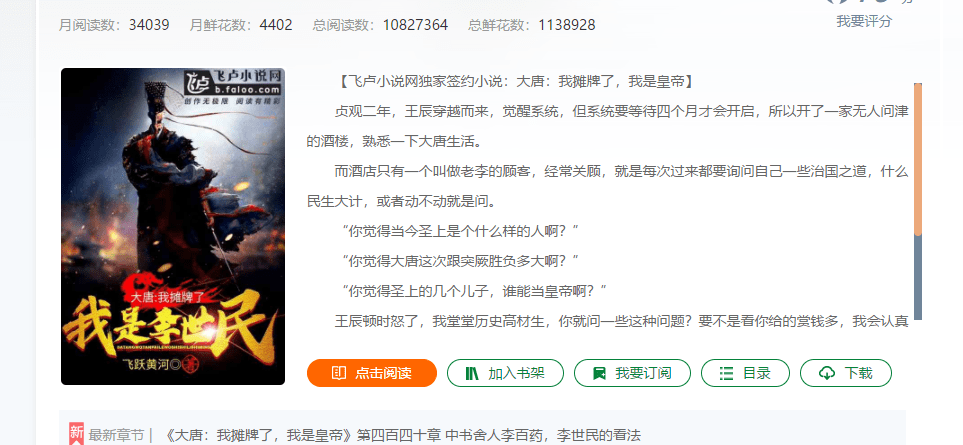
Guazi 2020/7/1 21:43:40
Take a look at this synopsis
Guazi 2020/7/1 21:43:55
At the start, the core was distilled.
Guazi 2020/7/1 21:44:05
Who is the main character! What is the protagonist supposed to do! What will the protagonist show off in the future?
Guazi 2020/7/1 21:44:07
I want to tell readers. ,
Guazi 2020/7/1 21:44:14
What kind of nonsense is this book trying to show off!
Guazi 2020/7/1 21:44:21
This leaves readers feeling a sense of anticipation after finishing the book.
Guazi 2020/7/1 21:44:28
I really love this! I want to see, I want to see!
Guazi 2020/7/1 21:44:32
Instead of a bunch of introductory articles.
Guazi 2020/7/1 21:45:02
Guazi 2020/7/1 21:45:22
Guazi 2020/7/1 21:45:34
This kind of introduction is purely a flaw
Guazi 2020/7/1 21:45:52
An introduction can influence your starting grades.
Guazi 2020/7/1 21:46:19
So, [Thrilling Before Reading = Synopsis]!
Guazi 2020/7/1 21:46:28
That's a wild idea—everyone should hear this clearly.
Guazi 2020/7/1 21:46:33
Having a big imagination doesn't mean you can really run wild.
Guazi 2020/7/1 21:46:43
Write some inexplicable things.
Guazi 2020/7/1 21:46:45
The so-called wild imagination
Guazi 2020/7/1 21:47:10
This is under the fixed theme of online novels, where you break conventions but the core satisfying points remain unchanged.
Guazi 2020/7/1 21:47:15
Getting a heads-up is another key point
Guazi 2020/7/1 21:47:33
What is a false overthinking?
Guazi 2020/7/1 21:48:06
Those strange and strange things, carrying nuclear weapons, heading to the prehistoric world
Guazi 2020/7/1 21:48:13
What technology invades the primordial world?
Guazi 2020/7/1 21:48:17
I can't say these genres won't be popular.
Guazi 2020/7/1 21:48:24
Because if a big shot shows up and relies solely on his writing skills to become popular, there's nothing I can do.
Guazi 2020/7/1 21:48:31
But in my eyes, this kind of wild idea is just trash.
Guazi 2020/7/1 21:48:36
What is the real imagination?
Guazi 2020/7/1 21:49:04
It's about breaking the [conventional setting] while keeping the core thrill unchanged!
Guazi 2020/7/1 21:49:10
The three classic examples.
Guazi 2020/7/1 21:50:16
First: In LOL, I'm a cheater, the protagonist can enter the LOL world, then during major professional team matches, the protagonist appears and instantly defeats Feike! Causing trouble!
Guazi 2020/7/1 21:50:20
This book is a truly imaginative example.
Guazi 2020/7/1 21:50:33
Here, let me explain what it means for the core thrill to remain unchanged.
Guazi 2020/7/1 21:50:49
[Showing off]—[Slapping in the face]—[Shocking]—[Expectation]
Guazi 2020/7/1 21:50:52
These four are the core thrills.
Guazi 2020/7/1 21:50:55
Everyone must remember this.
Guazi 2020/7/1 21:51:06
Every novel cannot do without these four elements.
Guazi 2020/7/1 21:51:09
I'm talking about web novels
Guazi 2020/7/1 21:52:08
The core thrill of LOL: The book 'I'm a Cheater' is [shocking!] 】, at the world championship, the protagonist enters the game, transforms into a big boss, instantly defeats Feike and the others, causing a sensation.
Guazi 2020/7/1 21:52:39
This is why the core thrill remains unchanged, causing a sensation! But it breaks the conventional setting because entering the game, it becomes a stat that instantly defeats heroes—that's the standard setting.
Guazi 2020/7/1 21:52:55
Book Two: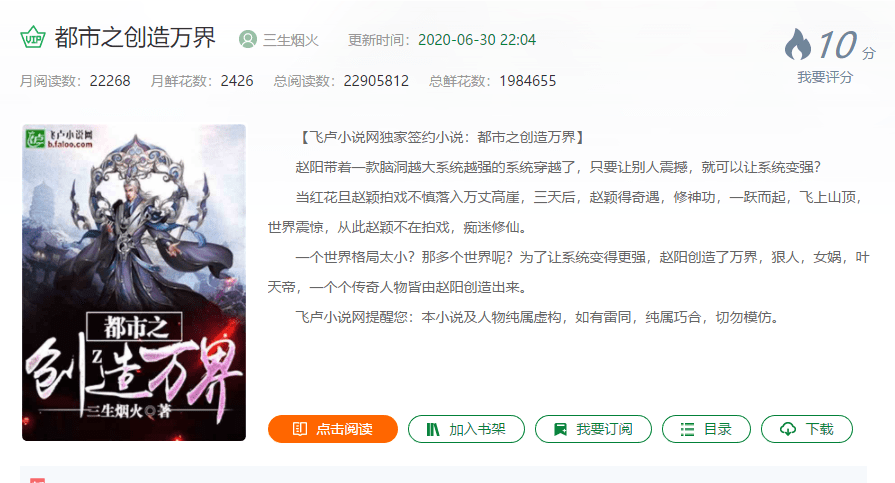
Guazi 2020/7/1 21:53:07
The protagonist uses his imagination to bring the nine dragons into the world.
Guazi 2020/7/1 21:53:16
Let Zhao Liying cultivate immortality.
Guazi 2020/7/1 21:53:21
This is what it means to break the conventional premise!
Guazi 2020/7/1 21:53:28
It breaks the usual urban cultivation routine.
Guazi 2020/7/1 21:53:41
As long as I have some imagination, I can bring the formulas of online novels to life in the modern world.
Guazi 2020/7/1 21:53:44
What impact does this bring?
Guazi 2020/7/1 21:53:47
[Shocking! 】
Guazi 2020/7/1 21:53:56
Ask everyone, if suddenly nine dragons were to appear in our world,
Guazi 2020/7/1 21:53:59
Is the world shocked?
Guazi 2020/7/1 21:54:06
Then readers will enjoy reading.
Guazi 2020/7/1 21:54:14
Why does UC always feel shocked! Shocking! Shocking! 】
Guazi 2020/7/1 21:54:19
Because this set really works
Guazi 2020/7/1 21:54:33
Title: [This Woman Says She Won't Eat, But She's Actually Secretly Eating]
Guazi 2020/7/1 21:54:45
Title: [Shocking! Shocking! Shocking! The reason this woman goes a whole year without eating or drinking is ......]
Guazi 2020/7/1 21:54:49
What would you choose?
Guazi 2020/7/1 21:55:05
Generally speaking, mind-witting stories fall into two categories
Guazi 2020/7/1 21:55:29
[Imagination = Anticipation + Shock]
Guazi 2020/7/1 21:55:38
Showing off and slapping faces isn't suitable for imaginative stories.
Guazi 2020/7/1 21:55:42
Don't make the wrong choice
Guazi 2020/7/1 21:55:54
Then the eyes were brightened
Guazi 2020/7/1 21:55:57
What is it?
Guazi 2020/7/1 21:56:11
In fact, besides these imaginative novels, the so-called 'eye-catching light' is the only thing that really happens.
Guazi 2020/7/1 21:56:18
It's a rather light and fresh theme
Guazi 2020/7/1 21:56:25
What is [I can see your life resume?]
Guazi 2020/7/1 21:56:30
What is [I can see the return rate]
Guazi 2020/7/1 21:56:45
What about [a tycoon rising after failing the college entrance exam]
Guazi 2020/7/1 21:56:55
It's basically just a gimmick.
Guazi 2020/7/1 21:57:00
A simple and straightforward gimmick
Guazi 2020/7/1 21:57:05
It was a refreshing sight for everyone.
Guazi 2020/7/1 21:57:29
This kind of subject matter is relatively simple!
Guazi 2020/7/1 21:57:34
Have a clear [purpose]
Guazi 2020/7/1 21:57:46
The protagonist's cheat is making money or doing something!
Guazi 2020/7/1 21:57:52
It's very simple, but simple enough to catch your breath.
Guazi 2020/7/1 21:57:59
If your settings are too complicated and messy, it just doesn't feel fresh.
Guazi 2020/7/1 21:58:09
It's just like going to Shaxian Snacks
Guazi 2020/7/1 21:58:14
I'm just going to fill my stomach
Guazi 2020/7/1 21:58:16
Ask for chicken service.
Guazi 2020/7/1 21:58:21
But go to Michelin restaurants
Guazi 2020/7/1 21:58:26
I not only want to serve, but I also want cultural depth.
Guazi 2020/7/1 21:58:37
In fact, you have no idea what kind of cultural depth this shop is.
Guazi 2020/7/1 21:58:38
What?
Guazi 2020/7/1 21:58:58
So, [eye-catching = purposefully developing the story]
Guazi 2020/7/1 21:59:10
Let me organize it for you
Guazi 2020/7/1 22:01:01
Creativity
[Thrilling Before Reading] = [Summary Core Distillation + Exciting Highlights Revealed in Advance]
[Big Imagination] = [Breaking the Mold While the Core Thrill Remains Unchanged, Focusing on Shocking the World]
[Eye-catching] = [Purposeful cheat code, developing around a single storyline]
Guazi 2020/7/1 22:01:27
Second Point [Plot]
Guazi 2020/7/1 22:03:05
If you don't have a 5,000 subscription idea and theme,
Guazi 2020/7/1 22:03:15
Then the plot becomes very important.
Guazi 2020/7/1 22:03:47
Works with 5,000 subscriptions all have resonant storylines.
Guazi 2020/7/1 22:03:51
What is resonance?
Guazi 2020/7/1 22:04:04
Expanding the thrill infinitely.
Guazi 2020/7/1 22:04:21
And before the excitement expands, they keep building a sense of anticipation.
Guazi 2020/7/1 22:04:50
So some authors ask, how do you write feel-good stories? How to build a sense of anticipation?
Guazi 2020/7/1 22:05:12
Most teachers say that feel-good stories are about making readers feel satisfied, and the sense of anticipation is the process.
Guazi 2020/7/1 22:05:19
Actually, that's true.
Guazi 2020/7/1 22:05:27
But now I realize there's a big contradiction among newcomers.
Guazi 2020/7/1 22:05:30
What contradiction?
Guazi 2020/7/1 22:05:48
That is, they don't define their core pleasure points based on their own writing.
Guazi 2020/7/1 22:05:52
What does that mean?
Guazi 2020/7/1 22:06:29
Your book is about the resurrection of demons, but you immediately start making some excuses. Ancient mythology, or some things that don't even go into it.
Guazi 2020/7/1 22:06:48
What kind of story are you! You must define your core pleasure points around your own work.
Guazi 2020/7/1 22:07:01
By clearly defining the core points of satisfaction, it creates a series of plot points.
Guazi 2020/7/1 22:07:11
Take a tycoon novel for comparison.
Guazi 2020/7/1 22:07:13
There are two types of 'Divine Hero' novels
Money-making and spending stories.
Guazi 2020/7/1 22:07:25
If it's a money-making story, just make money!
Guazi 2020/7/1 22:07:27
If you spend money, then spend money!
Guazi 2020/7/1 22:07:39
You don't want the opening of a money-making story, or the content of a money-making story
Guazi 2020/7/1 22:07:41
What does that mean?
Guazi 2020/7/1 22:07:48
The protagonist starts off rich quickly.
Guazi 2020/7/1 22:07:53
It looks like a money-spending story.
Guazi 2020/7/1 22:08:03
But damn, right from the start, you still have the protagonist honestly make money.
Guazi 2020/7/1 22:08:16
Or the creativity of money-making stories, the content of spending money
Guazi 2020/7/1 22:08:21
One chapter to make money, more than ten chapters to spend money
Guazi 2020/7/1 22:08:29
In an instant, it weakens your sense of anticipation for the book.
Guazi 2020/7/1 22:08:38
The protagonist has a system that allows him to see the rate of return.
Guazi 2020/7/1 22:08:52
At the start, you see something worth hundreds of millions by the rate of return, then make money and keep spending it.
Guazi 2020/7/1 22:08:56
Buy a car and a house.
Guazi 2020/7/1 22:09:00
Showing off at class reunions.
Guazi 2020/7/1 22:09:06
Then he could just make some money casually.
Guazi 2020/7/1 22:09:10
Unintentionally, he made billions
Guazi 2020/7/1 22:09:13
And then it was gone.
Guazi 2020/7/1 22:09:32
But readers want to see the protagonist make money, profiting through cheat codes.
Guazi 2020/7/1 22:09:46
Do you think it would be great?
Guazi 2020/7/1 22:10:00
Putting aside the master's brushwork,
Guazi 2020/7/1 22:10:05
A work for normal newbies
Guazi 2020/7/1 22:10:11
Definitely not.
Guazi 2020/7/1 22:10:18
So the plot is like this.
Guazi 2020/7/1 22:10:58
[With a clear core satisfying point of the work, continuously creating a series of plots around those core points, not afraid of repetition or boredom, just afraid readers won't be fooled]
Guazi 2020/7/1 22:11:25
[3. Writing Style]
Guazi 2020/7/1 22:11:29
As for my writing style, I won't say much more.
Guazi 2020/7/1 22:11:34
This is built through practice.
Guazi 2020/7/1 22:11:47
Good writing depends on writing a lot.
This was taught by the Chinese teacher, so I won't say much more.
Guazi 2020/7/1 22:12:14
[4. Character Design]
Guazi 2020/7/1 22:12:24
Character design involves a huge deal.
Guazi 2020/7/1 22:12:31
To be blunt, I don't even have the right to talk about the persona.
Guazi 2020/7/1 22:12:46
But let me just mention a few negative personas.
Guazi 2020/7/1 22:12:53
Let everyone avoid pitfalls when writing books in the future
Guazi 2020/7/1 22:14:30
The good brother persona shouldn't appear! At a certain Lu, I don't accept it! You can write about the simp persona, but don't write about close friends or the like. Most of Feilu's readers are naturally cold-hearted. To put it bluntly, Feilu readers don't see the author as a person, and on the contrary, I don't see Feilu readers as human either. They're just here for fun. Don't pay too much attention to Feilu's readers—they give you money, not because they want to, but because they can't find pirated copies and just want some fun!
Guazi 2020/7/1 22:15:25
White lotus female lead character: Vase heroine, always moved to tears, always saying 'I love your husband', 'I always allow you to have three or four wives'—such brainless character settings should never be written.
Guazi 2020/7/1 22:16:22
You can create a simp woman.
Guazi 2020/7/1 22:16:31
And don't create the kind of pure female lead you can't imagine.
Guazi 2020/7/1 22:16:40
To put it bluntly, unless you're a seasoned romantic expert, don't write about it.
Guazi 2020/7/1 22:16:48
If you've been in a few relationships, don't think you understand women.
Guazi 2020/7/1 22:16:58
Feilu refused to accept the true female and male lead roles.
As I said before, some readers are battle-hardened and mostly tired of formulaic web novels; they come here just to have fun!
Guazi 22:17:48
The female lead wastes her pen and ink and can't write it, so she simply doesn't read it.
Guazi 22:17:53
Why not write about a simp girl?
Guazi 22:17:58
It's simpler.
Guazi 22:18:00
Anyway, it's a crooked, satisfying story
Guazi 22:18:08
Are you serious?
Guazi 22:18:14
Want to create a female lead that countless readers love?
Guazi 22:18:18
Make the female lead famous?
Guazi 22:18:23
Wake up,
Guazi 22:18:39
These few personas must never be touched.
Guazi 22:18:44
Whoever touches it is in trouble.
Guazi 22:18:55
Don't think, 'Oh, Gua Tiandi, I see people have written a persona like you.'
Guazi 22:18:59
Why did he make it onto the Heavenly List?
Guazi 22:19:20
Think about it: it's because he wrote that kind of persona—originally 20,000 subscriptions, but only 10,000 in the end?
Guazi 22:19:35
This book
Guazi 22:19:34

Guazi 22:19:38
Wrote a crappy female lead!
Guazi 22:19:43
Watching it made me sick.
Guazi 22:19:53
Wasting my money.
Guazi 22:19:56
Criticizing books, not criticizing people.
Guazi 22:20:07
Previously, when I read the beginning, I thought this book would definitely get 20,000 subscriptions
Guazi 22:20:17
As a result, I wrote a female lead like this, and it only lasted a day or two, like Tianyi.
Guazi 22:20:26
Later, the price kept falling, and that's the reason
Guazi 22:21:05
[4. Character Settings: If you can't write good character settings, never write ones that readers dislike—better to be stereotyped than to fall into literary style]
Guazi 22:21:10
[Environment]
The environment is actually easy to understand.
In the broader environment, even the winds and waves can make pigs fly.
Guazi 22:21:57
Ahri, after the Demon Emperor became famous,
Guazi 22:22:01
Immediately starting the primordial era, one book after another
Guazi 22:22:21
The weather vane is always on the Heavenly Ranking
Guazi 22:22:23
What kind of fire?
Sunflower Seed 22:22:25
Just write about the type of work
Guazi 22:22:37
Those who go against the trend are either the boss
Guazi 22:22:39
Boss
Guazi 22:22:40
Or it's a flop for the job
Guazi 22:22:49
It depends on your personal opinion
Guazi 22:23:26
[5 Environment: Themes set in the broader environment, more appealing to audiences. With a big shot leading the way, you can enjoy the soup, and if you're lucky, you can eat meat together.]
Guazi 22:23:37
That's all for the five major events.
Guazi 22:23:45
Next, I will focus on analyzing two things
Guazi 22:23:53
All Heavenly List Texts possess two things
Guazi 22:23:45
Next, I will focus on analyzing two things
Guazi 22:23:53
All Heavenly List Texts possess two things
Guazi 22:24:09
[Exciting Points]—[Fanfiction]
Guazi 22:24:34
Take a ten-minute break, then I'll go check the document I wrote myself, otherwise it's easy to make mistakes
Guazi 22:28:28
When I teach, I generally prefer fitting metaphors.
Soy sauce 22:28:33
Every time the sunflower seed is finished,
Soy sauce 22:28:36
Everyone, don't flatter me
Soy sauce 22:28:39
Quiet communication
Soy sauce 22:28:42
Bring the problem out
Soy sauce 22:28:47
Everyone discussed with each other
Guazi 22:28:48
I hope everyone can grasp it as directly as possible.
Soy sauce 22:28:52
You join the group to learn
Guazi 22:29:18
Should I lick it, I still have to lick it?
Guazi 22:29:23
Guazi 22:29:41
[Exciting Points] and [Fanfiction]
Guazi 22:29:47
These two points are the most direct points on the Heavenly Ranking
Guazi 22:29:53
No thrill, and you're telling me, I want to make it onto the Heavenly Ranking?
I think you want to go to the sky, right?
Guazi 22:30:10
Fellow scholars are easy to discuss.
Guazi 22:30:20
But ninety percent of Tianyi's works include fan works.
Guazi 22:30:27
Rarely does it include a fanfaction on the Heavenly One.
Life carries Azure Dragon 22:30:31
May I ask, is it possible to write an ordinary fanfic about the unremarkable senior brother?
Guazi 22:30:45
No, a lawyer's letter warns
Guazi 22:30:52

Guazi 22:31:05
[Pleasure Points] I divide them into three
Guazi 22:32:08
[The Thrill of Showing Off and Slapping the Face] ———— [Obvious Satisfaction]
[Excitement Builds on Anticipation] ——— [Subtle Pleasure]
[Inexplicably satisfying] ———— [No way?] No way? You don't really think there's some random thrill, do you? 】
Sunflower Seed 22:32:23
Showing off and slapping faces is simple—a fantasy face-slapping story.
Guazi 22:32:31
Start as the Great Emperor
Guazi 22:32:40
Dark turmoil? I'll suppress it with my own hands!
Sunflower Seed 22:32:52
These kinds of satisfying stories always start off with a very high pitch.
Guazi 22:32:53
It was also very straightforward
Guazi 22:32:57
I won't compare with you too much.
Guazi 22:33:00
Repay grudges with hatred, repay resentment with grievances.
Guazi 22:33:15
Oh, you supporting character, dare to look at me? Are you planning something improper about me? Screw you!
Guazi 22:33:31
It's simple and formulaic—most of the time, it's about shaping a group of geniuses!
Guazi 22:33:39
I'm invincible! I'm number one in the world! I am the child of destiny!
Guazi 22:33:42
Then the protagonist was proven wrong.
Guazi 22:33:45
Another genius has emerged.
Guazi 22:33:52
Where do I come from? What do I inherit? How I was young.
Guazi 22:33:55
The protagonist slaps in the face
Guazi 22:34:11
Another genius appears—I hold the heavens with one hand, still invincible.
Guazi 22:34:13
The protagonist slaps in the face
Guazi 22:34:22
This kind of writing is all about constant refinement—genius!
Guazi 22:34:25
Then the protagonist forcibly slaps him in the face.
Any text is used.
Urban novels are about stepping on the protagonist, and the protagonist fights back.
Guazi 22:34:54
Many author friends ask, 'Melon Heavenly Emperor, I figured out this thing ten years ago.'
Guazi 22:34:59
Is it not outdated?
Guazi 22:35:13
So, I want to ask everyone: from twenty years ago to now, web novels have developed.
Guazi 22:35:17
Has there been any change?
Guazi 22:35:36
The only change is the reformative change of 'Spare Your Majesty', which has evolved into a meme story.
Guazi 22:35:43
Other than that, most of the novels are just showing off and slapping people in the face.
Guazi 22:35:47
There was hardly any major change
Guazi 22:35:54
It's basically a different approach so you can't see any changes.
Guazi 22:35:58
So, in a certain Lu
Guazi 22:36:02
What should everyone do?
Guazi 22:36:07
Keep it simple.
Guazi 22:36:10
Keep your way of speaking simple.
Guazi 22:36:17
Tricks to the Death!
Guazi 22:36:23
No premature preparation.
Guazi 22:36:33
Why do some authors ask, 'Melon Heavenly Emperor'? I'm also writing formulas
Guazi 22:36:43
I bought out from an external site, so why am I writing formulas on Feilu that don't become popular?
Guazi 22:36:48
Because you set the groundwork.
Guazi 22:36:57
Because you are always trapped in the prelude.
Guazi 22:37:02
It's like Battle Through the Heavens
Guazi 22:37:21
You still want to first introduce the main character, then have someone step down on the main character, and finally call off the engagement.
Guazi 22:37:37
Rather, the very first words from the start are, "I break off the engagement!" ”
Guazi 22:37:39
Get straight to the point.
Guazi 22:37:45
And then stop the damn three-year agreement
Guazi 22:38:03
What I mean is, I'm actually a Chaos Entity!
Guazi 22:38:12
I am a chaotic entity, and my engagement was rejected at the start
Guazi 22:38:29
One author said, 'Ah, isn't this really a mess?'
Guazi 22:38:35
If I write like this, even a hundred thousand words won't be long.
Guazi 22:38:50
Actually, raising the first plot point at the start is fine.
Guazi 22:38:53
I'll write slowly later.
Guazi 22:39:02
You can't start off slowly, right?
Guazi 22:39:16
Showing off and slapping faces is satisfying, so you have to be quick!
Guazi 22:39:21
It's obviously satisfying, but you have to hurry.
Guazi 22:39:29
You can also add a bit of skill.
Guazi 22:39:39
For example, most formulaic novels have protagonists who are geniuses, sect suppression, and readers complain.
Guazi 22:39:45
You're a genius, yet you suppress them? Are you brainless?
Guazi 22:39:52
Then write that the protagonist is a genius, and the sect is doing everything to protect him!
Guazi 22:39:55
All kinds of resources are poured in.
Guazi 22:39:59
Other sects are unhappy.
Guazi 22:40:01
Isn't that enough?
Guazi 22:40:08
Readers have to praise it for not being that NT novel anymore.
Guazi 22:40:18
Fantasy: I am a peerless sword immortal
Guazi 22:40:25
Any sword technique increases its power a hundredfold.
Guazi 22:40:27
Simple and straightforward.
Guazi 22:40:31
The protagonist starts out in the Sword Sect.
Guazi 22:40:38
Sweeping through, showing off, admired by the sect
Sunflower Seeds 22:40:41
We want talent like you
Guazi 22:40:45
Then go on to gain experience.
Guazi 22:40:49
The routine loops down.
Guazi 22:41:01
Is it really that easy?
Guazi 22:41:03
Use your brain!
Guazi 22:41:07
Things are dead.
Guazi 22:41:11
Everything is set by us
Guazi 22:41:15
So
Guazi 22:41:31
A show-off, face-slapping story is basically openly satisfying. Here are the main points.
Simple, clear, and straightforward! No more prepping! Win with speed!
Don't hide it—if it's great, it's great. Be bold! Write your favorite stuff, earn 5,000 on the first day, guaranteed to have your ideas flow freely!
Don't impose too many restrictions on the protagonist. Since it's already enjoyable, don't be afraid! Bury your head and just get to work! Do whatever feels good! Make money first, then beep.
Second, [The Excitement Built by Anticipation]
Guazi 22:43:06
This is difficult.
Guazi 22:43:23
This requires [Background Setting] - [Main Storyline Setting]
Guazi 22:43:35
Most online novels have simple main storylines: urban life is about making money, fantasy is about getting stronger.
Guazi 22:43:49
But to create a sense of anticipation and satisfaction, and to make readers secretly enjoyable, you must design a good background and main storyline.
Guazi 22:44:01
To put it simply, [Great Tang: I am the emperor, I lay my cards on the table]
This book is one of the representative works of anticipation
Guazi 22:44:25
Let's watch TVB dramas
Guazi 22:44:40
The emperor loses his memory, ends up on the streets, and is saved by the protagonist—isn't that great?
Guazi 22:44:48
Then the protagonist complains, saying so-and-so is bad.
Guazi 22:44:55
The emperor regained his memory and executed this man.
Guazi 22:44:57
Not happy?
Guazi 22:45:10
If you want to write this, you must be clear about your background settings
Guazi 22:45:23
Because it's impossible to reveal the identity so quickly.
Guazi 22:45:28
We must build a sense of anticipation throughout the process.
Guazi 22:45:33
Once the sense of anticipation disappears, it's gone and it's gone.
Guazi 22:45:35
The most classic book
Guazi 22:45:38
[Saint King]
Guazi 22:45:40
Written by Meng Ru Shen Ji
Guazi 22:45:44
The crown prince is the main villain.
Guazi 22:45:47
The initial anticipation is exploding.
Guazi 22:45:52
But in the end, Meng Ru Shenji got excited writing
Guazi 22:45:54
and killed the crown prince.
Guazi 22:45:55
Expectations plummeted.
Guazi 22:46:01
Although the back was forcibly pulled up.
Guazi 22:46:04
But what is gone is gone.
Guazi 22:46:19
So, what is anticipation?
Guazi 22:46:27
What readers look forward to is the sense of anticipation.
Guazi 22:46:42
For example, the book 'The Destiny of the Great Villain.'
Guazi 22:46:59
The protagonist is a major villain, who wants to kill Xiao Yan, Fang Han, and the others.
Guazi 22:47:03
At the start, he killed Xiao Yan
Guazi 22:47:07
Then, right away, Fang Han arrived.
Guazi 22:47:09
That's the sense of anticipation.
Guazi 22:47:15
Having learned from past mistakes.
Guazi 22:47:19
After readers have enjoyed the first plot,
Guazi 22:47:25
When you repeat the second plot, you start to feel a huge sense of anticipation.
Guazi 22:47:36
Therefore, the sense of anticipation is [reusable].
Guazi 22:47:43
Simply put, you can keep playing the same routine forever.
Guazi 22:47:48
This is what a story full of anticipation looks like.
Guazi 22:48:00
In The Emperor, the protagonist constantly tells the emperor about future events.
Guazi 22:48:03
The emperor was extremely excited.
Guazi 22:48:09
Over and over, this pattern has always been the same
Guazi 22:48:14
The protagonist devised a plan, and the emperor carried out the plan after returning
Guazi 22:48:18
Then the protagonist doesn't know the emperor is the emperor
Guazi 22:48:20
It kept beeping.
Guazi 22:48:28
Every time he helped the emperor solve problems,
Guazi 22:48:34
The emperor listened tirelessly every time
Guazi 22:48:36
Every time, I was excited
Guazi 22:48:38
Every time, it was shocking
Guazi 22:48:41
The perfect tool person
Guazi 22:48:48
Repetition!
Guazi 22:48:56
That's the sense of anticipation.
Guazi 22:49:07
Deepen your understanding.
Guazi 22:49:18
Feilu manuscript fees to be paid from the 20th to the 25th!
Guazi 22:49:23
On the first day, you definitely have no sense of anticipation.
Guazi 22:49:30
On the 18th or 19th, your anticipation is at its peak
Guazi 22:49:39
So, if you want to write a novel full of anticipation, you must hold on.
Guazi 22:49:43
Collapse
Guazi 22:49:45
It can't be delayed
Guazi 22:49:47
Nor can it be water
Guazi 22:49:52
Repeating the same scenes over and over
Guazi 22:49:55
The technique is very high
Guazi 22:50:01
But when he wrote it, it became wildly popular
Guazi 22:50:18
As for the inexplicable satisfying moment at the end,
Guazi 22:50:23
This is a common mistake among many authors
Guazi 22:50:28
If you don't understand it, you just find the pleasure part just strange
Guazi 22:50:34
Actually, feeling good is just enjoying it.
Guazi 22:50:43
Don't make excuses for your own taste.
Guazi 22:50:46
Alright
Guazi 22:50:49
Next, let's talk about fanfiction
Guazi 22:50:55
Fanfiction is important
Guazi 22:51:00
I understand it as the finishing touch
Guazi 22:51:06
On a certain Lu platform, fanfiction is very important.
Guazi 22:51:15
Fanfiction can also create many satisfying moments
Guazi 22:51:28
Fan Artists Are More Than Just 'People'
Guazi 22:51:33
One thing is also fanfiction
Guazi 22:51:35
One meme is also fanfiction
Guazi 22:51:56
And when writing fanfiction, you must engage frequently
Guazi 22:51:58
For example, writing about Marvel
Guazi 22:52:05
Don't write ten damn chapters
Guazi 22:52:10
You haven't met those fanfiction characters yet
Guazi 22:52:45
And the fanfiction doesn't say, just write about him.
Guazi 22:52:53
You can add other elements to the fanfiction
Guazi 22:53:18
Cover up the Conan fanfiction case
Guazi 22:53:21
Placed in the case-solving text
Guazi 22:53:27
The case is also a fanfiction
Guazi 22:53:29
Can you believe it?
Guazi 22:53:35
Roller coaster murder case.
Guazi 22:53:44
The protagonist is a detective who has read the entire Conan series
Guazi 22:53:56
And the case that happened was all about Conan
Guazi 22:53:59
He also liked to write
Guazi 22:54:03
and also able to put on airs
Guazi 22:54:05
And it's still a fan fiction
Guazi 22:54:09
That's the trick!
Guazi 22:54:13
Shift your mindset.
Guazi 22:54:23
Alright, we've been talking for almost two hours.
Guazi 22:54:30
Finally, let me tell you something
Guazi 22:54:55
If you want to do a cover in the group, you can go to @Art—Yu Shi'an! He works as a professional cover artist, and he does a great job. Help him advertise.
Guazi 22:55:01
End!
Qingguatang Notes, 2021.04.18
Soy Sauce Version: —— The entry point is too slow
Chapter 1: The protagonist writes a novel.
Chapter 2: An archaeologist sees the novel written by the protagonist
Chapter 3: Archaeologists are shocked
Chapter 4: Online Heated Discussion
Chapter 5: The protagonist discovers this matter
The melon seed version
Chapter One: Archaeologists Live Stream Archaeological Activities Worldwide, Shocking Audiences! Because they dug up the Nine-Dragon Coffin! Isn't this a novel written by the protagonist?
Chapter 2: The protagonist trended on social media and started paying attention.
Chapter 3: The archaeologist comes to find the protagonist and asks for the reason. The protagonist casually tells a lie that his third uncle left notes, which he uses to write a novel. The third uncle is a farmer, but in official Dihua, he becomes a 'tomb raider third uncle.'
Chapter 4: The archaeologist invites the protagonist to participate in the archaeological work. Since the protagonist has read The Tomb Robbers' Chronicles, he is helpful to the archaeologist. —The protagonist's reaction is to refuse (refuse the adventure summon), and at that moment, the system arrives! The system's condition was that the protagonist had to attend and was given a very high reward that the protagonist could not refuse!
Chapter 5: The system gives the protagonist many rewards, which can play a huge role in archaeology. The rewards are for the protagonist's self-preservation ability, which makes it easier to play with memes later!
The protagonist denies it: I'm just a novelist.
Viewers think: The protagonist, you are just a tomb raider, just now you have turned over a new leaf.
(Meme joke: You and I say one sentence, the author ends up in jail)
[Why the Beginning Matters]
Newcomer Question 1: My later writing is especially brilliant, but I start very slowly. I think my book can survive, just lack exposure opportunities.
For this kind of book to be popular, it needs three conditions:
First: Writing skills—very strong writing skills;
Second: The plot is smooth and extremely smooth, with no sense of connection or failure (no need for a major thrill).
Third: Keep going!
[What makes a good opening mean?]
First: Have a good topic! An extremely eye-catching subject!
Second: Having a fixed sense of anticipation that can be maintained indefinitely.
[Reveal Your Cards, I Am the Emperor]: The highest level of anticipation in historical novels. This genre template can last a lifetime.
Third: Your subject matter is enough to help you write over 500,000 words.
Expectations drop, plot transitions lag, and the story can't be wrapped up.
[Lucky Streamer]
The protagonist's luck is maxed out; no matter what he does, he is the luckiest person.
Lotteries, buying lottery tickets, fishing,
(Readers can help you imagine what diverse plot developments might be in the future.)
[What kind of opening is a bad opening?]
First: The subject matter is certainly good, but it's too grand and can't be self-sustaining.
Second: It's just a gimmick, but it can't claim the full text.
Third: The theme is inaccurate! As a result, by the middle of writing, you have no idea what's going on!
[The murderer is knocking on the door, don't panic, just call the neighbor to get takeout]
[How many V entries count as a good opening?]
—No matter how many Vtubers collect it, it's not a good opening
[How to Write a Hundred Thousand Words Well]
Ten thousand words: Introduction. [Attraction]
1. Book Title! Don't want "Urban: xxxx" or "Fantasy: xxxx" (which are too common)
Original: "Spiritual Energy Revival: Starting with a Hundredfold Cultivation Talent"
Revised: "With a Hundredfold Cultivation Talent, I Started by Comprehending the Tao Te Ching"
Or: "Starting with Understanding the Tao Te Ching, xxxx"
Choosing the book title to create a gimmick: UC
2. Introduction!
You can extract a single essence point!
For example, in 'Understanding the Tao Te Ching,' it is written:
When he woke up, Jiang Chen found himself transported to a high-martial world! (Clearly click whether it's a transmigrator or something, including the world background!) )
In this world, the strong are revered, ferocious beasts run rampant, and the human race is humble. (Clarify the world's pressures)
Just as Jiang Chen was feeling frustrated, he unexpectedly awakened the "Supreme Martial Arts System" and even drew a "hundredfold cultivation talent" (to clarify the protagonist's golden finger)
So, without hesitation, Jiang Chen bought a large number of scriptures online—the Tao Te Ching, the Huangting Jing, the Prajna Sutra...... (Creating a sense of anticipation)
While others were practicing various martial arts, Jiang Chen had already comprehended the true meaning of the Tao Te Ching and embarked on the path of cultivation. (Highlighting the protagonist's golden finger ability)
What effect will the protagonist show when he gains a golden finger?
—Bragging, building anticipation.
3. Chapter One
Many newcomers like to start by creating a Dalian storyline and showing off at the start.
Recommendations for newcomers:
1. Don't quickly draw aggro!
(Reason: You can't pull it well, and you're always writing the third stage of Dou Zhi Li. )
Whether or not readers hate them doesn't matter, because they're tired of traditional web novel formulas and want to read novels that are straightforward and satisfying.
They don't need to start with hatred
[Introduction]
Chapter 1: Laying the Foundation for Your Worldview! Your background, the protagonist's personality.
Because readers are already drawn in by the title and introduction, they are willing to patiently keep reading.
At the end, a system appears!
(The protagonist transmigrates into a high-level martial arts world and discovers it is cruel, but just then, a system appears!) )
Chapter 2: System Features! Highlights anticipation and satisfying moments!
(System Comprehension Supreme System can draw lotteries, starting with a hundredfold cultivation talent!) )
Chapter 3: Anticipation Emerges! The satisfying moment has arrived!
(With a hundredfold cultivation talent, the protagonist has no interest in ordinary martial arts and immediately takes out the Tao Te Ching from home to read!) )
Chapter 4: The Pleasure Keeps Increasing!
(The protagonist begins cultivating the Dao De Jing, only to find that what was originally just an ordinary scripture is now amplified a hundredfold!) A hundredfold increase! Watching it now, it's different—you can comprehend the ancient cultivation system! It can shape a powerful physique! And powerful divine abilities! Others practice martial arts, I cultivate immortality)
Chapter 5: Laying the Groundwork for the Next Plot!
(The protagonist's skills are about to be revealed, but he needs to be given a reasonable platform. You can't just say 'enemies have come knocking' or clichéd plotlines. You can set it up as a city in turmoil, a murderer invading, or some sect fleeing in the city, only to be discovered by the protagonist.) )
Commercial Writing!
It's not just about writing books—you need to have a purpose!
Design!
Prepare a roughly complete setup!
For every ten thousand words, you need to have a detailed plan and a necessary reason to write it.
Ten thousand words: Introduction! [Attraction]
Twenty thousand words: The first plot point! [Keeping Readers Steady]
How to keep readers engaged!
Anticipation + excitement
What is your sense of anticipation?
1. Supreme Martial Arts System—runs throughout the entire text
(When you can't get it right, that's when it comes into play!) The system forcibly issues tasks for the protagonist to do. If the protagonist does it themselves without the system's pressure, readers will feel offended! Because the system issues tasks, the protagonist gains huge benefits and completes inner retribution! )
2. Hundredfold Cultivation Speed — Creating Anticipation
(Cultivation speed hundreds of times stronger than ordinary people—ordinary people are twice as fast, geniuses three times, prodigies ten times higher—anything above that is gone!)
— Highlight the protagonist's uniqueness! )
3. Cultivation Techniques — Explosive Thrills
(What can the Tao Te Ching give the protagonist?) What can the Huangting Sutra offer the protagonist? Infinite nesting dolls are different every time; whatever you give is up to you, so never worry about whether readers will read or not, because they can only read your book. )
And what is your satisfying point?
Cultivate different techniques to earn different rewards, possess talents different from others, and then repeat the traditional routines!
Face-slapping, treasure hunting, and experience......
Thirty-ten thousand words: Foreshadowing! Setup! Setup!
Why is the thirty-thousandth word a setup?
Because if you don't build the groundwork, then what will you write in the seventy, hundred, or two hundred thousand words later?
What is the groundwork?
Laying the groundwork for the upcoming plot!
Laying the plot you need!
[Laying the stage for the plot everyone wants to see! 】
What does it mean to have the plot everyone wants to see? —Your profile says it all.
If you want to level up, you can set up a secret realm!
If you want to obtain treasures, you can also set up a secret realm!
If you want to show off, you can set up a [Martial Arts Tournament] once.
The thirty-thousandth character sets a goal for the protagonist: what will he do next?
Fantasy novel: Level up!
Tycoon Stories: Making or Spending Money!
Historical Novel: Status! —to make the emperor happy
Science and Technology Article: Scientific Research!
Urban novel: showing off!
This is reasonable and reasonable
The protagonist cannot be without desires.
Ten thousand words: The opening captivates readers!
20,000 words: Creating moments of satisfaction or anticipation to keep readers engaged!
30,000 words: Setup, setting traps to lure readers into your trap!
Expectations for the full text:
Historical and Cultural "Emperor," "Exterminating Foreign Races," Tycoon Literature "World's Richest"
Creating a sense of crisis throughout the text! If the protagonist fails to achieve his goal, then death is inevitable! Alien invasions and the like!
(Some books may be added, some may not be included)
Milestone anticipation:
Every plot point and the progress or gains each protagonist has, and what benefits they gain.
The Book of the Melon Heavenly Emperor: Fantasy: Reading and Becoming the Gods
The Book of the Azure Dragon Great: The Word of the Great Tang Dynasty, Shoulder to Shoulder
Soy Sauce Giant's Book: My Apprentice Dominated the City
Da Nian Ju's book: The Celebrity Goes on the Run for 365 Days
At first, if you follow trends and become hugely popular, once you can make money, try not to follow the crowd.
Tipping yourself:
Why do some books, after being rewarded, soar to new heights!
—Awesome book
Why do some books, after being rewarded, end up looking so miserable?
—Trash books
1. The subscription ratio is a standard, but not the only one!
2. Check the time! Listing date.
3. You also need to look at the subsequent plot of your book. If the 200,000 words fall apart, tipping becomes meaningless.
You know the big plot later is really satisfying, and I'm still leveling up. I only wrote one-fifth of the story, and if it didn't collapse, I could get a tip.
4. Tipping is purposeful, not just for no reason. You have to grab [new book endorsement recommendations] and [trending recommendations]. Other tips are meaningless, because after tipping, sales plummet, and you can't hold on much!
Has the book collapsed?
■ Check out the listing and follow your orders!
If the subscription is rising, it means the writing is very good.
If subscriptions are stable, the story is also good.
■ If not listed, see the comments!
Write the plot first, then the title; the newcomer will end up writing very well.
So you should first set a title and force yourself to stay hydrated!
Let yourself know the goals of each chapter.
Whether your collection is high isn't about how well you write, but about the title and synopsis.
All the plot functions revolve around:
—What benefits does the protagonist actually gain?
Every ten thousand words sets a goal—what does the protagonist gain?
On the protagonist's path to success, various contradictions and difficulties can be imagined.
Melon seeds =================================
8.22 Baboon Instructor Lecture [Character Development]
Today's lesson is just one thing: how to create characters simply and bluntly
Before the lecture, let me ask you a question
Just how important are characters and personas in a work?
Or, if you want to rank it by level, how many levels can your character and character reach?
Let's think about it simply
In a work, the importance of a character—or rather a person—is at a level
A novel is a story of collisions and frictions between characters, bursting forth from the second point
Whether it's conflict, love, tragedy, comedy, or heroic drama
No matter the genre, the scale, or whether it's male-oriented or female-oriented
Novels are stories between characters
For novels that have explosive openings or strong hype,
After the satisfying opening moments, what keeps readers engaged is never a formula
It's the characters you write
So, here's the question
How can we create a character that readers can draw in and empathize with?
Immerse yourself in the role and reflect on what the character is thinking
I believe everyone has seen this phrase more than once in various places
If you ask me, this statement is pure nonsense
Today, I want to tell you that characters and personas can be designed in a formulaic way
This formula is: (character attributes) + character status * character motivation + character ultimate goal
Let me illustrate this formula with an example
First, when designing a character, you need to determine their attributes
Is this character meant to drive the plot? Or is it meant to help the protagonist grow? Or just a tool? Or the protagonist's rival?
After determining the character's attributes, add a status to the character
What is his current condition? Seriously injured? Health? What is your mindset? What is your attitude toward the protagonist?
These are all the states of the characters
On top of the character's state, a character's behavioral motivation is layered
Whether it's a member of the protagonist's faction or his opponent, every action he takes must have a motive
You have to think from the character's perspective and why I do this
After completing these, the last optional or optional item is the character's ultimate goal
The ultimate goal of this character can enhance the authenticity of the character, but it is usually only used for important characters
After briefly explaining what the units in the formula mean, let me give an example
Suppose my protagonist is a giver
Designing a character who is a beggar
Adds an attribute to the character: beggar
Next, the protagonist and beggar are each given character status
The protagonist had just received his salary and was feeling delighted
The beggar had gone hungry for three days without eating, almost starving
Next, add a behavioral motivation for the beggar
What about beggars?
After starving for three days, he was so hungry he was dazed, his mind filled only with thoughts of eating. If he didn't eat soon, he would die
As long as you give me a bite to eat, I'll do anything
The protagonist meets the beggar, and because of a newly added status, the protagonist has just received his salary and is beaming.
Seeing beggars, they were happy about receiving their salaries and wanted to give some charity
The protagonist gives charity to a beggar, and two unrelated characters intersect
And so, the plot began
How do you make this plot more interesting next?
After receiving the charity, the beggar was extremely grateful and took out a cultivation manual, a business card, a martial arts manual, an address, or any other random items
He pulled out a cultivation manual, a peerless technique
Pulling out a business card, once a tycoon navigating the business world
A martial arts manual: "Young man, I think your bones are amazing—you're a great material for martial arts."
"Kung Fu" is out
An address—what else could be inside that address?
The protagonist, as the embodiment of the reader, simply gives a little and receives astonishing rewards
You're the main character—do you feel comfortable, do you enjoy it?
Thus, the plot unfolds
Thus begins the story
After giving examples, I'll go on to explain more advanced steps
Character development also has its own priorities
Again, the previous example
The protagonist gives charity to the beggar, who is deeply grateful and gives the protagonist something in return
Here, do you think the protagonist and the beggar are the main characters, and which is the secondary character?
Just in this one storyline,
The protagonist is a secondary character, while the beggar is the main one.
Focusing on the beggar's character, briefly describing his original identity.
What once powerful sect elders have been framed and fled to this point, their martial arts and magical powers utterly destroyed
What once swayed in the business world, the tycoon was schemed by villains and lost everything he once had
Some member of a mysterious organization escaped from the organization,
You mainly portrayed the character of the beggar
Then the beggar's return becomes even more precious, and readers feel even more delighted by this unexpected joy
The upcoming plot will be even more anticipated and worth watching
So, why is the protagonist only played a minor role in this plot?
Because in this storyline, the beggar is the key character, the key one
So remember, the priority of character development depends on the plot
Now, let's summarize
Character development follows a straightforward and crude formula
Character attributes) + character status * character motivation + character's ultimate goal
Next, let's move on to advanced knowledge points
Character development also has its own priorities, and the choice of priority depends on the plot
Alright, that's all for the character design
What to write about 30,000-50,000 words, and what to start writing after 30,000 words
Pyramid.
1
111
111111
111111111111
Entertainment novel: My protagonist joins The Voice of China to become a big star, then makes a stunning debut on The Voice. The plot is 30,000 words.
What should I write after thirty thousand words?
It became popular, but it didn't.
1-120,000 words, the protagonist's growth.
The story opens all about earning his first pot of gold.
You are on The Voice, showing off your skills and becoming a sensation across the internet.
But even if you win the championship, you're just a rookie just starting out.
At most, they just add a genius to your head.
Now, relying on your first pot of gold, like a bargain, you've made five million.
With five million, he broke into the stock market.
Then he leveraged to double down, and in the last afternoon, he made ten times the profit—fifty million.
Fifty million is a lot for ordinary people.
But for the goal of becoming the richest man, that's still not much.
A level that most people wouldn't dare to dream of.
But for the novel as a whole, it still remains at the bottom.
I've been in a relationship, pursued someone for months.
At that moment, he agreed to hold my hand, watch a movie, talk about life, and have dinner with me.
But in reality, do you two have a relationship?
But when it comes to marriage, still dating now, and still a person.
Just lovers.
But when it comes to marriage, there's still a long way to go.
For example, solving your career, having a car and a house, settling your mother-in-law, and then everyone blesses you.
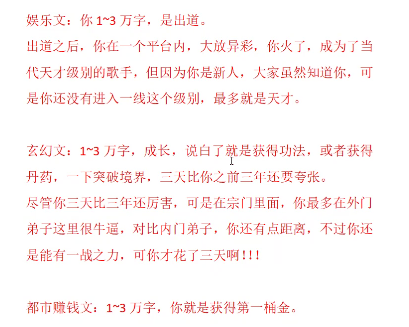
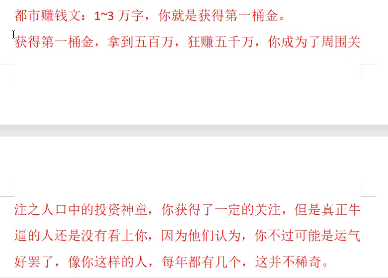
The host can handle it
1. Write about the protagonist who becomes famous right from the start
2. Rescue the situation
3. Directly confront the old lady
Then it exploded in popularity, but was the protagonist really famous?
No, there isn't.
He only has a few million followers.
30,000 to 50,000 words, with the lead actor outshining it.
Not open pressure, but covert pressure.
Prove the protagonist isn't strong through others' words or a fact.
The protagonist earned fifty million.
To put it plainly, compare the protagonist's situation through a big shot.
The book itself is meant to make the protagonist the most impressive person.
You could think of it as directly placing the protagonist and the most impressive person on a straight line for horizontal comparison.
Fact: Ordinary people: 666
People in the investment world: Geniuses, but such people are very common, and there are many every year. But what happens next depends on their situation.
They care, but not too much, because most people think luck plays a role.
Top boss: Oh
Why do this?
Because this suppresses the thrill and builds anticipation for the upcoming moments.
If you just exaggerate the thrill now, what will you write next?
Afterwards, it feels very trash and ordinary.
After I angrily confronted the Starbucks incident, it became nationally famous—everyone knew about it.
Later, readers clearly start to feel fatigued.
If I give you one million, it feels great; if you give ten billion, you'll feel amazing.
And then give 100 million—would that feel good?
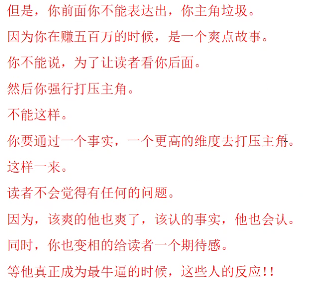
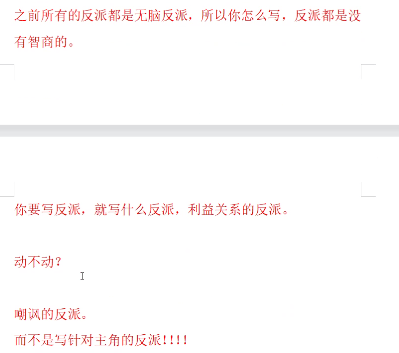
A villain who can disgust people and drive the pace.
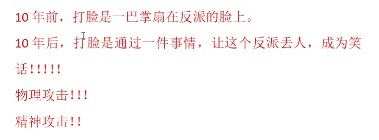
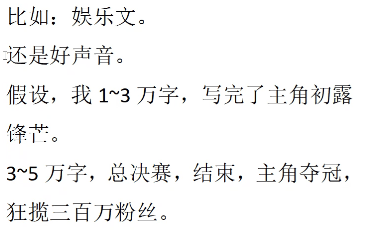
He should spend a chapter suppressing the protagonist.
First, start from the protagonist's perspective and think from the protagonist's perspective.
For example, after winning the championship, the protagonist sits at home, watching his popularity soar.
Happy and calm inside.
The reason is.
The happiness comes from the fact that, in just one month, he became a star with 3 million followers of Kuanglan.
Analyze yourself, the righteous step up to offer advice, the villains mock.
Main main storyline, small main storyline
For example, the streamer can get along
Main storyline: Roasting people
As long as you roast people, you can make readers feel satisfied.
Generally, the main storyline mainly looks at the cheat code
The second main storyline:
"Persona" centers on the main thread of character design.
"The Unremarkable Senior Brother" highlights the protagonist's character.
It may sound ordinary, but in reality, it's all about flashiness.
Next, use your golden finger to create the tasks or things that require you.
Or use your story and plot to highlight the protagonist's character.
The main thread is the trunk of a tree, the trunk of a tree, and it only grows upward.
A straight line.
The side line is like branches and green leaves.
A lush tree is the whole novel.
Main Storyline: Through an identity, a starting point, a system, and a quest, you are given a long main storyline.
The protagonist starts with a mission requiring him to become a Heavenly King within three years.
Fantasy novel: The system gives the protagonist a task, hoping he can become a master of XX-level within three months.
Readers watch how you become an expert and how you complete the task.
Main Storyline: Through various means, give the protagonist a visible, anticipatory goal.
Add stories to the protagonist.
Example:
Fan Adulthood: The story added to the protagonist is that he always wanted to become a superstar but was born at the wrong time.
In the end, he lived an unremarkable life, and after ten years, when he chose to quit, he held a concert.
Why should I become stronger?
Fantasy: Likes to add a bit of melodramatic plot to the protagonist.
For example, the three-year agreement.
For example, a sense of crisis.
If you don't strive to get stronger, you'll be in trouble.
The main story doesn't matter.
As long as you start a story and keep writing the story you want to write, your main storyline will naturally emerge. It's just that for a moment, you might be a bit clueless as an outsider and confused by the participants.
The focus is on side lines.
Become stronger.
Urban: Profitable, popular, famous, and high social status.
Live streaming: Become a super streamer
Entertainment novel: Becoming a superstar.
Urban story: Become the richest person in the world.
Cultivation novel: Become the strongest in the world.
Side Story: Which is better, a bare tree or a tree covered in fresh flowers and green leaves?
Definitely the flowers and green leaves are beautiful.
How could a novel not dress up?
The main storyline is well set.
The main storyline is that I want to become a superstar.
Immediately set up a side quest.
Side quests are tools that support the main storyline.
The side and main routes are inseparable.
To be precise.
Mainline is an investment company.
The side lines are energy companies, car companies, and esports companies.
All the money earned must return to the main storyline.
Suppose it's an entertainment novel. The protagonist starts off with a popularity system, then the system gives him a task: he must become a top-tier star within three months.
It cannot be set too long.
Become a Heavenly King within three years.
Because this way, readers won't feel tense or pressed for time.
[Countdown]
Side quests are not created through a system.
Side quests are created through goals you set yourself.
The system demanded that I become a top-tier star within three months.
The protagonist is about to start thinking.
How can you become a top-tier star in three months?
Suddenly, I saw a certain audition video for The Voice, which happened to be in the main character's city.
At this point, the side quest becomes clear: to participate in the draft competition.
Sign up for the open audition, make a splash, and gain a certain level of popularity.
It's like earning 10 yuan from nothing.
With the support of popularity, what should be done next?
Next, it's time to set another main storyline.
But this time, it's the main thread of every story.
Catch wanted criminals.
Low cost, big cost
As long as it can be obtained
Big goal: The richest man
Small goal: First pot of gold
Side Story: I began my first pot of gold story, and that is my story.
By snagging, I made five million.
When the cycle ends, you immediately enter the next cycle and set the next small goal. However, the next small main storyline can be discussed on a larger scale.
The protagonist has earned five million. At this point, it's important to emphasize his sense of crisis—for example, the system's task is right here, and he must finish it early, or the consequences will be severe.
Or you can create a small crisis for your readers, making them feel a certain sense of anticipation about your money-making experience.
Don't just talk nonsense, just like when you lecture, you still make some dirty jokes. Polish.
In the first twenty thousand words, I set up the main storyline, I started to develop, and when the development ended, I entered another story that needed a buffer.
For example, a cigarette afterwards.
To lay the groundwork for the story, simply put, you need to set up a small main storyline that makes readers want to see me keep making money.
[Set a Small Goal]
The quest requires the protagonist to earn 100 yuan.
So it's impossible for us to make a hundred yuan in one go.
But we can start with ten yuan, then use ten yuan to make fifty yuan.
In the end, I made a hundred yuan.
[Main Opening Storyline]
[Then there's a side main storyline. After setting up the main storyline, you enter the story, and the story develops—it's a side story. 】
[After the side story ends, immediately start a new main storyline, but before developing the main story. 】
[Find a way to add a bit of story to offset the boredom brought by previous stories. 】
The protagonist starts by angrily scolding a gold-digger, then goes to help his brother.
The first is a fierce retort to the main storyline.
Second, comedy, buffering, and memes.
First, he angrily confronted the square dancing auntie, then helped the child rescue his backpack.
It still revolves around the main storyline, giving the main storyline.
In the end, he still gained fame.
Constantly talking back will tire you.
Summary novels and the collection of Chinese civilization are popular science fiction.
Keep explaining the basics.
For example, Zhang San's legal education.
The whole process revolves around popular science and law, so there's no need to stop.
It satisfies readers' curiosity.
This isn't writing a novel; it's publishing a question to attract everyone's attention.
Every birth is a bizarre phenomenon.
Not really a novel, less than 300,000 words, it's basically a total flopping.
How to write an urban novel
How do you write an urban novel?
First: Fame (Popularity)
Fame is official recognition, while popularity is recognition from ordinary people
Second: Sense of anticipation
How do you write about anticipation? (Sample Essay)
The anticipation is raised, keeping readers in suspense
Third: Don't write too much about money
Don't give too many rewards.
Don't give too much, start with a little over 100,000.
At first, I gave too much and couldn't use it.
Be sure to use it up immediately.
Fourth: Avoid poison points
Three major toxic points: woman, brother, and idiotic plot points
Small things can earn you rewards.
Urban literature is a phase.
120,000 words of staged writing
- The first 10,000 words
Key points: Introduce the background of the characters, the world setting, and the golden finger [Do something and then get it reported. 】
2. [20,000-50,000 words] Make the protagonist famous.
Using a golden finger to show off, the first thrilling event happens, stunning the people of a city, and making the protagonist explode in popularity.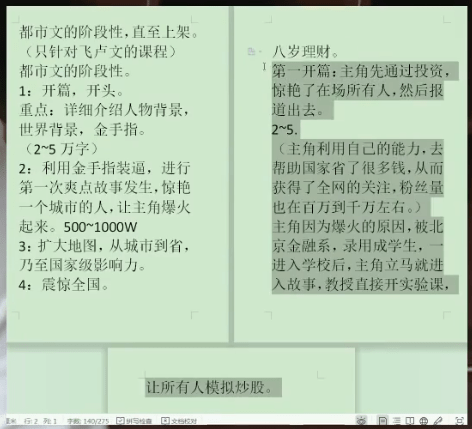
Amazing five million to ten million people. (Popular [Fame])
3. Expand the map, from city to province, and even nationwide (start entering the main storyline and start getting stronger)
Expand influence.
By this time, the protagonist's popularity was already sufficient.
You need to reverse it.
6-10W is the foundation for shelving
4. Shocking the nation with 10-120,000 opening stories
The Four Stages of the Novel
Introduction
Gaining popularity, a huge following
Become stronger
It sparked a huge hatred, started showing off, and the big climax was coming
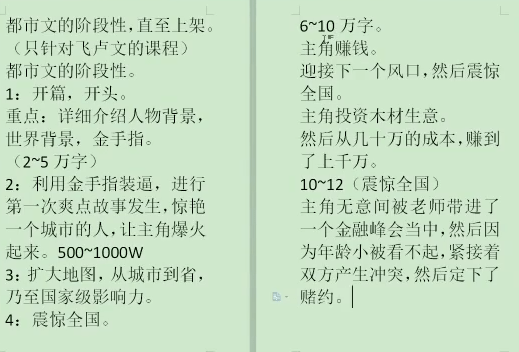
Villain Shaping Instructor: Tianbang 666
Instructor: Tianbang 666
Group number: 956208647
Time is tight, so many friends have privately messaged me asking me to give a lecture. I'll share some insights from the following new authors on how to create villains
I try to use simple, easy-to-understand language to help everyone understand
When we write books on Feilu, we're writing feel-good stories. The purpose of feel-good stories is to show off and slap them in the face—who is that slapping in the face? Slapping the villain in the face.
Many friends write novels with low subscriptions, or simply don't subscribe at all, mainly because the villain isn't well portrayed.
How can you shape a villain without feeling out of place, so readers don't think you're a villain deliberately set up just to make the protagonist show off and slap them in the face?
That is, you try to justify this act of showing off.
For example, the protagonist is walking down the street and discovers someone robbing. He goes up and beats him up, and the onlookers think the protagonist is especially impressive and powerful.
This is also a villain, but what meaning does such a villain have?
Readers immediately want to abandon the book; the protagonist's goal is nothing more than to show off and show off how skilled and capable he is, which is completely meaningless in advancing the main storyline.
But let's put it another way: the protagonist's system requires him to show off, and showing off earns rewards.
You can check out Panda Boss's 'Live Streaming Show-off System'.
He was showing off the whole time, every chapter was all about showing off. At that time, he posted one update every day and ranked first on the Heavenly Ranking.
Because he had a purpose in showing off, and showing off was to earn rewards.
Even if the villain is created this way, even if it's not substantiating and readers don't even know the villain's name, readers still feel satisfied.
Let's talk about the more advanced villains.
This point involves the word 'contradiction.'
Between the villain and the protagonist, you need to create a reasonable conflict before the protagonist shows off and slaps them in the face.
As long as this contradiction is set up properly, the villain won't feel out of place.
For example, if the protagonist wants to fight for a certain treasure, and the villain happens to be fighting for it too, this creates a 'contradiction.' Everyone is working for the same goal, each relying on their own skills and methods.
With conflict, the protagonist can naturally slap the villain in the face to achieve the goal of showing off.
After showing off and slapping the villain in the face, the protagonist can still get the treasure as expected, which is satisfying.
Of course, when we portray Feilu as a villain, we shouldn't make him seem very scheming or use all sorts of schemes to undermine the protagonist.
Such a villain is hard for Feilu readers, and with beginners lacking writing skills, it's easy to misgrasp them.
Even though your villain is pretty brainless, you deliberately design him to be scheming, complex, and hard to watch.
Also, villains don't have to be bad; their goal is just to make the protagonist show off and slap them in the face.
Just like in the League of Legends novels, your villain can be a well-known professional player.
A PUBG novel can feature well-known streamers or esports experts.
Urban novels can be about rivals, bosses, or even your own siblings, including your parents.
Everyone's goal is to unfold this show-off-slapping plot for the same 'conflict.'
League of Legends: protagonists and professional players compete for the championship.
In PUBG, the protagonist competes with a well-known streamer for first place on the Asian server. Both players have equal kill counts, and in the end, they get matched in a game to compete for the title.
An urban novel where the protagonist and his half-brother fight for the inheritance of the company
By reasonably setting up conflicts and antagonists this way, readers feel no sense of incongruity.
Of course, the main point is that after slapping the villain, the protagonist receives a reward to compensate the readers psychologically.
The way to create these villains is the simplest: how can newcomers make some money in Feilu?
Of course, if you want ten thousand subscriptions and go viral, the villain needs to be portrayed more three-dimensionally and vividly. But this places a high demand on the author's skill.
For example, the book "Death Designer" that was very popular two years ago is no longer available on Feilu because it's a dark story.
I can still remember almost every villain in that role—it's hateful to the bone.
Then the protagonist uses his system to punish these villains and ultimately earn rewards.
It really looks very satisfying.
However, creating such a villain requires deep writing skills. For new authors, it's recommended to just create mindless villains.
Even if readers in the review section criticize you, so what? Your goal is to make money and cater to most readers.
The villains I'm talking about, though not very subtle, are very suitable for fast-food, beginner novels.
Don't forget, many people in this society made their fortune selling fast food.
Fast food is not nutritious, yet many people still eat it every day. Of course, some fast food is only 200 yuan per meal.
If you're still hovering below 1,000 subscriptions and don't even have 10,000 yuan a month, my method will definitely be very helpful for you.
If you already have thousands or tens of thousands of subscriptions, you can skip this directly.
I hope my personal views can be helpful to everyone. Wishing you all to become gods soon and make it onto the Heavenly Ranking!
Timeline of major events in the Prehistoric Flow
Timeline of major events in the Prehistoric Flow
Pangu created the world, exhausted and perished
The birth of the Heavenly Dao, the emergence of Hongjun
Pangu's primordial spirit transformed into three friends: Zhunti and Jieyin became saints
Hongjun's single path was passed down to three friends
Hongjun created the Thirty-Three Heavens, forming the Taoist universe
The Eastern Emperor Taiyi established the Heavenly Court
Nüwa created humans to attain the Dao, Alaya's consciousness appeared, and the primordial continent merged
In the primordial era of humanity, the Eastern Emperor Tai descended into the realm and became Suiren
The Three Sovereigns ruled the world: Emperor Tai Fuxi, Heavenly Emperor Shennong, Earthly Emperor Xuanyuan
Fuxi created the Eight Trigrams
Shennong tasted a hundred herbs and requested a cinnabar inscription
Jingwei fills the sea
The Battle of Zhuolu: The Yellow Emperor fought Chiyou
Gonggong and the Eastern Emperor disguised themselves as Zhu Rong fought fiercely, enraging Buzhou
Nüwa mended the sky
The Five Emperors governed the world: Zhuanxu, Emperor Ku, Tang Yao, Yu Shun, and Xia Yu
Zhuanxu deceitfully married and harmed the nine phoenixes
Xingtian brandished shield and halberd
Yao and Shun abdicated
The lingering power of the great flood remains, and Gun and Yu controlled the floods
Initiated the establishment of Xia
Cheng Tang destroyed Xia and established Shang
The Great War of the Investiture of the Gods at the End of the Shang Dynasty, King Wu's Campaign Against Zhou (The Great Calamity of the Investiture of the Gods)
King Wen elaborated on the Zhou Yi
King Wu established the Zhou dynasty
The stone monkey emerged
Laozi is incarnate
Confucius studied Laozi
Laozi traveled west through Hangu Pass and transformed the Hu into Buddha
Confucius established the Confucian school
The great divine power (Guiguzi) spreads the Way, and a hundred schools of thought contend
Wukong studied the Way, Subhuti
The God of Killing, Bai Qi, slaughtered 400,000 heavenly soldiers
The seven great demon kings swore brotherhood
Wukong seized the Dragon Palace
Wukong's death is about to be smashed into the underworld
Ying Zheng destroyed the six states
Wukong first reversed the title of Great Sage Equal to Heaven in the Heavenly Court
Zulong Ying Zheng established Qin and proclaimed himself emperor, casting twelve golden figures
Wukong ascended to the Heavenly Court for the second time, and the court recognized him as the Great Sage Equal to Heaven
The Red Dragon Liu Bang established the Han dynasty
Sun Wukong stealing peaches disturbs the grand gathering. Wukong descends to the heavenly court for the second time
The Heavenly Court captured Wukong
The Great Sage escaped from the Bagua Furnace
White python Wang Mang brought chaos to the government
Sun Wukong was trapped on Five Finger Mountain
The Old Immortal of Nanhua transmitted the Taiping Classic to Zhang Jiao
The Taiping Sect arose
The Three Kingdoms period led to population decline and the chaos caused by the Five Barbarians
Bodhidharma crossed eastward to the Central Plains
Journeying west to seek scriptures
The Sixth Patriarch of Bodhidharma, Huineng, established the Chan school
Buddhism flourished greatly
The Eastern Emperor Taiyi's divine status was demoted, and the Jade Emperor ascended the throne
The great Peng Garuda is reincarnated as Yue Fei
The Eight Immortals Cross the Sea
Precious lotus lanterns
The Legend of the White Snake
Swordsman of Mount Shu
Prehistoric Materials (1)(1)
1: Overview of the Prehistoric Era,
The Meaning of the Prehistoric Era (China)
When chaos first opened, all living things vanished, and heaven and earth merged into one. Between them nurtured a single Chaos Green Lotus, which had five leaves and twenty-four petals, forming a single seed.
When the eternity of the years ended, the lotus seed split open, and the great god Pangu emerged wielding the Heaven-Splitting Axe. Dissatisfied with the endless oppression in the chaos, Pangu used the axe to split the heavens and earth.
After the world first opened, it became unstable. Pangu the great god would have blue sky above his head and feet on the earth, growing one zhang taller each day, causing the sky to grow one zhang taller and the earth to thicken daily. After eighteen thousand years, the heavens and earth were established.
Later, the great god Pangu was moved by the realm that all things in heaven and earth are absent,
Then the body transforms into the primordial wilderness: the left eye is the sun, the right eye the moon, hair scattered like countless stars;
Blood turns into rivers, lakes, and seas, muscles into thousands of miles of fertile land;
Bones become plants, veins become roads;
Teeth become metal and stone, essence becomes pearls;
Qi becomes wind and clouds, sound becomes thunder, sweat becomes rain and dew; When Pangu fell, his head and limbs transformed into the Five Great Mountains, while his spine became the pivot of the Buzhou Mountains between heaven and earth......
Du Ji transformed into a sea of blood, tens of thousands of miles in circumference, with waves of blood rolling within. Fish and shrimp refused to thrive, birds and insects did not come. All the malevolent energy of heaven and earth gathered here. The people of the primordial world called this place the Nether Blood Sea.
The Ancestor of the Nether River, accompanied by Abi and Yuantu, was born from the sea of blood.
Later, due to the great war between the Liches and the demons, the human race was implicated. After the human race's death, the ghosts of the dead wandered the world with nowhere to go, as the Earth had not yet transformed into the Six Paths of Reincarnation.
Thus, Styx used the Sea of Blood and the soul of the human race to create the Asura clan.
At the moment Pangu fell, three streams of pure energy and twelve streams of turbid energy escaped from his body. The three streams of pure energy ascended into Taiqing Taishang Laojun, Yuqing Primordial Heavenly Venerable, and Shangqing Tongtian Daoist.
Twelve streams of turbid energy descended and transformed into twelve ancestral witches, namely:
Ru Shou: The ancestor shaman of Jin.
Goumang: the ancestral shaman of wood.
Gonggong: the ancestral shaman of water.
Zhu Rong: The ancestral shaman of fire.
Tianhao: The Ancestral Witch of the Wind.
Xuanming: Ancestral Witch of Rain.
Qiang Liang: The ancestral shaman of thunder.
Xizi: The ancestral shaman of lightning.
Di Jiang: The Ancestral Witch of Spatial Speed.
Zhu Jiuyin: The ancestral shaman of time.
Shebishi: The ancestral shaman of the weather.
Houtu: the ancestral shaman of the earth.
The Heaven-Opening Axe, unable to withstand the resistance of the Heaven-Opening Axe, transformed its blade into the Taiji Diagram and Pangu Banner, the axe blade into the Ancient Sword of Zhuxian (later divided into four Parallel Formation Diagrams), and the axe handle transformed into the Chaos Bell, collectively known as the Four Great Innate Treasures!
The Chaos Azure Lotus was also damaged by the cracking of heaven and earth. Its twenty-four petals transformed into twenty-four Creation Jade Tablets, each containing the Three Thousand Great Dao. Most of these were later obtained by Hongjun, who also used them to attain enlightenment.
The five leaves of the Chaos Azure Lotus transformed into innate spiritual treasures known as the Five Elements Banner of Heaven and Earth (Central Wuji Apricot Yellow Banner, Eastern Azure Lotus Treasure Color Banner, Southern Earthly Flame Light Banner, Western Plain Cloud Realm Banner, Northern Xuanyuan Water-Control Banner);
Its roots transformed into three innate spiritual roots (Bodhi Wood, Ginseng Fruit, and Gourd Root), with only the lotus stem remaining unknown. (Some say the lotus stem transformed into Hongjun's Fenbao Cliff)
The Wu clan is a branch of Pangu, naturally able to control all the elements of the primordial wilderness. The Wu clan aspire to become saints by force like Pangu's father, so they only refine their physical bodies and do not cultivate their primordial spirits. The Wu Clan is led by the Twelve Ancestral Witches. The Twelve Ancestral Witches are formed from the essence blood of Pangu, stirred by the violent energy of heaven and earth, forming the strongest physical beings. Each has reached the quasi-Saint realm, and when combined, they forge a formation called the Twelve Heavenly Capitals Fiend God Formation, the number one fierce formation in the primordial wilderness—no one dares to resist it!
Within the Sun Star formed from Pangu's left eye, Di Jun was born wrapped in the innate spiritual treasure Hetu Luo Shu. Taiyi was born holding the innate supreme treasure, the Chaos Bell. Di Jun and Taiyi once listened to Hongjun's teachings in the Purple Night Palace and cultivated transcendent and saintly skills.
Emperor Jun and Taiyi established the Demon Emperor's palace outside the Thirty-Three Heavens; Emperor Jun called himself Demon Emperor, and Taiyi styled himself Eastern Emperor.
He appointed Kunpeng, the great god of the demon race who also listened to teachings in Zixiao Palace, as a demon master, leading all demon clans across the land, and for a time was at the height of his fame.
The demon clan possesses the Zhou Tian Star Array, which rivals the Wu Clan's Twelve Heavenly Capitals Fiend God Formation.
The Wu and demon clans were natural enemies, fighting for millions of years with countless casualties. In the end, the Three Pure Ones and the others mediated together, creating a situation where demons ruled heaven and shamans ruled earth, and only then did the two sides find some peace! But the good times didn't last. The demon and witch races fought a life-and-death battle for control of heaven and earth, each using their most powerful moves to split the entire primordial world into nine parts.
In the end, the Wu and Yao clan's ultimate moves destroyed five continents, leaving only the Eastern Victory Divine Continent, Southern Jambudvipa Continent, Western Niuhe Continent, and Northern Julu Continent.
The remaining five continents are scattered and collectively known as the Thirteen Overseas Islands. In the end, only the great witch Chiyou remained, and Houtu incarnated into the Six Paths of Reincarnation. Among the demon clan, only Lu Ya (the tenth sun) remained. Some books say Lu Ya later went to the West and taught the Great Sun Tathagata. According to mainstream online opinions, after Lu Ya joined Buddhism, he became a different incarnation of the same person and Master Wuchao (the same person). Master Wuchao appeared in Journey to the West. (Regarding Lu Ya, there is another theory: Lu Ya is the essence of innate Li Fire, a deity of innate origin like Hongjun.) Mahava, on the other hand, was transformed by Laozi from Hangu Pass into Buddha after Laozi left the west, establishing Theravada Buddhism and diverting Buddhist fortune.)
2: Prehistoric events, major events
Review of the Prehistoric Events
Pangu was born
Creating heaven and earth
The Demon God interrupted
Kill the demon god
Pangu's body transformed all things
Heaven and earth were created, ferocious beasts ran rampant, and innate divine sages joined forces to exterminate them
The three clans were established
The Demon Ancestor stirred up a great war among the three clans
The great battle of the three clans
The Four Sacred Beasts emerged
Hongjun fought against Luohu
After Luo Hou's defeat, he self-destructed and established the demonic path, destroying the Western spiritual vein
Innate gods and demons emerge
The lich appeared
The great force becomes a sage, a lecture on the Purple Sky
Six grand seats,
On Buzhou Mountain, there is a gourd, vine, and banana tree
The Heavenly Court was established
The second lecture on the Purple Sky
Heavenly marriage
The first battle among the lichs and demons was the defeat of the Heavenly Court
The three lectures of Zixiao divided the sacred ranks and the magical treasures
The Eastern King is the head of the male immortals, and the Queen of the West is the head of the mother and female immortals
The Eastern Emperor campaigned against Yingzhou, and the Eastern King perished
Nüwa attained sagehood,
Laozi traveled among the human races
The Five Sages emerged
Hongyun died
Postnatal transformation and reincarnation
Ten suns share the same sky
Kuafu chased the sun
The descendants shot at the sun
The second battle between the Liches and demons: the Zhou Tian Star Formation versus the Twelve Heavenly Formations
The Dao Ancestor appeared, demons controlling the heavens, shamans governing the earth
Chang'e flew to the moon
The demon clan slaughtered the human race
The Great Battle Between Liches and Demons
The Duke angrily rammed Buzhou Mountain
Nüwa forged stones to mend the sky
Tongtian beheaded the mysterious turtle
The vast heavens enter the heavenly court
Fuxi entered the human race
Laozi gathered disciples of Fuxi
Fuxi created the Eight Widows
Shennong emerged into the world
Duobao gathers disciples like Shennong
Shennong tasted a hundred herbs
Xuanyuan descended into the world
Guangchengzi gathered the disciples of Xuanyuan
Xuanyuan fought Chiyou
The Mysterious Maiden of the Ninth Heaven aids Xuanyuan
Chiyou was defeated and his corpse was torn apart
Punishing Heaven and battling the vast Heavens
Punishing Heaven and beheading the enemy
The vast heavens fell
The Era of the Five Emperors
Treasure
Yin-Yang mirror
Purple ribbon immortal robe
Nine-Dragon Divine Fire Shield
A long rainbow cord
Dingfeng Pearl
The Seven Treasures Exquisite Pagoda
The Heaven and Earth Foot
Seven arrows written with nailed heads
A pure glass vase
Hunyuan Golden Cup,
Ding Haizhu,
Treasures and gold coins were lost
Sweeping the rosy clouds of the robe
A supreme treasure of the primordial heaven
The Taiji Diagram belongs to the Supreme Lord Laozi
The Pangu Banner belongs to the Primordial Heavenly Venerable
The Chaos Bell belongs to Donghuang Taiyi
The Zhuxian Sword Painting belongs to the Tongtian Sect Leader
The Qiankun Cauldron was bestowed by Hongjun Dao Ancestor upon Nuwa to refine stones to mend the sky
The central Wuji apricot-yellow banner held by the Primordial Heavenly Venerable
No one knew where the Eastern Azure Lotus Treasure Color Banner was
The Southern Departure Flame Banner is in the hands of the Supreme Lord Laozi
The Western Plain Cloud Realm Flag held by the Queen Mother of the West
The Northern Xuanyuan Water Control Flag is said to be in the hands of Minghe
Merit Golden Lotus Guiding in Hand
Karma Fire Red Lotus in the hands of the Nether River
In the hands of the Apocalyptic Black Lotus Demon Ancestor
The White Lotus of the Pure World did not know
The Creation Green Lotus was split into three
The lotus transformed into the Three Treasures, the Jade Ruyi (owned by Yuanshi Tianzun),
The lotus root transformed into a white jade cane (owned by the Supreme Lord Laozi),
Lotus Leaf Transforms into the Qingping Sword (owned by the Tongtian Sect Leader)
The Seven-Treasure Wondrous Tree Zundi
The mountains and rivers, the altars of soil and grain, are the map of Nüwa
The Hetu and Luoshu script first surpass the emperor's brilliance, then the Kunpeng, and then Fuxi
Heavenly Book of Investiture of the Gods List + God-Beating Whip
The land records belong to Zhenyuanzi
Mingshu Life and Death Register + Judge's Pen
Red embroidered ball Nüwa
God-Slaying Spear Demon Ancestor
Purple-Gold Gourd Laozi
Summoning demon banners and imperial splendor
The Eastern Emperor passed the Immortal-Slaying Flying Saber to Lu Ya
Nine-nine, scattered souls, gourd, red clouds
The Demon Refining Pot Nüwa
The primordial chaos measures the heavens
Heaven and Earth, the Mysterious Yellow Pagoda, Laozi
The Heaven and Earth Xuanhuang Linglong Pagoda, the number one postnatal merit treasure.
One of the three great treasures of the Chaos Sword's innate world, it governs killing and destruction.
Huang Zhongli is the foremost innate spiritual root, blooming every 30,000 years, bearing fruit every 30,000 years, and maturing every 30,000 years. Each fruit bears thirty fruits, each increasing one-yuan mana.
The Heaven and Earth Order is a postnatal treasure, capable of gathering the power of heaven and earth to form a grand formation of heaven and earth.
The Purple Jade Black Lotus is an innate spiritual artifact, neither for offense nor defense; it is a rare treasure of creation.
The Donghuang Bell is a top-tier innate spiritual treasure, one of the ten ancient divine artifacts, and the most powerful among them.
The Demon Refining Pot of Nuwa, one of the ten great ancient divine artifacts.
The Soul-Scattering Gourd belongs to Ancestor Hongyun. Originally, there was a gourd vine on Buzhou Mountain, which had formed seven gourds; this was the sixth one.
The Purple-Gold Gourd belongs to the Supreme Lord Laozi. Originally, there was a gourd vine on Buzhou Mountain, which formed seven gourds; this is the first.
The Immortal-Slaying Gourd belongs to Donghuang Taiyi. Originally, there was a gourd vine on Buzhou Mountain, which formed seven gourds in total; this is the seventh one.
The Taiji Diagram is formed from the three-part divine axe of Pangu's Heaven-Opening Axe. It can determine earth, fire, feng shui, suppress the fortune of great sects, and is a top-tier innate spiritual treasure.
The Pangu Banner can cut through chaos; it is formed from the Three Divisions of Pangu's Heaven-Opening Divine Axe, capable of suppressing fortune.
The Zhuxian Sword Formation is responsible for killing; this formation can only be broken by the gathering of the Four Saints. It is the number one innate killing formation.
The Qiankun Cauldron has the effect of refining postnatal into innate heaven, defying the heavens, and inside the cauldron forms its own universe, making it a top-tier innate spiritual treasure.
The Mountain and River Map of the State can suppress the fate of the great sect, making it a top-tier innate spiritual treasure.
The red embroidered ball of Nuwa is not fully detailed???
Twelve-grade merit golden lotus top-grade innate spiritual treasure, an object established by the Western Sect.
The Seven Treasures Marvelous Tree, a supreme innate spiritual treasure, a Western religious artifact.
Fenbao Rock is a supreme innate spiritual treasure. After Pangu awakened and shattered the eggshell that nurtured him, most returned to chaos. Only one piece was obtained by Hongjun, which formed Fenbao Rock during Dao Fusion to distribute myriad treasures.
Yuan Tu's innate killing weapon, forged by the Ancestor of the Nether River.
Abi's innate killing weapon, forged by the Ancestor of the Nether River
The Xuanyuan Sword, originally named the Slaying Witch Sword, is forged from Donghuang Taiyi's collection of precious metals and the blood of hundreds of millions of people. It is the foremost of the ten ancient divine artifacts.
The Luo Script and the River Diagram are objects of Fuxi's attainment of the Dao.
The Haotian Mirror can see the thirty-three heavens above, and below it can see the Nine Nether and eighteen layers of hell. It is the Eastern Emperor Bell gifted by Hongjun, the most powerful of the ten divine artifacts, belonging to the Jade Emperor Haotian.
The Fuxi Qin is one of the ten ancient sacred artifacts, capable of controlling the mind, and is an object of Fuxi.
The Shennong Cauldron is one of the ten ancient divine artifacts, capable of refining peerless divine medicines that the gods of the heavenly realm cannot easily obtain, and conceals other mysterious powers. It belongs to the Shennong clan.
One of the three great innate treasures of the Pangu Axe and one of the ten great ancient divine artifacts, this axe possesses the power to split heaven and earth and traverse the void.
Kongtong Seal is one of the ten ancient divine artifacts, and possessing it grants immortality.
One of the ten ancient divine artifacts of the Kunlun Mirror, capable of traveling through time and space.
One of the ten ancient divine artifacts of the Haotian Tower, capable of absorbing stars and swapping moons.
Nuwa Stone is one of the ten ancient divine artifacts, capable of resurrection.
The Qiankun Ring golden bracelet can be large or small, thrown and attacked, with immense power. It belongs to Nezha.
Huntian Silk Red Silk, seven feet long, can automatically bind enemies, and is a Nezha item.
The Wind-Fire Wheels concealed the power of wind and fire, capable of ascending to heaven and earth, moving at incredible speed—they were Nezha's domain.
The Xuanyuan Bow, an item of the Yellow Emperor, is extremely powerful and is the treasured garrison of Chentang Pass.
The Bagua Dragon Beard Handkerchief is a square white handkerchief with the treasures of Kanli, Zhendui, and the Heavenly Treasures, encompassing all rare treasures. It can summon Yellow Turban strongmen and items from Shiji.
The Nine-Dragon Divine Fire enveloped Taiyi Zhenren's magical treasure, with nine fire dragons coiled inside—the Samadhi Divine Fire, extremely formidable.
The demon-summoning banner, a thing of Nüwa, can summon all the demons under heaven.
The God-Beating Whip is three chi, five cun, and six fen long, with twenty-six sections, each section bearing four talisman seals, totaling eighty-four seals.
The Daode True Lord of Heart-Piercing Nail gave Huang Tianhua a treasure.
Falling treasures and money can be used to gather the treasures of the world.
Twenty-four Sea-Calming Pearls belonging to Zhao Gongming can evolve into the Twenty-Four Heavens.
A powerful treasure belonging to the three ladies of the Three Consorts of the Three Immortal Islands of the Hunyuan Golden Dou.
The Golden Flood Dragon Scissors are made up of two flood dragons, drawing the spiritual energy of heaven and earth, absorbing the essence of the sun and moon. They don't fear you becoming immortals, and with one stroke, you can cut two sections at once.
Hongjun examined the objects of Hongjun's true path.
The Heaven-Flipping Seal of Guangchengzi's artifact is unbreakable unless it is the Earth Flame Banner or the Azure Lotus Treasure-Color Banner, crafted from the spiritual veins of the ancient divine peak Buzhou Mountain.
The Xuanyuan Water Control Banner can control the waters of heaven and earth.
When the apricot yellow banner of Wuji is unfurled, ten thousand golden lotuses appear.
The Azure Lotus Treasure-Color Banner fluttered in the air, white mist suspended in the air, golden light radiated myriad rays, and a single relic seed appeared.
The plain-colored cloud realm flag can summon ten thousand immortals; it is a gift from the Queen Mother of Hongjun.
The Flying Flame Banner unfurled. This treasure was a treasure of Xuandu, a rare treasure of the Five Elements.
Heaven and Earth, the five directions banners. A spiritual treasure from the dawn of chaos
The Qingping Sword, a treasure that reaches the heavens.
The Wind-Fire Meditation Cushion is my magical weapon.
A pure glass vase belonging to the Daoist Cihang of Luojia Cave on Putuo Mountain.
On the thirty-three days, the Taiyi Zhenren of the Golden Exquisite Pagoda delivered Li Jing's item to bind Nezha.
The Fire-Tipped Spear was made by Taiyi Zhenren of Kunyuan Mountain and later given to Nezha.
With this talisman, the Primordial One Qi Taiqing Divine Talisman can set up one of the three ancient killing formations, the Two Poles Microdust Grand Array.
Except for the five treasure banners, nothing escaped the five-colored divine light, and no one escaped it.
The Immortal Trapping Rope can restrain the immortals in the heavens.
A treasure of the Burning Lamp Daoist in Yuanjue Cave, Lingjiu Mountain, Qiankun Chi.
The spirit of the ghost, the white bone banner, and the objects of Bian Ji at Tongguan hang in the air, with a thousand strands of black vapor and ten thousand streams of cold mist. Everyone below fainted.
The Banana Fan, Princess Iron Fan's magical treasure, can travel 108,000 li with a single strike, and only the Dingfeng Dan can break it.
The Immortal-Slaying Flying Dagger is no ordinary treasure; it can slay people in Genshin Impact. Yu Yuan is the essence of metal, impervious to blades and spears.
One of the three great innate spiritual treasures of the Creation Jade Disc, Hongjun only obtained half a piece and thus achieved the Heavenly Dao.
The treasure of the Lotus Lantern belongs to the Three Holy Mothers, possessing tremendous power. Although not as good as an innate spiritual treasure, it is a formidable acquired supreme treasure.
The Azure Lotus Lamp, which was born in the chaos back then, was spared destruction at the dawn of heaven, and later merged into the Green Lotus Lamp, whose power was almost equal to the Treasure Lotus Lamp.
The Three Treasures Jade Ruyi Yuanshi Tianzun attained enlightenment.
The Vajra Bracelet is the supreme treasure of the Supreme Lord Laozi's moral teachings for the human world.
The Taiji talisman can be used to set up the Taiji Grand Array.
The Ten Thousand Crow Pot can release countless crows formed from the true fire of the sun.
The Heavenly Ruler is the number one postnatal merit attack treasure.
Innate spiritual root
Chaos Green Lotus, Chaos Sacred Fruit, Yellow Plum (Immortal Apricot), Cao Huan Dan (Ginseng Fruit), Bodhi Root, Peach Tree, Fusang Wood, Gourd Vine, Banana Tree, Six-Root Pure Bamboo, Star Fruit Tree, Five-leaf Needle Pine
The great calamity of the Lich and Demons
[Cause of the Great War]
In the mortal realm, the ancestral shamans are warlike. Gonggong and Zhurong, due to incompatibility between water and fire, fought fiercely on Buzhou Mountain, both wounded. During this time, Gonggong angrily struck Buzhou Mountain, breaking the heavenly pillar and repairing the sky with Nüwa. During this time, fragments of the Five-Colored Stone fell into the primordial wilderness (after absorbing the essence of sun and moon, the fragment gave birth to Sun Wukong, who joined Zhunti Daoist as a disciple—this is a story for another time). The remaining ten ancestral shamans of the Wu clan (Dijiang, Jumang, Ruxiu, Zhu Jiuyin, Qiangliang, Shebishi, Tian Wu, Yanzi, Xuanming, Houtu).
The Ten Sons of the Eastern Emperor (Lu Ya) have violated the heavenly laws, and ten days together set out to travel across the primordial wilderness, bringing suffering to all living beings. Later, because the Eastern Emperor's punishment was too light, the great shaman Kuafu was dissatisfied and began pursuing the suns, and the Eastern Emperor's ten sons killed Kuafu.
After the great shaman Kuafu was killed, Hou Yi was furious. He mobilized the strength of his tribe and used various secret techniques of the shamanic tribe to create arrows and shoot down nine golden crows.
After Hou Yi shot down nine Golden Crows, he was killed by the demon race. The conflict between the two sides intensified. The tenth son of the Eastern Emperor took the essence of Kuafu and Hou Yi into a single gourd, known as the Immortal-Slaying Flying Dagger. (Later, during the Battle of Investiture of the Gods, the Tenth Son of the Eastern Emperor transformed into Lu Ya Daoist and shone brilliantly.)
[Course of the Great Battle]
The Wu clan still had ten ancestral shamans (Gonggong and Zhurong fell on Buzhou Mountain), as well as a large number of ancient great shamans (Chiyou, Jiufeng, Xingtian, Xiangliu, Yu'er, Yu Guo, and others), who together attacked the primordial heavenly court.
The demon race includes Donghuang Taiyi (who commands the Chaos Bell) and numerous primordial demon gods (the Ten Great Demon Saints: Ji Meng, Ying Zhao, Bai Ze, Fei Dan, Fei Lian, Jiu Ying, Si Tie, Shang Yang, Qin Yuan, and Gui Che), who rely on the Zhou Tian Star Formation and the Hunyuan Heluo Grand Array to guard the Heavenly Court.
Because Nuwa was a sage, she could not go against fate and was on good terms with Xuanming Houtu, the two women, so she did not get involved in the witch dispute.
After this battle, all other ancestral shamans perished. Xuanming was the strongest in cultivation, dying together with Taiyi, and both demons and shamans were wiped out. Several ancient demon clans perished; the remaining ones hid or joined the Immortal Dao (such as the Jie Sect founded by Lingbao Dao Lord, honored as the Tongtian Sect Master), weakening the power of the Wu and demon races. After the great war, the Wu and Yao clans completely lost the strength to vie for supremacy in the primordial world and were forced to withdraw from the stage of history. The human race flourished during the reign of the Three Sovereigns and the Five Emperors, ushering in an era of dominance in the primordial wilderness.
3: Major knowledge points about the Honghuang era.
Section 1 [Pangu Emerges, Chaos Begins to Split]
The world itself is boundless emptiness; emptiness is eternity, without heaven and earth, without living beings, without good or evil, beauty or ugliness, without grudges or entanglements, without beginning or end—this is completeness. At this time, it is called 'Taiyi'.
At some point, a path of innate qi appeared, and then the "Great Dao" was born. At this time, it is called 'Taichu'. At some unknown time, chaos first opened, called 'Taishi'; Taishi then changed on its own, giving the world form and substance, called 'Taishu'. At this moment, all living things vanish, heaven and earth merge into one, and qi, form, and substance become one.
In the chaos, the pure and light ascend, the turbid heavy ones descends. At the center nurtured a chaotic green lotus, with five lotus leaves, twenty-four petals, and five lotus seeds. When the eternal lifespan is complete, a lotus seed will split open, and Pangu will emerge wielding the axe.
Enraged by the boundless emptiness of chaos, Pangu used the Heaven-Splitting Axe to split heaven and earth, then used the Pangu Banner to disperse chaos, used the Taiji diagram to determine earth, fire, wind, and water, and the Qiankun Cauldron to separate pure and turbid heaven and earth, opening up the primordial wilderness, endlessly renewing life. He also slew three thousand gods and demons and determined the postnatal Five Elements.
Pangu eventually died from exhaustion, his body turning into a whole land, and his spine became the mountain of Tianzhu Buzhou. The five elements then gave birth to three great divine beasts: the Ancestral Dragon, the Primordial Phoenix, and the First Qilin, just as the Chaos Green Lotus nurtured Pangu. The remains of gods and demons transformed into ferocious beasts, poisoning the primordial world and savaging all living beings. The primordial world is wild and primitive, extremely chaotic.
The three divine beasts each multiplied and grew stronger, inevitably engaging in deadly battles with the other ferocious beasts. After victory, the Ancestral Dragon, Yuanfeng, and First Qilin each established the dragon clan to command the scales; The phoenix clan that commands the birds; The Qilin tribe that commands beasts. From then on, the primordial world was jointly governed by these three clans, yet the Heavenly Dao had not appeared, and the division between yin and yang was indistinguishable. At this time, he was called the 'Yuan Emperor.' There is a poem that recalls the time of the Yuan Emperor, saying:
Pangu began the creation of the boundless, and all things began to transform in the primordial void.
Countless rivers flow through the fertile fields, towering and towering are a thousand ridges, rugged and uneven.
The phoenix calls, luan sings, dragons and phoenixes dance; the qilin lashes its tail, descending sweet rain.
Flocks of birds play in the era of the Yuan Emperor; all beasts dwell together in the vast wilderness.
At this time, besides being ruled by the divine beast clans of the Ancestral Dragon, Primordial Phoenix, and First Qilin, the dawn of heaven and earth naturally gave rise to a highly intelligent and diverse race. They were sometimes called beasts, feathers, or water tribes, but in later generations, they would all be renowned across the Three Realms as demon races. Because they did not possess the innate immense strength of the three great divine beasts, the demon race was initially dominated by them, divided into three groups, each under the command of the Ancestral Dragon, Primordial Phoenix, and Primordial Qilin.
Nuwa and Xihuang, with serpent bodies, are the first demon races born in heaven and earth. Endowed with innate power, their divine powers are almost no less than the three thousand gods and demons slain by Pangu, and they are revered as supreme gods by many demon clans roaming the prehistoric world. It was Nuwa and Xihuang who led the demon race to gradually gain spiritual intelligence, leading to the birth of the first generation of cultivators. Because the true bodies of the demon race vary in size, some large, some small, cultivators are the first to learn the art of transformation, often taking on the shapes of Nuwa and Xihuang. However, unable to adapt to the snake bodies of these two deities, they develop two feet beneath them. This became what became commonly known as the "human form." There is a poem praising the two Sovereigns, Wa and Xi, which says:
Demonic people are born in the vast wilderness, their spiritual roots are rare in the world.
The divine wisdom of the Two Sovereigns shines, the six senses reveal the wondrous bones.
Transmitting the Dharma transforms the essence of the Way; the sage's virtue understands the workings of Heaven.
In later generations, those who cultivated themselves relied on this relative.
During the Yuan Emperor's reign, countless innate powerhouses began cultivating on their own. Among them, the Yin-Yang Holy Ancestor was born from the Taiji and established the teachings, attracting many great beings to become his disciples. There is also the Ancestor of the Heaven and Earth, who attained the Dao beyond the mysterious and yellow realms, possessing the power to manipulate heaven and earth, possessing profound cultivation and wielding the supreme treasure, the Chaos Bell, capable of subduing heaven and earth, transformed from fragments of the Pangu Axe.
Beyond the Ten Directions Mysterious Void, within the vast desolation, there was Immortal Yangmei, born with vast divine powers. He was transformed from the first hollow willow tree, born from the center of the void, nourished by the essence of the Chaos Azure Lotus. His cultivation was unimaginable, yet he disliked fame and lived in seclusion, sometimes appearing in the primordial wilderness, traveling everywhere. There is a poem praising Yang Mei:
In the vast wilderness, Pangu appears; the Three Jewels open the mysterious and the yellow.
The divine tree reveals its primordial origin, the drooping willow rises in chaos.
No intention or thought, looking up and down, the vicissitudes conceal everything.
The innate poplar brows are called out, and when the work is accomplished, the fragrant brilliance fades away.
Among all the innate deities, only Dongfang Hongjun cultivates noble virtue, transcending the mysterious and the yellow. Hongjun was originally transformed from the primordial One Qi, hence called the Ancestor of One Qi. Because he could comprehend the Great Dao and attain the opportunity to become a saint in the Heavenly Dao, he established Taoist teachings and enlightened the barbarians, thus becoming known as the Dao Ancestor. In the Western Primordial Lands, Luo Hou lived in seclusion on Mount Sumeru, surrounded by many demon lords, each cruel and ruthless, striving to attain sainthood through great slaughter. Luo Hou refused to be bound by the Great Dao, devoted himself to desire, and acted recklessly.
It is said that shortly after Pangu's death, the "vast and righteous energy" he relied on for creating heaven and earth transformed into a celestial cloud, allowing the wielder to ward off evil and evil, making all laws impervious. After the various sacred contests, Hongjun ultimately obtained the Heavenly Auspicious Clouds, and with the protection of the Heavenly Auspicious Clouds, he obtained the innate supreme treasure, the Creation Jade Register. Later generations worshipped the Dao Ancestor, and there was a poem that said:
Reclining high among the ninefold clouds, I have reached the true path on a meditation mat.
Beyond heaven and earth, dark and yellow, I shall be the supreme master of teaching.
Pangu gave birth to the Supreme Ultimate, following the cycles of the Two Principles and Four Symbols.
One Way is passed down to three friends; two teachings are elucidated and divided.
The Xuanmen leads the elite, a single qi transforms into a vast balance.
The thirty-six-grade Chaos Azure Lotus that nurtured Pangu had its remaining four seeds blooming at the summit of Buzhou Mountain, transforming into four innate spiritual treasures: the Twelve-Petal Purifying World Azure Lotus, the Twelve-Petal Merit Golden Lotus, the Twelve-Petal Karmic Fire Red Lotus, and the Twelve-Petal World-Destroying Black Lotus. For a time, the sacred beings from all realms of the primordial world gathered at Buzhou Mountain, competing for the supreme treasure. Countless were reduced to ashes, but the whereabouts of the Four Great Lotus Platforms remained unknown.
Although there were many innate mighty beings at this time, the giants of the world were still the leaders of the three divine beast clans. Their descendants spread across the primordial wilderness, brimming with surging fortune, unstoppable. The world created by Pangu has been constantly honing its beard, preparing to establish an order governed by its own will—the Heavenly Dao.
The Great Dao, born at the primordial time, now evolves into yin and yang, giving all things in the world two faces. Therefore, the Great Way has fifty aspects, Heaven extends forty-nine, and man escapes one of them. The Great Dao evolved into the supreme Heavenly Dao, serving as the will of the primordial world. The part representing the spiritual energy of all things is divided into the Heavenly Principle. This is where all things generate and counter each other; principles are like yin and yang opposing each other, and everything eventually settles after dust.
There is a poem praising it:
One qi paints the traces of the Heavenly Way; the Five Great Ones flow and splendid lotuses arise.
For ten thousand generations, I gaze up and see the mysterious and yellow scenes; for a thousand autumns, I sigh over the sealed chaos.
Temperament, form, and spirit are perfectly balanced; dragons, phoenixes, and qilins work together to achieve success.
The events here are hard to recount, left for future generations to be the masters.
Section 2 [The First Calamity of the Dragon Han, the Sage Proves the Way]
As time passed, the great calamity appeared. Luo Hou had long been wary of Hongjun's fame. After seizing the twelve-grade World-Destroying Black Lotus, he indulged in selfish selfish schemes and disrupted the fate of Hongmeng. The dragon, phoenix, and qilin clans appear united in appearance but are divided in spirit, gradually beginning to fight. The primordial world is plunged into bloodshed, with only one in ten survivors alive and many ancient divine beasts vanishing. The three clans were severely weakened by the bloody battle. This is called the initial calamity of the Dragon Han.
At the beginning of the Dragon Han calamity, Luo Hou committed sins. He combined the spiritual energy of the Western primordial land with the blood and resentment of the three clans, breaking through the Pangu seal at the foot of Mount Sumeru, refining the Immortal-Slaying Sword Array, his killing intent soaring to the sky. Luo Hou founded the Demon Sect's lineage, commanding four demon Luo—Wuxin, Wuxiang, Wufa, and Wutian—known as the Demon Ancestor of Luo Hou, aiming to prove himself as a Primordial Sage through the path of slaughter. The poem says:
Sumeru possesses the demonic path, destined to fall into despair, and one loses immortality.
Tyrannical and overwhelming, unforgiven by all; his majestic power shakes the heavens.
The black lotus steps beneath its feet, all phenomena hang upside down.
God-slaying and wicked spear hunts, mountains and rivers all collapse and fall.
Weighing the kalpa, who can pardon the sin? The karma of Rahu comes first.
Divine beasts fought each other, the world was on the brink of collapse, and the weak demon clans became slaves to the divine beast wars. Because Xihuang was close to the Ancestral Dragon, he personally appeared to help Zulong and Yuanfeng fight against the enemy, and attacked the First Qilin. Unable to bear the massacre of his people, Emperor Nuwa led his followers in migration. Guided by Immortal Yangmei, they became disciples of Hongjun Dao Ancestor in the eastern wilderness.
At this time, the Qilin Clan was struck by calamity, unable to withstand the Flying Primordial Phoenix or the Sea-Stealing Ancestral Dragon, and was nearly wiped out. Shi Qilin sent his two sons, Yu Qilin and Mo Qilin, to lead the Qilin lineage and other divine beasts to resist the dragon and phoenix siege, but they were isolated and eventually captured. Shi Qilin grieved deeply for the loss of his son, found it hard to fight, and from then on, Qilin's power declined. Under Hongjun's disciples, Laozi, Yuanshi, and Tongtian came to relieve the siege, jointly rescuing the Jade Qilin and Ink Qilin. Yuanshi gathered the Nine Dragons and crafted the Chenxiang Carriage. Later, Huanglong Zhenren, a disciple of Yuanshi, persuaded Zulong to stop attacking Qilin, but was still influenced by the world's killing intent and turned to attack Yuanfeng.
Yuanfeng is powerful, commanding all feathered creatures in the world, making Zulong difficult to attack. A demon cultivator, Kunpeng, conspired with Luo Hou the Demon Ancestor to help Yuan Feng welcome the Ancestral Dragon on Sun Star. The Feather Squad attacked him, causing his final death, and Yuan Feng won a great victory. Kunpeng then pursued Xihuang's defeated troops to the Western Primordial Wilderness, forcing him to lure Luo Hou Demon Ancestor out of seclusion. Thus, the demonic path emerged, demons ran rampant, and Luo Hou officially advanced eastward from Mount Sumeru, stirring up chaos in the primordial world, rampaging through lustful sins, and countless divine beasts and demonic races perished beneath the demonic path. When the first calamity of Dragon Han descended, the primordial land was turned into a sea of blood, resentment soared to the sky, and slaughter was endless.
After the demonic path emerged, Yuanfeng, unable to defeat Luo Hou, was forced to retreat into the volcano. Meanwhile, the three-legged Golden Crow Taiyi and Xihe on Sun Star, aided by Tongtian's three disciples, subdued Kunpeng, who was colluding with Luohou. Using the noble bloodline of the three-legged golden crow, they proclaimed themselves supreme, reuniting the scattered feathered demons to single-handedly resist the demonic path. Tongtian then led Taiyi and Xihe to join Hongjun's sect, and immortals came to assist the two demons together. Kunpeng claims to have repented and is of the feather type, and because he and Taiyi and Xihe are all feathered creatures and have a good friend named Hongyun Daoist protecting him, he finally survives.
Taiyi's elder brother, Di Jun, devoted himself to secluded cultivation within the Sun Star, proud and arrogant, claiming to be the emperor of the Feather Clan. His cultivation had long surpassed Taiyi and Xihe, but as the supreme figure within the Sun Star, he was destined to become the Demon Emperor. Later, Taiyi and Xihe were injured by the Four Demon Lords, forcing Di Jun to descend from Sun Star and decisively defeat the Demon Lord in a single battle, leaving all the immortals stunned and the feathered demons present all submitting to him. Afterwards, Dijun was ordered by Nuwa and Xihuang, proclaimed himself the Demon Emperor, united all the demon races, broke free from the constraints of the dragon, phoenix, and qilin divine beast clans, established his own clan, and joined forces to slay beasts and demons, advancing with unstoppable momentum. Hou Yao wrote a poem praising this demon emperor's handsomeness:
The divine deity of the Great Universe roams the sun and moon; heaven and earth, immortal spirits, contend for supremacy.
The dark and yellow have lost the Way and discussed past and present; fate and fate return only to the sacred Golden Crow.
For a thousand years, unrestrained contending over the dragon and Han; for ten thousand ages, beacon fires revive mountains and seas.
Its aura covers the six directions, the shepherd stars and constellations, outlining the Book of the Eight Extremes of the Demon Emperor.
By this time, the Dragon, Phoenix, and Qilin clans had all declined, and Xiang Xiangjun presented his head and ceased to establish a new clan. Di Jun then led the demon clan to continue fighting demons, without any help from the immortals, and finally established the capital at Imperial Capital Mountain. During this time, he traveled through many places and saw that many other divine beast races besides dragons, phoenixes, and qilins had all been wiped out by the Demon Ancestor, yet their killing intent did not diminish in the slightest. Nuwa Huang befriended the ancestral Wu Wu Houtu of the Wu tribe, causing some Wu tribes to appear on the territory and join forces with the demon tribes to join forces.
As long as the demonic path of Luo Hou is not eliminated, the killing intent will never fade, and the wars in this world will never end. In the chaos of the primordial world, all beings yearn for order. Among the many innate mighty beings, only Hongjun Dao Ancestor is the most revered by all beings. Hongjun first expounded on morality, elucidated the Heavenly Way, cut off vitality, and spread teachings. He had long transcended the mysterious and the Yellow Heaven, and was a Hunyuan Da Luo Golden Immortal whose realm was on par with Luo Hou.
At this moment, Hongjun Daozu led his disciples to the ancestral lineage of the Western Prehistoric World—Mount Sumeru—to battle the Luo Hou Demon Sect, aiming to directly end the Dragon Han tribulation. Hongjun wholeheartedly protected the people, "reducing the excess to make up for the deficient," hoping to prove himself as a primordial sage through great merit. The Dao Ancestor once faced Luo Hou alone in the formation, yet possessed countless innate spiritual treasures but could not harm Luo Hou, instead being bullied by the rampaging demons and harsh words of Luo Hou's followers. The young disciple Taiyi refused to accept this and seized the supreme treasure of the Qiankun Sect Patriarch, the Chaos Bell, suppressing the Zhuxian Formation and eliminating all the demon lords under Luo Hou. Only Luo Hou's junior disciple Wutian escaped with serious injuries, but the Zhu Xian Formation was protected by Luo Hou's great cultivation and suffered no harm. With the demonic barrier broken, the Dao Ancestor was moved by the mercy of the Heavenly Dao and wished to manifest himself as the manifestation of the Heavenly Dao, summoning many innate mighty beings to break the Immortal-Slaying Sword Formation once again.
Hongjun Dao Ancestor mainly attacks the Zhuxian Sword Sect, Yangmei Immortal focuses on the Slaughter Immortal Sword Sect, the Yin-Yang Saint Ancestor focuses on capturing the Immortal Sword Sect, and the Qiankun Sect Ancestor focuses on the Juexian Sword Sword Sect. Luo Hou wielded the Four Immortal-Slaying Swords, and the last three Immortal Ancestors were all severely wounded by his boundless sword intent. In contrast, Ancestor Hongjun, protected by the auspicious clouds of the heavens, was not harmed in the slightest. Yin-Yang and Qiankun, forced into a desperate situation, successively self-destructed their primordial spirits, severely injuring Luo Hou Demon Ancestor. Hongjun Patriarch and Yangmei Daxian continued to break the formation.
While Yangmei was fiercely battling Luo Hou Demon Ancestor, Hongjun finally succeeded in summoning his three corpses: good, evil, and holding. Ancestor Hongjun summoned the "Auspicious Clouds of All Heavens" to suppress the Sword Sect of Slaying Immortals; Hongjun Shanshi summoned the Qiankun Cauldron to suppress the Slaughter Immortal Sword Sect; Hongjun's evil corpse summoned the Taiji Diagram to suppress the Sword Sect of Trapping Immortals; Hongjun wielded the corpse and summoned the Creation Jade Tablet to suppress the Sword Sect of the Absolute Immortals. Taking advantage of Luo Hou's severe injuries and lack of distraction, he took the opportunity to take down the Four Swords of Immortal-Slaying Swords. The four swords were lost, and the sword formation was already broken.
After the Zhuxian Sword Formation was broken, Luo Hou was furious and furious, denouncing the unfairness of the Dao. He then swore to become a Heavenly Demon from beyond the realm, transforming into the Other-Avatar Free Heaven. The twelve-grade World-Destroying Black Lotus fell into the hands of the demon Luo Wutian under his command. Hongjun Laozu comprehended the profound mysteries of the Great Dao contained within the Creation Jade Register, and finally, by severing the Three Corpses, became the first "Heavenly Dao" Saint, from then on without desire or emotion. There is a poem that says:
The calamity of the Dragon Han rises and evil obstacles are exposed; slaying immortals and gods is one in ten.
The merits of slaughtering and slaying Sumeru are diminished; alas, beneath the ranks of the ancient sages, they are low.
Heaven and earth create a natural order, the heavenly way is at peace; good and evil are held firm, and the past is promised to come after.
The Zixiao Palace and the entanglements began; from now on, Hongjun has privately lost his way.
There is also a poem that says:
Wielding his sword, he defeated the worthy men,
The World-Destroying Heavenly Demon Yan.
The primordial chaos is the foremost sage Way,
The common people sing of ten thousand years.
At this point, countless innate powerhouses had already fallen at the hands of the Luo Hou Demon Sect, and the withdrawal of the Dragon, Phoenix, and Qilin clans from the primordial stage was inevitable. The Three Pure Ones formed from Pangu's primordial spirit—namely, the Supreme Lord Laozi, the Primordial Heavenly Venerable, and the Tongtian Sect Leader—have long since become disciples of Hongjun to cultivate the Dao, and have witnessed the Dao Ancestor break through the formation to become a saint, each with their own thoughts.
When Hongjun first returned to the Zixiao Palace sanctuary, he suddenly encountered the severely injured and retired Immortal Yangmei. Both knew they were the only innate divine beings left in the world, so they used their treasures to compete and recount the path of the past. Although the Dao Ancestor was a Saint of the Heavenly Dao, all his treasures were still taken by Yang Mei. Yet Yang Mei did not harm the Sage in the slightest, and the two ended up in a stalemate. Afterwards, Yang Mei returned the magical treasure, said goodbye to Hongjun with a smile, and hid himself in a corner of the primordial wilderness.
When Hongjun became a saint, the Heavenly Dao tested whether the Dao Ancestor could become his incarnation, forcing him to abandon all desires. Hongjun could not bear it. He shattered his own desires into countless fragments, scattering them into the primordial world. From then on, countless beings in the primordial world, influenced by the eighty million fragments, gained emotions and intelligence that were once exclusive to gods.
Yang Mei traveled through the primordial world, quietly collecting eighty million fragments, but sensed a force within—the 'Heavenly Principle' suppressed by the Heavenly Dao. If the Heavenly Dao is the primordial world, representing the will of this world, then the Heavenly Principle, as spiritual consciousness, exists within the bodies of all living beings within the world, residing within emotions and intelligence.
But if the heavenly principles are not suppressed, all beings of the primordial world will fall into a sea of desires and suffering, slaughtering without end. Therefore, to keep the primordial world running in order, the Heavenly Dao suppresses the heavenly principles within all living beings, and only cultivators can gradually awaken as their realm advances.
Now that Hongjun has become the manifestation of the Heavenly Dao, the price is to completely abandon his own emotions—the hiding place of Heavenly Principle—to fully merge with the Heavenly Dao. But the Heavenly Dao did not anticipate that Hongjun's actions would restore a glimmer of heavenly justice to all things in heaven and earth.
Yang Mei knew well that Heavenly Law was intolerable to the Heavenly Dao, but could not bear to see it continue to be suppressed. So he led Heavenly Principle to the summit of Buzhou Mountain, transforming it into the sixth seed of the Chaos Azure Lotus. In the future, it will grow into a twenty-four-grade pure and subtle white lotus. Yang Mei became the 'One' that escaped from the fifty Great Daos during the Taiji era, seizing that sliver of hope for heaven and all people. There is a poem that says:
The subtle and pure heavenly principles remain,
People wish to empty the spirit cup.
Entrusting oneself to avoid the ultimate end,
After a long time, vitality remains.
Section 3 [Hongjun Preaches the Way, Establishing the Sacred Throne]
Since the dawn of Hongmeng, the filthy mud and blood within Pangu have gathered in one place, forming the Netherworld Blood Sea. He was born with a placenta, later becoming the Ancestor of the Nether River, merging with the blood sea and cultivating great divine powers. He was born with two swords, named Yuantu and Abi, and later obtained the Twelve-Grade Karma Fire Red Lotus, living alone in the Blood Sea.
Most of Pangu's essence blood transformed into the Twelve Ancestral Witches, the ancestors of the Wu clan. The twelve ancestral shamans are Dijiang, Zhu Jiuyin, Shebishi, Ruxiu, Jumang, Gonggong, Zhurong, Houtu, Xuanming, Tian Wu, Qiangliang, and Yanzi, each responsible for the powers of space, time, weather, metal, wood, water, fire, earth, rain, wind, thunder, and lightning. Among them, Xuanming was the strongest. Houtu is on good terms with the demon emperor Wa and once appeared in the earth realm with Qiang Liang and Xuanming during the first calamity of the Dragon Han to jointly oppose the demonic path.
Since the dawn of Hongmeng, various realms have emerged, but most remain in chaos and have not yet been created. Within it, the human realm is formed by heaven and earth, possessing infinite vastness and unimaginable vastness, called the primordial wilderness.
At some unknown time, Ancestor Hongjun once again received the cultivation of the Heavenly Dao, merging himself with the Heavenly Dao, becoming the Supreme Hongmeng and the incarnation of the Heavenly Dao. From then on, he obtained the method to destroy saints and open the world, yet all his actions were decided by the Heavenly Dao. Hongjun, acting by the mandate of Heaven, lectures at the Purple Cloud Palace, discussing the essence of creating heaven and earth and manipulating the workings of creation. Among the audience were the three great disciples under him: Taishang Laojun, Yuanshi Tianzun, and Tongtian Jiaozhu; the demon clan members Nuwa, Kunpeng, Taiyi, and Dijun; the two senior brothers from the Western Jieyin and Zhunti; the Blood Sea Underworld River Patriarch; and the scattered immortals Hongyun, Zhenyuanzi, and Chisongzi.
Hongjun preached the Dao, distributed the sacred throne, but the timing was uncertain. Among them, Taishang, Yuanshi, and Tongtian were granted the chief seats under the name of the Three Pure Ones of Pangu; Nuwa also took her seat after receiving the Hongjun verse; Hongyun Daoist kindly offered his seat; Zhunti then expelled Kunpeng to take his seat, and together with his senior brother Jieyin, they attained the sacred position. Taiyi, however, missed the opportunity to attain enlightenment because he arrived late.
Hongjun scattered treasures at the Treasure Division Rock. The eldest disciple, Taishang Laojun, possesses treasures such as the Taiji Diagram, encompassing mysteries of all phenomena; The second disciple, Yuanshi, obtained treasures such as the Pangu Banner and inscribed prophecies of myriad formations in the world; The third disciple, Tongtian, obtained treasures such as the Immortal-Slaying Sword Formation, which presided over the Heavenly Dao's life and death; The sage Nüwa obtained treasured lotus lamps and other magical treasures, illuminating the fire that protects the world and the people; The sage received treasures such as the Azure Lotus and Precious Color Banner, laying the foundation for Western civilization; The sage Chunti received sacred treasures such as the divine pestle, which he considered as proof of universal salvation and affinity; Taiyi obtained treasures like the Chaos Bell, displaying the power to suppress the primordial chaos; Dijun obtained treasures such as the Heavenly Book, Zhenyuanzi obtained the Earth Book and other treasures, Chisongzi obtained the Five Elements Drum and other treasures, and Minghe obtained the Xuanyuan Water-Control Banner. while the rest who listened to the Way each gained their own insights.
The twelve-grade Pure World Azure Lotus in Hongjun's hand, as a single vein of the Chaos Green Lotus, was no longer accepted by heaven and earth. Taking advantage of the opportunity of becoming a saint, Empress Nuwa drew the lotus into four parts: the lotus flower transformed into the Three Treasures Jade Ruyi, the lotus root into the Taiyi duster, the lotus leaf into the Green Duckweed Sword, and the lotus soil into the Nine Heavens Resting Earth. These four treasures were obtained by Nüwa together with the Three Pure Ones. Hongjun also bestowed the twelve-grade merit golden lotus upon Jieyin and Zhunti, to establish the Western Dharma in the future.
At this point, the situation was finally settled. Taiyi suppressed the Hongmeng world with the Chaos Bell and ascended to the position of Heavenly Emperor; Nüwa created all living beings in heaven and earth, becoming the ancestor of all living beings. There is a poem that says:
All the worthy gathered to listen to the sound of the Way, following the sacred sovereign's precious proclamation.
The ritual implements are divided for future generations; only the lotus flower remains a legacy of its legacy.
Ascending to the myriad realms, proclaiming the imperial mandate, all spirits return to the blessed land.
The earth immortal presents the scroll to prolong the morning's longevity; the wondrous realm is passed down to the scholar's immortal land source.
Zhenyuanzi established the Earth Immortal Realm through the Earth Book and became the ancestor of Earth Immortals. He built the Wuzhuang Temple at Wanshou Mountain in Niuhe Continent, west of the Earth Immortal Realm, and planted ginseng fruits. Even ordinary beings in the Earth Immortal Realm cultivate the Dao and cultivate their own paths, prolonging their lives. Therefore, all the sects have established blessed lands in the Earth Immortal Realm. Buddhism established two great worlds: the Western Pure Land and the Eastern Pure Lapis Realm from the Earth Immortal Realm, while Daoism also opened the Three Pure Ones Sacred Realm.
There is a poem praising the realm of earth immortals:
Having hidden herself in the mysterious realm of immortal mountains, the vast seas and mulberry fields have all turned to dust.
The Ninefold Transformation Fasting does not require receiving it; naturally, one attains the Taiyi body.
Qilin and auspicious beasts follow orders, turning the five elements to plant spiritual roots.
In a moment, the wind blows toward the snow-capped ridge; so close, even at the ends of the earth, they gather among the immortals.
In leisure, I devote myself to the art of creation, comprehending the mysteries of life and death.
Wisdom does not lie in age; longevity arts help one survive winter and spring.
Carefree and carefree, true intention arises; I then recite the immortal's verses with high voices.
Section 4: [Demonic Heaven and Earth, Division of Lineages]
Afterwards, the Sage Nuwa followed Hongjun's decree and, following the ancient demon clan "human form," together with her elder brother Xihuang, molded a human from clay. Demons have diverse forms and need to transform, while humans have similar postures, are agile and light, and naturally possess powerful intelligence, yet have no cultivation at all, and thrive on Shouyang Mountain. Nüwa also founded a demon cult, becoming its leader, and taught all the demons of the world. Donghuang Taiyi leads the ancient demon clan, part of which serves as the Heavenly Court, rules the heavens, and establishes the Heavenly Laws; Some are the people of the lower realm. At that time, the demon race was the legitimate ruler of the Three Realms. Donghuang Taiyi was the supreme ruler of the Heavenly Court, and his elder brother Dijun was the Demon Emperor, jointly governing the demon race. But the Eastern Emperor feared that Nuwa was once a venerable goddess of the ancient demon race, deeply revered by them, and now a saint, so he ordered Nuwa to disregard the position of Demon Emperor. Thousands of years later, among the people of Chu, there was a poem about the Eastern Emperor Taiyi:
The three realms are rightly unified, and the clouds part to reveal the sun.
Heaven has no two suns; only the Emperor of the East is the Emperor.
The supreme pole rules the universe, and the earth supports the eight directions.
Heaven and earth have their numbers; the supreme one ascends and ascends.
Seeing that Nüwa created humans and gained merit, the Old Patriarch of the Underworld also performed the Asura clan in the Netherworld Blood Sea, taking in four great disciples: the Free Lord Paxun, the Desire Heaven Heaven, the Great Brahma Heaven, and Shiva. The Asura clan is naturally insatiable in desire, violent and unbearable, forming countless demon kings.
The great disciple of the River of the Dead, Mahāra, is the leader among the Demon Kings, and together with his wife, the Heavenly Consort Umo, they have seventy-two Asura princesses. Uma became involved with Shiva, the junior disciple of Praxun, due to lust. Although Shiva ranks last among the four great disciples of the River of the Dead, his talent is exceptional, and his cultivation is the deepest.
The Asura clan also has many demon generals such as Indra, Vishnu, Rotoro, and the Ghost Mother, guarding the underworld. Their clan devours the souls of living beings that have fallen into the sea of blood to strengthen themselves. Because the Wu clan was powerful, the Asura clan never lived in the blood sea, focusing on quiet cultivation. The Old Ancestor of the River of the Underworld originally intended to imitate Nüwa's creation to gain merit, but instead suffered heavenly punishment for creating the Asura clan.
From then on, the Nether River established the Netherworld Sect, claiming to inherit the Demon Sect's lineage. The Demon Ancestor's former subordinates, like Wutian, all came to join his disciple.
The twelve ancestral witches used the remaining Pangu essence blood to collect the fallen souls of humans and demons who had wandered and had no refuge, attaching their essence blood to the souls. Reincarnated, they gained innate divine powers—these were the Great Shamans. From then on, the witch tribe was formed and flourished among humans, with tribes flourishing.
The Wu Sect lineage lacks the Pangu primordial spirit imprint, possesses boundless divine powers, but cannot comprehend heavenly secrets. Therefore, one must first address the lack of disposition, utterly lacking human nature, being cruel and violent, unable to establish proper teachings. Great shamans lack primordial spirits, but ancestral shamans do; they are innate and cannot attain the Dao. Unless the twelve ancestral witches unite as one, gather Pangu's true body, and then use the power of the Chaos Bell to prove it. Therefore, the ancestral shamans were at odds, and the Chaos Bell was in the hands of the demon clan's Donghuang Taiyi. This event sowed the seeds of cause and effect for the Lich and Demon conflict.
As for the Great Shaman, although he lacks a primordial spirit, he is born with divine powers and possesses an extremely strong body. He has figures like Kuafu, Hou Yi, and Xingtian, all leading their tribes to wreak havoc in their regions.
In the Heavenly Court, Taiyi is the Heavenly Emperor, Dijun is the Demon Emperor, and many ancient beasts under him cultivate with their physical bodies. The 365 Great Saints of the demon clan are in charge of the celestial cycles and the alternation of sun and moon, allowing them to cultivate with star power. The Supreme Star of the Stars, the Sun Star, is also managed alternately by the Golden Crow of the Ten Sons and Three-legged Crow.
The Demon Emperor Jun, based on the numbers of the acquired heavens, elevated the Heavenly Book to the Hetu Luoshu, and created two major protective formations: the Zhou Tian Star Array and the Hunyuan Heluo Formation.
Patriarch Kunpeng is the master of all demons in the Heavenly Court, yet he is at odds with the brothers Di Jun and Taiyi, neglecting the ten great demon gods: Ji Meng, Yingzhao, Bifang, Taotie, Guiche, and Shangyang.
Donghuang Taiyi suffered because he was the Heavenly Emperor, entangled in karma, and hated not having attained the opportunity to ascend the throne. He hoped to prove the Dao through force, break through heaven and earth, and planned to use the Chaos Bell as a magical artifact to prove the Dao.
At that time, the Three Pure Ones also opened their own sects. Laozi founded the teaching of humanity and honored him as the Heavenly Lord of Morality. Yuanshi established the Teaching and was honored as Yuanshi Tianzun. Tongtian founded the Jie Sect, honoring him as the Lingbao Heavenly Venerable.
All three teachings established sage sanctuaries on Kunlun Mountain, simply because the primordial world was elusive, Heaven's mandate had not yet arrived, and the three teachings had not yet gained great influence. However, Tongtian followed the principle of teaching without discrimination, and his disciples were reckless and disorderly, causing the Primordial Sage to resent him and gradually leading to divisions. Even with Laozi's reconciliation, it was impossible to mediate. Eventually, the three teachings split, with the Chan Sect monopolizing Kunlun Mountain. Tongtian led his followers to Jin'ao Island, while Laozi set up his own sanctuary in Daluo Heaven, ignoring worldly affairs. The greatest sect in the primordial world remains a demonic cult.
Thus, demons take control of the Heavenly Court and shamans roam the mortal world. Human religion has not yet become a force. There is a poem that says:
At dawn, the light of the sky appears gracefully; clay is gathered to form a journey on Shouyang.
The supreme ruler of the Demon Court manifests myriad phenomena, shamanic arts penetrate mysteries and transform a thousand spirits.
The primordial rivers and Luo River are controlled by sun and moon; in the capital, the gods of heaven choose their immortals and pass through.
Kunlun's forks grow into the distance, drifting and emerging; the world's clamor stirs the inscription of demons and sorcerers.
Section 5 [The Great Lich War, Primordial Shattering]
The Demon Emperor Jun governed the demon realm, causing the demon race to establish kingdoms in the lower realm and appoint rulers, keeping the demon kingdoms orderly. Taiyi was also regarded as a profound demon of cultivation, and was conferred the title of god of all mountains and rivers. But in the human realm, the various Wu tribes truly have great influence, flourishing and growing strong. The ancestral shaman was warlike. For some unknown reason, Gonggong and Zhurong fought fiercely on Buzhou Mountain, both perishing. During the battle, Gonggong angrily struck Buzhou Mountain, breaking the heavenly pillar and severing the earth's pillars. Nuwa used the Qiankun Cauldron to refine stones to mend the sky. When the four extremes collapse, the great balance of Heaven summons the four symbols before the throne: the Azure Dragon, the White Tiger, the Vermilion Bird, and the Black Tortoise, to suppress the four extremes. Yuanshi Tianzun then gathered rocks from the summit of Buzhou Mountain, transformed them into the Fan Tian Seal, and passed it on to his eldest disciple, Guangchengzi. There is a poem that says:
The unfinished star falls, heaven and earth mourn; the clear sway sweeps northwest and sinks southeast.
The water soaks the mortal world, and the four extremes have abandoned the Way and its teachings.
The Holy Mother of Heaven and Earth refines the creation of heaven and earth, colored stones support the palace vault and vault remain intact.
All the elephants compete to perform great deeds, foreign seals vie for the mountain's summit and rocky peaks.
The Ten Sons of the Eastern Emperor secretly left the Fusang wood of the Sun Star to play in the mortal world, causing innocent beings to grow anxious, with waters drying up and springs drying up, the earth cracking and mountains collapsing, and countless people crying out in agony. The Eastern Emperor's punishment was not severe, which angered the great shaman Kuafu, who then carried out the daily ritual, and the Eastern Emperor's ten sons burned Kuafu. The great shaman Hou Yi was furious upon hearing this. He mobilized the strength of his tribe and various secret arts to craft arrows and shoot down nine golden crows, as well as many demon saints protecting the emperor. The Eastern Emperor gritted his teeth in deep hatred.
As a result, the karma inherited by the Wu Clan became too heavy, making the Heavenly Dao intolerable, triggering the calamity of the Wu and Yao tribes, and a great war between the Wu and Yao clans. The Wu clan still has the remaining Ten Ancestor Wu, and the demon clan has the saints of the Heavenly Court guarding the Heavenly Court with the Zhou Tian Star Array and the Hunyuan Heluo Grand Array. Because Nuwa was a sage, she could not go against fate and was on good terms with Xuanming Houtu, the two women, so she did not get involved in the witch dispute.
The demon clan, due to their profound secret arts and Taiyi's so-called "number one beneath the sages," along with Emperor Jun, Xi He, Wang Shu, Kunpeng, and other followers of the Purple Cloud Palace, initially struck like a mountain striking an egg, winning triumphs step by step. The last ten ancestral shamans gathered, each using their powerful body-refining techniques to break the demonic arts, almost unstoppable.
The ancestral shaman Xuanming was enraged by the arrogant power of the Heavenly Court and wished to submerge the five islands of Mount Dai, Yuanqiao, Fanghu, Yingzhou, and Penglai in the East Sea as a warning to others. Instead, they were blocked by the Longbo people. The Xuanming tribe raised troops to attack the Longbo tribe to eliminate him, but discovered that the Longbo people's souls could damage the Wu tribe's body-refining techniques. Because the Longbo people were human, they also learned the profound uses of human souls.
Di Jun learned that he had gathered a group of demons to descend to the mortal realm, heading to Shouyang Mountain, the birthplace of the human race, intending to slaughter humans to forge the divine weapon, the Witch-Slaying Sword. Although ultimately mediated by the sage Nüwa, the demon and human races were thus swept up in eternal karma. The human race was saved by immortal saints such as Nuwa and Zhenyuanzi.
Meanwhile, Xuanming encounters the last remaining ancient ferocious beast, the Hou, in the mortal world. After a fierce battle, Xuanming subdues it. Taking advantage of Di Jun leading the demon saints down to the mortal realm, he and his subordinate, the Nine Phoenix Warriors, break through the Heavenly Court's Wei Xu and slaughter demon gods at will. Donghuang Taiyi was shocked, thinking victory was assured, but because of a grudge with the demon master Kunpeng, and Kunpeng feared defeat and Bolian would endanger his own life, he set up the formation and escaped while holding the Hetu Luoshu, returning alone to live in seclusion in Beiming, causing the second formation to collapse.
Taiyi personally led troops to battle the Ten Ancestral Witches. The rest were wiped out, and Xuanming was the strongest, dying together with Taiyi, with both demon witches dead. The war between the Liches and demons in the human realm continues. Several ancient demons have perished, while the remaining ones have gone into hiding, while others have joined the Jie Sect founded by Tongtian Jiaozhu. As a result, the Lich and Demon clans were weakened.
The Beast Hou uses the demon shaman's spiritual energy absorbed in this battle to refine ancient divine abilities, channeling the energy into the corpses of the dead, awakening the stiff bodies. He was called the ancestor of zombies. Hou Rong Evil Law killed Empress Xi from the Heavenly Court and descended to the mortal world. Just as he was about to cause trouble, he was eliminated by Nüwa.
Among them, the ancestral witch Houtu survived in the world. Seeing all beings trapped in slaughter, she suddenly felt compassion and made a grand vow, transforming into the Six Paths of Reincarnation, establishing the Netherworld above the Blood Sea, gaining great merit and nearly becoming a saint. The elder brother of the demon cult's sage Wa Huang, Xihuang, died in the Heavenly Court. Not long after, he was reborn as a human through the six realms of reincarnation, becoming Fuxi. But Hou escaped from the Underworld, splitting his soul into three to search for its host.
The Chaos Bell in Donghuang Taiyi's hand can suppress the Hongmeng world and is the foremost of the three great innate treasures. But after Taiyi's fall, the Chaos Bell disappeared without a trace. In reality, he was possessed by the Heavenly Court coachman, taken to the lower realm to claim the mountain as king, known as the Great Sage of the Sea, the Flood Dragon Demon King.
After the battle between the Lich and the Demons, the primordial world (i.e., the human realm) was annihilated, and fragments transformed into countless continents and the vast starry sky. Due to the small territory, cultivators from all the heavens migrated to the Earth Immortal Realm. After being slaughtered at Shouyang Mountain, the human race also began to migrate on their own. There is a poem that says:
The blazing sun shines ten times, extinguishing and burning silence; all beings endure bitter suffering as the water dries up.
Drawing the bow and nocking arrows in a string of nine pearls, the deep hatred of the slaughtered son is hard to overcome.
By chance, I attacked the Dragon Lord and slaughtered the shaman, yet the clan was powerless to pull the great power.
The calamity of life evokes a grand vow to transform into a grand vow; the six realms of the netherworld, fierce and fierce, are touched.
Section 6: [The Three Sovereigns and Five Emperors, the Flourishing of the Human Sect]
Afterwards, the three teachings of Renjiao, Chanjiao, and Jiejiao arose. He guided the monks to the West and established the Western teachings. Seeing the extreme barrenness of the West, he made forty-eight great vows, wishing to save all suffering in the world and to receive merit from heaven. From then on, Jieyin would not leave the West unless it was a major event to fulfill his great vow, and Zhunti traveled far and wide to gather those with connections. The Guiding Daoist is the Buddha Lord Amitabha Buddha, while the Cundi Daoist is the Buddha Mother Bodhi Patriarch.
The Three Pure Ones inherited Pangu's primordial spirit and, because of their title as the chief disciple, were called direct disciples. The Renjiao, Chanjiao, and Jie teachings founded by the Three Pure Ones together are collectively called the Pangu orthodox school, also known as the Xuanmen, and later collectively called Taoism. Among them, the Chan Sect advocates clarifying the Daoist tradition, saying that cultivating oneself and nurturing one's nature has led to immortality; The Jie Sect aimed to seize a glimmer of hope, teaching universally and widely accepting disciples. The Human Sect takes transforming living beings as its mission, serving as human mentors, closely tied to the fate of the human race. There is a poem that says:
Mist rises, gathering purple mist; banners and jeweled ornaments reflect golden lotuses.
The sound of Sanskrit sounds brings supreme bliss, and the fairyland drifts gently, enjoying tranquility.
With compassionate resolve, I have overcome all worldly ailments, traveling the great thousand to invite those with destined connections.
Clarifying the interception and comprehending the immortal path, human life and breath have no abyss.
After the Lich Calamity, as the Lich and Demon clans declined, humans finally became the protagonists of heaven and earth. At this time, the human realm still had great shaman tribes that regarded rising humans as mortal enemies, and the human witches fought endlessly. Fuxi established the Huaxu tribe in the name of Taihao, unifying all the human tribes in the Central Plains, and painted the divine dragon as the human totem.
Fuxi, now the leader of the human race, gradually recalls his identity from his previous life—the noble Emperor Xi of the demon race and the elder brother of the sage Nüwa. Relying on memories from his previous life, he traveled through the primordial world, tamed five dragon horses, practiced the Eight Trigrams, and was ultimately taught by Laozi to be appointed as the Heavenly Emperor of the Fire Cloud Palace, passing the throne to Shennong, who won the hearts of the people by tasting hundreds of herbs.
The Shennong clan had ruled the Central Plains for many years, and the great shaman Chiyou, who had secretly cultivated power, had unified all the remaining Wu clans in the human world and called himself the Jiuli Clan. The Jiuli tribe was not purely a witch tribe; many were mixed with shamanic and mixed ancestry, including Chiyou himself. The human-shaman hybrid is entirely due to the witch clan's innate divine powers and immense strength, but reproduction is difficult. By chance, a shaman intermarries and discovers that the children born from the union possess both primordial spirits and divine power comparable to pure-blooded witch clans, with a relatively short breeding period. Therefore, the two clans begin large-scale intermarriage.
Chiyou once apprenticed under the Ancestral Shaman, mastering the Unbreakable Body. After the calamity, he attempted to gather the spirit of the Ancestral Shaman for his own use, calling it the Twelve Capitals Heavenly Divine Fiend Art. Chiyou used this technique to stir up trouble, forging eighty-one demon soldiers and nine armies, known as the "Nine Fiends."
At this time, after the fall of the Demon Saint Feng Bo Feilian, Donghuang Taiyi, he was determined to rebuild the Heavenly Court, gathering the Heavenly Court's Rain Master Ji Meng and the Garden Master Yingzhao and his wife, two demons, to hold a grand ritual, but repeatedly faced setbacks. Seeing the human race flourish and become the protagonists of heaven and earth, jealousy fuels the Yan Emperor's wrath, causing the Shennong tribe to invade the notorious Youxiong tribe in the north, causing internal strife among the humans and diminishing the fortune of the human race.
Chiyou knew Feilian had always been at odds with the human race, so he allied with him. Corrupted by Chiyou, Feilian planned to join forces with the Wu tribe to destroy the prosperous human tribe, but Ji Meng and Yingzhao were deeply worried. Chiyou's great shamans, Xingtian and Xiangliu, all disdainful of cooperating with the demon clan, yet remained silent. Only the Xuanming disciple Jiufeng and Chiyou parted ways, leading their clan to migrate to the Northern Heavenly Pool.
At that time, the people taught to care for the common people and pacify the realm, so they ordered the worthy men to descend to the realm and discuss the Way. But the world grew increasingly chaotic, with the Central Plains at prolonged warfare, many human tribes migrating west and south, their fortunes scattered.
Feilian disguised himself as a god of the Human Sect, inciting the Yan Emperor Shennong's army to attack the Youxiong tribe, and attacked tribes such as Xiling and Fangfeng, whose leaders Shaodian and Fubao were revered. Shaodian was helpless and was killed by the Yan Emperor's general Bing Jie. There is a poem that says:
Taihao, the dragon soars, and Huaxu stands firm; the common ruler unifies the Central Plains.
The Nine Evil Warriors do not break their bodies; the demon sage secretly plots to reduce the body.
Huoyun governs the world and commands the people; fate returns to the bear alliance, lingering in solemnity.
The gathering of worthy men debates the Way in endless chaos; four transfers divide the transport torch and pass it on.
Shaodian's son, Xuanyuan, was born with a unique appearance: born with divine spirit, able to speak in a young age, loyal to Qi in childhood, diligent and intelligent as he grew, and wise as he matured—he was a heaven-appointed emperor and was taken in from childhood by Guangchengzi of Kongtong Mountain. He is the leader of the Twelve Golden Immortals of the Chan Sect, pioneering the practice of future immortals becoming emperors' teachers.
Xuanyuan descended the mountain to surrender and submit, and rescued Leizu, the female leader of the Xiling tribe. After the Battle of Banquan, all people under heaven won their loyalty. Later, he led various tribes to pay homage to the Shennong tribe, causing the Yan Emperor to feel ashamed and considering abdication. Xuanyuan yielded and did not accept.
Chiyou learned that the human race had turned danger into safety, and that all the merits were due to the Xuanyuan of the Bear tribe. He realized the human race's fortune was still flourishing and he even sought to defy heaven. Feilian even personally performed a spell to help Chiyou trample the flourishing land of the human race, using the arts of wind and rain to assist the Jiuli tribe's march. Jiuli first campaigned against Shennong's border, capturing and killing the leaders of various human tribes they encountered, and used their heads to offer sacrifices to Pangu's father. For a time, the name Chiyou struck fear into the entire Central Plains.
Xuanyuan wanted to protect the people from war, but despite all his strength, he could not withstand the army of Chiyou's witch clan, believing that Guangchengzi's cultivation path would ultimately be unable to quell the demon of slaughter. Helpless, he searched everywhere for talented people. A descendant of Fuxi, Feng Hou, met Xuanyuan and lectured on military strategy and the art of strategy. Xuanyuan then became prime minister at Jintai, gathered heroes from all over the world, and launched a campaign against Jiuli.
Fenghou used human military strategy and mechanisms to repeatedly defeat the reckless invasions of the Wu tribe, creating a south-pointing chariot to let the human army pass through wind, rain, and smoke. At Changyang Mountain, he severed the head of the Wu general Xingtian. Xingtian had no leader, so in his rage, he transformed his breasts into eyes and his navel into a mouth, fighting desperately again. Chiyou heard this and was furious. He personally rescued Xingtian, made an agreement with Xuanyuan to engage in battle on the plains of Jizhou, and the victor would become the ruler of the world.
At this point, Xuanyuan had abandoned the cultivation path in Kongtong Mountain. No matter how he changed the military strategies and formations passed down by Fenghou, it was still difficult to break Chiyou's Twelve Capitals Heavenly Fiend Technique. After the wind, Xuanyuan was sent back to the mountain to invite the teacher to honor Guangchengzi. Guangchengzi descended the mountain and bestowed upon him the supreme treasure Xuanyuan Sword, which was once reforged by Emperor Jun's Shaman Slayer Sword by Yuanshi Tianzun, capable of breaking the Wu tribe's formations. Guangchengzi then entered the battle to confront the demon clan Wind Lord Feilian, Rain Master Ji Meng, and Garden Master Ying Zhao, explaining the principles of Heaven.
Yingzhao and Ji Meng witnessed the battle situation and realized that Heaven intended to support the human race, and further realized that the true power of the Wu and Yao Demons was lost. He then withdrew his demonic arts and manifestations, parting ways with the Demon Saint Feilian. But Feilian remained stubborn, determined to wipe out the human race, and informed Xingtian and Xiangliu about the departure of the two demons, Yingzhao and Jimeng. Xingtian and Xiangliu, enraged, left the two demons on their own. After the battle, they split up to hunt down Yingzhao and Ji Meng.
Soon after, Chiyou fought a decisive battle with Xuanyuan. Chiyou tried to gather the souls of the twelve ancestors to recreate Pangu's spiritual form, but failed, as Houtu was still alive. Xuanyuan cut off three heads and used Fuxi's dragon horse to split his corpse, exterminating the Jiuli tribe. Xuanyuan knew that his victory depended entirely on Guangchengzi, and he was deeply ashamed that he had once abandoned the path of cultivation, so he sought advice from Guangchengzi again. Guangchengzi Zhuan practiced self-cultivation and nurturing his nature. Soon after, Xuanyuan rode the dragon to ascend to heaven and was instructed by Laozi to be conferred the title of Human Emperor Sage of Huoyun Palace and the first ancestor of humanity. People everywhere remembered saving the people from disaster and unifying humanity, honoring him as the 'Yellow Emperor.'
Heavenly Emperor Fuxi, Earthly Emperor Shennong, and Human Emperor Xuanyuan have since become the actual leaders of the Human Sect, collectively known as the Three Sovereigns of the Fire Cloud Palace. Although they bear the title of sage, they do not actually possess the sagehood.
Afterwards, the common ruler of the realm temporarily took over by Xuanyuan's son, Shaohao, and after several generations, the throne was abdicated to King Zhuanxu. Zhuanxu was extremely cruel and cruel, waging wars in the eastern lands. Many tribes could not tolerate his harsh exactions and rebelled. At that time, the remnants of the Gonggong and Zhurong tribes were still in the Central Plains, recuperating and recuperating, not daring to provoke Zhuanxu. By this time, the Wu clan had declined to the extreme, with only Jiufeng and Ganyushi founding states in the northern Yan region and beyond the East Sea. The country of Ganyu Shizhangshebishi lies beyond the East Sea, where earthquakes and thunderstorms have struck year after year, and natural disasters never cease.
After being reprimanded by the sage Nüwa, Zhuanxu sought to achieve merit and establish his legacy, leading a distant expedition against the Jiufeng tribe, exterminating their clan. Jiufeng was wounded and fled north. and provoke the wrath of the warlike tribes of Gonggong and Zhurong. Xiangliu and Xingtian had long sought revenge against the human clan, and seeing Zhuanxu reckless in warfare, they raised troops to invade the Central Plains.
Xiangliu was once a minister of the ancestral shaman Gonggong, skilled in controlling water, and sought to summon a torrential flood to flood the Central Plains. Later, the brave Yu the Great emerged, managed the floods for the people, obtained the River Diagram and Luo Script, and established the rule of all under heaven. Yu the Great then exterminated the entire Xiangliu clan, driving them all the way beyond the East Sea. Meanwhile, Xingtian escaped into the Western Niu Hezhou of the Earth Immortal Realm. From then on, the Wu tribe no longer made waves across the land, the human race finally became the overlord of the human world, and the Wu tribe almost disappeared without a trace.
Although Yu the Great achieved great merit by controlling the floods, he was criticized for his love with the princess of the demon tribe, Princess Tushan of Qingqiu. In the end, Yu the Great parted ways with Tushan, and from then on, Yu suffered from a heartache. Wishing to venture into the entire primordial world and create a unified world, he sent his general Shu Hai to travel the four extremes with his travel bag, writing a travel record. Later, Shuhai's travel records were obtained by the great shaman Boyi, who rewrote it as the Classic of Mountains and Seas, creating three types of ancient sorcerer scripts, shamanic scripts, and Central Plains scripts, spreading throughout the primordial world. But Boyi was, after all, a half-blood shaman. Although he was highly favored by Yu the Great, he was rejected by loyal ministers. In the end, King Yu passed the throne to Xia Hou Qi, who drowned Bo Yi and threw him into a well. Boyi Tu fled to the borders of the Western Regions and lived in seclusion without showing his name. There is a poem that says:
Heaven's mandate favors the virtuous king, who manifests extraordinary signs; the golden immortal Kongtong leads the lord's teacher.
The wind and rain of Jiuli offer sacrifices to Pangu; the southern plains of Ji and Ji await the hope of the world.
The first ancestor of humanism proclaimed to the Yellow Emperor; the dragon horse slayed the corpse, and the shaman's spirit vanished.
The water minister indulges in the great Yu Emperor's departure, traveling four directions through mountains and seas, greatly stirring up great plans.
Section 7: [Yingzhou Vast and Distant, Heng River Murmurs]
After the great war between the Liches and demons in the mortal world, it was shattered into countless pieces, scattered into a universe, and could never be reassembled. Near the Six Paths Reincarnation, the remaining Sun and Moon stars formed fragments of the Earth, nourished by yin and yang, thus possessing spiritual energy.
Among the majority of immortals, demons, and humans remaining in the human realm, those with supernatural powers have all moved to the Earth Immortal Realm. There are four major continents: Eastern Victory Divine Continent, Western Niuhe Continent, Southern Jambudvipa Continent, and Northern Julu Continent. Along with earlier immigrants living in the Earth Immortal Realm, those with great divine powers have founded sects, making cultivation a widespread trend in the Earth Immortal Realm. Meanwhile, the residents scattered deep within the primordial wilderness could not return because the journey was infinitely long. There is a poem that says:
The human realm and the entire realm collapsed,
Spiritual energy is close to rebirth.
Divine powers move to new realms,
Sectarian strife began.
Since the twenty-fourth-grade Qingwei White Lotus matured, Yangmei Great Immortal had been living in seclusion at the Fusang Divine Tree, reminiscing with old friends. Meanwhile, the two islands sunk by Xuanming during the great calamity also drifted beneath the Fusang Divine Tree, which shook incessantly. Yang Mei's disciples, Izang Nuozun and Izang Ranzun (also siblings), were enlightened cultivators and immediately wielded the Heavenly Jade Spear refined by Yang Mei to bring the two islands to the surface, naming them Rixia Island.
At that time, in the Eastern Sea, shamans still ran rampant as before. After Xiangliu's death, his brother fled to Yingzhou, where he acted recklessly and gathered shamans to devour mortal spirits to survive. Because its body is like a towering mountain and it has eight heads. Called Yamata no Orochi. Shebishi also sought to annex the islands to avenge the people of the Central Plains. At this moment, the siblings Izanozun descended upon Yingzhou, drove out the shamans, and used the art of Yangmei to build eight great islands. Because Yingzhou was the center, it was collectively called Dongying.
The siblings saw that the islands of the Eastern Isles were covered with divine mushrooms and immortal herbs, jade stones reaching thousands of feet high, immortal energy swirling in the air, colorful clouds drifting in the air, and a spring that emerged like wine, sweet and delicious, called Jade Sweet Spring. So they built an immortal island among the clouds in the sky of Yingzhou, named Takamagahara, absorbing the island's immortal energy. Soon, thirty-two cultivators came to practice together on Takamagahara Island.
Izanomito and Izanranomikoto and Siblings fell in love and gradually became Daoist companions, but the great shaman Yakira harbored resentment since being driven out and plotted to burn Ranzon to death with Zhurong's fire. Ran Zun's soul was then taken by the shamans into the underworld, where she was cleansed in the Nether Sea of Blood, transforming into an Asura woman. Izono-saka, grieved over his companion's departure, shut himself away from home and soon returned to Fusang. Takamahara was jointly managed by two disciples, Tenhichi and Tsukimi, from the siblings.
Because the Japanese are protected by many reclusive immortals, it attracts many human refugees to settle and multiply. Yata also intends to reclaim the Japanese Empire and appears on Izumo Island. Because Izanochi shut himself away, the third junior brother, the Elder Kaichao, gathered the scattered immortals to intercept the shamans and used a plan to kill the reckless Yamata no Orochi. From then on, the Japanese human race flourished even more. The Elder of Haichao was chosen by the Takamagahara immortals to become the chief of the Takamagahara Immortals, above Tiannichi and Tsukimi. There is a poem that says:
The spear of Tianqiong points toward the sun, the divine statue of Yizang descends upon the Eastern Sea.
The Eight Tribes run rampant, shamans plot and plot together; Sister Ran is washed clean by the sea of blood and duckweed.
Colorful mushrooms and immortal herbs are freely picked, jade nectar and sacred springs ripple gently in mist.
Izumo fiercely battles the tides of the sea, even taking the name Takamagahara as its first name.
From Chiyou's rebellion until Emperor Qi of Xia ascended the throne, countless refugees had been displaced due to years of warfare. Most tribes migrated east to settle in Yingzhou, while the west was hot and barren, with a long period of population decline. To promote the prosperity of the West and broaden the karmic connection, the two sages Jieyin and Zhunti repeatedly guided the dying tribes from the eastern lands to the western lands and transmitted the Great Dharma of Ultimate Bliss.
After the great war between the Liches and demons, the Netherworld Sect emerged from the Nether Blood Sea and passed down its lineage in the human realm, calling itself the Demon Sect. In the barren lands of the West, many people deeply believe in this teaching, complaining about the injustices of the world. Shiva, Brahma, Vishnu, and others all manifest demonic forms in the Western Land.
At that time, the western tribes were constantly fighting over water sources, and the world was filled with bloodshed. The people worshipped Amitabha Buddha and prayed to the Buddha to wash away the sins of their people. Before the Buddha responded, there was an Asura woman transformed by Izangran, who descended to the mortal realm to draw water from Everest in the northern snowy region, yet it could not wash away the killing karma of the Heavenly Poison Man, instead turning into Heng water to nourish the Western lands. Izanami-no-Mikoto was thus called the Daughter of the Snow Mountain. The merit of saving the West should have belonged to the Western Sect, but now, because of the Snow Mountain Maiden, it has fallen into the hands of the River of the Underworld. There is a poem that says:
Guided by the Dharma, one passes on to the Pure Land; the desolate and desolate are the suffering of Bodhisattva.
In the underworld, the world laments in this barren land; in the western lands, the Xiangmo Luo appears.
The tribes contend over living waters stained with sins, the Snow Maiden of Everest merges with the Ganges.
Heaven's poison scorches the earth and cracks in drought; the merit of saving the world does not belong to the Buddha.
The various western tribes, due to the arid land and scorching heat, called themselves "Heavenly Poison."
The prosperity of the Central Plains also attracted many divine beasts to come and seek them. In the time of the Yellow Emperor, a great demon named Bai Ze met him, recounted the history of all demons under heaven, taught him the method of sight and ear clarity, and then departed with great confidence; the Yellow Emperor regarded this as extraordinary. There was also the ancient divine beast chieftain Yuan Feng, along with his two sons, Xuanniao and Peacock, who all went to the Eastern Lands to explore. The black bird is deeply playful, enters the dream of Qi's mother, gives birth to the King of Shang, and helps his offspring seize the realm. There is a poem that says:
The heavenly demon's laws are clear and clear,
Divine beasts seek peace and prosperity.
The swallow plays in a dream,
Thus, the reputation of the great merchants was restored.
Section 8: [The Great Investiture of the Gods, Western Buddha Spreads Eastward]
At this time, the world consisted of only the Six Saints of the Heavens: Taishang Laojun, Yuanshi Tianzun, Tongtian Jiaozhu, Nuwa, Zhunti Buddha, and Amitabha. Above the Six Saints is the manifestation of the Heavenly Dao, the Supreme Hongmeng Ancestor Hongjun.
After Donghuang Taiyi's death, Hongjun appointed the Golden Boy Haotian and Jade Maiden Yaochi as the Jade Emperor and Queen Mother of the West, commanding the Heavenly Court. Although the Jade Emperor and Queen Mother bore the title of Heavenly Emperor, she lacked the majesty of the Eastern Emperor Taiyi, so she was constantly constrained and schemed by the sages, always practicing non-action.
The sage Wa Huang, for her merit in creating humans and mending the heavens, became a deity worshipped by the people of the human race, and has long surpassed Pangu, the Three Pure Ones, and the Queen Mother Jade Emperor. Xia Houqi, son of Yu the Great, succeeded to the throne, replacing the public world with his own family, claiming to be descendants of the Three Sovereigns of the Fire Cloud Palace, and worshipping Fuxi, Shennong, and Xuanyuan. The fourteenth generation passed down to the Gui hour, seeking to attain enlightenment and defy heaven, marrying the Dragon Maiden and calling himself the incarnation of the Sun Star. Heaven's way does not tolerate it.
At this time, Cheng Tang, a descendant of the Black Bird, established the Yin Shang state in Bo, with the assistance of Jie cult cultivator Yi Yin and others. He raised an army to destroy the Xia dynasty and exiled Jie (Gui) to Nanchao, inheriting the Nine Tripods of the Central Plains with a crushing force.
However, although Cheng Tang gained the realm and received the help of the Xuanmen, he instead turned to praying for blessings to the goddess Nuwa, the mother goddess, to replace the Three Sovereigns appointed by Emperor Qi. This was truly an act to appease the people. From then on, the Shang king followed the orders of the righteous gods for generations, but the Xuanmen became enemies with the Shang king because of this.
Nüwa, on the other hand, failed to intervene while protecting the demons of the Xia Dynasty when they died. Now, as a human deity, she is hated by the demons, who have each established their own sects, and the demon cult is nearly torn apart.
However, later Shang kings gradually turned against the divine mandate. By the time of Emperor Wu Yi, he once wielded the Xuanyuan Bow to shoot at the heavens, intending to "destroy the gods and establish himself," but was ultimately killed by divine punishment. After Wu Yijia's death, all the tribes believed the Shang king's fate was sealed, and rose up in great numbers, eager to seize the Nine Tripods. From this, the world fell into great chaos.
At that time, the Jade Emperor Haotian reigned, and the Heavenly Court lay desolate. When Wu Yi shot the gods, it triggered the great calamity. Haotian then respected Hongjun's decree, gathered the three teachings, and jointly established the Investiture of the Gods at the Jie Sect's Biyou Palace.
The Investiture of the Gods List was originally established to delay the calamity and ease karmic consequences. Those who made the list entered the divine path and served the Heavenly Court, but had no chance to cultivate or attain the Dao, causing the saints to lose face. All the sages considered it undesirable, so there were elements of contention, sovereign rivalry, and profit distribution.
There are a total of 365 people with names and surnames on the Investiture of the Gods list, and after death, they are granted divine positions by imperial decree. The sages agreed that among the three teachings, those with deeper roots attain the path of immortality and can attain the Hunyuan; those with lesser roots attain the path of spirits, while those with shallow roots attain the path of humanity. However, the Jie Sect was renowned for its reputation for sending ten thousand immortals to pay tribute, and with many people, it was initially the top candidate on the list, so Tongtian rejected it.
The three teachings have long been locked in contention, and the sage Nuwa Huang proposed that disciples of various sects descend the mountain to endure calamities. Meanwhile, the human dynasty of the Yin Shang dynasty has offended the Way of Heaven and is destined to lose the realm. Moreover, the Way of Heaven had long intended for the Ji family of Western Zhou, descendants of Xuanyuan, to inherit the Central Plains. This was truly a plan by Emperor Nuwa to regain control of the demonic cult, to destroy the Shang dynasty herself and eliminate the rift among the demons.
Meanwhile, the sage Yuanshi Tianzun of the Chan Sect was already dissatisfied with the Jie Sect, believing that although Tongtian Jiaozhu advocated universal education and universal love for all under heaven, he blindly adopted it without guidance, which contradicted the teachings of the Dao ancestor Hongjun. Therefore, he had long intended to purify the sect for the Dao Patriarch.
Yuanshi sought to become the executor of the Investiture of the Gods and entrusted the Investiture List to his disciple Jiang Ziya, ordering him to assist the Western Zhou in investiture on behalf of Heaven. Goddess Nuwa then summoned the three demons of Xuanyuan Tomb under her command, bringing chaos to the Shang dynasty.
Once Master Tongtian learned of the sages' plan, he confined Biyou Palace and strictly ordered his disciples not to flee to the Western Lands. However, later, Shen Gongbao of the Chan Sect stirred up trouble everywhere, and because the Jie Sect was uneven, countless Jie Sect disciples lost their lives and robberies due to impulsiveness and lack of immortal talent.
One of the four main disciples before the Jie Sect, the Golden Spirit Holy Mother, has complete moral integrity, with disciples Wen Zhong and Yu Yuan. Wen Zhong served as a high minister entrusted to King Yi of Shang, assisting King Zhou as Grand Tutor, was loyal and righteous, upright and incorruptible, and bore the responsibility of guiding the Son of Heaven. When Wen Zhong campaigned north against the Wu tribe, King Zhou, incited by Fei Zhong, the reincarnation of the Juanshe star, broke the ministerial order and abandoned the way of kings. To obtain the beauty Daji of Jizhou, he did not regret killing the Northern Lord, Marquis Chong Houhu, and went to war with Jizhou.
When Daji entered the palace, she was already possessed by the nine-tailed fox spirit under Nüwa, so she was ordered to bewitch the ruler's heart. King Zhou listened to their slanderous words, imposed cruel tortures and torture, set up pools of wine and forests of meat, and even sought to build the Deer Terrace for entertainment, forcing the then lower-ranking official Jiang Shang to flee; The lord teases the minister's wife, causing the Martial King of the Nation, Huang Feihu, to rebel and leave Chaoge City; Lightly discarding the elderly and the exquisite heart of the imperial uncle Bigan, to see if he truly became a sage.
Although the Grand Preceptor returned victorious from the northern campaign, the state and its altars were already on the verge of collapse. Among the various tribes throughout the realm, the Western Qi Martial King was especially severe. In former times, King Zhou deceived the four great lords and lords into entering the court, but only King Wen of Zhou, by mastering divination and divination, escaped death and was imprisoned in Youli. Later, the eldest son, Bo Yikao, presented tribute to atone for his crimes, but was chopped up by Daji into sauce and sent to King Wen to eat. King Wen of Zhou was renowned for his benevolence and virtue, and many feudal lords submitted to him. Moreover, by the Wei River, he invited Jiang Taigong, an old man holding a fishing rod, to serve as prime minister, but he broke ties with King Zhou.
When King Wu ascended the throne, Ziya held the position of prime minister and repeatedly defeated the Zhou army to suppress the rebellion. Later, he heard that the Grand Preceptor personally led troops to suppress the rebellion, and invited fellow Jie Sect disciples from Jiulong Island, the Ten Heavenly Lords of Jin'ao Island, and Zhao Gongming from the Luofu Mountain Altar of Xuantan, who could almost destroy Western Qi. Yuanshi Tianzun revered the Heavenly Dao and ordered the Twelve Golden Immortals of Yuxu Palace and the deputy leader Burning Lamp Daoist to descend to the mortal realm to assist King Wu in carrying out the heavenly punishment. Saint Nuwa also sent the tenth son of Donghuang Taiyi, Lu Ya Daojun, to descend the mountain and begin a killing spree.
Within the Nine-Bend Yellow River formation, Yuanshi joined forces with Laozi to kill the Jie Sect's rogue immortals—Yunxiao, Qiongxiao, and Bixiao. It was heard that the Grand Preceptor also lost his life at Juelong Ridge, shocking the three realms. Shen Gongbao also incited the last immortals of the Jie Sect, such as the plague god Lü Yue and the fire immortal Luo Xuan, to massacre cities with unchecked methods, all losing their lives due to excessive karmic burdens and acts against heaven.
King Wu of Zhou, Ji Fa, was appointed general at Jintai, and Jiang Ziya led his troops into three columns to attack Chaoge. Among the disciples of the Jie Sect, there were many who valued ordinary intentions, many relied on Daoist arts to serve as officials in the Shang dynasty, but all were killed by Ziya. The Fire Spirit Holy Mother, disciple of Tongtian's top disciple Duobao Daoren, traps Ziya to avenge her disciple. Guangchengzi, the leader of the Twelve Golden Immortals, comes to rescue Ziya, using the Fan Tian Seal to crush Huoling to dust, and surrenders her treasured Golden Mist Crown to pay respects at Biyou Palace three times. The Tongtian Sect Leader gradually lost patience and successively set up the Immortal-Slaying Formation and the Ten Thousand Immortals Formation to confront the Chan Sect.
Laozi was pure and had few desires, disliked conflict, and came this time because Tongtian was overly arrogant, claiming to be orthodox in the Xuan Sect, and even verbally contradicting his senior brother. Laozi knew that the Jie Sect had many immortals, but the strength of the Chan Sect and the Human Sect alone was still hard to discern. Peacock, being a descendant of the Shang king's brother Xuan Bird, also descended to the mortal world as Kong Xuan to block the Zhou army at Golden Rooster Ridge. The Western Sect's Sage Zhunti came to collect him, making him the Peacock Great Bright King. Laozi then invited the two sages, Zhunti and Jieyin, to jointly oppose Tongtian. The two sages had long intended to teach in the Eastern Lands, gladly coming, and wished to retrieve the Four Immortal-Slaying Swords that had once been stored beneath Mount Sumeru in the west.
At this point, the Jie Sect was inevitably defeated, while the Western Sect widely recruited those with destined connections, salvaged three thousand mortal travelers, took on many disciples, and rapidly expanded its power. In the battle of Jiepai Pass, the Chan Sect seized the Four Swords of Zhu Xian, and Laozi used the Wind-Fire Meditation Cushion to capture Tongtian's chief disciple, Duobao Daoist. Later, at the Three Teachings Assembly, the Ten Thousand Immortals Formation, although Tongtian modeled the ancient Demon Emperor Jun's Zhou Tian Star Array and gathered all twenty-eight constellations, he ultimately could not match the Four Immortal-Slaying Swords of Yuanshi Sect. The Jie Sect was nearly destroyed.
The Investiture of the Gods War completely changed the human world, and Western religions were renamed Buddhism, rivaling the Xuanmen sect. Yuanshi Tianzun purified the sect, boosting the reputation of the Chan Sect and earning him the title of orthodox Hongjun Xuanmen. But the Tongtian Sect leader was already in decline, and the Jie Sect was in decline. Even though Hongjun personally intervened later to mediate, the friendship of the Three Pure Ones had long since broken down. There is a poem that concludes:
The demon was furious, after the fall of Xia and the rise of Yin and Shang, and separately offered blessings to Nuwa Huangfu to pray to the gods.
Wu Yi destroyed the heavens and was immediately punished; the warlords attacked and quelled the marks of the Nine Cauldrons.
By imperial decree, the divine path is sealed and killed; immortals profit in chess and the wheel of cause and effect.
The struggle for moral instruction—who is not wrong? The foundation is entirely buried at the tomb of Xuanyuan.
Although Jieyin and Zhunti were able to cross over three thousand destined beings and become three thousand Buddhas, they did not obtain a single treasure in the Eastern Land, but they returned satisfied. At this time, the realm of heavenly poison is filled with the underworld; every household worships Shiva and the great Brahma, claiming to be the son of Brahma, while ignoring the wondrous Dharma of Ultimate Bliss. Jieyin and Zhunti became disciples of the monks, who then transmitted the Dharma in the Western Regions, merging them into the sea of blood and chanting Sanskrit chanting. Countless Asuras were converted into Buddhism and became Dharma protectors.
In the Netherworld Sect, there is a demon general named Indra, who befriends Poxun, the chief disciple of the Old Patriarch of the River of the Underworld, and is also converted into Buddhism, becoming the Dharma Protector Indra. Because of this, Poxun became hostile to the Buddhist sect, intending to join forces with his three disciples to appear in the human world without permission and become an enemy of the Buddhist sect.
Because Praxun commanded the demons, he did not establish a faith or perform sacrifices for the people of Heavenly Poison. The third junior brother, Great Brahma, due to his many followers, claimed to be the leader of the demons of the Nether Sect, which aroused Shiva's wrath. Shiva and Brahma fought fiercely above the Nether Blood Sea, with followers from both sides fighting separately, causing the Nether Blood Sea to churn abnormally. Although later the River of the Dead River Patriarch stepped in to ease their conflict, and one of Brahma's heads had already been severed by Shiva.
This matter is also for the Western Region's enfeoffment of Buddha. Countless Asura and underworld followers have fallen into reincarnation, being liberated by Buddhism and becoming people of ultimate bliss. There is a poem that says:
After the Investiture of the Gods has ended, a single illusion unfolds; when all the immortals come to court, why will they come again?
The two sages broadly guide guests of the mortal world; the three teachings ultimately divide the pure heavens.
In the western lands, flourishing and the teachings of tea are lost; in the sea of blood, jealousy exhausts all who take refuge.
The Asura ultimately falls into the path of reincarnation; the wondrous Dharma of ultimate bliss looks up to the snowy river.
Section 9: [Laozi Turns into a Hu, The Reincarnation Prison Begins]
Since the great Investiture of the Gods calamity, Buddhism has flourished and its momentum has soared. Because its teachings are vast and its teachings are clear, it attracts countless devotees. The Taoist sect is struggling with talented individuals, and among the Twelve Golden Immortals of the Chan Sect, several have already joined Buddhism.
After Jiang Ziya's death, the Qi Zhou dynasty in the Central Plains worshipped his physical body to prolong the dynasty's reign. Duke Dan of Later Zhou established rites, music, and laws, enfeoffed the feudal lords of the realm, and established the two national sacrifices to Heaven and Earth. Because of this, the Jade Emperor and Queen Mother of the Heavenly Court gained faith and established their prestige among the 365 divine generals.
Western Buddhism also gained the favor of Empress Nuwa, greatly prospering its fortune, with countless Arhats and three thousand Buddhas under its sect, far surpassing the disciples of the Three Pure Ones. At that time, Tiandu was again plunged into years of slaughter, and the people renewed their faith in Buddha and built temples. Buddhism seems to have the potential to surpass the Netherworld Teaching.
At this time, Laozi incarnates in the mortal world, passes west through Hangu Pass, and causes Duobao Daoist to be reborn as Qutan Tianda, son of King Tiandu Jingfan, declaring him to become the master of Theravada Buddhism. Laozi's transformation of the beard was meant to split the fate of Western Buddhism, to clarify the causal relationships between Buddhism and Taoism, and to prepare for the next kalpa. Laozi, too, refine treasures like the Vajra Bracelet, which are supreme treasures of the Human Sect, thanks to the merit of transforming the Hu.
One day, Lady Maya, the mother of Gautama, was walking to the towering Worry-Free Tree. Suddenly, she was moved, stood upright, and gave birth to the World-Honored One. At this time, the Sixteen Kingdoms of Heavenly Poison were in turmoil. To realize his grand ambitions, King Jingfan named himself 'Tianda'. Yet Qutan Tianda was born displeased with disputes; after his mother's death, he spent his days reflecting on himself. He traveled through the four gates of Kapila, witnessed the four sufferings of birth, aging, sickness, and death, deeply felt the impermanence of human life, and resolved to become a monk. This is called the 'Four Gates Tour.'
Gautama Tianda embarked on a journey of ascetic practice, traveling through various countries to spread the Dharma, but never attained enlightenment. He bathed in the river and went to the Bodhi tree to attain enlightenment and attain enlightenment, earning the title Shakyamuni.
When Shakyamuni attained Buddhahood, he was robbed by the Asura clan on the way. Because of enmity with the Buddhist order, Zizai Tianbo Xun personally led an army of ten demons—blood sea, disgust, hunger, greed, laziness, fear, doubt, attachment, flattery, fame, and arrogance—to block Shakyamuni's path. The Heavenly Demon appeared, known as the Demon Lord of the Demon of the Prajun.
Shakyamuni, however, remained calm and detached from the world, using "wisdom" to defeat the demon army, instantly attaining enlightenment and Buddhahood, entering the Western Pure Land to save and transform—this is the Tathagata Buddha. From then on, Theravada Buddhism was established, aiming to save oneself as supreme bodhi, and was named the Central Saha Pure Land.
Jieyin and Zhunti honored Mount Sumeru, the primordial land of the West, as the foundation of their founding sect, establishing the nine-grade Golden Lotus Platform, and collectively called Theravada and Mahayana Buddhism the Western Religion, aiming to sever Laozi's division of Western fortune, while Shakyamuni devoted himself wholeheartedly to transmitting the Dharma. In former times, Vice Leader Randeng of the Chanjiao opened the Buddhist gate with the Dinghai Pearl to the twenty-four heavenly gods, entering Buddhism himself—this is the ancient Buddha of Lamplight.
Afterwards, Buddhism flourished completely. The kingdoms of Tiandu burned incense and worshipped Buddha, while Shiva and Brahma ignored them. Buddhist strength far surpassed that of the Daoist Ren and Chan teachings. There is a poem praising it:
The Bodhi teachings extend beyond the bounds, and the power created by cause and effect is extremely subtle and refined.
Without worry, I am fully moved by the sacred virtue descending; the four sufferings are impermanent, wandering to admire the splendidness.
The Buddha Shakyamuni spread the Dharma and attained enlightenment, while the demonic army of the Prajna obstructed and contended on the path.
Only by being at ease and at ease can one transcend the world; my Buddha fully melts into solid ice.
Since Houtu transformed into the Six Realms of Reincarnation, she established the Underworld. Because the merit of reincarnation in reincarnation is immense, the sects did not want Houtu to monopolize this merit, and hoped to obtain a portion of the reincarnation power in the Underworld to allow their disciples to reincarnate and cultivate. At the time of the Investiture of the Gods, Yuanshi Tianzun appointed Huang Feihu, the Great Emperor of the Eastern Peak, to oversee the Underworld in order to obtain merit. After the decline of the Netherworld Sect, the River of the Underworld, resentful of the Underworld established by Houtu for occupying vast areas of the Blood Sea, caused rifts and frequently sent demons to harass the underworld. The Eastern Peak Emperor, due to weak magical power, was unable to defeat the Blood Sea Asura tribe and thus could not subdue them.
Therefore, Houtu expelled Huang Feihu and proposed joint governance by all religions. Because Houtu's merits were already close to those of a sage, and since the Heavenly Dao had long harbored such intentions, Yuanshi and Jieyin disciples from various sects went to the underworld.
Zhunti transformed the Ghost King Yama of the Nether Sect to become King Yama, and thanks to the favor of Nüwa, Kṣitigarbha Bodhisattva established the Kṣitigarbha Hall atop Yin Mountain to oversee the reincarnation of all Buddha's disciples. Taoism opened the Six Heavens of Luofeng from the Underworld, with the Fengdu Great Emperor stationed there, ruling over the ghosts and people of the Underworld. Therefore, Buddhism and Daoism jointly govern. There is a poem that says:
In the ninth heaven, silk and Feng lie idle,
The King of Hell ascends to the summit.
The Kṣitigarbha Yinshan Palace,
The grace of the six palaces extends endlessly.
Meanwhile, the Old Ancestor of the Nether River was ostracized by Houtu and was constantly ostracized by Buddhist and Daoist figures in the underworld. He grew increasingly dissatisfied and gathered many demon Luos from the Netherworld Sect, creating a four-legged balance in the underworld. Meanwhile, Wutian, a former disciple under Luo Hou Demon Ancestor, was now practicing hard atop the snowy region of Everest.
Section 10: [Struggles Among Sects for Succession, Sword Blade Through Spring and Autumn]
When King Wen appointed Jiang Ziya as prime minister, he pulled the carriage eight hundred paces, giving rise to the saying that the Zhou dynasty lasted eight hundred years. After this shift, Heaven should select a new person to rule the Central Plains.
When King Mu of Zhou was in his prime, he deeply admired Ziya's path to immortality, personally set foot in Kunlun Mountain to seek the Queen Mother of the West, and also met Chisongzi, the ancestor of the Five Elements, who taught him the methods of nurturing life. King Mu returned to his country, gradually becoming more indulgent; nine generations passed down to King Li, who was tyrannical and lawless, and was killed by the people of his state. Later, during King Xuan's restoration, although it was difficult to resist the arrogant power of the Quanrong and barbarian tribes in the Western Regions, by serving the state of Ziyabi, the dragon vein remained stable as before.
By the time of King You of Zhou, Ji Gongmi, coveting beauty, sought to win the smile of the beautiful woman Bao Si, lighting beacon fires to amuse the feudal lords, and exiling Crown Prince Ji Yijiu. At that time, the imperial uncle Shen Bo wished to support the crown prince and sent a letter requesting the Quanrong to invade Haojing and "pacify the imperial house." Unexpectedly, the Quanrong people's ambition became uncontrollable. Not only did they kill King You, but they also seized the land of Longxing, indulged in pleasure, and chopped Ziya's flesh into meat sauce to eat, considering it a means of longevity.
Shen Bo was deeply ashamed of joining forces with the barbarians to save his lord. Later, Ji Yijiu, aided by Duke Wu of Zheng, drove out the Quanrong and returned to his country, only to find Haojing in ruins, corpses strewn everywhere, and the body of Ziya, who was worshipped, was nowhere to be found. With no other choice, the capital was moved to Luoyi, royal power declined, starting with Duke Wu of Zheng, and the feudal lords across the land were in turmoil.
Although Jiang Ziya's physical body has died, he is still surrounded by fortune and cannot ascend to immortality. He is reincarnated as Sun Wuzi, a disciple of Guangchengzi. Due to accumulated merits in his previous life, his roots and cultivation are exceptionally strong, and he roams the human world. In Western Qin, he accepted Wang Chan and Wang Ao as disciples, and is known as the Martial Sage.
At this time, the Zhou Son of Heaven untied the royal order, and the Central Plains were divided into eighteen states: Qin, Chu, Yan, Han, Zhao, Wei; Liang, Lu, Jin, Song, Wu, Qi; Chen, Cai, Cao, Zheng, Li, Yue—eighteen states waged endless wars. King Jing of Zhou, in order to pacify the feudal lords across the land, agreed to the Lintong Treasure Tournament, enabling the states to quell the wars and live in harmony. Duke Mu of Qin, however, wanted to eliminate the rulers of various states and devised a poisonous plan. Wu Zixu, son of Wu She, Grand Tutor of Chu, saw through the treacherous scheme of the Duke of Qin, wielded a treasured cauldron, slashed a parasol tree with his sword, displayed great skill, and pressured Duke Mu of Qin to marry the crown prince of Chu with Princess Ying Wuxiang.
The treacherous Chu official Fei Wuji had a grudge against Grand Tutor Wu She, deliberately sending Princess Wuxiang into the royal palace, and had King Ping of Chu take his son's wife as a wife. He also exchanged the commoner's daughter Ma Zhaoyi for a carriage and married her to Crown Prince Mi Jian. This matter was discovered by Grand Tutor Wu She. Fei Wuji, seeking wealth and rank, slandered King Ping of Chu, framed the Grand Tutor, and executed the entire Wu family. Wu Zixu fled Chu alone, vowing revenge. He met two great sages, Confucius and Sun Tzu, and eventually became a disciple of Sun Wuzi, assisting King Fuchai of Wu in his hegemony and defeating Yue and Chu. Wu Zixu whipped the corpse of King Ping of Chu to avenge his father's death.
King Goujian of Yue was imprisoned in Wu, bribed treacherous ministers, and deceived Fuchai into falling for the beauty Xi Shi. Gradually, he ignored Wu Zixu's advice, and later believed slander and led to Wu Zixu's death. Later, Goujian returned to his country, seeking to strengthen himself and defeat Wu. To avenge his disciple Wu Zixu, Sun Wuzi came out of seclusion to assist the King of Wu in the campaign against Nanyue. He even fought his fellow disciples of the Chan Sect on the Qiantang River, struck the Dragon King by lightning, and his karmic burden was too heavy, violating heavenly laws. Although he defeated the Yue troops, he still suffered Heaven's punishment and died. There is a poem praising Sun Wu:
In Haojing, the Pingtian Rong tribes run rampant; all who die and the fate of the dead flow through the heavens.
Entrusting the Sun family with the title of Martial Sage, their art of war is vast and unyielding.
Wuzi bowed deeply and contemplated his grievances; he conquered Yue and conquered Chu, achieving the foremost merit.
Qiantang's domain was struck down by thunder and heavenly punishment, leaving behind a family estate with a sword pointing eastward.
At this time, the Hundred Schools of thought in the Central Plains were competing, and when the Supreme Lord Laozi descended to the mortal realm to transform Hu into Buddha, he also wrote moral teachings in the human world under the name Li Dan. Among humans, those with rooted conduct, such as Yin Xizi, Liezi, and Zhuangzi, ascended to become the three true masters Wenshi, Chongxu, and Nanhua. The people of various states believed in the teachings of Huang-Lao, and thus the fortune of the Xuanmen was revived.
Among the disciples of Laozi and Li Dan, there was a seeker of the Way named Confucius, known as Confucius in the world. Confucius was a descendant of the Shang kings, born to usurp the rites of his parents, yet was born to follow the rites and laws, and his talent and virtue were prominent. The Master lamented the endless strife in the world, the collapse of rites and music, and the displacement of the people. He then established private schools and wrote classics, practicing the ways of "benevolence" and "love." He had three thousand disciples, among whom seventy-two were virtuous men. Confucius did not bow to Heaven, Earth, humans, spirits, and ghosts, but only to himself.
At first, Confucius served under Duke Ding of Lu, and the state of Lu grew ever stronger. Later, at Jiagu, he suppressed Duke Jing of Qi's power, and in southern Qi, he met the sorcerer Shangyang and discussed the Way with him. Everyone in the world praised Confucius as erudite and called him 'the sage of the living.' However, because Confucius once asked Laozi about the Dao and did not respect the laws of the Supreme Purity, he was despised by many Daoist disciples.
At that time, the common people of the Three Huan clans seized the national treasures of Lu, and Duke Ding's great power was lost. The Master, entrusted with Duke Ding's trust, sought to restore ritual and reform, but was ultimately not accepted by the nobles and was left isolated. Duke Jing of Qi again presented a woman to Lu, causing Duke Ding of Lu to indulge in pleasures day and night in the inner palace, no longer focusing solely on state affairs. Angered, Confucius fled to the state of Lu, traveling among the lands of the feudal lords, wishing to discuss governance in depth, but not a single person appreciated him, and he was left wandering and displaced, like a dog lost in its home.
Though he had fallen into such a difficult state, he still devoted himself wholeheartedly to teaching and did not lose his integrity. He compiled the Six Classics, educated the four regions, expounded virtuous governance, and promoted benevolence. In his later years, he studied the qin with Master Yue Sheng, gradually understanding the Doctrine of the Mean, and eventually became compliant and understood the Mandate of Heaven. When Confucius departed, his disciples all claimed to be disciples of the Confucian teachings of the Sage Confucius. Although Confucianism lacks a fate of fortune, and the conduct of the disciples is shallow, the many virtuous still compare themselves to the schools of Daoism and Mohism. There is a poem praising the Master:
Zunli was renowned for his virtue and distinction,
Good learning is uprooted by evil sins.
The Master followed the laws of music,
The ancient teacher was the sage without bounds.
The soul of Confucius, the Confucian teacher, fell into the Six Heavens of Luofeng, but was then summoned out from the path to the Yellow Springs by the Big Dipper, traveling beyond the Thirty-Three Heavens. Wenqu Xingbi Gan wished to yield his position, but Confucius refused. From then on, he dwelled together with the other star lords in the Heavenly Enclosure, becoming the foremost of the Wen Chang Five Star officials.
It is said that before Sun Wuzi received divine punishment, he entrusted his son Sun Tao to his disciple Huang Boyang, who also studied under him and became the imperial son-in-law of Yan. At this time, the Jade Emperor's sixth princess Haotian was demoted to the mortal world and transformed into the ugly lady Zhong Wuyan, who was obtained by King Xuan of Qi under the guidance of Prime Minister Yan Ying. Zhong Wuyan helped King Xuan quell internal turmoil and foreign invasions, and also assisted Sun Tao in enlisting King Zhao of Yan to ascend the throne, agreeing that Sun Tao would have future officials serve in Qi.
Sun Tao's descendant was named Sun Bin, courtesy name Boling, and became a disciple of the previous disciple, Master Wang Chan of Yunmengshan. Because of his extremely ugly appearance, people called Wang Chan 'Guiguzi.' Sun Bin became acquainted with his junior brother Pang Juan, but Pang Juan schemed against Sun Bin at every step. Later, Pang Juan mastered three handfuls of divine sand and descended the mountain to become the imperial son-in-law of Wei. Sun Bin continued his cultivation, was appointed as the guardian of the Peach Garden in the Heavenly Court, and during this time became sworn brothers with the White Ape who Steals Peach Treasures, obtaining three volumes of the Heavenly Book. In the end, the matter was exposed, but fortunately, the Elder of the South Pole stepped in to protect him, allowing Sun Bin to safely descend the mountain. By this time, Sun Bin had cultivated for three lifetimes and mastered the Six Jia Secret Script, so his magical power was already on par with the Twelve Golden Immortals of old.
The peach-stealing white ape also had a friend named Dongfang Shuo, who cultivated in the Earth Immortal Realm and was known as the Great Thief Demon. After the white ape was exposed, he met Sun Bin and swore brotherhood, continuing to steal in the Heavenly Court. Later, he was subdued by a servant from the Doushuai Palace holding the Vajra Bracelet and brought before Laozi. Laozi, seeing his excellent constitution, took him as a furnace-keeper attendant.
Sun Bin went to the state of Wei to meet his junior brother Pang Juan, but was deceived by Pang Juan. Because Sun Bin was still an ordinary body, he was personally subjected to knee torture by Pang Juan, leaving both legs disabled. Sun Bin secretly communicated with the state of Qi and was saved by the King of Qi. At Yunmeng Mountain, he met the sect leader Yuanshi Tianzun, who knew he was the third reincarnation of Jiang Ziya. He could settle a grudge in the human world, but not be as greedy for fame and fortune as Ziya, nor become angry and stirring up trouble like Sun Wuzi.
Sun Bin obtained the innate treasure, the Ancestral Dragon Staff, forged by Laozi. Returning to the state of Qi, he assisted King Chun of Qi in decisively defeating the state of Wei, with ten thousand crossbows shooting Pang Juan. Yet, because his achievements were great, he was envied by King Min, son of the Prince of Chun, who wished to eliminate him. Sun Bintu fled to the State of Qi and went to Mount Tiantai to cultivate. On the way, he met Le Yi, a disciple of Huang Boyang from his previous life, who recommended him as a distinguished talent in Qi. When Yue Yi arrived in Qi, he was killed by King Min and fled overnight to Yan. From then on, he deeply resented the state of Qi and Sun Bin.
Yue Yi attacked Qi, his momentum unstoppable; King Min died under the sun, and the Crown Prince of Qi was rescued and fled by Sun Bin. But Yue Yi's evil spirit was undiminished; he continued to hunt Sun Bin and invited his master Huang Boyang. Huang Boyang, jealous of Sun Bin's profound cultivation, defied the will of heaven and set up the Five Ghosts Soul Formation, but Sun Bin easily broke the formation, banishing him to reincarnation, becoming a lame immortal crane, and later cultivated as Han Xiangzi, one of the Eight Immortals. Yue Yi drew his sword and took his own life.
The great shaman Boyi fled from the earth to the Western Regions' border, and his descendants adopted the surname Ying. Because he was of shamanic mixed blood and had once protected the Zhou ruler, he was exceptionally granted the title of Count of Qin. Later, it was passed down to Duke Xiao of Qin, where Wang Chan's old ancestor Wei Yang gained power, reformed the state, but was torn apart by shamans and killed. By the time of King Zhuang, the nation was powerful, occupying the source of Western Qi and inheriting the Longxing lineage.
Seeing that the Central Plains had long been in turmoil and fearing another deadly disaster, the Jade Emperor Haotian spread rumors that Wen Zhong, the Universal Transformation Heavenly Venerable of the Nine Heavens Yingyuan Thunder God, had descended to the mortal world and reincarnated, named Wang Jian.
At that time, after the destruction of the Ten Thousand Immortals Formation, the Jie Sect leader Tongtian entered the Purple Sky Palace to listen again. The only remaining disciple, the Holy Mother Wudang, continued preaching, but sought the Dao under the Elder Haichao of Yunguang Cave in the High Sky Plain of the East Sea. The Holy Mother Wudang also accepted Zhang Yi as a disciple from Patriarch Wang Chan. Later, Zhang Yi descended the mountain and, using the art of alliance and alliance, assisted Western Qin, dominated the feudal lords, and destroyed the royal family of the Zhou king.
Haichao learned that Wen Zhong had descended to the mortal world to transform Wang Jian, so he took Wang Jian as a disciple, teaching him the arts of Yangmei the Great Immortal, and ordered him to join his senior brother Zhang Yi in supporting Western Qin with full strength, commanding the Wu tribe's troops, sweeping across the six states, slaughtering living beings, and even exterminating the two Daoist sects. Wang Jian descended the mountain and arrived at Ying Zheng's camp, only to find that Zhang Yi had long been gone.
The Chan Sect had always considered itself orthodox in the Xuan sect, so naturally it could not endure such humiliation. However, the matter of unification was the Jade Emperor's decree. To protect Qi, Sun Bin once again defied Heaven, but because he possessed the Ancestral Dragon Crutch forged by Laozi, even the Elder Haichao could not match him. Then the Second Sect deployed the Hunyuan Formation, Five Thunder Formation, and Gathering Immortal Formation, shaking the world. Haichao originally intended to help the Jade Emperor carry out the Mandate of Heaven, but was stopped by the immortals of the Chan Sect. Enraged, he summoned the Six Saints of the Heavens to convene a meeting to pacify the spirits of the Three Sects, discussing Sun Boling's rebellion against Heaven. Only then did Sun Bin swear an oath before the Six Saints never to resist Heaven again. From then on, the affair with Sun Bin was over, and there is a poem that says:
A lifetime of cultivation through three lifetimes, the divine secrets of the ghostly valley scroll the heavenly book.
Bo Ling received the armor and joined the sharp blades; the sound of ten thousand crossbows and their might compares to the original.
Sitting on Tiantai, I forget the sudden envy of others; coming and going freely, I raise my arm and call out.
Hard to match—who would defy the will of Heaven? Swear never to defy the shaman of Qin Ying.
Afterwards, Wang Jian did not oppress the Chan Sect and swept across the Central Plains. Ying Zheng also took ancient karmic artifacts to stabilize the shamanic fate and establish the Qin dynasty, known as the Ancestral Dragon. Haichao's five disciples remained in the Heavenly Realm, serving as the Five Elder Emperors.
By this point, the Fengjian Spring and Autumn period had become sparse. During this period, various sects competed for supremacy, the Hundred Schools of Thought contended, and countless immortals shone brilliantly. Meanwhile, Ying Zheng, relying on the loophole in the Haotian Jade Decree, unified the Central Plains human race as a member of the Wu clan, without a single saint or half sect to protect him, and ultimately could not escape the Heavenly Dao's scrutiny. There is a poem recording the Spring and Autumn Annals of this sharp sword:
The Zhou dynasty's order was untied without cease, and the sword's blade collapsed in the Spring and Autumn rites and music.
Flying Bear's Fate Battles the Ruins Method, Confucius' Heavenly Wall Hears of Calamity.
The disaster in Western Qin arises from its source, and the horizontal slaughter of the First Emperor is proclaimed.
Pingling summoned the Three Churches again, the various sects seized the throne, and the hundred schools contended for succession.
Section 12: [Red Dragon Rises in Han, Confucianism Is Established]
It is said that the Old Man Haichao helped the First Emperor seize the realm, while Ying Zheng was tyrannical and lawless, building the Great Wall and the Spirit Canal, causing all the people to mourn and lament. At this time, Confucianism adopted the acquired spiritual treasure Heshibi as a vessel and established its teaching in the Central Plains. Ying Zheng, in order to obtain the He family jade, deceived all the Confucian disciples of the realm into entering the court, burned the books and buried the scholars, and obtained the He family jade disk as the Imperial Imperial Seal. There is a poem praising this He Shi Bi:
The He family laid the foundation for their enterprise,
Confucian scholars often bow in greeting.
Filial piety and integrity are honored and righteousness is ashamed
Respectfully welcoming the arrival of the Nine Provinces.
Haichao originally intended to use the remnants of the Jie Sect from the Holy Mother to assist the First Emperor in carrying out the great cause of unification, gaining heavenly merit to establish a teaching and attain enlightenment. Now, he was deceived by Ying Zheng, causing harm to the lives of all beings, and went to Zixiao Palace to plead guilty. All the sages looked down on Haichao, except the Supreme Elder Lord and the moral sage, who humbly treated Haichao as a fellow Daoist. The sea tide returned to Takamagahara, bringing Tianri Zun and Tsukimi Sovereign under the Taoist sect.
Meanwhile, Ying Zheng recklessly sought to cultivate Daoist arts and obtain the method of immortality. He sent the occult Xu Fu to lead five thousand boys and girls across the East Sea to trace the traces of the Ancestor Haichao and the legendary land of the witch tribe of Shebi Corps. Xu Fu was unable to comply with the king's orders, but, fearing the First Emperor's wrath, he settled with his entourage on the islands of the Eastern Islands. Afterwards, the population of the Japanese population gradually flourished.
Soon after, Qin Shi Huang Ying Zheng was killed by assassins while traveling through the nine provinces, but the Nine Tripods of Qin remained, and the He Shi Bi was the one who governs human fortune, so the kingdom did not fall. The young ruler Huhai was succeeded by treacherous ministers, and Qin had lost nine parts of the realm.
As early as the Warring States period, Heaven's Dao Hongjun, in order to save the people, ordered the Red Dragon Crown Prince, Golden-Winged Roc, and Jieliang Laolong to descend to the mortal world and unify the Central Plains, reincarnating as the great ancestor Liu Bang, the great general Fan Kuai, and the earl king Xiang Yu. The Heavenly Dao wishes for the Great Roc and the Old Dragon to jointly assist the Red Dragon Crown Prince in the world.
Gaozu came from humble origins; only after reaching the age of thirty did he recall his true self. He then slew a white serpent and raised an uprising, gaining the aid of Fan Kuai in the disguise of the great roc. He entered Xianyang city to abolish Qin's harsh laws and established three laws. Meanwhile, the old dragon of Jie Liang disguised as Xiang Yu never made peace with Liu Bang, and their relationship was like fire and water. Xiang Yu was known as the Earl King of Western Chu and leader among the feudal lords. In the Battle of Bashang, he broke the cauldrons and sank the boats, defeated the Wu clan, and sought to replace the Red Dragon King in the world.
Ultimately, Zhang Liang, a disciple of Chisongzi, the ancestor of the Five Elements, descended the mountain to assist Liu Bang, aided by the military immortal Han Xin, who ultimately enabled Liu Bang to ascend the throne and perform the Fengshan ceremony, founding the Han dynasty. Zhang Liang made the Han dynasty revere the Way of the Profound Gate and the Pure Dao, governing with hands folded in hand, stabilizing the fortune of the Ren Sect once again—an unprecedented and unparalleled legacy.
In the early Han dynasty, Empress Lü Zhi, in order to stabilize the Central Plains, slaughtered meritorious officials, and the war immortal Han Xin met her downfall. Zhang Liang, having achieved success, retired to Kunlun and again became a disciple of Chisongzi to continue his studies.
With the revival of the Xuanmen and the new Confucian teachings, unprecedented prosperity has also emerged. The Wu clan was utterly destroyed, and Gaozu then obtained the most treasured Confucian treasure, the Heshi Jade, to serve as the instrument for inheriting the great succession, maintaining the fortune of the human race in the Central Plains. At this time, as the world was unified and the four seas were at peace, there was Dongfang Shuo, a servant attendant attendant before Laozi. He did not wish to hide in the mountains but wished to conceal himself in the court, so he became Emperor Wu Liu Che's Grand Master, assisting him with Daoist arts.
Dong Zhongjun Shu was originally one of the Eight Immortals of Shu. Later, he sought out the teachings of Confucianism, studied the Four Books and Five Classics, and deeply admired Confucius. Dong Zhongjun then presented three strategies of Heaven and Man before the Emperor, explaining the principles of Heaven's Way and Mandate, integrating Confucian teachings with the various schools of the Spring and Autumn period, forming a unique school. Liu Che was greatly pleased and ultimately accepted Confucianism as the sacred teaching. There is a poem praising Dong Zhongshu and the flourishing Han dynasty:
The strategies and discussions of Heaven and Man are truly divinely bestowed; the Spring and Autumn Annals unify under the influence of the fierce winds.
The Three Bonds establish morality and morality, and the Five Constants establish one's conduct through ritual teaching.
Ascending the steps to enter the imperial procession, the imperial carriage path is laid out, and from afar I ascend the vermilion steps and the Phoenix Palace.
The capital's Weiyang region sparsely sparses like a dragon's head; the Imperial Guards are just ready, blessings and prosperity flourish.
Zhongjun established Confucianism and was the head of the sect in the world, yet he had little cultivation. Throughout Confucianism, there are no great supernatural powers; only Confucius has left behind merit to protect himself. Zhongjun then used the Heshi jade to stabilize the Confucian fortune, merging the fate of the Central Plains people with the fate of Confucianism.
From then on, Confucianism flourished, and thus replaced the teachings of the people as the orthodox order. Confucius ascended to become King Wenxuan, relying on the star qi obtained in the Wenchang Star Palace, and together with the four symbols of the Azure Dragon, White Tiger, Vermilion Bird, and Black Tortoise, he refined the magical treasure Qilin Duo.
Confucius, the leader of the Confucian teachings, entered the Purple Cloud Palace to pay respects to the sage of the Way of Heaven. Hongjun bestowed upon him the Dharma treasure, the Jiangshan Se, regarded as the supreme treasure of rites and music. Master Tongtian was also present to listen to Hongjun's teachings, and only after reaching five hundred years old could he return to his own dojo. Tongtian saw that Confucius advocated teaching without discrimination, and that among his disciples were many virtuous men. He was greatly moved by compassion and compassion, bestowed upon him the treasured Confucian teachings, and wished to support and establish him.
At this point, although Confucianism was established and claimed to be the sacred religion of the Central Plains, it was never taken seriously by Daoism, Buddhism, or the Netherworld, who all considered it weak and inadequate. After years of attending lectures at Zixiao Palace, Master Tongtian also sought a comeback, attempting to merge Jie and Confucianism into one sect.
Section 13: [Wang Mang usurps the Han, Jue Ru returns to Chan]
Although the Central Plains are the origin of humanity and the land where destiny and dragons rise, war has never ceased. The accumulated karma rivals that of the Liches and Demons, with murderous intent soaring to the sky. Meanwhile, cultivators from the heavens, demons, and monsters gradually begin to leave the Earth Immortal Realm, establishing sects in the human world. Therefore, as the great calamity approaches, the Heavenly Dao intends to end the chaos among humans, so that both the world and overseas are under one person's command, and a thousand years of peace will be secured. This is called the 'Great Calamity of the Kaihuang Era.'
Since Gaozu unified the realm, the human realm was divided into two main parts: the Continents Within the Sea and the Great Wilderness Overseas. The Central Plains are located at the center of the realm, also the heart of heaven and earth. To the south lies the Southern Sea Heavenly Pool, desolate and uninhabited; To the east lie the islands of the Eastern Isles, where immortals are scattered about. Besides the Central Plains, the Xiongnu and Quanrong people also rose to prominence in the Western Regions. In the southwest, there was the snowy Everest, known for its year-round cold that defined the boundary between the Central Plains and the Western Heavenly Poison. To the west of the Western Regions lies the sacred mountain Kunlun, which leads straight to the heavens.
At this time, in the Western Heavenly Poison Kingdom, although the merits of Hengshui were acquired by the Netherworld, the achievements of transforming the people and stopping killing toward goodness were attributed to Buddhism. Zundi Bodhisattva also traveled to the Eastern Lands, being both Buddhist and Taoist, using the language of Eastern teachings to expound the profound teachings of the monks, so that people in the southwest near the Central Plains would all believe in the Buddha and revere the white elephant as a sacred object.
Zhunti then established a temple at the Cave of the Three Stars of the Slanting Moon on Fangcun Mountain of Lingtai, located at the confluence of four extremes, making it convenient for preaching. Just as the temple was established, the Aolai Kingdom's stone monkey appeared. Because it was a stone left behind by Nüwa Mending the Sky, it was famously linked to countless karmic and fate cycles. Zhunti led him into the Lingtai Daoist temple, named him Sun Wukong, and taught him seventy-two transformations and eight or nine profound arts, in order to befriend the sage Lady Nüwa.
Little did he know that Monkey Head was naturally unruly. After mastering it, he declared himself king in the Water Curtain Cave on Flower-Fruit Mountain, sworn brotherhood with Tongtian Jiaozhu's external disciple Bull Demon King and others, collectively known as the Seven Great Demon Saints, causing considerable trouble. Sun Wukong caused havoc again at the Dragon Palace in the East Sea, obtained the Sea-Stabilizing Needle, and attracted multiple attacks from the Heavenly Court, all of which were decisively defeated by the Sage Zhunti. There is a poem about this stone monkey:
At the spirit terrace, a single thought becomes a small space; the slanting moon shines and reflects the brilliance of the three stars.
Earth Fiends reveal the number of stone monkeys, eight-nine mysterious skills somersault in pursuit.
He called himself the Great Sage equal to Heaven; chaos broke out among men, and the emperor lost his authority.
The Kaihuang Emperor's game of substituting for the calamity was finally lost; at the peaceful banquet, no one urged him to drink.
Sun Wukong styled himself the 'Great Sage Equal to Heaven' and repeatedly defeated the heavenly soldiers, causing the Jade Emperor to lose his power once more and plunging the mortal realm into chaos. At this time, the overseas wilderness was divided into four parts: East, West, South, and North, each leading to a single extremity. Among them, the Southern Wilderness was barren and desolate, and because the demon race had previously been powerful, the A tribe humans had struggled to thrive and were nearly wiped out. Fortunately, after the tribulation, the power of the Wu and Demon clans gradually weakened. A Ren Gan Shen caught sight of the demon master Kunpeng from the Southern Sea Heavenly Pool, became his disciple, unified the southern wilderness, and established the Shouhua Kingdom in the former land where Houyi shot the sun, becoming the Lord of the Four Wilds.
The people of Ah all have black skin, eat sweet wood, and are born to live eight hundred years. However, after Gan Shen ascended the throne, he did not honor Kunpeng, sending envoys to the Central Plains to worship the Three Sovereigns of the human race, provoking Kunpeng's wrath and threatening to flood his country with the waters of the Southern Sea. Fortunately, the strongman Xin Yang usurped the throne and declared himself emperor, finally honoring Kunpeng as the highest authority. From then on, the people of Shouhua became immortal, becoming overlords overseas, known as the Immortal People. Xin Yang became Emperor Biyang, calling himself a disciple of Kunpeng.
At that time, beyond the Eastern Sea, south of Yingzhou and west of Fusang, there was a country called Shebishi, established by Ganyushi, one of the twelve ancestral shamans, under Shebishi. Because Shebi Shi controlled the weather of the four seasons, Ganyu Shi was famous worldwide for his unique shamanic techniques. As a result, the country was shrouded in black smoke all day long, with rolling waves of fire and thunder echoing endlessly, like a living hell.
The Shebi Corpse Kingdom ravages the seas, using hurricane magic to form a sea abyss, known as the Calamity Book. Kunpeng and the demon son and demon grandson travel back and forth between the northern and southern extremes. On the way, they encountered disaster in the Shebi Corpse Kingdom, so they wished to eliminate him. He then transmitted demonic arts and sent his disciple Feiyi to Shouhua Kingdom, where he was worshipped by the demon saint Feathered Serpent and served by the A people.
Shouhua Kingdom grew stronger day by day, and Emperor Biyang also planned a distant expedition to the East Sea to achieve great merit. Fei Yi then offered a plan to the demon master, willing to enter the Central Plains and lead the Central Plains army to attack the Wu Kingdom and avenge the Red Dragon's death—after the founding emperor had slain the White Snake in rebellion, that snake was Fei Yi's true form. Fortunately, the Kunpeng rescued him, granting him two wings of the roc; only after the fat and decayed could he be revived and become a feathered serpent.
Fei Yi disguised himself as Wang Mang, a native of the Central Plains. To avoid being exposed by the mystical sect, he deliberately supported Confucianism and sought to restore the ritual and royal system, earning him the title of the living Duke of Zhou, confusing the nobles and common people throughout the land. Later, he abdicated and proclaimed himself emperor, causing widespread chaos and sending royal forces to attack the East Sea, corrupting the moral fortunes of human and Confucian teachings and causing considerable trouble.
When Wang Mang usurped the Han throne, the Central Plains and the four seas were torn apart, and the world fell into great chaos. The Heavenly Realm was also caught in Sun Wukong's chaos and powerless to pacify the mortal world. To avenge Gaozu, Fei Yi threw the Central Plains fortune-holding He Shibi jade into the court, ruining the corners. The Confucian influence was on the verge of collapse. There is a poem recording Wang Mang's usurpation of the Han dynasty:
The Red Emperor rose to prominence in Han, the White Serpent righteousness; the rich legacy transformed like feathers disturbing the Central Plains.
Feigning reverence for rites and music, restoring the king's system, while the Duke of Zhou lingered in confusion while still alive.
The abdication distorts the legitimate mandate, and the four seas are torn apart and the borders are torn apart.
The Liu family's thousand autumns suddenly come to an end, and then the great lord secretly extends the lineage.
At that time, Dongfang Shuo was about to ascend to the throne, but saw the Han dynasty in decline and the Heavenly Court doing nothing. So he remained detained in the mortal world and summoned the immortals of the Xuan Sect to discuss major affairs in the Central Plains. Chan instructed Sun Bin to calculate the purpose of Fei Yi's usurpation, went to the Yan region to meet the great shaman Jiufeng, and recounted the crimes of Shebi Shiguo. Jiufeng is the only one of the Wu clan with great spiritual wisdom outside the twelve ancestral shamans, and as a disciple of Xuanming with high cultivation, he led his tribe and immortals to defeat Ganyu Corpse, burying his corpse in the abyss of the East Sea, thus opening the path without obstruction. Jiufeng appointed the great shaman Tianyu to govern this Shebishi Kingdom. Tianyu changed the name of his state to Tianwu, so Tianyu originally came from the Tianwu tribe.
Sun Wukong was ultimately captured by the Supreme Lord Laozi using the Vajra Bracelet, but because he practiced the Eight Nine Mysteries, no matter what methods the Heavenly Court used, he could not be harmed. Laozi, knowing this was a Western Zhunti scheme, because the great 'Kaihuang' calamity was approaching, and he intended to use Wukong's three corpses to seize the throne of the Human Emperor, thereby damaging the fate of the Daoist sect. Laozi then refined Wukong's root cultivation in the Bagua Furnace and bestowed upon him the Fiery Eye of Gold, making him a prodigy in the end.
But Laozi did not know that Wukong was naturally rebellious. When he mastered the Fiery Eye and Golden Eye, he overturned the Laojun Furnace and caused havoc in Heaven, making it difficult for the generals of the Heavenly Court to capture him. With no other choice, Haotian asked the Western Buddha to bring Wukong back to his place. The Tathagata suppressed him with the Five Finger Mountain, saying that five hundred years from now, someone would come to redeem him. The Jade Emperor then held a grand assembly to pacify the heavens, feasting and drinking together with the immortals of the Three Teachings and the various heavens.
When the Shebi Shi Kingdom collapsed, Sun Bin took charge of the Taoist sect leaders of various states, using secret arts to assist Emperor Guangwu in restoring the Han dynasty. In Chang'an, he used the method of flint and meteor to trap Fei Yi and behead him. Afterwards, Sun Bin reincarnated Zhang Liang as the Celestial Master Zhang Daoling, promoting Central Plains Taoism and opening the Three Pure Ones' teachings, achieving great prosperity. During the reigns of Emperors Ming and Zhang of the Eastern Han, Amitabha Buddha appeared in the emperor's dreams, bringing Buddhism into the Central Plains.
From then on, the Buddhist sect was known to have heavenly poison. Meanwhile, on Mount Everest in the Northern Snow Domain of Heavenly Poison, because Mo Luo Wutian cultivates here, demons run rampant, and the people are in dire straits. Amitabha Buddha wished to save the people of this place, so he used the merit golden lotus to emit golden light, causing the twelve grades of the world-ending black lotus under the Heavenless Throne to give birth to a deity named Padmasambhava. Although Padmasambhava was born from a black lotus, he was nourished by the Golden Lotus, never corrupted by the demonic cult, and devoted himself wholeheartedly to Buddhahood.
Wutian was furious that Amitabha Buddha had depleted the cultivation of the World-Destroying Black Lotus, but since he was a saint, he could only vent his anger on Padmshava. Unexpectedly, Padmasambhava left the Wutian cultivation site and spread Buddhist teachings widely in the snowy land, leading people to take refuge in the Three Jewels. Guided by Avalokiteshvara, he used the three-lifetimes mantra as his method, defeating Wutian like Shakyamuni defeating the demonic army of Prashun. Wutian transformed himself into a demon, falling into reincarnation, and later reincarnated as the Demon Lord Dahetian.
Guanyin Bodhisattva wished for Padmsambhava to steer the Everest monk in the snowy region, but Padmasambhava himself entered reincarnation, wishing to once again guide the people of the snowy region to the right path as a human. Padmasambhava thus became a Buddhist monk through merit, honored as the Great Jewel Guru.
Padmasambhava was reincarnated as a sacrifice for the poor. When he was about to be sacrificed by the demon kingdom, he summoned his slaves to flee on horseback, and fought bravely against many heroes along the way, earning the honorific title King Gesar. On the summit of Everest, he built the Buddhist Sangye Temple, where he attained the merits of his previous life, and received the Dharma name Jueru. Seeing King Gesar unify the Snowy Region, the Patriarch of the River of the Underworld sends demons to attack. King Gesar uses esoteric Buddhist artifacts and summons Buddhist manifestations to descend to the mortal realm, making them impervious to all demons. Everest in the snowy region ultimately becomes a place illuminated by Buddhist light.
However, although Buddhism flourished and Nüwa was participatory, it ultimately lacked the three great ritual tools and was inherently lacking. To enable the union of Buddhism and Daoism and establish the supreme great teaching, the matter of the journey to the West was decided, spreading the wondrous Dharma of the Mahayana Ultimate Bliss in the Eastern Lands, and dividing the fortune of Daoism. At the beginning, Laozi and the Two Pure Ones considered themselves the orthodox followers of Pangu, so how could they be placed alongside Buddhism? They had long considered countermeasures. A poem records this:
In the snowy land, Mount Everest stretches without sky, golden light bursts forth like a lotus flower.
Taking refuge in the Sangha and turning to the right path, the three lifetimes of heart mantras shatter all demons.
Rebirth is like the establishment of Sangye, supported by auspicious clouds supporting the Dharma form of Esoteric Buddhism.
Universal illumination prospers, flourishing throughout the world, yet discussions arise over the return of the Western Journey to the Buddhist and Daoist paths.
Section 14: [Journey to the West: Journey to the West, Moon Tang Disputes]
After Wang Mang usurped the throne, the Nine Tripods of the Central Plains were repeatedly seized by traitors, leading to the neglect of education. At the end of the Han dynasty, Han Xin was reincarnated as Cao Cao, Peng Yue as Liu Bei, and Ying Bu's reincarnated Sun Quan divided the realm among three people. Jieliang Laolong, after Xiang Yu made a grave mistake, also reincarnated as Guan Yu to atone for his sins, earning the reputation of the Loyal and Righteous Martial Sage. After death, he passed away as the Marshal Protector of the Guan Sheng Emperor and the Buddhist monastery Bodhisattva. Shortly after the Three Kingdoms returned to Jin, the barbarians rebelled again, and with princes vying for the throne, the Central Plains were divided between north and south.
Now, with the great calamity of Kaihuang about to descend, according to the will of Heaven, the ruler of the human world must come from the Central Plains. This prompted various religions to spread their teachings to the Central Plains, attempting to persuade the True Dragon Son of Heaven to convert to their sect.
At this time, the Tathagata Buddha's Theravada Dharma was also flourishing among the people, accounting for three-tenths of the human teachings' fortune. After the rise of Celestial Master Zhang Daoling, the Xuanmen gained more followers through the enlightenment of immortals such as Taiji Immortal Ge Xuan and Miaoji Zhenjun Xu Xun.
The Great Kaihuang Calamity was originally supposed to occur during the Sui dynasty. At that time, the Northern and Southern Dynasties coexisted. Emperor Wen of Sui unified the Central Plains, proclaimed himself 'Kaihuang,' and campaigned eastward against various barbarians. Both Daoism and Buddhism revolved here, aiming to become the emperor's teacher. Knowing this, he was aware that this led Emperor Yang Guang to usurp power and seize power, replacing his father as the ruler of the unified realm, building the canal, and intending to invade from abroad.
Since Zhenyuanzi established the Earth Immortal Realm, the immortals have lived freely and unwilling to face any more deadly tribulations. Confucius, the Confucian leader, also disagreed with Heaven's will to unify the Central Plains through a series of slaughter and plunder, hoping to make the Sui ruler submit to all under heaven through Confucian 'benevolence', but Emperor Yang of Sui refused to comply. Confucius then went to the Earth Immortal Realm, joining forces with Zhenyuanzi, the ancestor of the Earth Immortals of Xiniu Hezhou, and Chisongzi, the ancestor of the Five Elements, to obtain the three sacred treasures of the Purple Cloud Palace—the Jiangshan Se, the Earth Book, and the Five Elements Drum—to jointly suppress worldly karma and delay the great calamity.
Soon after, Emperor Yang, due to his reckless military campaigns, failed to reveal the great calamity, leading to rebellion across the nine provinces and uprisings across the land. Confucius, under the pretext of pacifying the Central Plains, asked the Heavenly Court to send the Purple Tenuity Emperor to descend to the mortal realm and transform into Li Shimin, sweep away all bandits, and unify the eastern lands. The Four Symbols Divine Lords also assisted Confucius, with the reincarnation of the Azure Dragon, Shan Xiongxin, and the White Tiger, Luo Cheng, both reincarnated and descended to the mortal world.
Confucianism should have flourished because of this merit, but because Li Shimin worshipped the mystical path, Taoism became the state religion. Shan Xiongxin and Luo Cheng failed to fully assist the Tang Dynasty before being killed, and Shan Xiongxin's true body, the Azure Dragon, harbored resentment toward Li Shimin and was unable to return to his position for a long time. By the reign of Emperor Gaozong of Tang, the Li royal family's incarnation of Li Dan, the Virtuous Heavenly Venerable, was made the founding ancestor and was titled Supreme Mysterious Origin Emperor. The Daoist sect flourished, reaching an unprecedented peak.
At this time, Zundi sought to replace Shakyamuni's Hinayana self-cultivation method with the Mahayana Buddhist teachings, and to transmit the true Buddha to the Eastern Lands. Also, since Shakyamuni had been the great disciple of the Jie Sect in his previous life, Duobao Daoren, Zhunti merged Mahayana and Hinayana Buddhism, abdicated with Jieyin, and made the Buddha the head of the Buddhist sect. From then on, Shakyamuni no longer acted rashly or recklessly, but could only suppress his heterodox thoughts and devote himself wholeheartedly to Buddhism.
The second disciple of Shakyamuni, Jinchanzi, was reincarnated as the Tripitaka Master Xuanzang, and met with Li Shimin. Because Li Shimin had received help from Shaolin during his uprising, and Guanyin Bodhisattva was sent by Amitabha Buddha to Chang'an, the capital of the Tang Dynasty, to manifest his sagehood, he was granted two acquired treasures: a brocade kasaya formed from lotuses nurtured in the Eight Treasures Merit Pool of the Western Pure Land, and a nine-ringed tin staff. Xuanzang was ordered by Li Shimin to travel west to Heavenly Poison to obtain the Mahayana Tripitaka scriptures. On the way, he passed through Wuzhi Mountain, rescued the Great Sage, became Sun Wukong's master, and successively accepted Ao Lie, son of the Dragon King of Guangjin in the Western Sea; Zhu Ganglie, reincarnated as Marshal Tianpeng; and Sha Wujing, the curtain general, as disciples, wholeheartedly setting out to obtain scriptures from Tiandu. Naturally, the Xuanmen would not just sit idly by. Shakyamuni secretly intervened, pardoning demonic beasts under the pretext of improper care, and when Laozi's mount, the Blue Ox, caused chaos, he sent the Arhat 'Lost' eighteen golden elixirs to Laozi, joining the heavenly court in eighty-one difficulties to obstruct Tang Sanzang's group, but all were resolved one by one.
Buddhism, because the two sages befriended the demon cult saint Nuwa, enabled Tang Sanzang and his disciples to eliminate all demons who refused to submit to the cult during their journey to the West, subduing countless demons such as the Great Sage Who Pacifies the Heavens, the Bull Demon King, and the Prince Consort Nine-Headed Worm of Bibo Pool. Some died, some fled, or were taken in by Buddhism, thus achieving great merit in cleansing the Four Desolations.
In the end, the five disciples went to Mount Ling to meet the Tathagata, returned to their origins, attained enlightenment, and obtained the Tripitaka True Sutra. Tang Sanzang thus became the Sandalwood Merit Buddha; Sun Wukong as the Victorious Fighting Buddha; Zhu Wuneng as the Pure Altar Messenger Bodhisattva; Sha Wujing as the Eight-Jeweled Golden Arhat; and Ao Lie as the Eight Divisions Heavenly Dragon Bodhisattva. Master Tripitaka returned to the Tang Dynasty and spread Mahayana Buddhism to the Central Plains. Taoism's fortune declined sharply; Laozi and Yuanshi tried to weaken Buddhism, but ultimately failed. Soon after, Jianzhen traveled east and brought Mahayana Buddhism to Japan. Thus, the journey to the west and the crossing to the east was completed. A poem praised it:
In this prosperous age, the peony steps stretch endlessly; the sage is at ease, bestowing brocade and splendor.
The blessings of the Tripitaka True Sutra arrive, offering it to the heavenly beings with their care and compassion.
The eighty-one hardships bring constant suffering, the ninety-nine return to truth and relieve hardship.
Returning to the source and enlightening thoroughly, spreading the Dharma and reflecting eastward, crossing the mortal realm.
During the reign of Emperor Ming of Tang, Li Longji, although he worshipped Taiqing, due to the decline of Taoist fortune and countless heterodox and crooked sects bewitching the emperor's heart, Emperor Ming gradually became corrupt and corrupt. At that time, the Western Regions clashed with the Tang Dynasty, with a fierce battle at Talas, but the matter ended without resolution. Therefore, the Battle of Talas was supposed to mark the beginning of the great catastrophe of Kaihuang, but due to insufficient karma, the calamity did not occur. Afterwards, chaos erupted again in the Central Plains. Xuanzong, bewitched, dreamed of traveling to the Moon Palace and harassing the fairy Chang'e, causing the Heavenly Court to tremble. The Jade Emperor sent the Azure Dragon, who harbored longstanding resentment toward the Tang Dynasty, to reincarnate as An Lushan, inciting Emperor Xuanzong and launching a rebellion, causing the realm to fall apart—this is the Yue-Tang War.
During the conflict between the Yue and Tang dynasties, the Taoist sect, in order to save the Li Tang royal family, sent Laozi to send his disciple Taibai Jinxing down to the mortal world to become Li Taibai and beat An Lushan. The Heavenly Court sent a white tiger to descend to the mortal realm for Lord Guo Ziyi, protecting the emperor's lineage under the pretext of Confucianism. Thus, Taoism ultimately declined in fate and struggled to stabilize the royal house. Meanwhile, Tongtian Jiaozhu also wanted to rebuild the Jie Sect, deliberately opposing his senior brother by sending Jin Bifeng and other heterodox cultivators to assist An Lushan.
Taking advantage of the Central Plains turmoil, after the unification of Guru Padmasambhava, Everest in the snowy region grew increasingly powerful and sent troops to invade Chang'an. Guo Ziyi mounted his horse again and led the expedition, suppressing the invasion. Afterwards, Confucianism flourished in the Central Plains, eventually becoming closely linked to the region's fortune and being called the orthodox Renjiao (Renjiao Daoist). Within the four seas, all revere King Wenxuan and Confucius; thus, Confucianism rises step by step and becomes a sacred teaching. The Master of Heavenly Teachings also formed a friendship with Confucius, supported Confucianism, and earned praise from Heaven's Way. Confucius almost became a sage through faith; though not a sage, the Confucianism he mastered far surpassed the teachings of Daoism, Buddhism, supernaturalism, and the netherworld.
Section 15: [The Eight Immortals Cross the Sea, Heavenly Justice Is Clear]
Although Confucianism is orthodox to the human sect, compared to the Xuanmen, it lacks profound cultivation and is even more innately lacking compared to Buddhism. Confucianism only holds the Central Plains Dao tradition and the Shi Bi to stabilize the fate of the main sect, but lacks the foundation for establishing the teachings. Hongjun bestowed upon Confucius the 'Jiangshan Se' because it suppressed the karmic power of the Kaihuang calamity, stained with karma. Now, Confucianism discusses it alongside the Way and Buddhism; Hongjun guided Confucius eastward, intending to entrust the Chaos Bell of the place where the sun rises to Confucius, making it the foundation for establishing the teaching.
Confucius traveled east and met with Izonuo Zun in the Eastern Isles. Izanobu was revered as a disciple of Yangmei the Great Immortal and had lived in seclusion for a thousand years, his cultivation already unfathomable. Confucius greatly admired him, unaware that, apart from the Six Saints, there were other primordial Golden Immortals in the primordial world.
After Elder Haichao, the junior brother of Nuozun, helped Ying Zheng unify the realm, he secluded himself in Takamagahara to cultivate, befriended the Dragon Kings of the world, and sought to establish the Yin-Yang Sect to control the fortune of the Eastern Isles. Haichao had long coveted the twenty-fourth-grade Qingwei White Lotus in Master Yang Mei's possession. After this treasure reached his senior brother Izano, Haichao repeatedly requested it, wanting to become the master of the White Lotus and establish the sect. Nuozun was so entangled that he had no choice but to agree that after Haichao gathered the Four Sea Dragon Kings to establish the sect, he would give it to him.
Knowing well that the Qingwei White Lotus is an embodiment of heavenly principle, its nature is unrestrained, falling into Confucius' hands and recognizing it as its master. Both Confucius and Nuozun were amazed. This incident only angered Haichao. After Haichao founded the sect and saw the white lotus become Confucius' treasure, he concluded that his senior brother had broken the agreement. The Dragon Kings of the Four Seas originally intended to lead their scaled armored troops into the Haichao Sect to establish themselves, but the Yin-Yang Sect lost its foundation and all resented Confucius.
Elder Haichao deceived Confucius's shallow cultivation and summoned the Dragon Kings of the Four Seas to intercept Confucius on his return, intending to flood him with the waters of the Four Seas to reclaim the Qingwei White Lotus. Izanoson suddenly appeared, helping Confucius turn danger into safety and stripping the Dragon King from the scales. Haichao was furious, broke with his senior brother, and swore to reclaim the founding sect's treasure.
At this time, the Iron Crutch Li, a disciple of the Supreme Lord Laozi, also enlightened Han Zhongli, Zhang Guolao, Han Xiangzi, Lü Dongbin, He Xiangu, Lan Caihe, and Cao Guojiu—seven of them—to ascend, becoming the Eight Immortals. The Eight Immortals then went to the Heavenly Court to attend the grand transcendent transformation feast, and met with their master, the Saint of Morality and Virtue, at the Penglai Pavilion. This event attracted countless Daoists, ascetics, and Confucian scholars from the Central Plains to come and pay their respects, all to listen to the words of the sages.
After mastering the Eight Immortals' skills, he and his companions crossed the East Sea and returned to the Nine Provinces. During this time, Tieguai Li advised the Eight Immortals not to cross by boat, but to each return using their own treasures, luring them across the sea and showing off their powers. Upon learning this, the Dragon King of the East Sea took advantage of Laozi's return to Da Luo Heaven and sent his dragon offspring to raid the Eight Immortals at sea, seize their magical treasures, and deal with Confucius with the Sage's Xuanhuang White Cloud Board. The Eight Immortals were furious and cast Mount Tai into the East Sea, nearly filling the sea, causing disaster for the aquatic tribes. There is a poem that describes it:
The Pavilion of the Eight Immortals of Penglai,
The Eastern Sea displays its mighty virtue.
The Dragon King seized the opportunity to threaten him,
Mount Tai sank into the great marsh.
Confucius invited three deities—the Western Buddha, the Elder Lord of the Mysterious Gate, and Izanozun to mediate—to mediate, severely punish the Dragon King, and imprison the Elder Haichao within Laozi's Universe Diagram.
During the Eight Immortals crossing the sea, among the entourage was a Confucian scholar named Zhu Xi, who was naturally pure and honest, praised by contemporaries as an eternal upright official. He was born with a unique love for lotuses. That day, he consulted a Taoist and learned that a white lotus would appear in the East Sea, so he came to witness the Eight Immortals crossing the sea. When Confucius, the founder of Confucianism, appeared, Zhu Xi sacrificed himself to retrieve the magical treasure, the black-yellow white cloud tablet, and made great contributions before the leaders, then presented the sacred relic, the tooth tablet, to pay respects to Confucius. Confucius admired it and presented the twenty-four grades of pure white lotus before the immortals of the heavens, its fragrance filling the air, rivaling the Western merit golden lotus. Zhu Xi gazed at the white lotus from afar without disrespecting it, and thus understood the heavenly principle within. This is how Zhu Xi saw the white lotus and understood the principles of Heaven.
Confucius thus took the pure and subtle white lotus as the foundation of his teaching, and by guiding Zhu Xi to understand heavenly principles, he used his achievements in educating the people to become a sage through his own merits, thus becoming the First Teacher Confucius. Confucius reinterpreted the Four Books and clearly understood the opposition between the Way of Heaven and the principle of heaven. He had Zhu Xi emphasize, "Preserve the principle of heaven and eliminate human desires," meaning that all people must preserve the entire inner heavenly principle to preserve their spiritual wisdom and spirit, while also eliminating great desires and not being constrained by heavenly principle to act as one pleased. From then on, Neo-Confucianism was first established, and a poem praised it:
Zhu Xi alone loved the lotus,
Sacrificing myself before the dark tablet.
By the utmost fortune, I have begun to see Your Majesty's presence
Preserving principle and extinguishing desires to speak.
The Confucian leader attained sagehood, astonishing all six sages of the heavens. Among them, Yuanshi Tianzun was the most furious. Now, the Xuan sect lags behind Buddhism, and with the newly established Confucian sage becoming a major enemy, Taoism has become the weaker branch of the three teachings. Tongtian Jiaozhu thought he could use Confucianism to make a comeback, but unexpectedly, he became the Confucius Sage. Confucius, being the lowest in cultivation and having once sought the Way from Li Dan, is the most humble among the Seven Sages.
Since Journey to the West, Nüwa has taken the opportunity to purge and regain control of the demon cult, intending to subdue the Kunpeng and spread the teachings outward centered on the undead people of Shouhua Kingdom. Kunpeng knew he could not defeat the Saint Nuwa, but unwilling to lose his supreme position in Shouhua Kingdom, he led the Netherworld Sect southward, pretending to befriend Minghe, so that the demons under Minghe would control Shouhua's fortune, while he himself returned to the Northern Sea Demon Master's palace, shutting himself indoors.
The Nether River was deeply grateful to Kunpeng, thinking he had found a place to preach. Unaware that the Saint Nuwa was furious, he personally came to the Southern Sea and brutally killed most of the demon generals of the Netherworld Sect. Defeated by the Nether River, he was captured by Nuwa and told her all the past events. Knowing this was Kunpeng's trick, Nüwa performed a ritual to collapse the Northern Pole Heavenly Cabinet Mountain, trapping it like a prison cage. The Kunpeng feared the might of the sage and dared not appear again in the primordial world.
After the destruction of the demon and nether cults in Shouhua Kingdom, Zhunti immediately brought the Three Great Masters to transmit Buddhist teachings. From then on, all the countries of the Southern Sea came to believe in Buddhism, with Siam being the most prominent. After the incident with Ancestor Jingshouhua, nearly all the Shura under his sect were killed or wounded. Among his four great disciples, Brahma and Desire Heaven were also taken advantage of the opportunity by the Buddhist sect to save them. Minghe regarded the Kunpeng demon master as a mortal enemy of Western Buddhism and swore to eliminate him. But because the Underworld is guarded by the Three Sects, they dare not act rashly.
Minghe knew that Yuanshi Tianzun was also deeply dissatisfied with Buddhism and regarded Buddhism as an outsider, so he intended to unite with him. However, due to his low status and status, he had no hope for such a deal. Unexpectedly, soon Yuanshi and his senior brother Laozi Erqing personally met with the River of the Underworld at the Sea of Blood. Due to the heavy karma of the world, the great Kaihuang calamity could no longer be suppressed and was about to appear. Therefore, Erqing intended to use the power of the Netherworld Sect to help the true destined master unify the human world and corrupt the fortunes of Buddhism and Confucianism.
At this time, Buddhism was truly different from before, as if it were a completely different religion from the time of the Investiture of the Gods. Because of its widespread spread, there are followers in Tiandu, Siam, Japan, the Central Plains, and even the snowy Everest, so great Zen masters have come to understand Buddhism, competing to interpret Buddhist meaning, and many great masters have emerged. A poem praises this grand occasion:
Performing rites, burning incense, reciting heart mantras, sitting cross-legged and chanting the Śūraṅgama Śūraṅgama name.
All dharmas return to the root, the power of ultimate bliss; the Buddhas of the three times protect the wondrous source.
A billion Saha practitioners of the Ganges, merit and virtue shine like a golden wheel and mirror disk.
With a heart full of compassion, one listens to the sacred truth; Anutovdhi contains the five elements.
Section 16: [The River of the Underworld Eradicates the Law, the Purple Sky Reveals Calamity]
Since Confucius became a sage, the Way of Heaven gradually distanced itself from Confucianism, simply because Zhu Xi had comprehended the principles of Heaven and was rejected by the Way of Heaven. Fearing to offend Hongjun, the Tongtian Sect Leader would be stripped of his sacred position and banished to reincarnation by the Heavenly Dao, and began to distance himself from Confucius. Confucius, however, tried to use Tongtian's previous assistance to unite the Jie Sect with Confucianism, elevate the cultivation of Confucian scholars, and gain the fortune of the Jie Sect.
Although Minghe was delighted by the alliance between the two Qing Emperors, he still harbored doubts and fears that Yuanshi Tianzun would give his all. To keep a backup plan, he met with the Confucian sage Confucius to exchange the guardian divine beasts Hanuman and Pixiu. Yet Confucius spoke little about the great calamity of the Kaihuang era.
The flower fields by the riverside of the Wangchuan River in the underworld have stood for billions of years, each tree accumulating the memories of countless undead. If guided, it can surely serve as a springboard to invade the Six Realms of Reincarnation. The Underworld River is determined to avenge its shame, gathering resentment at the Naihe Bridge to gather memories of all beings from past lives, becoming the Flower Master of the Other Shore, occupying four paths of the six realms of reincarnation. The Taoist Fengdu Emperor also received the Erqingming Mandate but did not act against the Nether Sect, nor did he attempt to delay the Buddhist Kṣitigarbha King from responding. The Nether River controlled the reincarnation of four living beings, gathering a vast tribe all followers of the Nether Sect. Minghe, with his Asura clan and mixed blood, quickly invaded the Buddhist heartland of the Tiandu Kingdom, slaughtering countless people. This is called the River of the Underworld Extinction Dharma.
The Nether Sect, because it led barbarians to slaughter the Heavenly Poison, offset the previous merit of opening the Heng River to save the Heavenly Poison people. Since then, the Heavenly Poison has become the territory of the Netherworld, filled with the stench of blood and rot all year round. Buddhism itself suffered no major damage, and its light continued to shine on Siam and the snowy regions.
But the River of the Underworld did not stop; he gathered the last remaining Wu tribe in the northern Central Plains—the Zhurong Tribe—to teach the Nether teachings to these innately lacking intelligence and brutal beings. At this moment, Mo Luo Wutian's evil corpse cultivated into the Demon Lord Dahetian, vowing to slay all Buddhas. The River of the Dead named Dahei Tian as the chief deity of the Zhurong tribe, and named the name after the ancient shamanic secret script 'Mengwu' (Heavenly Fire), establishing the Mengwu tribe and claiming to be descendants of the Chiyou Jiuli clan. He also arranged marriages between the Asura and people of mixed Heavenly Poison blood with the Mengwu tribe, gradually giving the Mengwu a spiritual aura.
With the arrival of the Kaihuang catastrophe, the Underworld River helped the Mongols sweep across the seas and unify the Arctic. When breaking through Beiming, Kunpeng released the Tianze Water from Tiangui Mountain, freezing it for thousands of miles, attempting to perish the descendants of the Fire Ancestor Wu in a land of ice and snow. Little did they know, the Mengwu tribe was already a mix of countless races, extremely cold-resistant, and with the help of the Demon Lord Daheitian, they had besieged the Kunpeng.
Because Kunpeng was known as a demon master, many Beihai demon cultivators came to assist, but Mengwu was never able to break through the demon formation. To avenge Kunpeng's destruction of the sect, Minghe poured the muddy blood water from the Netherworld Blood Sea into Beiming. Because he and the Blood Sea were truly one, he could control Beiming and crush the demons to dust.
Kunpeng saw that Minghe was nearly insane and knew he could not escape death. However, Minghe wielded the swords Yuantu and Abi, and killing without karmic consequences, Kunpeng did not want to die in vain during the Kaihuang Calamity. He entered the dream of a close friend teaching Master Nanhua, seeking his help. He also used the name of the demon cult's demon master to order all his demons to honor Lady Nuwa, and all the demon cult was to be supreme under Nuwa Huang.
Nanhua Zhenren Zhuang Zhou used his own dream as a refuge for the Kunpeng, and personally went to the Wa Palace as a disciple of the Supreme Lord Laozi to invite the sage to come out of seclusion. However, Nuwa still ignored the Kunpeng's past misdeeds. At this time, Kunpeng's descendants migrated from the South Sea back to the Northern Underworld. The Underworld River ordered Mengwutian Khan to draw his bow and shoot at the sky, killing all the immortal birds one by one to demonstrate military might. Kunpeng was heartbroken.
Kunpeng knew his days were numbered and that he had no saint to protect him. He regretted having stolen books from the Taitian Court and fled, then established his own sect to stand against the leader of the demon cult. Kunpeng voluntarily left Zhuang Zhou's dream realm to confront the Ancestor of the Nether River head-on. The battle between them shook the Mengwu Witch Clan and many demon clan cultivators under him. In the end, Kunpeng was defeated, but Minghe avoided karma thanks to the two swords of Yuantu and Abi. However, the demons of the North Sea all committed suicide because of Kunpeng's death, falling into reincarnation, ultimately staining the Nether River with karma. Other cultivators faithfully followed Kunpeng's instructions, claiming to be disciples of Nuwa, honoring the Saint Nuwa as the highest authority, unifying the demonic cult.
When Kunpeng was defeated by the Underworld River, Master Nanhua opened a dream and brought a fragment of the soul of the Master of Ten Thousand Demons into it. From then on, Kunpeng forever existed in the confused dream of his close friend Zhuang Zhou as a soul and spirit. Thus, the demon master Kunpeng fell, and there is a poem that says:
Soaring high in the ninth heaven, grasping the bright moon, myriad demons arrive at the Northern Darkness, Master.
A thousand miles of ice seal the Luo River, secluded in a remote corner, briefly at peace.
Shouhua's immortality is the calamity of cause and effect; the Heavenly Chest brings disaster upon Nuwa's imperial conduct.
Boundless blood stains my wings, imagining carefree wandering in peace.
With Kunpeng's enmity avenged, the River of the Underworld learned that the Buddhist kingdoms of the world still existed, the Snowy Region and Siam, so he ordered Mongwutian Khan to lead his troops to Everest, slaughtering all the people in the snowy land, until piles of bones piled up and blood froze into rivers. The Underworld River destroyed the Buddhist Kingdom of the Snowy Region, while Mengwutian Khan was warlike and tried to continue southward to invade the land of the Heavenly Poison Nether Sect, but was stopped by the Underworld River.
The Mengwu army then advanced toward the Western Sea. At this moment, Nüwa, moved by Kunpeng's dying demeanor, ordered the new ten demon saints of the demon cult to resist the Mongol advance in the far west, doing her utmost to protect Shengli. But Minghe's intention was never to wipe out the tribes here, but to use a scheme to seize the supreme treasure, the Chaos Bell—which once belonged to Donghuang Taiyi—and was also after the Two Qing Emperors. Yuanshi Tianzun then sent the Human Sect Dongfang Shuo to retrieve the Chaos Bell. Because Minghe had previously assisted the Taoist sect in the Underworld and could not control the treasured Chaos Bell, he handed it over to Dongfang Shuo, creating a karmic connection with the demon clan.
Dongfang Shuo brought the Chaos Bell to the Earth Immortal Realm, but because the North Sea was filled with the scent of peaches, he went to steal peaches again. Later, he drank Dukang's wine and became drunk in the Northern Darkness. The Chaos Bell was also tricked by Shen Gongbao, the Lord of the Waters, who took the bell to Jin'ao Island and handed it over to the Tongtian Sect Leader. At this moment, Tongtian was drinking with the Two Pure Ones at Biyou Palace. Realizing this was a plan for the Two Pure Ones to reconcile with him, he gladly accepted it, and thus used the Chaos Bell as the foundation for establishing the sect, reestablishing the Jie Sect, breaking Confucius' wish to unite Confucianism and the Confucian sect. At the same time, he gathered the Three Pure Ones of the Xuan Sect to jointly defeat the greatest enemy, Buddhism.
At that time, Confucianism also flourished in Japan, with Confucius often lecturing there, and Zhu Xi's Tianli studies were also a "prominent school" in the Yinghai region. During the Song dynasty in the Central Plains, emperors often worshipped the mysterious gates and the divine heavens to prolong the dynasty's reign, but were invaded by northern barbarians and remained confined to a corner, with the people's fortune at its lowest point. The Xuanmen sent immortals and gods to the mortal realm to help the Song Dynasty turn danger into safety, but ultimately failed. The northern barbarians were arrogant and unmatched, and by turning to Confucianism, they gradually came to rule the Central Plains.
The Xuanmen was arrogant, so the sect was not transmitted among the barbarians. Buddhism also faced a crisis due to the Netherworld's destruction of the Dharma, and its spread gradually slowed. The barbarians received Confucian teaching, revered Confucius, and used the Heshi jade to stabilize the imperial foundation, truly establishing themselves as the legitimate rulers of the Central Plains, becoming the central sovereign and causing the previously secure Song court to submit to them.
At this point, Confucianism was truly closely linked to the fate of the Central Plains. The Six Saints of the Heavens were all shocked, regretting not taking Confucius seriously before, and all wanted to use the Kaihuang Calamity to completely annihilate Confucianism. There is a poem that says:
Confucianism flourished in the Eastern Sea,
Yet the spirit of Song descends in peace.
In the borderlands of the Rong and Di tribes,
and entered the Central Plains court.
The Heavenly Dao regarded this incident as clear evidence that Confucianism was controlled by Heavenly Principle. He thought the primordial world had been disturbed by the heavenly laws and no longer operated according to his will. The Heavenly Dao fears that all living beings living in this world will once again stir up chaos in the primal world as they did at the dawn of chaos, even openly defying Heaven's will and proving the Dao through killing. Confucius' Confucianism is precisely the representative of the heavenly principles guiding this scene.
Section 17: [Two Calamities Converge, Chiming Kaihuang]
The Heavenly Dao not only brought the Kaihuang Calamity directly upon him, but also used its will to suppress the primordial magic veins, weakening the spiritual energy of all realms and causing them to wither—this is known as the 'Chiming Calamity.' The Heavenly Dao attempts to use the two tribulations of Chiming and Kaihuang to completely reshape the prehistoric world, replace the main protagonists of the mortal world, and reestablish the Immortal Class.
The two tribulations merged and appeared simultaneously. The Heavenly Dao Hongjun summoned the Seven Saints to gather at Zixiao Palace to hold a tribulation assembly and discuss the ashes and earth after the calamity. This is one Shang. Therefore, once Heaven's mandate is set, after the two kalpas merge, there will surely be the Four Teachings and Three Merchants.
During the Xianjie Assembly, the five sages of Buddhism and Taoism all resented Confucius. Although Nüwa had once worked with Confucius, she was also caught off guard by her friendship with Zhunti and Jieyin. At this moment, Hongjun spoke up, announcing the mandate to suppress the heavenly principles, which must never manifest outwardly, so Nüwa sided with the Five Saints. The Six Sages isolated Confucius, with the help of the Heavenly Dao, and together suppressed Confucianism. Confucius, enraged, left the Purple Cloud Palace and withdrew from the Four Teachings Assembly along with Confucianism.
After expelling Confucius, the Three Pure Ones intended to use the words of Heaven to attack Buddhism, but Unexpectedly, Zhunti Bodhisattva spoke first, listing to Hongjun the deeds of the Netherworld Sect's Minghe Patriarch after being supported by the Three Pure Ones, and exposing his alliance with Confucianism. The Three Pure Ones were shocked, unaware that the Nether River secretly understood Confucianism. They hurriedly apologized to Hongjun, asking Laozi to let his junior brother open the world to atone for his crimes and eliminate the Nether River.
After leaving Zixiao Palace, Confucius went to Japan to teach. Thus, amid the turmoil and hardship of the Central Plains, not only was the Japanese immortal aura shrouded in immortality and the islanders had exceptional roots, but with the help of his old friend Izanomi, they began teaching together. Confucius then established shrines in the Eastern Sea.
Yet the River of the Dead was completely unaware of the great disaster that had befallen him. The Underworld River, unaware of the Mandate of Heaven, still believed he was acting on behalf of the heavenly Dao to carry out the great calamity. He made Mengwu Tian Khan understand Confucian teachings, intending to support Confucius in replacing the Demon Lord Dahei as the chief god. Little did they know, countless Mongol shamans had already converted to Buddhism during the campaign against the Snowy Region. Jieyin then took the opportunity to confront the Great Black Heaven and enlightened him as the Buddhist Great Protector. Mengwu's followers in the Snowy Land gradually grew dissatisfied with the Nether Sect and harbored rebellious intentions.
The Old Ancestor of the River of the Underworld eventually gathered the Mengwu tribes, led by the eight sons of Tian Khan, known as the "Bandit Bandits," each of whom apprenticed under a Mo Luo from the Nether Sect. At Tianhan's command, the villains launched an attack on the Central Plains. Styx then went to the snowy Everest, personally performing rituals to destroy Samye Monastery and restore Wutian's primordial spirit.
At this time, the leader of the Tongtian Sect, including Wudang Holy Mother and Golden Cup, ambushed the Six Realms of Reincarnation, freed them from the hands of the Nether River, and incorporated the evil spirits, evil spirits, and reincarnated beings from various sects into the Jie Sect, appointing a Buddhist monk as the Wheel King, commanding the Ten Yama Kings, and standing alongside the Fengdu Emperor. Then they entered the Netherworld Blood Sea, suppressing it with the Chaos Bell, turning it into a Dead Sea. The Asura clan either died or surrendered, with no chance of escape.
Upon learning this, the Ancestor of the Nether River hurried back to the Blood Sea, but as he passed by the River of Forgetfulness, he encountered the Flower Master of the Other Realm, who had previously been the one to deal with Houtu. Today, however, because the blood sea was tightly suppressed by Tongtian's Chaos Bell, his divine powers could not be used, and he brought disaster upon himself, being trapped outside the Underworld by the Flower Lord of the other realm. Tongtian then welcomes the ancestral shaman Houtu to appear. Houtu uses Xu and Yi earth to draw out the blood sea, and with a ritual technique, absorbs all the objects within it into his abdomen to remove the filth accumulated in the world. Kṣitigarbha Bodhisattva also used the Seven Meanings to transform the flower lord of that realm, removing a great calamity from the underworld, and released the Ancestor of the River of the Underworld. Taoist Tongtian, Buddhist Kṣitigarbha, and Wu tribe Houtu joined forces to destroy the River of the Dead, using its body to refine the Blood Ripple Plate as Houtu's magical treasure. There is a poem that says:
The flowers of that world bloom to dominate the underworld, and the asura demons are boundless.
Yuan Tu sheds his sheath and cuts through karma; Abi's blade cuts through the great thousand.
The sea of blood churns and accumulates filth; the Seven Principles save all beings from wrong.
The karmic fire burns away the red lotus, extinguishing it; only the remaining thread remains, already refined like a ripple coil.
The Moluo Netherworld Sect, along with the Nether Blood Sea and its leader, the Underworld River, was destroyed and vanished into thin air. Kṣitigarbha Bodhisattva converted the remaining Asura demon children to take refuge in the Mahayana and called himself the new leader of the Netherworld. This Netherworld Sect is actually already a subordinate of Buddhism.
During the Chiming Calamity, the primordial magical veins were suppressed by the Heavenly Dao, causing the spiritual energy of the realms to fade and cultivation and merit to scatter. Houtu had already gained great merit by transforming into the Six Paths of Reincarnation to protect the souls of various realms, nearly becoming a saint. Now, purifying the underworld and removing those who rebel for the heavenly way, he became the first saint of the Wu clan. He obtained the Three Pure Ones' finger and led him into the Purple Cloud Palace to pay respects to Hongjun. There is a poem praising this first shamanic sage:
The august Heaven and the earth's might,
The ancestral shaman shelters the soul's radiance.
Transcending the sin of reincarnation,
Protect my old clan and return home.
But the Old Ancestor of the Nether River also lost his life, falling into reincarnation and reincarnating anew. Minghe believed he had allied with the Three Pure Ones to act on behalf of Heaven, hoping to win the favor of the Heavenly Dao. In the end, he only became a bridal dress to the heavens and became the Saint of the Underworld, the Earth Queen. In the end, they are just pawns of the Three Pure Ones. Minghe's death was also due to the heavy karma of previous killing, which he reaped the consequences.
Meanwhile, the Mengwu Wu tribes of the human world have long since abandoned the Netherworld Sect and have stalled in the northern frontier of the Central Plains. Back when Minghe was still suppressing Buddhism in the snowy region, Qiu Chuji, an immortal of the Quanzhen Sect of the Xuanmen, received the mandate of Jade Pure Light and went alone to the overseas Wu tribe's camp to meet Tianhan, helping Tianhan understand Tianhe's destiny, rebel against Minghe, and declare independence, thus no longer invading the Central Plains. This is Qiu Chuji's single word to stop killing.
The Nether River was extinguished, and the Four Teachings then gathered again at the Purple Cloud Palace, known as the Four Teachings and Two Merchants. The Confucian sage Confucius was still absent, but the shamanic sage Houtu supplemented it, so it remained as the Four Teachings. At this time, the fortune of the Xuanmen had already recovered, while Buddhism remained deeply entangled in the previous difficulties of the Underworld River, continuing to recuperate and recuperate. Among the Three Pure Ones, the leader Tongtian had the deepest resentment with Buddhism. Laozi then asked Tongtian to list to Hongjun the acts of Buddhism that did not respect morality, denouncing Buddhism as an outsider, and subtly wishing to destroy the Heavenly Dao. Zhunti Bodhisattva rebutted with sharp words, vigorously vying for the orthodox position in Buddhist states like Tiandu, to debate with the Tongtian Sect leader.
During the Buddhist and Daoist debates, Patriarch Hongjun remained silent, focusing solely on the new Saint, Houtu. The Supreme Sage Laozi understood the meaning of the Way of Heaven and thus no longer argued with the Buddhist sect. Yuanshi Tianzun was determined to clarify the supreme status of the Xuanmen, stood up to oppose Zhunti with his junior brother, and Jieyin also joined the debate.
Nüwa also understood the will of the Heavenly Dao and recommended Houtu to the lower realm to continue carrying out the Kaihuang Great Calamity. This was exactly what the Heavenly Dao was thinking. Hongjun of the Heavenly Dao set aside Buddhism and Daoism, making Houtu the Holy Mother of the Witch Clan in the lower realm, and ordered her to continue leading the Mongwu and unify the entire Hunyu Kingdom. Due to the merging of the two tribulations, cultivation became scattered, and many cultivators from the heavens lost their spells, which made the Wu clan's body-refining techniques unparalleled. The Heavenly Dao wants to protect the Wu Clan and cleanse all realms.
At this point, the four teachings reconstitute two merchants, and in the end, Buddhism and Taoism brought little benefit; everything was decided by the will of Heaven. For the first time, Yuanshi Tianzun expressed dissatisfaction with the Heavenly Dao.
Chapter 18: [The Reincarnation of Zhenwu, Becoming a Deity Again]
Several mornings ago, Zhunti Daoist intended to befriend the Jade Emperor and the Queen Mother of the West, hoping to secure victory during the Kaihuang Calamity. He then obtained the One Burn Fire and Three Jewels Tree from the demon cult Daoist Lu Ya, and gifted them to the Jade Pool. Little did they know, this tree was the very object that the Sage Nuwa used to subdue the ferocious beast Hou, whose roots penetrated underground to lock the Hou's soul. At that time, Buddhism was flourishing, and most of the Heavenly Court guards were Buddhist disciples, such as Li Jing, Nezha, and the Four Heavenly Kings, all of whom took refuge in the Hinayana.
Now that the treasure tree has moved into the Jade Pool and Jade Isle, it has also revived the spirit of the Hou. Hou gradually rebuilt his body with the help of the Yan Fire Three-Pearl Tree, absorbed the spiritual energy of the Jade Pool, and grew into a demon named Jiang Chen, causing havoc in the Jade Pool with no one to subdue. The sages had just passed the Four Teachings and Two Shang Teachings but had not yet acted, causing the Heavenly Court to be nearly overthrown. The Jade Emperor and Queen Mother perished in pairs, falling into reincarnation.
Heavenly Dao Hongjun then decided on a second investiture of the gods, reestablishing the divine position of the Heavenly Court, replacing the Heavenly Emperor, and stripping all old gods of their divine positions and banishing them from the Heavenly Court. At this time, it was not yet time for the Third Shang of the Four Teachings to arrive, but the saints had already gone to Zixiao Palace to discuss the matter of the Second Investiture of the Gods. The Heavenly Way, under the pretext of teaching without fixed methods, ordered the Three Sovereigns of the Fire Cloud Palace to abdicate, and established the position of the original ancestor Wu Huang, allowing Mengwu Tianhan to act. The saints were in an uproar, but only Nüwa knew that the Heavenly Dao intended to change the protagonist of heaven and earth, but it was definitely not the Mengwu witch clan. After all, the Mengwu witch race has mixed blood and intelligence, while pure-blood witches lack primordial spirit intelligence, so they lack the Heavenly Justice within their bodies. The Heavenly Dao uses Mengwu as a vessel to cleanse all living beings of the realm, establishing a race that faithfully follows the teachings of Heaven as the protagonists of heaven and earth.
Jiang Chen brought chaos to the Heavenly Court and was banished by the Four Symbols to the lower realm, where he survived by feeding on the flesh and blood of living beings. After the Jade Emperor and Queen Mother descended to the mortal world, each benefited from their noble cultivation in previous lives: one cultivated the True Warrior Great Emperor on Wudang Mountain, and the other cultivated Mazu Holy Mother on Meizhou in the South Sea.
The True Martial Great Emperor subdues demons and evil spirits in the mortal realm, subdues the turtle and snake demons, the God of Wealth Zhao Gongming, the two generals of Thunderfield, the Fire King Ma Tianjun, the Five Thunders and Five Tones, and other heavenly generals. In the past, all the generals in the Heavenly Court served under their command, calling themselves the Demon-Slaying Soldiers, campaigning against the Tatars for the Song Dynasty, honoring them as supreme gods, and all the people performed incense at Wudang and built the Golden Palace. There is a poem that says:
Zhenwu subdued demons and monsters,
Old ministers of tortoise and serpent formed friendships.
Marching north along the desert road,
Offering incense brings suffering and dispelling hardship.
Mazu the Holy Mother attained enlightenment by peering into a well, becoming the sea goddess who stepped on waves, with a sail-shaped bun symbolizing her aspirations and reading all the sacred books. In the Southern Wilderness, pray for rain and cure illness, plant medicine to save people, transform into trees to protect boats, capture ghosts and exorcise demons, and devise clever strategies to overcome misfortune. Mazu pursues the traces of the water demon, confronts Jiangchen head-on, and, guided by Yuqing Yuanshi Tianzun, reunites with the True Warrior Emperor to eliminate the calamity of the fallen Heavenly Court. There is a poem praising Mazu, the Holy Mother:
Treading the waves as the god of the vast sea,
The sail's hair gleams with rippling waves.
The banners and flags protecting the boats trembled,
The Empress has implicated the generals and ministers.
The Queen Mother and Jade Emperor, the reincarnated gods, honored Yuanshi as their teacher, and Yuanshi guided him to recall his past life. It turns out Yuanshi deliberately refrained from intervening when Jiangchen was throwing chaos into the Heavenly Court, so that the old immortal class could fall into reincarnation, so that they could reunite the Heavenly Court's forces in the mortal world and attempt restoration. The True Warrior Emperor and Mazu Holy Mother then temporarily entered the Chan Sect.
At this moment, the guiding sage Amitabha Buddha withdrew the heavenly poison and revived the Buddha's light, but he still had to tighten vigilance against the Mongwu invasion. Although the Mongols had not invaded Tiandu, they were eyeing Buddhist lands like Nanhai, Siam, and other Buddhist kingdoms, with long-standing intentions of invasion. Houtu, acting on the will of Heaven, quelled the turmoil across the four seas, supported Kublai Khan as the Great Khan of Mengwu, and proclaimed the Yuan dynasty. He also saw that the Mongols already possessed spiritual intelligence, and that Buddhists and followers of the netherworld were involved, so there was an intention to establish a shamanic religion.
With the help of Houtu, Kublai Khan destroyed the northern barbarians of the Central Plains, took control of the Central Plains, and confronted the secure Song dynasty. Kublai Khan also obtained the cultivation method for Chiyou's Twelve Heavenly Gods Fiend Technique from the Jiuli Secret Text. He wanted to gather the souls of the twelve ancestral witches, but only eleven ancestral witches' true spirits returned to their places. Between heaven and earth, apart from the twelve ancestral witches, only the Great Witch Jiufeng possesses a primordial spirit. Houtu then ordered the Great Witch Jiufeng to offer his primordial spirit to help his fellow Wu clan wash away their shame, survive the Kaihuang calamity, and become the protagonist of heaven and earth.
Jiufeng had cultivated in Beijulu Continent for many years and was already the supreme among the Great Shamans. She knew that the true protagonist of heaven and earth the Heavenly Dao sought was a race that obeyed the Heavenly Dao and possessed sound intelligence. It did not seek to support the Wu Clan, but rather to use the Wu Clan as a magical artifact to reshape the primordial world. and the Chiming Great Calamity, which makes cultivation difficult for all realms, are merely tools in the hands of the Heavenly Dao.
Jiufeng did not respond for a long time. Knowing Jiufeng refused to obey, Houtu personally went to the Earth Immortal Realm to confront him. At Xiniu Hezhou, he encountered the great shaman Xingtian, who had also been in seclusion for many years. He abandoned Jiufeng, captured Xingtian, and then descended to the mortal realm to campaign against his disciple Tianyu of Haihai Tianwu. Tianyu presented the body of Ganyushi, a disciple of Shebi Corpse, and escaped from the East Sea. Jiufeng then took the bodies of the two witches Xingtian and Ganyu Shi to fill the final needs of the Twelve Capitals' Heavenly God Fiend Arts, and marched south in a grand force to invade the Song, Siam, Shouhua, and other states.
At that time, Confucius was still teaching in the Central Plains with his disciple Zhu Xi. Because he held the power of the Central Plains and the He Shi Bi to protect the Song dynasty, he believed that the natural order of heaven could not break through the natural barrier, and he assured that peace would be secure. Knowing well the Heshibi, he accidentally lost it and soon fell into the hands of the Mongol national preceptor. Confucius was filled with regret and quickly gathered tens of thousands of Confucian cultivators, determined to resist the invasion and fight to the death to preserve the legitimate position of the Central Plains. But Confucian cultivation was already extremely low, and the world's magical power was weak, so they could not withstand Mengwu's overwhelming momentum.
Confucius blossomed the thirty-six grades of pure and subtle white lotuses in the South Seas, with pearls emerging and ensuring the southern flow of the Song dragon vein—this is the Pearl River. Confucius also displayed his sage Wen Tianxiang and composed songs of righteousness, ensuring that the people of the Central Plains never yielded to the oppression of foreign invaders.
Houtu expelled Confucius out to sea, and Confucius fled back to Japan, where he was saved by Izanomi. At this moment, the Chiming Calamity had reached its climax, and his magic was extremely scattered, making it extremely easy for him to become a Saint. Izano respectfully inherited Confucius' laws of heavenly principles, but gradually felt that heavenly principles were difficult to control, easily allowing him to act as he pleased and become filled with selfish desires. Izono was already highly cultivated, and with his own body, he suppressed the number one among the heavenly principles, achieving harmony between heaven and man—this was Nuozun who grasped heavenly law and attained sainthood.
Buddhism has flourished in Japan for a long time, with every household burning incense and worshipping Buddha. Izanobu's two disciples, Tianri-son and Tsukimi-no-sun, both took refuge in the Three Jewels. Nuozun then came with two Buddhist disciples to rescue Confucius from Takamagahara in Japan, and invited the Buddhist Zundi to join them. At this time, because the Mongols were warlike and attacked the Buddhist kingdom of Siam from the south, Zundi had to personally appear to resist. Zhunti and Nuozun met with the Three Saints Confucius. Nuozun then borrowed the legacy of his junior brother Haichao in the Eastern Kingdom, establishing the Yin-Yang Sect, controlling seven-tenths of the fortune of the East, and the Dragon Kings of the Four Seas came to pay tribute. This is called the joint discussion of the Three Teachings.
Section 19: [Divine Wind Determines Saint, Destiny Returns to Japan]
Confucius knew he could no longer be tolerated by the Heavenly Dao; the rise of Mengwu and the merging of the two calamities were both actions of Heaven's Mandate to suppress Heaven's law, yet he showed no shame. He revered Izano, who had supreme the supreme realization of heavenly principles, believing that in the future, all cultivators would reach the balance of human desire, otherwise moral cultivation would not be discussed.
Fleeing from the Central Plains to the East, Confucius also experienced the terror of heavenly punishment. Soon after, Confucius, Izano, and Zundi Bodhisattva welcomed the Three Sovereigns of the Fire Cloud Palace—Fuxi, Shennong, and Xuanyuan—to the Yingtian land, where they were still honored as leaders of the Human Sect. Saint Nuwa also came with the Three Sovereigns to prevent the people of the world from bleeding like rivers due to the great Heavenly Dao.
Kublai Khan mobilized the Mongol troops from all over the world and summoned many reclusive shamans from various realms, claiming their numbers numbered in the hundreds of millions, and in an instant, he wiped out the Eastern Kingdom. Houtu also holds supreme power in the underworld, using the favor of the Heavenly Dao to drive out the forces of the Dao and Buddha, directly controlling the cycle of the six realms.
At this moment, only the Three Pure Ones are observed. Since the Four Teachings and Two Shang Temples, Laozi has shut himself away in the Purple Mansion of Xuandu beyond the Thirty-Three Heavens, sending his only personal disciple, Master Xuandu, down the mountain, and from then on, he never cared about worldly affairs again. Master Tongtian was overjoyed and intended to replace his senior brother as the executor of the second tribulation, aiming to become the leader of the sages. After the Investiture of the Gods, Tongtian listened to the teachings of the Heavenly Dao in the Purple Cloud Palace for five hundred years, almost fully merging with the Heavenly Dao and daring not defy even the slightest disobedience.
Yuqing Yuanshi Tianzun, however, began to doubt his master, Ancestor Hongjun, and the Heavenly Dao itself. After seeing his senior brother Laozi retire, he recalled that when Hongjun became a saint, he had said he would one day appoint Laozi as his successor. Yuanshi, troubled and troubled, summoned his senior disciple Guangchengzi to discuss the Dao. Guangchengzi played chess with Yuanshi, using chessboard terminology to help his master strengthen his resolve to defy heaven. Yuanshi then met with Izanobu at Gaotianyuan, learned that he was a disciple of the great immortal Yangmei, and addressed each other as peers.
The assembly of Confucius, Izano, Nüwa, Yuanshi Tianzun, Zundi Bodhisattva, and Amitabha Buddha in the East is called Takamagahara in the Eastern Isles, known as the Four Teachings and Three Shang Merchants, the mandate of heaven. Confucian sages array treasures such as the Heavenly Book, Earth Book, River and Mountain Setter, Five Elements Drum, Heavenly Jade Spear, Pangu Banner, and Nine-Grade Golden Lotus Platform to form formations. They also use the Heavenly Principle Cun Cun Thirty-Six Grades of Pure Micro White Lotus as the array core, gathering the formations of all sects into one formation, called the Heavenly Realm Array, which encompasses all realms. There is a poem that says:
The myriad realms reach their heights and pass on wondrous formations; the four teachings of the Eastern Sea and Yingzhou trade together.
Heaven and earth, jade and silk, reveal the profound explanations; the rivers and mountains, the five elements, and the harmonious rhythms.
Tianqiong raises the ink banner straight away, merit spreads on the golden platform in circles and squares.
Pure and subtle heavenly principles gather the fate of fortune; once again, the supreme Way changes its strings.
The Four Teachings and Three Shang merchants collectively discussed investiture of the gods. Suddenly, the leader of the Tongtian Sect led ten thousand immortals to the Eastern Isles, rebuking Yuanshi for defying the Mandate of Heaven. Houtu also led his troops with Kublai Khan into the Yingtu Archipelago, where the sea wind howled and blood-red shadows and disaster lights appeared. Before Confucius could even open the Heavenly Realm Formation, he was forced into a fierce battle with the heavenly punishment army. Suddenly, a divine wind swept across the East Sea, just like the technique cast by Ganyu's corpse years ago, sweeping all the Mongol troops into the sea, slaying the dragon. Confucius looked closely and realized that the great shaman Jiufeng had led his followers to rush over.
Thus, when Heaven's fate reaches this point, the sages scheme against each other, exhausting their minds, and within this process there is reason for mutual generation and restraint, resulting in the world roaring like waves and turning into ruins. All these preserved memories for future generations to imagine.
It is true: the ancient primordial wilderness remains unchanged, and countless sages have passed away.
In vain, I read the ghostly play of Luo Feng, waiting for future generations to compose the score.
[The wheels of prehistoric history are still moving forward....]
From then on, the Zixiao Heavenly History ended. All the strange and dazzling worldly affairs had become a thing of the past, ultimately nothing but a foolish dream. When the dream ends, it still feels dazed; upon waking, I see my clothes soaked, and two streaks of tears not yet dried...... No matter how much you search, you can never find it again; all that stands before you is desolation, like fireworks in a flourishing era, gone in the blink of an eye...... He sighed to himself in vain:
Awakening from a dream of Nanke, enchanted by a dream, immersed in this scene, unable to extricate oneself.
At first arrival, I felt as if I was lost in emptiness; at parting, tears fell in my eyes as I was startled awake.
The Eight Sages contend with us through deceit; the world's fortunes and principles punish us.
The song of the Purple Heavenly History ends and disperses; do not say the primordial wilderness is unreachable.
4: Related to the Primordial Era.
Author: Storyteller Link: https://www.zhihu.com/question/24615804/answer/251505585
5: Investiture of the Gods and the Complete Guide to Magic Treasures.
Magical treasures and treasures from 'Investiture of the Gods'—
Golden Gourd — Nüwa: A golden gourd. (In the first chapter, the Colorful Cloud Boy fetched the golden gourd from the harem, placed it under the cinnabar steps, lifted the gourd lid, and pointed with his hand; A streak of white light appeared inside the gourd...... )
Demon-Summoning Banner—Nüwa: as large as a rafter, over four or five zhang tall, its light divided into five colors, illuminating a thousand strands. (In the first chapter, at various times, the mournful wind howled, the mist shrouded in mist, dark clouds gathered from all sides, and after several gusts of wind, all the demons from across the land gathered at the palace, awaiting the decree. )
Map of Mountains and Rivers and the State—Nüwa: Chapter 92, used to capture Yuan Hong.
Demon-binding rope — Nuwa: Chapter 97, binds the three demons of the fox, chicken, and pipa.
Taiji Diagram — Laozi: The treasure that encompasses all phenomena, splitting the earth and splitting heaven, dividing and clearing the turbid, and determining the earth, water, fire, and wind.
Wind-Fire Meditation Cushion — Laozi: a Taoist meditation object with wind and fire attributes. (Not sure what use it is)
Universe Diagram — Laozi: A piece of cloth wrapped in a cloth embraces heaven and earth. (In Chapter 51, Laozi opens the Qiankun Diagram and orders the Yellow Turban strongmen: "Wrap the clouds in the sky and pin them beneath Qilin Cliff." ”)
Three treasures: Jade Ruyi — Laozi: White jade ruyi, thrown to attack, strike the crown of the head, and cause loss of magic.
Treasure Box — Yuanshi Tianzun: (In Chapter 51, Yuanshi takes a box from his sleeve, lifts the lid, and throws it into the air: Bixiao and his horse are placed inside the box, soon turning into blood. )
Glazed Bottle — Yuanshi Tianzun: A transparent small bottle made of glazed that can hold the Three Lights Divine Water.
Pangu Banner — Yuanshi Tianzun: Deploys banners that can break the "Taiji Formation."
Taiji Seal — Primordial Heavenly Venerable: Seal to resist magical attacks.
Zhuxian Sword — Tongtian Jiaozhu: An ancient sword cast by the spell, set up in the Zhuxian Formation.
Slaughter Immortal Sword — Tongtian Sect Leader: An ancient sword cast by a spell, set up with the Immortal-Slaying Array.
Immortal Sword — Tongtian Sect Leader: An ancient sword cast by a spell, setting up the Immortal-Slaying Formation.
Absolute Immortal Sword—Tongtian Sect Leader: An ancient sword cast by a spell, set up in the Immortal-Slaying Array.
Zhuxian Formation Diagram — Tongtian Jiaozhu: Records the diagram for arranging the Zhuxian Formation.
Six Soul Banner—Tongtian Jiaozhu: This banner has six tails, with the name of the person inscribed on the tail; Use talismans and seals morning and evening; when the worship is complete, wave the banner and immediately take a life.
Juque Sword — Yunzhongzi: Cut from the branches of an old, withered pine tree, in three days it turns to ashes, demonic energy departs.
Tongtian Divine Fire Pillar—Yunzhongzi: There are eight in total, each over three zhang high and over ten feet round, according to the directions of the Eight Trigrams. Inside each pillar, forty-nine fire dragons appeared.
Purple-gold bowl — Yun Zhongzi: a vessel for holding food, blocking enemy retreats in midair.
Demon-Reflecting Mirror — Yun Zhongzi: A bronze mirror that reveals the true form of demons.
Bagua Immortal Robe (Bagua Purple Ribbon Robe) — Guangchengzi: A Taoist robe printed with Bagua patterns, invisible.
Fantian Seal — Guangchengzi: Immortal seal, with the characters "Fantian" engraved on the back. Thrown attacks, always accurate, targeting the top of the head.
Sweeping the Rosy Clouds — Guangchengzi: A gauze robe imbued with immortal energy, piercing the clouds to reveal the sun.
Yin-Yang Mirror — Chijingzi: This mirror has one side white and the other red. The white side is a dead end, the red side is a gateway to life.
Purple Ribbon Immortal Robe—Red Essence: Purple ribbon, can be wrapped around the shoulder, impervious to blades and spears.
Nine-Dragon Divine Fire Shield—Taiyi Zhenren: Inside the shield, flames billow, fierce fire arises, and nine fire dragons coil around it. Release the Samadhi True Fire.
Changhongsuo — Samantabhadra Zhenren: Binds enemies.
Wind-Calming Pearl — Du'e Zhenren: Round Pearl, Wind Stopping.
Seven Treasures Exquisite Pagoda — Burning Lamp Taoist: Draws people in and burns them with fire; or throw and strike at someone's top door.
Qiankun Ruler — Randeng Daoist: A long strip-shaped ruler, made of unknown material, commands attacks.
Six Pure Bamboo Sticks — Zhunti Daoist: Immortal bamboo, binding enemies.
Purity Glazed Vase — Compassionate Path Daoist: Inhales people and animals into the bottle, causing their skin and flesh to turn into pus.
Immortal Pill—Moral True Lord: Revived in both eyes. (Saving Yang Ren)
Hunyuan Banner — Daode Zhenjun: umbrella-shaped, spatial transfer, and can become invisible.
Divine Sand—Moral True Lord: Sand and earth with immortal energy, metamorphosing forms through objects.
Gourd — Daode True Lord: Blooming Divine Sand.
Five Fires and Seven Birds Fan (Five Fire Divine Flame Fan) — Daode Zhenjun: This fan contains fire in the air, fire in stone, fire in wood, samadhi fire, and human fire, combining five fires; This treasure fan has phoenix wings, blue luan wings, large crane wings, peacock wings, white crane wings, swan wings, owl wings, and seven bird feathers. The front side has talisman seals and secret seals. On the reverse side is poetry. Release flames.
Organ-protecting talisman — Jiang Shang: A typical Taoist talisman seal involves burning the talisman ash in water and taking it into the abdomen to protect the five internal organs.
Jade Void Apricot Yellow Banner — Jiang Shang: A small apricot-yellow triangular flag that blocks magical treasure attacks.
Immortal Trapping Rope — Juliusun: Automatically binds enemies.
Xuandu Flying Earth Flame Banner — Xuandu Grand Master: Drawn according to the Five Elements rare treasures, counters the Fan Tian Seal.
Azure Lotus Treasure Banner — Guiding Daoist: White vapor hangs in the air, golden light stretches in myriad rays, revealing a single relic seed. Counter the Fan Tian Seal.
Plain Cloud Realm Banner (Immortal Gathering Banner) — Queen Mother of the West: Misty clouds spread everywhere, enveloping it with a strange fragrance, restraining the Fantian Seal.
Bupleurum — Shennong: a plant that can treat infectious diseases.
Qiankun Ring — Nezha: A golden bracelet that can change shapes, large or small. Thrown attacks, immense power, hitting the mark every time.
Huntian Silk — Nezha: Red silk, seven feet long, can automatically bind enemies.
Wind-Fire Wheel—Nezha: Twin wheels conceal the power of wind and fire, and can be stepped on as a means of transportation. Moving at incredible speed, reaching the heavens and earth.
Gold Brick—Nezha: Made of pure gold, brick-shaped, thrown to attack enemies.
Fire Jujube—Nezha: jujube, transformed into three heads and eight arms.
Yin-Yang Sword—Nezha: Two swords of different attributes. (In Chapter 76, 76. Nezha was overjoyed, holding the Universe Ring in one hand, the Huntian Silk in the other, two fire-tipped spears in both hands, a gold brick in the other, and three hands empty; The Immortal then enveloped the Nine-Dragon Divine Fire and took the Yin-Yang Sword, making a total of eight weapons.)
Flower Basket — Huang Tianhua: Absorbs hidden weapons.
Mo Ye Sword—Huang Tianhua: Radiance flashes, and heads fall instantly.
Heart-Drilling Nail—Huang Tianhua: Seven inches and five fen long, emits brilliant light and dazzling flames. (In Chapter 41, Huang Tianhua unleashed a piercing nail that struck Mo Liqing's front heart, unconsciously passing through his heart.) )
Dragon Escape Stake (Seven-Treasure Golden Lotus) — Golden Pillar: A golden pillar of bright yellow with three gold rings inlaid on top. Automatically binds enemies to golden pillars and secures them with gold rings, making escape impossible.
Wu Gou — Mu Zha: This sword is of the same style as Gan Jiang and Mo Ye, with male and female forms.
Demon-Subduing Pestle—Wei Hu: A short metal rod imbued with spiritual power, one end large, the other small. Held in the hand, it feels as light as grass; when struck on a person, it feels as heavy as Mount Tai.
Qiankun Bow, Three Thunderbolts — Li Jing: Passed down from the great victory of the Yellow Emperor Xuanyuan to Chiyou, yet no one has ever been able to wield it. In the White Bone Cave of Skeleton Mountain, the Azure Cloud Boy was struck in the throat by this arrow, flipping over and falling to the ground, dying.
Red apricot — Lei Zhenzi: fragrant and fragrant, like sweet dew soaking the heart. Allowing people to have the wings of wind and thunder.
Red Gourd — Chong Hei Hu: Red gourd, releases the Iron-Beaked Divine Eagle to support the battle.
Bagua Yunguang Handkerchief (Bagua Dragon Beard Handkerchief) — Lady Shiji: A white handkerchief adorned with the treasures of Kan, Li, Zhen, and Dui, encompassing all rare treasures. and summoned the Yellow Turban strongmen.
Golden-eyed Divine Eagle—Huang Feihu: Eyes like lamps, claws like steel hooks, specializing in subduing demons.
Fire Dragon Marker — Chen Tong: Hidden weapon dart, smoke from every move, always hit.
Soul-Slaying Banner — Residual Transformation: Flag-shaped, captures enemies alive.
Blood-Transforming Divine Blade—Yu Hua: Like a bolt of lightning, struck by the blade mark, instant death.
Red Pearl — Wind Forest: About the size of a bowl, can knock someone down from their horse.
Kaitian Pearl — Wang Mo, Yang Sen: orb, thrown attack.
Hunyuan Pearl — Gao Youqian: a round pearl, a throwing attack.
Earth-splitting pearl — Li Xingba: a round orb that throws attacks.
Stones — Dragon Beard Tiger: Stones emitted from the palm, stones attack with stones.
Five-Light Stone—Deng Chanyu: A stone that emits a strange five-colored glow. Never failed, hitting someone's head and face.
Qingyun Sword—Mo Li Qing: The sword bears a seal with four characters in the middle: earth, water, fire, and wind. The wind is black wind, and within it are countless spears and halberds; if one encounters this wind, their limbs will be reduced to dust. If we talk about fire, golden snakes twist and twist in the air, leaving a cloud of black smoke everywhere, covering the eyes; The fire burned people without any protection.
White Jade Vajra Bracelet — Mo Liqing: The Vajra Bracelet is made of jade and is used for throwing attacks.
Hunyuan Umbrella—Magic Ritual Red: All umbrellas are strung with bright pearls, including emerald, emerald green, luminous pearl, dust-repelling pearl, fire-repelling pearl, water-repelling pearl, cooling pearl, nine-curve pearl, face-fixing pearl, and wind-stabilizing pearl. There are also pearls strung with the four characters "Carrying the universe." When it is opened, the sky darkens and the earth darkens, the sun and moon lose their light, and when it turns, the world trembles; Absorb treasures and weapons.
Pipa — Moli Sea: The pipa has four strings and is also tuned to earth, water, fire, and wind. Plucking the strings, wind and fire arrive together.
Flower Fox Marten — Mo Li Shou: Shaped like a white rat, it rises into the air, appears like a white elephant, with wings growing from its flank, devouring all people.
Black Sand — Yao Tianjun (Yao Bin): Black sand, used with the Soul-Losing Formation for scatter attacks.
Soul Falling — Yao Tianjun (Yao Bin): Set up an incense table, tie a straw figure on the stage, and write the enemy's name on it; Three lamps are lit above the straw man's head, seven lamps at its feet: the top three are called Soul-Summoning Lamps, the lower seven are called Soul-Grasping Lamps. They wear their hair loose and carry swords, walk with a spirit and chant incantations, cast talismans and seals before the stage, bow in the air three times a day, and after 21 days, the victim dies.
Immortal Capturing Mysterious Rope — Qin Tianjun (Qin Wan): Rope-shaped, automatically binds enemies.
Dragon-binding Rope — Zhao Gongming: rope-shaped, automatically binds enemies.
Dinghai Pearl — Zhao Gongming: There are twenty-four pearls, clustered together. This pearl later appeared in the Buddhist sect, transforming into the twenty-four heavenly beings. It emits five-colored rays of light, making it impossible to keep one's eyes open and making it highly susceptible to ambush.
Luobao Jinqian — Xiao Sheng: Money has wings. It can knock down enemy magical treasures.
Golden Jiao Scissors—Yunxiao, Bixiao, Qiongxiao: These scissors are two flood dragons that absorb the spiritual energy of heaven and earth, absorb the essence of the sun and moon, rise in the air, move up and down, protected by auspicious clouds, head to head like scissors, tail to tail like a thigh. Insert two sections at once.
Hunyuan Golden Ladle — Yunxiao, Bixiao, Qiongxiao: the "toilet" used by later generations. Capture enemies alive and cause them to lose treasures and magical power.
Flying Sword—Bixiao: A treasured sword, similar to Muzha's 'Wu Hook Sword'.
Eye-piercing Pearl — Fairy of Colorful Clouds: This pearl specifically harms the eyes.
Wind Bag — Hanzhi Immortal: Can release black wind to cut flesh and bones.
Flying Dagger — Lu Ya: Inside the gourd was a thread of light, over three zhang tall, with an object appearing on top, seven inches long, with eyebrows and eyes, and two white beams of light in its eyes. White light descends in the back, pinning the enemy and knocking them unconscious. With just a bow, he says, "Please, baby, turn around." The treasure spun over the enemy's head, and the head fell to the ground.
The Seven Arrows of the Nail-Head Book — Lu Ya: A manuscript recording the extraordinary art of the "Seven Arrows of the Nail-headed Arrows." Set up a camp, with one platform inside the camp, tie up a straw figure, write the enemy's name on each person, a lamp above their head, a lamp at their feet, walk with a Gang Dou, write talismans, form seals, and burn them. They bow three times a day, until noon on the twenty-first day.
Nail-Head Seven Arrows — Lu Ya: A small mulberry branch bow and three peachwood branch arrows. First hit the left eye, two arrows shot the right eye, three arrows pierced the heart with one arrow.
Headache Pan — Zhou Xin: A percussion instrument that has been subjected to demonic arts, causing headaches and making combat impossible.
Irritability Bell — Li Qi: A bell that has been subjected to demonic arts, making people agitated and unable to fight.
Coma Sword—Zhu Tianlin: A straight sword subjected to demonic arts, causing unconsciousness and inability to fight.
Plague-Dispersing Whip — Yang Wenhui: A long whip that has been subjected to demonic arts, causing confusion and preventing fighting.
Golden Glow Crown — Fire Spirit Holy Mother: Worn on the head, the golden glow radiates thirty to forty zhang. Invisibility.
Primordial Hammer — Fire Spirit Saintess: Small hammer, throwing attack.
Sun and Moon Pearl — Turtle Spirit Holy Mother: A precious pearl containing the spiritual energy of sun and moon, used for throwing attacks.
Dragon and Tiger Ruyi — Golden Spirit Holy Mother: Jade Ruyi engraved with dragons and tigers. Throwing attacks.
Four Symbols Pagoda — Golden Spirit Holy Mother: A pagoda with six floors on all sides, thrown attacks.
Immortal bean — Yin Jiao: Makes one with three heads, six arms, and an extra eye.
Soul-Losing Bell — Yin Jiao: A small bell shook by hand, causing a person to lose their soul and lose balance.
White Jade Ring—Gentle and Kind: White jade bracelet, thrown and attacked, hitting the mark every time.
Illuminating Heaven Seal — Luo Xuan: An ancient seal thrown with immense power.
Five Dragon Wheel—Luo Xuan: Formed by five divine dragons intertwining and attacking enemies, the five dragons can also attack on their own.
Ten Thousand Crow Pot — Luo Xuan: A demon pot with a square mouth and four handles, capable of releasing countless fire-breathing crows.
Smoke Rises Over Ten Thousand Miles—Luo Xuan: Rockets don't need to draw a bow, are ready to use at any time, have precise targets, and wide coverage.
Flying Smoke Sword — Luo Xuan: Originally a pair, releasing smoke during attacks to confuse the enemy's vision.
Mist Dew Universe Net — Princess Longji: A damp net cover, boundless, carrying water that extinguishes all flames.
Four Seas Bottle — Princess Longji: A porcelain bottle that can absorb treasures.
Erlong Sword — Princess Longji: Two dragons entwined, throwing attacks, hitting the mark every time.
Divine Whale—Princess Longji: A monster floating on the sea, like Mount Tai. Cross the river.
Dragon Binding Rope — Princess Longji: Automatically binds enemies.
Qiankun Needle — Princess Longji: A fine needle three inches and five fen long, capable of completely losing one's magical power.
Whale Dragon — Hong Jin: A monster of elephant fish and dragon, crossing water.
Centipede Bag — Gao Jineng: Can release centipede wasps.
Five-colored radiance—
6: Introduction to the Prehistoric Timeline
Prehistoric (all are my humble opinions, not necessarily absolute)
Approximate ranks: Earth Immortal, Heavenly Immortal, True Immortal, Golden Immortal, Da Luo Golden Immortal, Quasi-Saint, Saint
First: Timeline
First: During the Chaos Era, there were three thousand demon gods, Pangu (some say he was one of the three thousand demon gods).
Pangu possessed three Chaos Treasures: the Pangu Axe; Creation Jade Butterfly; Thirty-sixth-grade Chaos Azure Lotus.
Pangu opened the heavens and proved the Great Dao. The Great Dao is greater than the Way of Heaven.
Special note: After the creation of the heavens, the Creation Jade Butterfly shatters, the Pangu Axe transforms into the Taiji Diagram, Pangu Banner, Chaos Bell (the Taiyi companion spiritual treasure), and the thirty-six petals of the Azure Lotus transform into three twelve-grade golden lotuses; Jieyin has a Golden Lotus, Luo Hou has a Black Lotus, and Styx has a Karma Fire Red Lotus.
Of the three thousand demon gods, three are still alive and reborn in the primordial wilderness; 1. Ancestor Yangmei, with a hollow Yang Mei body in his body, opened a world inside him to become a saint, fought a great battle against the newly attained Hongjun, and won.
2. Hongjun Dao Patriarch: Zixiao Palace held three lectures with three thousand people, preaching for ten thousand years, each lasting three thousand years. In the last thousand years, only the Three Pure Ones recognized him, returning after the distribution of treasures to listen.
3. Luo Hou Demon Lord: Provoked the Longhan catastrophe, triggered a great war among the three clans, and was killed by Hongjun (not necessarily dead).
Second: In the early primordial era, Pangu created the world and transformed into all things (some say he was outmaneuvered by the Great Dao, because after Pangu created the heavens, he attained the status of a Great Dao saint, a status comparable to the Great Dao). )
Pangu's left eye became the Sun star, and his right eye became the Moon Star.
Pangu's spine became Buzhou Mountain, his meridians and blood became rivers, his flesh and blood became mountains and rivers (these are the most important parts; some other parts became spiritual treasures). )
Special note: Two Golden Crows were born on the Sun Star, and later the demon race formed the Heavenly Court. The largest was called Dijun, the smaller Taiyi.
On the Moon Star are beauties: Xihe and Changxi; Changxi is the great deity before Chang'e's reincarnation; Xihe later became Emperor Jun's wife. They had their first wedding (heavenly marriage) in the primordial world, and it was a blessing bestowed by heaven.
Pangu's primordial spirit transforms into the Three Pure Ones (Laozi, Primordial, Tongtian)
Pangu's essence blood combined with the fierce aura of three thousand demon gods: the twelve ancestral witches, not allowed to cultivate the primordial spirit.
Dreaming of Shenji in 'Buddha Is the Way' describes: Pangu is nirvana, pure energy rising to form the Three Pure Ones, who are Taishang Laojun, Yuanshi Tianzun, and Tongtian Jiaozhu; The turbid energy sinks downward, gathering the chaos of heaven and earth and the five elements into spirits, forming the ancient witch clan, with legend said to have twelve ancestral shamans in their incarnations. The twelve ancestral shamans and the Three Pure Ones are all incarnations of Pangu. (Meaning is pretty similar)
Third: Prehistoric Calamity 1. Dragon and Han Calamity 2. Wu-Yao War 3. Investiture of the Gods 4. Journey to the West
Dragon Han Calamity: Cause: As the primordial world develops, life multiply, with the Dragon, Phoenix, and Qilin clans being the strongest, constantly fighting to seize territory.
Development: The demon lord Luo Hou secretly sows discord among the three clans, causing a final war among them. At the last moment, Luo Hou appears.
Ending: Luo Hou appears, Hongjun appears, and Luo Hou is defeated. The three clans suffered heavy casualties; the Qilin and Phoenix clans were nearly wiped out, and the dragon clan was barely surviving in the sea.
Special Note: 1. Rahu's weapon: God-Slaying Spear, the most powerful offensive weapon in the world, a deadly weapon. (This item may have originated in chaos, its origin unknown.)
Zhuxian Sword: The Sage uses the Four Zhuxian Swords combined with formation diagrams to set up the Zhuxian Sword Formation, which can rival the Four Saints and is very powerful. (In Investiture of the Gods, the Tongtian Sect Leader uses this sword formation to fight his enemies.) )
2. Hongjun Weapon: Creation Jade Butterfly, (mentioned earlier, but by then the Creation Jade Butterfly has shattered, but its power is still great).
Pangu Banner, Taiji Diagram, Qiankun Cauldron, and so on
3. All three clans have Da Luo Golden Immortals, and their clan leaders are quasi-saints. Luo Hou Hongjun is also a quasi-saint, but his combat power is very strong—extremely strong!!
4. Purpose: Luo Hou initiated a great battle, mainly to compete for the fortune of heaven and earth, hoping to break through and become a saint.
Hongjun slaying Luo Hou means the Heavenly Dao: if killed by Luo Hou, Luo Hou will succeed and become a saint. Kill Luo Hou, and Hongjun will become a saint.
Fourth: The Great Lich Calamity: (This was an era of warlords rising and the main era of the primordial world, with many stories; the following are just a few examples.) )
After the human race appeared, they allied with the Wu tribe, who were dominant; otherwise, survival was impossible. The primordial chaos was too chaotic, and Nuwa ignored the human race. Human leaders: Suiren, Ziyi, Youchao. The human race once faced a great catastrophe, and all the saints stood by idly. The human race has an innate Dao body, and forging the Witch-Slaying Sword requires killing, so the demon race has slaughtered countless people. The Wu clan also practiced the Demon-Slaying Sword and didn't kill anyone. Later, the human race had no choice but to seek refuge with the witch tribe.
Cause: After the Longhan Calamity, masters from all walks of life fell, with only the strongest being at the Golden Immortal level. Sun Star Emperor Jun Taiyi appeared, leading all demon races under heaven and establishing the demon tribe's Heavenly Court; The twelve ancestral shamans on earth emerged, developing the power of the two witch tribes, inevitably causing conflict.
Development: The two races fought each other, causing heavy casualties.
Ending: In the final battle, Taiyi Dijun self-destructs, kills the ancestral shaman, and leaves Gonggong behind. Realizing it was Heaven's Dao plotting against the two clans, he furiously strikes Buzhou Mountain, causing the primordial world to collapse.
Notes: 1. There are two decisive battles among the Wu clan. The first is a minor battle. The Wu clan is formidable, and the Twelve Ancestral Sha Wus jointly set up the Dutian Divine Fiend Formation; The demon clan centers on Donghuang Taiyi and Heavenly Emperor Dijun, with 365 Da Luo Golden Immortals as the demon gods. Ultimately, due to insufficient numbers, they are defeated by the Pangu phantom formed by the Twelve Ancestral Wu Formations at the peak of quasi-Saints.
At this moment, Hongjun intervened to stop him, and a ten-thousand-year truce was made to prevent the demon clans from perishing, so that both clans would perish together. (The meaning of the Heavenly Dao, Hongjun is merely a spokesperson)
2. Characters: Witch clan: Twelve Ancestor Wu, Kuafu, Hou Yi, Xingtian, etc
Demon Clan: Dijun, Taiyi, Demon Master Kunpeng, Fuxi, Nuwa (rarely intervened, and even neglected after becoming a Saint). ); Fuxi was the elder brother of Nüwa. The Ten Great Demon Generals.
Story: Hongjun became a saint, received the Heavenly Dao's demands, preached three times at Zixiao Palace, and spoke of the Three Thousand Great Dao. Each time lasts for three thousand years. There is a gap of a thousand years in between (even if it's one or two thousand years).
First sermon: The highest Golden Immortal cultivation in the prehistoric world; To hear the Dao, one must pass through the chaotic fierce winds; only Golden Immortals with skills can cross.
Seats within Zixiao Palace: six seats, the Three Pure Ones arrive first, the first three seats. Nuwa and Fuxi arrived, but Fuxi did not sit; Nuwa did. Kunpeng and Hongyun Daoist fought for their seats. Afterwards, Western Zhunti and Jieyin arrived, crying and saying they were suffering (but search for plot on Baidu), and that Hongyun was a nice guy who voluntarily offered his seat. But they still need one seat. Kunpeng won't let them, and the Three Pure Ones are not to be trifled with. The two don't dare, nor do Nüwa and the other women. They force Kunpeng, and Yuan interjects something like not associating with beasts () For the full plot, you must search on Baidu for details.)
There are three thousand guests in Zixiao Palace. Here are a few introductions: Zhenyuanzi (who appears in Journey to the West) wields a land book, so he is called the Ancestor of Earth Immortals because of the Earth Book. He has strong earth defense, and Hongyun (Zhenyuanzi's friend) weapon is a gourd. The Three Pure Ones, Nüwa, Fuxi, Zhunti (who transformed into Patriarch Bodhi), and Jieyin. Kunpeng, Dijun, Taiyi, Houtu (only one of the Twelve Ancestral Witches came, searching for a way to become a saint without a primordial spirit, but ultimately couldn't find it), Ancestor Minghe (born in the Sea of Blood, companion spiritual treasures: Yuantu, Abi, Twelve-Grade Karma Fire Red Lotus), and so on.
Hongjun has two Daoist apprentices: Jade Pool and Haotian (Queen Mother and Jade Emperor).
(For specific plot details, it's best to look it up on Baidu)
Second sermon (nothing major to skip). )
The third sermon: The three thousand Zixiao guests are all at the Da Luo realm or quasi-saints. Fenbao Cliff and Hongjun are granted seven streams of Hongmeng Purple Qi, six disciples, and four household disciples. Zhunti Jieyin is a registered disciple, giving each of the six seated people a Hongmeng Purple Qi, saying that only with purple energy can one become a Heavenly Dao Saint (though not necessarily, just having purple energy makes it easier). The last purple qi is given to Hongyun, who is actually Hongyun's calamity.
Hongyun's decision to give up his seat caused Kunpeng to lose his chance to become a saint. Filled with resentment, he ultimately killed Hongyun. Countless people fought for the purple energy, but none could refine it, and its whereabouts were unknown.
After three sermons, the first great battle between the lich and the demons occurred, with the witch clan victorious. As mentioned earlier, you can look it up on Baidu.
A ten-thousand-year truce, during which Nuwa created humans and became saints.
Afterwards, Laozi traveled among the human race and finally understood the secret to becoming a sage, establishing a human teaching to become a sage; The primordial Tongtian followed, with the primordial Chan teaching; Tongtian: Jie Sect.
I have only one disciple: Master Xuandu
Original Disciple: The Twelve Golden Immortals are the most famous (search for others on Baidu)
Jie Sect accepts anyone who wants to enter. The four major household disciples: Duobao Daoren, Wudang Holy Mother, Golden Spirit Holy Mother, and Turtle Spirit Holy Mother. There are many others. (Searching on Baidu) Many appear in Investiture of the Gods, but in the Prehistoric World, they are not important.
Houtu deeply felt that the lonely souls and ghosts of the primordial world had nowhere to rest. Under the calculations of the Heavenly Dao, they began reincarnation, transformed into reincarnation, and became meritorious saints, but could only remain in the Underworld, forbidden to act, essentially under house arrest. (This is also why both sides died in the final battle.)
Short story: The Three Pure Ones split the family;
Treasure hunt at Buzhou Mountain (Long ago, before preaching, there was an innate spiritual root gourd vine on Buzhou Mountain, formed seven gourds. The first, purple-gold and purple-gold red gourd, obtained by Laozi. Later, he gave his avatar, Taishang Laojun, for the Flourishing Pill. The second, purple-red, nine-nine scattered soul red gourd, was obtained by Hongyun Daoist. Later, due to the sainthood struggle, Kunpeng killed the third. The purple-white immortal-slaying gourd was obtained by Donghuang Taiyi. After refining the gourd, it was given to his tenth son, Lu Ya, who used it to cut off his own evil corpse. The fourth is purple-blue, the Demon-Summoning Gourd, obtained by Nüwa. Crafted into a Demon-Summoning Banner, it can summon all demons in the world. The fifth is Purple-yellow, Water-Fire Gourd, obtained by the Tongtian Sect Leader. There are two Water-Fire Qilin. The sixth, purple-green, was obtained by Emperor Haotian, capable of nurturing treasures and elevating it to a new level. The seventh is a purple-black, chaotic gourd, which can form chaos on its own. Obtained by the Primordial Heavenly Venerable. )
The demon clan's Heavenly Court was newly established, and the dragon clan refused to submit. The Twin Emperors set out to subdue the dragon clan.
Recruiting Kunpeng: The demon race is established and needs a demon master. Kunpeng refuses to submit to the Heavenly Court, so the Twin Emperors intervene to subdue Kunpeng and send a strand of his soul into the Demon-Summoning Banner. (All demon clans leave a soul inside; Fuxi and Nüwa only help out of obligation, not needed.) )
Kuafu chased the sun, Hou Yi shot down the sun, Zhunti secretly entered the Sun Star, and the ten golden crows on the Fusang tree (all sons of Dijun, still young and inexperienced). ) Confined by Dijun, Zhunti released them, deceived them, and sent them to play in the heavens. Thus, ten days struck the sky, the land was devastated, the human race was wounded, and Kuafu intervened, lacking long-range attack methods. Ten Golden Crows set up a formation and burned him alive. Hou Yi avenged Kuafu, shooting and killing nine of them, with the last one fleeing back to the Heavenly Court. During the truce, the lich could not fight, and Dijun could only wait for the final showdown.
There are also many short stories that can be found in prehistoric novels.
Lich vs. Demon Showdown, Heaven and Earth Collapse (Baidu for more information). )
Fifth: The Three Sovereigns and Five Emperors.
The great war between the Wu and Yao people, the heavens and earth collapsed. All the saints intervened to stabilize the heavens and withstand the holes in the sky, preventing the waters of the Milky Way from flooding backward. Nuwa slew the giant turtle in the North Sea, brought Xirang, borrowed the Hongjun Qiankun Cauldron, and refined the Heaven-Mending Stone. Nuwa gained merit by repairing the sky, and the other saints also shared the merit.
When Fuxi died, Nüwa preserved a fragment of his soul and reincarnated. He was the Heavenly Emperor Fuxi of the human race
Earth Emperor Shennong, Human Emperor Xuanyuan, and the subsequent Five Emperors are not important.
Note: Fuxi's Eight Trigrams are impressive, and divination was already powerful during the demon race's time (the Zhou Tian Star Array was comprehended by Taiyi from chaos and has nothing to do with him.) ) Weapon: Hetu and Luoshu.
During Shennong's time, Jingwei drowned in the sea due to his playful nature, and the story of Jingwei filling the sea
During the Xuanyuan era, Chiyou (a descendant of the Wu and human tribes) fought a great war with Xuanyuan.
Sixth: Investiture of the Gods
The Golden Five Chapters Writing Method (Speaker: Murderous Aura on the Chest)
and five gold insignia
The so-called Golden Five Chapters refer to the importance of the first five chapters in Feilu's writing—how to write everything within five chapters while keeping readers engaged.
One important thing about writing on Feilu is the pacing. Feilu's pace is the fastest on the entire internet.
So, books like Qidian have a very slow pace, while Feilu needs to finish everything within the first five chapters and write a story that shows off and slaps the face to attract readers.
Chapter One:
This chapter must clearly introduce the protagonist's identity and world background within the first 400 words, so readers can read it less tediously.
Then, after finishing the 400-word section, write about the predicament the protagonist is currently facing.
Then, in about a thousand words, the protagonist's golden finger must be written.
Then, until the end of the first chapter, the abilities of the golden finger, its usage, and the abilities the protagonist acquires will be clearly explained.
This way, by the end of the first chapter, there will be no unnecessary talk, and readers will understand what the protagonist can do in this world, as well as the purpose of his golden finger.
What benefits can it bring to the protagonist? And so, the first chapter ends.
Chapter 2:
Starting from Chapter Two, I'll introduce the abilities the protagonist acquired. The first half can be written in about four to five hundred words.
Then, in the latter part of Chapter 2, I need to write about someone coming to pick a fight. (Whether it's historical, urban, fantasy, or any genre, this approach can be used everywhere.) )
The second half of Chapter Two is about having someone pick a fight, which is what is called stirring up enmity.
Remember, the more you pull hatred, the more satisfying your revenge will be.
This is a real show-off.
Then, before the end of Chapter Two, the protagonist must start to refute the person who came to pick a fight, causing a rather shocking incident.
This way, you leave a button to hold the reader's heart, and then the reader's heart is held in place.
Then, he would go straight to the content of Chapter 3.
Chapter 3:
The protagonist begins to fight back.
His so-called counterattack means using the previous newbie gift pack or the abilities gained after unlocking the golden finger to counterattack.
To put it simply, it was about using the abilities he had just acquired to show off and slap his face.
Here, you should write it more satisfyingly. If the third chapter ends but the story isn't over yet, don't worry—it can continue into the fourth chapter.
This way, readers will keep following the book.
Chapter 4:
The protagonist can end this show-off and slap them in the face, then move on to the second half of Chapter 4.
You need to clearly describe the benefits the protagonist gains after this counterattack and showing off.
If it's a system stream, then you get benefits from the system; if you don't pay much attention to the system, then after this show-off and face-slapping, you get benefits from others.
For example, historical literature... After the show-offs and face-slapping, they could get some benefits from the emperor.
For example, when I wrote about the young general.
Chapter One reveals a golden finger, Chapter Two encounters Li Shimin's death, Chapter Three uses system powers to save Li Shimin, and Chapter Four directly uses the favor of saving Li Shimin to demand an official position.
This is how the first four chapters are written.
Chapter 5:
Then it's about amplifying the impact of this incident or calming the time.
For example, if the first four chapters cover showing off and slapping faces, then the fifth chapter will definitely cover the various developments triggered by the protagonist's actions.
This is what is called expansion.
With this, the first five golden chapters are complete.
This formula applies to all types of novels and can be followed by this pattern.
Then, follow this formula for these five chapters. Basically, as long as your cheat code isn't clichéd and your writing isn't too bad to introduce clearly, then these golden five chapters can perfectly complete the first five chapters of a novel and capture the reader's interest.
How to stir the reader's emotions, how to shape the villain
How to Write a Book to Lift Your Mood?
What is emotion?
One is the reader's emotions.
One is the emotions within the story.
The two are connected.
The reader's mood.
Reader emotions are those where you can evoke various emotions in your readers through your words.
For example: angry.
For example: sad.
For example: joy.
For example: a sense of refreshment.
How to provoke anger in readers.
Your answers are very one-sided and vague.
Rules of online writing
Set up a story of injustice.
What does it mean to be unfair?
There is the simplest, most straightforward way to learn.
Open Douyin, open News, and look for those videos that make all the comments curse.
For example, the recent operator incident!
Write a story that angers readers.
Can we use this as material to revise it ourselves?
On-site teaching.
Starbucks incident.
It was just a few waiters who drove away the police officers eating at the door during heavy snow, saying it would damage their restaurant's reputation!
Find the core point.
Emotional points.
Why do emotions arise?
Because police are role models for the people, heroes who serve the people.
Such a great hero protecting the people was driven away just because he ate in a snowy day.
1: Noble status!
2: It's a small matter!
3: Unreasonable troublemaking!
4: Evoke sympathy.
The volunteer teacher took the only child in the class who had learned piano and was gifted, to the city to participate in a competition.
After participating in the competition.
Because he came out of the mountains, he was very dirty, and with the boy's hands climbing over the wall, dust accumulated. When he came in, he was rejected by the so-called proctor.
The reason is that the other party will dirty the piano!
Not receiving the respect it deserves!
As human beings, we should have respect!
Whoever bullied him.
Who hit him.
From the very bone, from the heart, from the dignity, trampling on the other person.
Everything talks about dignity!
Doctor.
An elderly man had a long appointment and waited in line for a full three hours before it was his turn.
At this moment, the wealthy man came over, skipped over without calling a number, and let the rich man's child come over.
After a thorough examination, after a long process, the child got a scraped skin, and the family was very worried.
Someone spoke up for the elderly man.
But the wealthy mocked him in all sorts of ways.
The doctor also said, "Can such a small matter cause death if you wait a little longer?"
In reality, the old man was a veteran, or rather a former general, who lived under an assumed name and so on.
Creating a character.
Through your character, bring emotion to everyone!
Debts not repaid
My roommate who stole my stuff
Mama's boy
Zu is the number one to ride the banquet, never treats guests
Good people, bad people!
Bad guys, commonly known as villains.
It's about bringing in people around you!
The person you dislike most, or the person you see on TV.
For example, if you write a rich second-generation villain now,
You need to write about what's wrong with this rich second-generation heir.
You can adapt the character settings according to your storyline.
What does it mean to use a persona?
Bring in the people around you.
All the books I had written before.
All of them are just people around me as personas.
For example, if I want to write about a lofty saint, I play the role of a goddess you can't win.
For example, I want to write about a villain.
Before writing all the villains, I had to give them a good persona.
Whether it's in film or television.
And it's in the real world.
So how should we narrate it so that readers can feel what kind of character he is?
Describing a person through adjectives.
This is just a supporting role,
If you truly want to write something vivid and resonate emotionally with readers,
It means that in just a hundred or so words, you can write down all the traits, personality, and labels of the character.
When you want to compliment someone on being handsome,
You need to describe it through the reactions of others.
It's not about saying, 'People on the roads are as fair as jade, and the young master is unmatched in the world.'
Just walking from the school corridor into the classroom.
Along the way, all the girls couldn't help but look at him.
A few bold young girls, with shy and shy expressions, leaned over to hand over a love letter and then took off running.
Xu Yuan was used to this and set it aside, not caring about it!
Write down his label.
This is what a character setting really means.
Then there was the persona.
Naturally, readers will automatically immerse themselves.
You know, oh, this person is that kind of person.
Next, all you need to do is lay the groundwork for his character and set up a reasonable plot.
Then, through the story I just mentioned.
Step into your story.
This situation.
You'll find that readers' emotions follow you!
1: Noble status!
2: It's a small matter!
3: Unreasonable troublemaking!
4: Evoke sympathy.
Adjust the reader's mood.
It is through a disgusting story, which means injustice.
Then, for your character design, you can borrow from people around you or those with special labels in TV dramas.
After setting up the persona,
Entering your storyline.
At the same time, in the story, don't directly say someone is good or bad; you should use your words and indirect portrayals.
This makes it clear to readers who this person is.
Once you have a clear villain persona, your upcoming storyline must fit that persona.
This is what they call a brainless villain.
So-called brainless villains are just what he does, and have nothing to do with his persona!
How to create a sense of anticipation
- Seek out contradictions, swap strengths and weaknesses.
For example, on the Battle of Red Cliffs, the two sides of the conflict were: Cao's army and the Sun-Liu alliance.
The situation was: Cao's army was strong, while the Sun-Liu alliance was weak.
Readers expect: Cao Jun shifted in the opposite direction, from strong to weak. The Sun-Liu alliance shifted in the opposite direction, from weak to strong.
Therefore, the questioner first needs to identify who the two sides of the conflict are.
Then we need to set the situation for both sides.
Finally, the questioner leaves clues about both parties turning in opposite directions.
- Providing the main character and stage (lots of onlookers)
Heaven Sword and Dragon Saber: Bright Summit
Demi-Gods and Semi-Devils Shaolin Heroes Tournament
Mount Hua Sword Debate
Fantasy: Family Grand Competition, Sect Grand Competition, Genius Gathering.

1. Lack of imagination and writing skills—basic skills are not solid, so read more; Read the book as an author, observing the order of character appearances, character settings, and setup.
2. What methods of reading can help you gain more valuable reading—focus on specific texts, focus on the topics you want to write, and focus on the most essential beginnings and the 5~10 chapters you publish for learning. Don't waste time reading books unrelated to what you write, unless you have achieved certain results.
3. Innovative approaches to the same plot—same ending, innovative process. Law: Old wine in new bottles, old wine in old bottles. If you can't write well, you can just write about showing off.
4. How to enhance immersion—add more details in daily life, and don't stray too much from reality. Tip 1: Collect character portrayals from TV dramas. Tip 2: When writing fight scenes, watch fight movie videos.
5. How to enhance anticipation—before the satisfying moments burst, build anticipation for the upcoming plot, laying the groundwork for the next plot, with each plot tightly linked, keeping readers constantly in anticipation. Also, the sense of anticipation is good because the hatred is well drawn. (Before finishing this storyline, lay the groundwork for the next one)
The Golden Five Chapters are especially important—they're meant to quickly attract readers!
Chapter 1: Introduces the world background, character backgrounds, and events that happen to the protagonist.
Chapter 2: Introducing the system or cheat code, stirring up aggro, setting up the plot, and building anticipation. The higher the aggro level you pull, the stronger the anticipation.
Chapter 3: Upgrade Your Hatred, Conflicts, and Expectations.
Chapter 4: Showing off and slapping faces, adding a little foreshadowing.
Chapter 5: Ending the Show-Off Story, Continuing the Next Show-Off Story.
Chapter 6: Setup and Aggro.
Next, he continues to show off and slap faces, triggering the main storyline of the novel.
When writing a novel, the protagonist must set a goal!
Riding the wave of popularity.
How to raise expectations?
How to increase anticipation
Book Title/SubjectComparing "Others Practice Martial Arts While I Cultivate Immortality" and "He Came from Hell," the former clearly has higher expectations
Goal, make sure readers know what the protagonist will do next, and avoid writing one step at a time, otherwise the story will be scattered and lacking in anticipation.
The trick is to push backwards: First, think about the show-off and face-slapping scenario—how the protagonist will show off, who is present, and what shock will be released. Then, based on this scenario, we gradually rewind the story to lay the groundwork
At the end of the chapter, Qidian is a section out of chapter, but don't break sentences, as it can hurt the audience。 It's best to break the plot and create a new environment for readers where the protagonist shows off and slaps the face.
Innovation: Add a bit of freshness to the book, rather than just combinations of old formulas and plots
Method:After finishing a chapter, first check if there are satisfying moments; second, if there are highlights (dialogue, character development); third, whether there is a main plot setup or strong anticipation. If any one of these three is present, the release is acceptable
Phenomenon:Whenever the anticipation ends and new expectations don't rise—like after opening a tomb-raiding museum or revealing your cards—losing subscriptions is normal
So it's necessary to add a setup before the end to guide readers to the next plot
Each chapter raises your anticipation a bit, progressing step by step, raising it continuously. You can spend a long time building around this one sense of anticipation
Anticipation formula = Degree of grasp × value
1. The great battle is imminent; readers know, but the villain doesn't know, and the protagonist doesn't
2. Encountering a powerful enemy, helpers arrive; readers know, but the protagonist doesn't
3. A benefactor intervenes, secretly helping each other; readers know, but the protagonist does not
4. Protagonist factor: the villain gets beaten, the reader knows, but the protagonist doesn't (I didn't do anything, how could this happen?)
5. The big shots like it, everyone recognizes it—readers know, but the protagonist doesn't (look, the director really recognizes you). How come I didn't know)
6. An enemy of the opposite sex, falling in love with the protagonist—readers know, but the protagonist doesn't
7. Secret crushes of the opposite sex—readers know, villains know, protagonists don't
8. Opportunity is gained; readers know, villains know, protagonists don't
9. When reinforcements arrive, the reader knows, the villain knows, but the protagonist doesn't
10. Finding treasure—the reader knows, the villain knows, but the protagonist doesn't
Thrilling
Author: Chenggua Text
Link: https://www.zhihu.com/question/54033038/answer/1797332210
Source: Zhihu
Copyright belongs to the author. For commercial reprints, please contact the author for authorization; for non-commercial reprints, please indicate the source.
1. Others go to the top of the table to get a treasure that could be boiled in oil, and the protagonist sets up a street stall to give it away, offering as much as they want. A group of high-ranking officials and nobles envy, eyes, and jealousy to death, but they still have to curry favor.
2. When he was somewhat famous, someone impersonated him, only to be met by the protagonist. The humorous scenes go without saying.
3. When you have no fame (maybe just a sweeper or a library reader). ) Many major gangs or figures treated him with utmost respect. (Hides identity) But his direct superior looks down on him. When the incident finally happened, he stepped forward and was scolded by his superior, but the enemy was so frightened that they fled in panic.
4. When performing his special skill, the people around him were shocked, but after it ended, he calmly said: 'Where are you going to visit prostitutes later?'
5. Having your own team. Their feelings are absolutely deep. So deep that others envy him, the kind of friendship he displays in front of others is unmatched.
6. One of the protagonist's friends suddenly disappears. The protagonist clearly knows who is behind it, so he goes to look for him. He smiles but has no smile in his eyes. The other party frantically asked, "Why did you come back?" The protagonist said, "You kidnapped my child, how could I not come back?" The other friends tried every possible way to hold the protagonist back, because they knew very well that he was truly angry.
The kidnapped person desperately exchanges glances with other friends, trying to calm the protagonist. He knew very well that the protagonist was going to massacre this place. And the other party happened to be the son of a powerful leader. But no one could stop him. In the end, the protagonist killed them all by himself. Just as he was about to kill the killer, the kidnapped man came over and pulled him into his arms, saying, "Alright, alright, I'm fine, aren't I?" ”
The protagonist looked around and confirmed he was really fine, still smiling, but only these few people knew he was truly fine. Only then did the killer spare the victim's life. And the protagonist said, "I don't care where you're a young master. Even if the emperor himself came to demand her, he would never take our child." ”
7. Other people's illnesses or other issues can make characters or readers place their hopes in the protagonist, making them feel the protagonist can save them and that the protagonist will take action, but the protagonist himself is unaware. Or the protagonist can help overcome difficult hurdles for others.
8. Friends may not be tied, but they should be straightforward and smart people. Of course, the premise is that they can't do anything that hurts themselves. They must be someone who can pick up and let go, and must have a certain level of strength.
9. Combine various cultivation methods to extract their strengths, creating a brand-new set of techniques that amaze those who were already there, or make them beg the protagonist for guidance. Although the fused technique lasted only a few short moves, it was endlessly varied.
10: Everyone who appears has value; if there are no useless characters, first write about a mysterious or ordinary, brief person, or a remarkable and special character, then make a mysterious and powerful person or a mythical figure leave you puzzled, and finally make the two the same person, which is quite surprising. Let readers slowly guess and finally reveal the answer.
11: Using an object or other strange thing to summon others, the object may suddenly appear out of thin air or float, or may not be physical. There is also a weirdo who loves collecting treasures, medicines, or other items, but is very useful to the protagonist and constantly exploited by him.
12: Each character respected by others, but as soon as the protagonist appeared, they would bow their heads obediently, a stark contrast to the arrogant presence they once dominated.
A small boss in a big place can be defeated in a small place, and then defeat wholeheartedly. He had always hoped the protagonist would go out and lead them. Later, the protagonist arrives at their sect and happens to be recruiting people, but is treated by their subordinates as if they were newcomers to the apprenticeship, treating him with displeasure.
13. Suppose a protagonist must go all out or use a cruel method to train someone, with outstanding methods that make people look forward to the strength developed through this method.
14: YY doesn't always require the protagonist to do it deliberately; it's a deliberate arrangement by the writer. It can be unexpected events, or someone else appearing to help him (like a private school dance party, inviting a superstar to appear and kiss). The main thing is the effect before and after Y, written as a world of difference. The more people you can influence, the better. The emotions you evoke are also important—not everyone needs to believe you. It's incredible, but surprising... It's even more effective—the more people you bully, the more powerful and cruel the tricks, the more unique and satisfying your methods. Don't bully the younger generation and lower your status.
15: During the battle, the protagonist only wields a broken knife, while the opponent wields a treasured blade that can cut through iron like mud. Everyone thought the protagonist would lose, but unexpectedly, the blade was broken by him. The strength of a powerful knife is not in its own right, but in the person who wields it.
16: Compassion is your best weapon. As the protagonist spoke, he struck with a knife, saying, "I'm helping him escape his misery."
17: When fighting with a righteous person, others think he will use openly and aboveboard methods, but who knows he will use underhanded tactics. And he looked proud.
18: He leads his subordinates everywhere to help, but every time he waits until others finish fighting before appearing, shouting slogans and rushing out with a fighting attitude. But going out isn't really killing, but about taking advantage. In the end, when the righteous people see him arrive, they shout, 'Let's not fight, we'll fight next time,' and then everyone starts grabbing things from the ground.
19: Holding something very ordinary and speaking of it as significant, valuable, and unique, with a look of deep reluctance to part with it, moves people to hesitate to accept it carelessly, yet still wants to do things for them. In the end, it was revealed that the protagonist had already given away an unknown amount of that thing. — Referenceand Fang ShiyuThe part where his mom gives her daughter-in-law a bracelet.
20: An organization even the protagonist envies, yet the protagonist can't compare to it no matter what. In the end, he becomes the main force of this organization, leading it to create even greater glory.
21: Calling others' methods vicious, he happily used those methods to bring down countless people.
22: Pulling someone from the lowest to the highest is undoubtedly the most satisfying. Help more people and wait for them to repay their kindness. The protagonist's strength doesn't have to come from himself; helping others become stronger is also satisfying. He was the one who wielded the most power in front of others, personally promoted him
23: Some important figures appear high-profile or mysterious, separating one after another, and then reuniting when needed. This brings a lot of twists and surprises.
24: Set up hidden dangers, helpless or unsolvable issues that make the protagonist anxious, and readers also anxious, eager to make the protagonist stronger to solve the problem. —Reference: Battle Through the Heavens
25: When a character does something, they must be appreciated, admired, and proud of by others, making readers want to make that kind of friend.
26:. Everyone thought the protagonist was a novice and looked down on him, while the group was in trouble. Later, the protagonist showed some strength, changing everyone's opinion of him and relying on him.
27: Calling a group of eccentric, strong-willed old men who are always respected by others like brothers. One day, the protagonist happens to meet the old man's granddaughter on the street. So he made friends while also flirting with girls.
28: Ability is not feared, possessions are not feared; what matters most is their value, straightforward, fantastic, and using the bigger picture.
29: Layer by layer, the master must have at least two goals to have motivation and distinction, or equipment level restrictions, requiring the protagonist to level up and describe the equipment's important uses and value.
30: The worst and most useless things become treasures in his hands, or transformed into treasures to trick people, or turn the tide and transform them into truly valuable things.
31: Playing dumb to outsmart others is like an emperor in disguise—opening a tempting chicken shop or clothing store in another world.
32: Fools can pretend, and ordinariness can pretend too... Various abilities don't necessarily have to be used for the right path; they can be misused, underused, or misused,。。。 For example, Superman Flying to deliver fast food.
33: Encountering a cat, adopting or a dragon egg stone. Originally thought it was just a small animal, but in the other world, cats are fiercer than tigers, bigger than tigers, and grow very fast. Yet his cat did not grow, and eventually it was discovered to be a king cat that could transform at will.
34: Rich but unaware, others fear him, can't compare to him, and even when scolded, he doesn't dare speak up. When he stands up, everyone thinks he's overestimating himself, his peers lack confidence and look down on him. Later, his strength turns out to be surprisingly strong. Shocking
35: Hiding his identity, others don't know and think he's a nobody, but some who understand still hope he can step forward.
36: Gaining something without effort, or politely snatching from others. Put it in your own pocket.
37: When it's time to be a hooligan, he is a hooligan. A fierce rogue makes many nobles who go to his territory so angry they speak without thinking, but they are helpless and don't know what to say. The protagonist grinned widely, chuckled, and said, "X Jue, please have a seat."
38: Treat subordinates well, seek benefits for subordinates, show favoritism and protection, and protect their own weaknesses. This causes others' attitudes toward him to shift from disobedience to fear, to respect, then to dependence, and finally to a genuine sense of pride in following him.
39: Unexpected is the most important point. The protagonist seems in crisis but gains powerful abilities from it
40: The protagonist fights with someone many, many levels above him, just to break in and save a brother or his own woman. Little did they know, the heroine or her brother was not kidnapped, but because the legendary sect was their own family. He was brought back as the successor. (Even though the brother or the woman herself does not want to inherit the family.) He just wants to be with the protagonist. )
41: When the fight gets fierce, the protagonist is no match at all. He is almost knocked down with a wave of his hand. After being knocked down, the protagonist still stands up, gets knocked down again, and repeats this process. People around burst into laughter, and women or brothers watch from the shadows, tears welling up in their eyes.
42: By the end, the laughter grew quieter. When the protagonist stood up for the 101st time, the surroundings fell silent. The attacker's hand trembled slightly, and he was shocked by the person's persistent belief and tenacious vitality.
43: Never received good treatment from a young age, yet still never blamed his father or mother, wholeheartedly devoted. Even if he became famous, he wouldn't receive a single word of praise. In the end, he helped his father or mother resolve his inner knot, making him feel guilty, but he would calmly smile and say: My life was given by you, and you will always be my father.
44: Others look down on the protagonist by using their son's strengths, but don't realize that his son's abilities are actually thanks to the protagonist.
45: It's best if the subordinates you recruit have powerful power, strength, and wealth—never accept useless people.
46: To gain some benefit from the protagonist, some large organizations or individuals have their beauties or children entangled with the protagonist. The children, however, are forced and take out their anger on the protagonist. In the end, after the protagonist understands, they find a solution that prevents them from being forced to be with them again. However, at that time, they fall in love with the protagonist.
47. Leverage the enemy's strength, making those who originally looked down on the protagonist and flaunted before him, trying to humiliate him, look shocked and incredulous when his low-level underlings arrived. Make them regret underestimating the protagonist
48。. All sorts of strange attack methods, like shedding hair or skin from a strand of beast blood!
49. What can make readers interested—whether the protagonist or the plot—as long as it gives readers an excited and eager desire to know the outcome, that's itImmersion。
50:。 If quality isn't enough, win by quantity; even the 'human wave' policy can crush you.
51: No one knows the whole story, but the protagonist already knows all this and watches their performance like a clown.
52: Before doing anything, always emphasize what others can't think of or do, focusing on their difficulty or depth, then let the protagonist accomplish it, making others feel inferior or misjudged. This enhances readers' sense of achievement with the protagonist. The effects before and after some things affect unity.
53: Several powerful sects are established; at first, they may be hostile, but later they want to rely on the protagonist's power to submit.
54: Arrange for some characters to make cameos or appear as minor characters, then introduce some scary or hidden people, so that there are subtle signs among these people that spark guessing and then leaving readers unexpected.
55: A little girl who loves playing with a whip, her technique is unique, but her internal martial arts technique has been lost. A whip without internal energy is more than a hundred times weaker. The protagonist gains powers or inner techniques that can be used to help her, making her eager to take action.
56:. To accomplish something that others are nearly desperate to do in a short time.
57: Exaggerating the impossibility and difficulty of that event misleads readers into that feeling (the more realistic, the better), causing disappointment themselves, yet the protagonist breaks through the clouds, burns his boats, and watches with excitement.
58: A devoted woman was constantly deceived and used, desperately protecting the man's belongings, never regretting it even in death, never changing her mind until she gave up. When she died, she grabbed the gift the man gave her and said, 'I've been waiting for you to come back all along.'
59: Watching disgusting scenes and eating meat, all kinds of accident scenes, the dead talking about it. Before killing someone, she tried to get physical, but after angering the other person, she said this would be more exciting, then continued their intimacy and finally killed the man.
60: Even after making a fool of himself, he still claims he's impressive, even mockingly saying that as long as everyone works hard, one day he'll become as outstanding as him. He's an uneducated and unskilled guy, but he's actually very rich. People say Emperor Taizong of Tang's surname was Li, but he says it's Tang; accusing others of lying to him is a serious beating.
61: Acting unpredictably catches people off guard, always suffering losses. He didn't follow the rules of the martial world when he acted, following the principle of 'winner wins, loser gets out'. Besides, if he's dead, who cares about morality anymore? Yet, no one knows his true strength, because he's always dealt with enemies with a single move.
62: Recruiting a bunch of female assassins, each beautiful and beautiful, each with eccentric personalities and bloodthirsty (each subdued led to many misunderstandings, almost killing their own people)
63: Nearly unlimited room for growth—the founder of martial arts thought he had reached the highest limit, yet was repeatedly surpassed
64: So fast that even electronic cameras need to crack at extremely high speed, and to outsiders, his attack seems like nothing at all. Even the police couldn't get him convicted.
65: After being beaten to death, everyone thought he was dead, but unexpectedly, he came back to life, shaking everyone and boosting morale to its peak.
66: Physical mutations, such as: iron chains growing from the back. The iron chains could grow and contract, attack like tentacles, and could also grab walls or trees to fly. Their movements were agile, and they were connected to life itself
67:. Light gathers, like snowflakes, making the scene as exaggerated and ornate as possible, creating scenes others want to see, like, or fantasize about. It can be a stunning beauty or a shock when killing.
68: Stop at nothing, sow discord, play tricks. Set up small flaws, like being stingy, but generous to friends.
69: The protagonist's woman is pursued, and the protagonist doesn't even glance at her, calmly saying: I believe her. And sure enough, that woman did not disappoint the protagonist.
70: For readers, if a pig does bad things, they must at least get benefits; otherwise, it's wasted and they don't like it
71: The character is looked down upon—in fact, the character has great powers—malice toward others, the character just smiles faintly. To him, it's like ants provoking humans—villains plotting against the protagonist—the protagonist casually retorts but doesn't kill the villain, letting them suffer forever—the protagonist starts pretending to be an inconspicuous person again.
72: Beauty, spend 50,000 words on the plot, depicting a beauty interacting with a protagonist, focusing on depicting her unique personality. When readers feel she's no longer just a pretty face, then arrange and push it
73: Easily neutralizes a deadly blow that others consider irresistible, such as crushing a magical light orb released by others into balls to kick back, or playing with their magical power, such as using the three true flames released from their life-bound true energy to roast meat.
74: Assign the protagonist a special skill, such as cooking, sculpture, and so on...... This talent might not be much of a matter in daily life, but at critical moments, it always helps the protagonist. For example, "Ice and Fire Demon ChefIn the film 'Heaven,' what heaven lacks most is food.
75: Prank spells, martial arts, or personal names, special moves, and turn a perfectly good dainame into something out of place.
76: Do important things for the country, win face and authority for China, but others can't accomplish it.
77: The reward you get through hard work and sweat is more interesting and convincing. Not just endless luck or coincidences.
78: Attack with compressed energy projectiles, then produce a large force. Tell others you don't need to be so big to deal with them, just to conceal your purpose and have time to compress.
79: The impact of what he does is something comical, as I wrote in 'This Book Is Forbidden.' The sleazy man Rob is a domineering high-tech criminal who repeatedly exploited financial loopholes in the servers of thirty-one French banks to obtain money, amounting to over three billion euros. They stuffed the UK headquarters' servers with pornographic films, hid in the US, and for a ,000 bet, broke into NASA's servers, mobilizing three military satellites and one satelliteMeteorological satellitesto monitor the sex time of a man and a woman......
80: When a character does something, they must be appreciated, admired, and proud of by others, making readers want to make that kind of friend
81: Foolishly using the strength of an ant to fight an elephant, others laughed at his overestimation, but in the end, not only was he unharmed, he even benefited.
82: Let the protagonist always turn misfortune into blessing after every bleak moment.
83: Unintentionally, by coincidence, kindly saving a destitute, hopeless person, unexpectedly helped him establish a highly prestigious sect and even honored him as the highest honor. And the protagonist still doesn't know.
84; Everyone thinks the protagonist is an old man, or unattractive, but no one knows he's a good-looking guy—it's surprising and satisfying.
85: Many powerful individuals are products of a hidden gang. And all of these are quietly possessed by the protagonist, revealed by the protagonist, or can preemptively highlight the individual's strength.
86. Extraordinary in the ordinary, for example, only 60 points in every exam. Not a single point is too much, not a single point is off.
87: When the protagonist fights others, he always wins just a little, just a tiny bit. Others simply can't catch up.
88: Immersion means readers have expectations for the protagonist and are willing to follow the author's brushstrokes to experience together
89: What should the author focus on what readers care about? What do you eagerly open the web page every day? Understanding this is extremely important for writing
90: As for murder, slander, conspiracies, and so on, as long as you add 'for your own benefit,' you're just writing about a sinister villain. Using a condescending perspective, treating everyone as mere tools for pleasure, regardless of love, hate, good, or evil, such madmen seem like the darkest people.
91: Patterns of casting magic, spinning swiftly and brilliantly, with ever-changing forms and numerous numbers.
91: A certain villain knelt and begged the heavens: "God, how can you let such a demon survive? It's our nightmare! Get rid of him quickly." ”
The god above the heavens spat out a spit and was a thunderbolt at the villain. "If you want to die, then die. Enough, come on, come on."
92: Placed in a beast pen since childhood, accustomed to all kinds of fierce battles, even raised as a beast, thrown into a big pit, only one survives. The protagonist's weak body defeats all the beasts. The only one who survived. After becoming human, he was also honored as the Beast King.
93: Smart people always tell those around them or their owners not to provoke the protagonist, and introduce a powerful character to say they'd rather offend that powerful person than the protagonist.
94: Others were puzzled and eager to try, but after returning, they refused to share their experiences. From then on, he taught all his subordinates the same way.
95: Helping a A Dou up, loyal to him, but in reality, no one knows the mastermind behind it is the protagonist.
96: Designing a powerful woman as the female lead. From the very beginning, this woman was famous far and wide, a goddess in every man's heart, but she was so powerful that no one could touch her, and in the end, she was subdued by the protagonist.
97: What you own may not be very useful to you, or you may not understand its value, but it is something others have pursued for a lifetime. Others can't get it even if they beg, but those who have it insist on accepting it
98: A boss who makes prison his home, after going out to visit, wants to go back, saying prison offers free money and a boss position, but hides a big secret behind the scenes—doing a small case and wanting to get back if he wants.
99: Diligence is the most important part of YY. As long as you work hard, the major achievements you accomplish after leaving seclusion are the reader's top priority.
100: You can have a bit of cleverness, but you must distinguish between small cleverness and great wisdom. Great wisdom appearing foolish is the highest realm.
101: You have a powerful background, but you hide your identity and start from the bottom... He developed his own power and finally lends a helping hand when the family is in trouble.
102: Give the protagonist a golden finger, which can be a talent for forging or body modification. It's never shown in daily life, but it's a life-saving secret technique at critical moments.
103: Turning the impossible into reality, turning waste into treasure, turning passivity into initiative, and turning downfall into nobility. (Chen ErgouThere is a saying in the life of a prodigy: bite, kneel, bow your head, and so you are honored! )
The rhythm of the five senses in web novels
What is a sense of rhythm?
It's simple—it's like riding a roller coaster. In a novel, it's full of twists and turns and a plot full of tension!
Great rhythm, ups and downs, and organization!
What is Feilu Fast Pace?
It's not about leveling up quickly or shortening the plot progression, but about continuous stimulation.
Feilu readers lack patience; if they can't provide emotional stimulation in the short term, they won't be able to continue, so continuous stimulation is needed.
How to create a sense of rhythm?
A fast-paced book, every chapter must have a sense of rhythm, no unnecessary talk, and the plot must be driven forward.
Each chapter should have at least two small plot points, either to build anticipation, curiosity, or to provide a small sense of satisfaction, so readers can feel emotionally ups and downs.
Each small climax is best ended in 20,000 to 30,000 words.
Cause, process, reversal, climax, result, transition
What are the benefits of a strong sense of rhythm?
It keeps readers hooked and comfortable, with continuous stimulation that keeps them from feeling bored and very exciting.
A book with a strong sense of rhythm draws readers into its rhythm, rising and falling with the mood and rhythm, which creates inertia.
For example: most catchy hits have strong rhythms. You might not think they're rich or great, but you just can't help but remember them. This is when you get immersed in the rhythm of the music, and your lazy brain instinctively inertia.
And browsing Douyin is the same—fast-food culture, also fast-paced.
One short video after another, time passes before you know it. That's when you enter the rhythm. A short video lasting two or three minutes is a continuous stimulation, one rhythm after another, making it hard to stop under inertia and not wanting to leave your comfort zone.
Take LOL as an example: why do people say this team is being led by another team, and the jungler can't catch their breath?
It's because you've gotten caught in the opponent's rhythm—others are catching people, you come to help, and then to rescue them. You're always blocking the gap, leaving no chance to do anything else, and you'll be overwhelmed by the fast pace.
Similarly, when watching LOL matches, whether they are exciting or entertaining depends on the sense of rhythm. Those exciting matches often leave you wanting more, and everyone can feel that, right?
Take the rhythm for example: every team fight is a climax of the moment. At this moment, the audience gets excited, their emotions tense, and their anticipation and curiosity explode. After the team battle ends, it's the result: you gain resources, dragons and dragons, and if you're the team you support, you'll get in and feel satisfied, followed by transition.
Writing a book is the same—it needs a fast pace, so readers follow your pace without time to overthink, but not so overwhelming that readers can't breathe.
They also need to breathe a sigh of relief, which would require a plot overflow.
If the transition period is too long, readers will want to sleep, but if kills appear from time to time, it's just exciting.
But over-the-top plot crossing also requires careful control and strict word limits, so it doesn't overdo it and even lose readers.
You also need to give readers a little stimulation, which is just right to build up anticipation and curiosity. A little satisfaction makes it even more perfect.
For example, many people like to use overtraining to improve their strength after obtaining loot at the end, planning new growth paths and introducing new storylines.
And for everyday transitions, add a little warmth, or a bit of ambiguity, a touch of emotion, a little joy, and so on.
Finally, there is a very, very important point.
Update!
Because we're serialized novels, fast-paced ones, it's worth considering keeping reading.
So updating is very important and must maintain a sense of rhythm.
Slow updates are a fatal issue of slow pace breaks. Take Nian Ge for example: 20,000 words a day, a short plot, all stuck in the twist, then the next day writing the climax and ending, stuck again in the twist, and so on.
This keeps readers looking forward to it every day, making them want to keep reading every day, unable to stop.
But if you update slowly, like 6,000 or 8,000 copies, the rhythm will break. One day, the story goes through, the next day just the reversal, and the third day the climax. Many readers get frustrated on these countless first and second days, lack patience, and end up giving up the book.
So updates are not only tied to sales, but also affect follow-up rates.
Improving your studies is a good thing, but never let progress affect your hand speed. Once you fall, it's very hard to rise again.
We need to find a balance: while learning and progressing, we must not compromise our efficiency. This is the way to make money!
This is also the philosophy of Langya Pavilion!
Taboos of Writing Novels (All Practical Tips, Some Lengthy, Please Read Patiently)
Taboo: No matter how beautiful the writing is, never let the description stall your narrative
First taboo: No matter how beautiful the writing is, never let descriptions cause your narrative to stall.
The author of the novel must keep this in mind: do not overdescribe anything, whether it's the Teton Mountains, the sunset, or the zebras on Waikiki Beach. Otherwise, the strength of your narration will be affected, and you will leave the reader's attention at a dangerous blank. Remember Ellermo. Leonard's wise advice: "I always try to remove content that readers might skip over." "Readers are indeed willing to skip over ineffective content.
The second major taboo: Don't waste too much time describing environments that aren't important.
Novelist David. Roji once declared: "The descriptions in a good novel are far more than just descriptions. The danger of most background descriptions lies in a series of beautiful statements and interruptions that push the reader into a drowsy state. "Remember Logie's motto: type it on a note and stick it in front of your computer or typewriter: "A good novel's description is far more than just description." ”
The third taboo is: don't waste your reader's attention on something trivial. This is the most common mistake beginners make.
The fourth taboo is: don't generalize, be specific.
When it comes to generalizing writing taboos, no one speaks better than the great Russian writer Chekhov. In a letter, he advised a writer friend to avoid generalization and generalization: "I believe that true descriptions of nature should be quite brief and relevant to the theme. Clichéd descriptions should be avoided, such as 'The setting sun bathes in the waves of a black ocean, purple golden light pours down,' and so on. When describing nature, you need to pay attention to details, and achieve such a level that even with your eyes closed, you can still see the scene you are describing.
So, when you sit down to write, remember, it's not "a drink," but "a martini"; Not "a dog," but "a long, curly-haired dog"; Not "a bouquet of flowers," but "a bouquet of roses"; Not "a skier," but "a young girl about to bloom"; Not "a hat," but "a high-topped corner hat"; Not "a cat," but "an Abyssinian cat"; Not "a single gun," but "a zero." The "new .44 caliber automatic pistol" is not "a painting" but "Manet's Olympia".
By combining the four taboos of describing with Qihefu's wise words, we get a rule that every good writer should follow when describing: be specific!
You must accurately depict scenes that make the characters authentic and believable, as they carry out their daily work within their own senses of sight, hearing, smell, touch, and taste. — Ravel Spencer.
"How can we make things look real and believable?" When a writer is asked this question, it is actually a form of praise for him. If someone goes further and says to them, "I feel as if I am there, able to hear, smell, and feel these places, as if stepping into the pages of a novel," then what he offers readers is truly extraordinary. When I was asked the same question, my answer was: "With the help of the five senses." Some authors fail to realize that readers should use the five senses to gain a sense of authenticity. Using the reader's visual sensations is common, but how often do we use the reader's sense of smell, hearing (except in conversation), touch, or taste? I started writing in 1976, and to this day, five words remain on the walls of my office: see, hear, sense, taste, and smell. Whenever I write, I refer to this chart and consciously write about things with a scent. In fact, some disgusting things have miraculous effects when it comes to creating a sense of realism.
Think about the smell of rotten fruit when someone opens the fridge; When someone skins a bear, the rotten fat; When a woman fills up her tank at an unattended gas station, her hands are covered in the smell of gasoline. Just mentioning the taste at the beginning of the story isn't enough; when narrating the plot, you have to repeatedly refer to that table. Let's imagine a man and a woman arguing about something. The man rushes from the door all the way to the kitchen, shouting at the woman: "I can't stand your mother living with us anymore. The old lady must move out before I come back, or I'll leave this house!" "When setting up this scene, I could have women bake pumpkin pancakes (sweet and warm, evoking joyful Thanksgiving moments), but if you add the smells of pickled spices and vinegar, the scene becomes symbolic. At some point, I will have readers imagine this smell: "I solemnly warn you, Laura, without her, without me, without her!" He said this, looking as sour as the smell in the kitchen. Don't forget, during the argument, Laura was still stuffing pickles into the jar. When she is loudly arguing, she may burn her hands and then rinse them with cold water. Of course, she might also be pouring salt water into the kimchi, spilling it all over the floor, and then cleaning it up. She also wiped her hands dry on a coarse cotton apron. She can wipe sweat from her forehead (hot, ticklish), shout while waving a hard, wooden-handled spoon in her hand, and throw it at the man. All of these enhance the visual effect. When the argument escalates, what sounds might be heard? Did a dog sneak in and drink the water from the tin pan of cakes?
Is there a car driving on the road making a clicking sound? Is it the sound of children playing in the neighbor's yard? When the water on the stove boils, doesn't it jingle and rattle? How hot is the water? Have you told readers about warmth? Did the female lead in the novel place a cup of iced tea or iced coffee next to the kimchi jar? The argument ends with the man storming out, but the problem remains unresolved. At this point, does the female lead pick up her cup, drink the iced coffee deeply, find the coffee bitter, and then make a funny face? As you can see, it is possible to evoke all five senses simultaneously in a plot like the one above, but to achieve this, the plot must be carefully arranged. The vast majority of plots cannot use all five of these senses (especially taste is the hardest to write), but you can easily evoke the reader's four senses, and in most plots, at least three. When you doubt the authenticity of your novel dialogue, read your lines aloud, pretend you're an actor, and deliver your lines in the same rhythm needed on screen and stage. If it sounds stiff or unnatural, it needs to be revised. Don't forget, the ideas people express in language are always unpolished, so make the words spoken by the characters shorter. In life, people always ask questions one by one, and the characters in your novel should do the same, especially when they want to get to know each other. People often sigh, smile with pursed lips, scratch their heads, puff out their cheeks, and examine their nails during conversations. You should also have the characters in the novel perform these actions and continue their conversations while working.
Use closing words to create imagery. Look at the following two examples: "You never liked my mom!" Laura shouted loudly. With a bang, she set down the kettle. "You never liked my mom!" Laura suddenly threw down the water bottle. The second line heightens the tension, pushing the plot forward faster by removing unnecessary words and hinting rather than telling readers that Laura is shouting loudly. This is the best moment for the principles I mentioned, and it is by these principles that I measure all my work. Use fewer but more precise words for tense moments. I learned this from my English teacher. When I was writing my second book, there were several scenes I just couldn't finish, but I couldn't find the reason, so I handed the manuscript to this teacher and asked her to offer criticism and suggestions. When she told me this rule, I applied it to my novel, and as a result, everything became clear at a glance.
When the plot is tense, use short and powerful sentences, use short words within sentences, avoid closing remarks, and write suddenly. When you do this, tension naturally arises. In contrast, in a more somber atmosphere where silence and tranquility envelop the scene, longer sentences, longer words, longer paragraphs, and more closing remarks are used. Doing so will naturally ease the tension. When you are conceiving a novel, you must establish a realistic attitude. Only through observation and reflection can you accurately depict scenes and give the characters credibility. They carry out their daily tasks with innate sight, hearing, smell, touch, and taste. Alright, as I said earlier, taste is the hardest to write about in a novel, but having four out of five isn't bad.
Apply these five senses, use sentence structure to create an atmosphere that is slow or tense, so that readers of the novel you write cannot be left behind, because it is so authentic and believable.
Capturing the excitement:
For novelists, the greatest reward is to always hold onto that magical excitement. — Phyllize Whitney
There were many exciting moments in the writer's life. If these moments come after experiencing rejection and disappointment, they will be even more joyful. I will never forget those moments—the first time I heard the editor encourage me, the first time I saw my own words printed, or the ecstasy of holding my first novel. I firmly believe that for any novelist, the true "peak of excitement" is everywhere. And it keeps emerging because we learn how to stimulate it. I mean the wonderful moment when the first flash of inspiration appears in the mind when a new novel is being conceived. When a new story (or novel) is constantly flashing through the initial conception, the author experiences a dazzling sensation that we usually believe it will be the best work we have ever written.
This wonderful feeling can often come in a moment, and I carry it with me for days or weeks. The flashes in these thoughts gather so many strange brilliances, as if constantly flickering by some kind of magic.
So, I wrote them down. I am always happy to write the beginning of one story after another, but only occasionally complete a complete one. What I write is never as perfect as I dream. I was too impatient, and when I realized I was only starting a story and had to keep it going, I lost interest. The magic faded, so I kept giving up on those stories.
I envy writers who can follow the initial idea and develop it into a novel. But I can't achieve it overnight, so I must clarify the direction of my writing before I start writing. I found some effective ways to protect those initial shining points and keep them shining or reappearing. I found that when I reached about 30 pages, if I could still maintain my initial excitement, my interest would be highly motivated until the work was finished.
How long the initial excitement lasts varies from book to book. I first spend some time designing characters in my notebook, collecting fragments from the plot to clarify my writing direction, or jotting down things that have come to mind until the moment comes when I have to start writing. That moment always comes before I finish designing; I never resist that momentum—at least I can start my story first. To reward myself, I usually write a few pages first, which helps maintain continuity in my writing and helps me return to the conceptual ideas of characters and plot at any time.
When I flipped through the completed sections again, the feeling of joy surged again, and I truly wished a reader could share these beautiful words with me. I don't expect to receive a lot all at once, but I do want praise and recognition, even though I know I'm the worst judge of these works, because I'm so immersed in creation that I can't see their flaws
Usually, the readers I choose are deeply versed in these rules; they encourage me while gently offering some advice to keep me from feeling arrogant. Sooner or later, I will reread the first chapter to see if I can improve it after some thought. For beginners in writing, asking for criticism too early is risky, as it can easily dampen the initial excitement. A safer approach is to wait until you've finished writing before asking others to read and judge.
Now, I no longer expect the intense excitement to last forever; I know it will return, exciting me and motivating me to keep moving forward. It's important to know that a story spanning hundreds of pages cannot be achieved by a single wave of excitement. During the writing process, some brilliant new ideas take unexpected turns in my writing, leading me back to the peak of excitement. Novelists should be emotional people; if our writing becomes a self-motivated movement without passion, the novels we produce will inevitably be dull and unremarkable.
Waiting for a sudden burst of inspiration is also unwise. When I can't go on, I often ask myself: in this situation, what unexpected actions might the character take? What kind of plot is both logical and unexpected? I was watching the movie in my mind, letting sparks of inspiration keep flying.
Let's analyze three common excitement situations encountered in novel writing. The first is the most important feeling of excitement about the story to be described; The second is the experience of a character in a novel playing a special role. If you can discover the motivation that excites your character, you've reached another level of excitement. The third kind of excitement concerns the reader. If both you and the characters are highly engaged, readers will also find satisfaction in your story.
The author's goal is to let readers and characters breathe and share the same fate. But how to keep the author in high spirits, spending months or even years completing his novel, is no easy task. The main issues are growing tired of what is written and losing a long-term plan. To keep my writing fresh, I set a rule for myself: don't look back too much at the parts you've already finished. When I start writing every day, I only read the last few pages, which gives me the motivation to keep going. No matter how much I want to know what I've already finished and see how it really is, I absolutely won't allow myself to turn more than five pages forward, even if it's just for a short while.
That moment finally came, and when I began to believe that what I wrote was nothing more than a mess, I lost interest and confidence. So I simply started reading from the beginning, all the way to the point where I got stuck in writing. However, they turned out to be much better than I expected. Ha, I was refreshed again and kept writing. I found that after this round of browsing, my understanding of the characters became much clearer. This situation often occurs during the writing of novels.
My own method is to read books and communicate with novels. My purpose in reading novels is not to imitate or gain new ideas, but to discover certain emotions. My attention wanders between the pages, and whenever something suddenly strikes my heartstrings, I can keep writing, because I can already convey that emotion to my character. I rewrote the dry love scenes, and this time it worked very well. I also found a way to deal with loss of interest: replenishing your brain with new nourishment.
"Anxiety" is one effective method worth taking, but I don't endorse this method with negative effects; it's just one method. We can use various methods to convey excitement to readers and continuously strengthen it to preserve the original spark of thought. For novelists, the greatest reward is to always hold onto that magical excitement.
The Suspension and Tension Technique in Novel Writing:
One of the tricks to attracting readers with such a small length in microfiction is the clever use of the "suspended tension technique" in description. The 'suspense technique,' also known as suspense, 'keeping you in suspense,' 'setting buttons,' or 'tying the bundle,' is a common and very important technique in novels. Chernyshevsky uses the "suspense technique" in this way—in the preface to his novel "What to Do," he says: "I cite the tricks often used by novelists: extract a few mysterious scenes from the middle or end of a novel, place them at the beginning, and cover them with a layer of mist." "In 'What to Do,' the story begins with Lopkhov faking suicide, which creates suspense, then flashes back to his past relationships with Vera and Kirshanov, explaining the reason for his fake suicide. In fact, "suspended tension" can be used not only at the beginning but also in the middle, and even at the end. For example, in the film "Gunfire at the Secret Service," the ending scene shows Chang Liang unexpectedly shooting and killing the secret agent leader, rescuing Liu Xiaochen and A Ji, then following the fleeing Nationalist Army—who exactly is Chang Liang remains unexplained until the end. This kind of "suspense" at the end is bound to spark various speculations and associations among viewers. The content of the "suspense method" can be divided into two categories: one is that certain characters in the work have "numbers" in their hearts, while the reader is completely "in the dark," leaving them to judge and guess the plot progression for themselves. For example, in "Borrowing Arrows with Straw Boats," Zhuge Liang already knew there would be heavy fog and could "borrow" 100,000 arrows within three days, while the reader was completely unaware and anxiously worried about Zhuge Liang's fate. First, readers already know most of the plot, but certain characters in the work are "kept in the dark," leaving readers wide open to see how these characters will act. For example, in "Fifteen Strings of Cash," readers already know that Lou Ashu stole the money, but the characters in the work know nothing except Lou Ashu, so readers anxiously wonder: how will this wrongful case be handled? In longer novels, when using the "suspense and tension technique," one can tie small "burdens" within large "burdens" and tie small "buttons" within large "buttons," linking one link after another, one "suspense" after another, pushing conflicts to a final climax. In contrast, micro-novels are very short, often only setting a small "suspense," and by the end suddenly shaking off the "punchline," readers are shocked and achieve excellent results. When using the "suspended tension method," first, attention must be paid to authenticity—it must be "suspended" but not "mysterious"—that is, not pretentious or undermining the artistic authenticity of the work; Second, pay attention to "suspending tension" around the theme; if you "suspend tension" in the details, it will only weaken the main theme of the work.
The Twelve Commandments of the Writer:
First, avoid following trends: "Don't write about cultivation if it's popular; write about the Three Kingdoms if it's good." ”
Second, avoid 'me' "I won't elaborate, but for all writers, writing in the first person is a big taboo."
3. Avoid 'Flowing Accounts' "The writing is too brief, so it must include plenty of dialogue, environmental descriptions, and character descriptions."
4. No plagiarism: "At the very least, you have to copy so that readers can't tell it's plagiarized. Some people's works are obviously copying the plot of 'Seeking Qin'."
Fifth, avoid articles that are too short: "Don't write books that scam clicks; each chapter should be at least four to five thousand words."
6. Avoid being too trembling: "It's fine to drag out the scene, but you must have skill; you can't drag it out indefinitely." Try to convey useful things and foreshadowing, and lengthen the article in some texts, but don't force it if your skills aren't enough. Articles that are too short or too long are not acceptable. The length should be moderate. ”
7. Avoid being too mixed. For example, it's best not to combine sci-fi works with wuxia; Xiangman's wuxia sci-fi comics are the biggest failure. Because they insist on balancing martial arts and science fiction. Every novel has its central theme. Science fiction is science fiction. Wuxia can appear in it, but its role is minimal, because since it's science fiction, everything must be explained from a scientific perspective, not just scientific and martial arts. ”
8. Avoid Superman's "The worst thing in the article, besides following trends, is making the protagonist become Superman overnight. The protagonist encounters a strange encounter and gains unexpected powers—sure! But overnight, he gains super strength, and afterwards his power is unmatched. How are you going to write it all the way to the end? ”
9. Avoid having too many names: "Readers won't have the patience to memorize the place names you cite and can only explain them slowly (very slowly) in the article for readers to digest. If the author rushes too much, it will only make readers dizzy and their eyes drift through the story. ”
10. The taboo table "Subject matter setting is always meant for yourself. Don't force it into your article. If readers aren't interested in your setting, it's like telling the ending of a book in advance, making it lose the interest of reading." "Example: When the author of 'The Demon Thief' wrote about the Demon Thief, there was no premise. At first, I thought it was a medieval noble story. Finally, the magician suddenly appeared. Only then! did I realize this was a fantasy work. It gave me countless surprises, and the author did not see many more mages for a long time from then until then, which made readers interested in continuing to read. The dragons and such only appeared slowly at the end, described one by one rather than being presented all at once. In other words, the author has only now made me understand what this world is like (dragons have only appeared twice so far, and fairies have never even seen them). Using the long writing style I have to this day, he has carefully constructed that world in his own mind. This is where he succeeds.
Eleventh, taboo: "As an author, you should try to read and write from a neutral standpoint, so please avoid situations where you don't mention the full name of the character and call her 'Xiao XXX' or 'A XXX' for convenience." The article must convey a neutral and cold impression. Nicknames are used to create closeness among friends and family, replacing names. I've never seen anyone with great writing use these nicknames instead of character names. "If you're the author, why do you feel a sense of familiarity with your character?"
12. Avoid chaotic hierarchical relationships. "In many works, the protagonist tries hard to build relationships with the characters around them." For example, when the protagonist orders his eldest brother to go to something, he says, "So-and-so, go help me take down this and that." Instead of: "So-and-so, listen to the order and take down XXX for me." "Public and private matters cannot be kept clear, and relationships between superiors and subordinates are chaotic. Look at any army in the world that fights, and in the workplace, they use such a tone. This only shows the author's lack of social experience.
Another point is that in many works, the author clearly sides with the protagonist, making serious war awkward and awkward like child's play. "Ah! I'm a step too late. That so-and-so actually killed them all, leave some for me!" "You brat, you actually defeated all the enemies, so why should I fight? And you won't leave me any at all." "How is this supposed to be the way a soldier should say! Soldiers~ matters of the nation, a place of life and death. How can we let the protagonists' friends and family do whatever they want; Where did the military law go? The battlefield became like playing house. —On the Gains and Losses of Writing Commenting on the gains and losses of writing First, for an author, many beginners like to use me to write books, or to say it in the first person. I don't understand why they think this way. Titles like 'The Record of the Proud World of the Stranger' and 'The Three Kingdoms' gradually switched to using him in the end, with the third person being used. Because this writing method has many drawbacks, anyone who has explored it online knows that under normal circumstances, using 'I' alone will never produce a good book, especially for beginners. As a result, many readers don't have a good impression of the author who wrote the book 'I' writes. After reading the first page, they stop reading unless they join VIP and expect improvement in the future. Therefore, it's best not to use me when writing books. Jin Yong never used this writing technique; Huang Yi used it once in 'The Great Swordsman' and then stopped using it. Yet the authors even claim they can surpass these two grandmasters—truly impressive.
Second, women—I don't know how much dating experience these authors have, or maybe the current male-to-female ratio in China's market is so absurd that the protagonists in the books lose the integrity and dignity a man should have, letting women hit and scold them at will. It seems that having a girlfriend is enough, and even if the girl makes any mistakes, I never see the protagonist angry or anything like that. That's just too saintly. When there are too many protagonists like this, ah! All these protagonists lose their own personalities. Especially in some books about kings, the king absolutely never lets anyone threaten his authority; he must be cold and ruthless, sometimes giving up the woman he loves, becoming extremely cold-blooded. Yet many authors insist on writing perfect love stories. Go! Whether in reality or the world of novels, perfection has never existed, because readers themselves do not believe in perfection. Isn't writing like this just telling readers that this is just my delusion? Also, I am a man, and ninety percent of online readers are male. If authors want to write about romance, they can consider writing romance novels. I personally don't think the element of love shouldn't appear in men's books, but I've seen many people overrate the proportion of romance in novels. Even though it's a king-themed novel, they insist on linking romance to romance, while iron-blooded novels insist on playing house, as if women are more important than the country. Ha! As the saying goes, you can't have both fish and bear's paw. Sometimes you have to choose between a woman and your country, but many authors insist on writing a perfect ending. Isn't that classic enough? It's a satirical reflection from these readers, and it's impossible to force perfection. Also, in many books, the protagonist is overly soft-hearted. At least I haven't seen anyone beat or kill a woman, no matter how outrageous and arrogant that woman is. Alas! Wu Zetian's reign has changed.
Third, you can choose to gently skip over things you're not good at, touch on them briefly, and bring them aside without forcing detailed descriptions. If you really have to write about it, you can look it up, but love is unavailable. So I advise those without experience in love or who only understand love from manga and novels not to force it, or it will only make the rice stick to flies.
Fourth, the text should be described in detail and simple; if it is set in fiction, the main focus should be on describing the strength of the empire being established. To put it simply, it's the country's fantasy, not the protagonist's fantasy. The difference between military and alternate fiction, in my view, is only historical factuality or not.
Fifth, alternate history and military. Not many people like purely military books. From start to finish, how many readers are single-minded about gore? The most important thing in an alternate history book is to depict China's strength. Because we are dissatisfied with reality, don't get it wrong. The protagonist is actually insignificant in this alternate history novel. Like the commercial Three Kingdoms, his fantasy lies in the strength of Qingzhou, and the contrast between Qingzhou's lives and other people's lives becomes his selling point. Therefore, the biggest taboo in alternate history books is that they always revolve around the protagonist; they should use every means to depict improvements in people's lives, the strength of the military, and the people's sense of self-reflection—these are the real selling points. There are also livelihoods, politics, technology, diplomacy, military, and so on. Don't just fantasize about the military; we prefer to see how people's lives improve and how a Datong meets a Du Hui. Military affairs are only placed at the end; a book about fighting from start to finish gets boring. Another selling point of alternate history is diplomacy: a powerful country, the contrast between Ming and Jiaoming, and national pride—these are all features of alternate history.
Sixth, and most importantly, 'taste.' Don't follow trends. Whatever book is popular and influenced by it, write about it. Cultivation is popular, so write about cultivation; the Three Kingdoms is popular. Nowadays, aside from a few older works, I believe most people have stopped at these two books. Creation, creation—creation means creating itself. An author should have confidence and not be influenced by opinions, but they should know that readers prefer to read something, not write whatever they want. Veteran authors will feel that although this creates a market, it cannot fully meet readers' needs, as that would cause a loss of change and novelty. Therefore, it is necessary to savor it. Just like Zhou, the more you interact with art, the more you naturally develop your own taste in beauty, and it will only grow higher. I believe longtime online readers are probably no longer interested in ordinary wuxia authors. Because I was exposed to so many books, a single approach couldn't satisfy my needs. Therefore, only those with taste can write good works, and to have taste, one must read thousands of books. Now is the world of the internet, and the meaning of these ten thousand books is broad. It does not refer solely to Chinese history, but also requires understanding world history (Roman history is recommended). It's not just Chinese politics; world politics is widely available online. So readers broaden their horizons and become wiser, but if the author faces things with a narrow view of knowledge, they won't keep up with the times. So expand your horizons and viewpoints; otherwise, if others can't do it, why should you expect others to read your book? You have to know, there are thousands of authors online nowadays, unlike before when the total number of novelists nationwide was less than a hundred. Taste is something only those who have read many novels possess; it is the key to judging whether a book is good or bad. Veteran readers understand what I mean: at first, any book is good, but gradually you become picky. Hey! Only such people can write good books. Finally, as an author, you should try to stay neutral. It should lean toward the protagonist but not make it smooth sailing; We are not gods, we cannot be realistic, but success lies in giving readers a sense of authenticity.
Taste is very important to an author. Taste is something even the author can't quite explain, but it's an experience gained after reading thousands of books, representing the author's breadth of knowledge and reading ability. The higher the taste, the deeper the understanding of the quality of books. Such people can instantly recognize the potential of books. Nowadays, only those who have been online for over four years qualify for this. It's like back in the 1980s, when there were hardly any cartoons to watch, only Mickey Mouse and Transformers, so for kids back then, any cartoon was a good treat. But now, looking back at Transformers' design and storyline, it really feels a bit childish. That's because taste has improved. Novels and comic books are different. Manshu movies use images to express the characters, directly imprinting the characters' impressions in the reader's mind. But for novels, no matter how carefully you describe a person's appearance, readers won't remember what the character looks like. For readers, the protagonist's image is always vague, leaving only a few subjective impressions. For example: the protagonist is handsome, the protagonist is weak, the female lead is cruel yet quiet—none of these can be explained in a few words; they can only be gradually planted in the reader's mind through writing over a long plot. Only those who understand this can truly write well. Therefore, as an author, one must have taste, but taste cannot be narrow. Some authors have a social circle limited to just one town, looking at the sky from a well.
What kind of objective works can such a person write? But we can't travel thousands of miles to see everywhere. What else could be done? The only option was to read, and the reading was very diverse. Before reading the history of Athens, you probably thought America was the world's first democracy! And then you thought democracy was the most perfect politics in the world. Before reading the history of Rome and Athens, I thought this way, but unfortunately, I was wrong. Athenian democracy predates the United States, and Athens has demonstrated its failures. After reading this history, I realize that many novels about universal democracy are basically nonsense, unrealistic fantasies by some people, because I know the conditions for democracy are very strict, and forcibly implementing democracy without them will only cause harm. I highly recommend Roman and Greek history, which are must-reads, because their histories have tried almost every political system in the world. After reading, the authors will understand what childishness means. Therefore, I suggest that an author can read comics, but don't think you can write everything from comic books, and certainly not write soap opera plots. Instead, read more Western Raykage, Egyptian history, and Rome to experience various civilizations and understand current affairs and the political systems of other countries (this is very important).
A word of advice for authors: nowadays, writers generally have a few stubborn points. If you want to write like this, think carefully before deciding. God: Many authors, for some reason, are influenced by depicting gods in human form. Why must gods be human? And why angels! Gods! Demons! Why must there be human emotions? Without these, you can't write? Why must the protagonist fall in love with a certain woman? Why can't the protagonist be aloof like the protagonist in 'The Proud Twins' and look down on women? Why must men treat women well? I remember some women admire you the worse they treat her. Of course, men need to be proud. Why can't the protagonist be as cold and ruthless as the protagonist in 'Mounted Archery'? Why must the protagonist have feelings? Why can't the protagonist be a subjective life like the protagonist in 'Demon Star'? Why does the protagonist have to be human? Is it because they're not human that you can't depict female relationships? Why does the protagonist have to be a magician or a samurai? Why can't the protagonist be an alchemist? You have to know that if a pharmacist is harmful, he could be a master of poisons. And at the same time, medication can also bring him power and money. Why must the protagonist be extremely powerful? And not like Wei Xiaobao in The Deer and the Cauldron, who is powerless to fight chickens? If you write it like this, do you think no one will read it? Why must the protagonist cultivate immortality? Why can't magic be cultivated? Why must immortal arts and magic share the same origin? Why must magic and martial arts be cultivated simultaneously? Is it because the protagonist isn't strong enough to write anything? Why is cultivation and martial arts in urban novels all about cultivation? Instead of learning Western black magic? Why do you have to get stuck in a dead end?——
I am not opposed to writing about women, but may I ask you, authors, how much love experience do you have? Where did it come from? Did it come from various manga and movies? Or was it your own life insights? Was it a truly moving and heartfelt romance? Or was it your own inexplicable infatuation? If you understand love, You will surely understand that it is very difficult for a girl to fall in love with a boy, and there must be a reason for it. So, let's talk about women! Young and naive little girls are influenced by comics and novels, and have a mindset of putting love above all else. These girls generally focus only on their appearance and pay attention to their inner qualities. I'm sure you've noticed that many female manga heroines are of this type. Therefore, young girls lack much experience in relationships and interactions with others. They are willful, act recklessly, and do not know what harm it means to hurt others. The world revolves around them, and men are born for them. Such girls are very difficult to get along with. Therefore, mature men only play with young girls and do not choose to date, because they are too young and do not understand men's feelings. As girls struggle through life and get hurt in relationships, as their life experience matures, they gradually realize how childish it is to focus on appearance. Countless hurts have made them place looks secondary, and thus two kinds of women are born. A pragmatism is about pursuing wealth and cunning. They don't care about a man's appearance, only about his family property and money, hoping that one day they will rise to prominence. Another type of woman is virtuous; they are only attracted to gentle or talented men, with appearance being secondary. But regardless of the type of woman, men must have their own capital to attract them. The most natural assets—none of the protagonists themselves can see what makes them attractive to women. The author of 'The Thief' writes very well; he clearly describes the attitudes of each woman. He doesn't make every woman fall in love with the protagonist's childish ways—some sleep with him for profit, while others are forced to harbor hatred. The women who fall in love with the protagonist each have their own reasons, and these reasons are thoroughly explained in the plot. The main point is this, because readers agree that their love is reasonable. Everyone, everyone! Love at first sight may exist, but in this profit-driven Du Hui, how many have you actually seen? Don't vent your unwelcome frustration on your novels. Novels must be objective and an art. Only by respecting them can you write well. If you're going to parody, it's better not to write at all. Only those who treat writing and novels as a hobby or profession can write good works, because they are serious, and diligence helps them improve. Let me give you an example! There's a book about a girl who sent the protagonist out of a truck and cargo to the hospital, and so she cried by his bedside out of guilt. Alright! The first time they met, she accidentally ended up in the hospital with a boy she didn't know, and then felt very guilty and sad for him. Hmph! Do you believe it? A ten-year-old girl at this age still cries? Have you ever seen it? For a boy she met for the first time? Hunting for love, lustful XXX, having an encounter with XXX, flirtatious XXX......
I am not opposed to writing about women, but may I ask you, authors, how much love experience do you have? Where did it come from? Did it come from various manga and movies? Or was it your own life insights? Was it a truly moving and heartfelt romance? Or was it your own inexplicable infatuation? If you understand love, You will surely understand that it is very difficult for a girl to fall in love with a boy, and there must be a reason for it. So, let's talk about women! Young and naive little girls are influenced by comics and novels, and have a mindset of putting love above all else. These girls generally focus only on their appearance and pay attention to their inner qualities. I'm sure you've noticed that many female manga heroines are of this type. Therefore, young girls lack much experience in relationships and interactions with others. They are willful, act recklessly, and do not know what harm it means to hurt others. The world revolves around them, and men are born for them. Such girls are very difficult to get along with. Therefore, mature men only play with young girls and do not choose to date, because they are too young and do not understand men's feelings. As girls struggle through life and get hurt in relationships, as their life experience matures, they gradually realize how childish it is to focus on appearance. Countless hurts have made them place looks secondary, and thus two kinds of women are born. A pragmatism is about pursuing wealth and cunning. They don't care about a man's appearance, only about his family property and money, hoping that one day they will rise to prominence. Another type of woman is virtuous; they are only attracted to gentle or talented men, with appearance being secondary. But regardless of the type of woman, men must have their own capital to attract them. The most natural assets—none of the protagonists themselves can see what makes them attractive to women. The author of 'The Thief' writes very well; he clearly describes the attitudes of each woman. He doesn't make every woman fall in love with the protagonist's childish ways—some sleep with him for profit, while others are forced to harbor hatred. The women who fall in love with the protagonist each have their own reasons, and these reasons are thoroughly explained in the plot. The main point is this, because readers agree that their love is reasonable. Everyone, everyone! Love at first sight may exist, but in this profit-driven Du Hui, how many have you actually seen? Don't vent your unwelcome frustration on your novels. Novels must be objective and an art. Only by respecting them can you write well. If you're going to parody, it's better not to write at all. Only those who treat writing and novels as a hobby or profession can write good works, because they are serious, and diligence helps them improve. Let me give you an example! There's a book about a girl who sent the protagonist out of a truck and cargo to the hospital, and so she cried by his bedside out of guilt. Alright! The first time they met, she accidentally ended up in the hospital with a boy she didn't know, and then felt very guilty and sad for him. Hmph! Do you believe it? A ten-year-old girl is still crying at this age? Have you ever seen it? For a boy you've met for the first time?
It reminds me of a soap opera plot, where the author tries hard to build a woman's love for the protagonist, but I think he fails completely. Alright, these aspects show the authors' shallow understanding of women. Since they don't understand women, I advise everyone to skip writing about women and at least not focus on them. Alright. If you want to write, then I can only offer some objective opinions. There is a type of woman who is a strong woman, a spy, a wealthy elite, and a talented woman or princess. These women are unlikely to fall in love with men; they approach men only for personal gain. So, if authors don't have enough reasons for falling in love with such women, they might as well write that she approaches him for profit or some purpose. (Forcing your work will lose its persuasiveness due to insufficient reasons, which is what an author fears most.) Another type of woman will never love the protagonist at all, but is forced to sleep with him. They even hate the protagonist, for example: when a woman's family needs the protagonist, they use their daughter as bargaining chip. (Political marriage) A type of woman who stays by the protagonist's side only because of professional needs; for them, the protagonist's presence is dispensable. The most typical example is the Y-ring and the female secret book. So! If you can't write it, don't force it—settle for the next best thing! Don't think all women care about the protagonist's fate. Some women, even if they fall in love with the protagonist, won't go to hell with him. Only by writing such imperfections can readers feel authentic; a work that loses its sense of authenticity is the author's failure. Because a perfect world does not exist. Please write women like women. Women inevitably do not feel jealous, and jealousy is also their trait. Many authors describe that several women serving one man together without jealousy is impossible. Women's jealousy is a thousand times stronger than men's! Two women might coexist peacefully, but three women can't.
Eleven Chapters on Novel Techniques: 1. What is a novel: Besides being the original material for the film and the toy in the publisher's hands, what else is a novel? Take some time to read Henry James's essay "The Art of the Novel," which should have already addressed this issue very thoroughly—"The novel is an art form, and it deserves all the honors and rewards that have so far been reserved only for successful professions in music, poetry, painting, and architecture." "Novels have their own history, whether in China or abroad; The novel art form has never lost its vitality for hundreds of years, even in today's era of film and television proliferation. A country's emphasis on novels as an art form actually indirectly reflects the overall cultural literacy of its people. For many years, Chinese people have been talking about the "Nobel Prize in Literature." In my view, the Nobel Prize is certainly a globally shared literary prize, but don't forget, it is awarded by the country called Sweden. The primary goal in novel writing is: to learn to express words clearly and meaningfully, using the perseverance of a dancer to train our sense of words. 2. Subject Matter of the Novel: Generally speaking, before a novelist begins writing a particular novel, they need to choose a subject that can continue writing. Choosing the "subject matter of the novel," simply put, is "What am I going to write?" "From another perspective, it's like, 'What's worth writing about?' "Whether in novels or other forms of art, before transforming invisible ideas into tangible, visible works, one faces the challenge of subject selection. Vargas Llosa said in his book "The Chinese Box," which discusses novel writing: "A novelist does not choose a subject but is chosen by the subject." He writes about certain things because certain things appear in his mind. "This is certainly true. A novelist's life experience, education received, personality, interests, personal history, family background, interactions with people or groups, and social environment all influence their choice of writing subjects.
So this seemingly proactive process of "choosing a subject matter" is often completed in the novelist's subconscious. A novelist, if he is an outstanding novelist, will respect his personal interests and conscience when choosing the subject of his upcoming novel, or be chosen by those that have imbued him with his personal thoughts. Conversely, an ordinary novelist often pays more attention to the needs of the external environment at the time and place when choosing subjects. A truly outstanding novel is the crystallization of a spiritual activity tinged with ideals, inseparable from the novelist's stubborn exploration of human nature. More importantly, an outstanding novelist's choice of subject should be an independent decision with personal dignity—something they want to say, must say, or must say. Rather than assessing the situation—what can be said, what can't be said, what is said by many people, what is said by few listeners—the result. Only in this way can the "novel" continue to exist as a powerful art form. To end this article with Leo Tolstoy's comment on a writer I had never heard before, Wie von Polentz: "This novel (referring to the latter's novel 'The Peasant') does not belong to him, nor to this or third, but is a true work of art, in which what the author says is what he needs to say because he loves what he says ......." "3. The fiction of the novel: For a while, I often heard the saying, 'Writing poetry after Auschwitz is barbaric,' said to be a famous saying by the German philosopher Theodor Adorno. I didn't think that phrase sounded so beautiful. Because I feel this sentence itself is poetry. Using poetry to oppose writing poetry is like a person trying to lift themselves off the earth without relying on other supports—pretentious and ineffective. What people often call "real life" is nothing more than working, eating, sleeping, shopping, studying, socializing, and perhaps even reading books, watching TV, and watching movies. So when it comes to reading, maybe it also includes reading novels. We can analyze the psychology of a novel reader: why do they actually read novels? Naturally, it was because the novel attracted him. Some of his dreams that cannot be realized in real life can be fulfilled by novels; His life was too dull, and novels could provide him with spiritual and emotional support; Or he could gain some moral guidance from the novel and resonate with it; Or maybe he just wanted to satisfy some of his private hobby by reading novels. In short, everything depicted in the novel should be related to his real life, but not just a direct copy of his real life. A novel must bring him thought, dreams, emotions, spiritual strength, and more. Among the many purposes he uses to read novels, one important point is that he wants to equip his real life with something like wings, so he can fly.
To quote a city girl's famous saying, it's about "getting high." And these wing-like things are born from the novel's "fiction" of real life. In other words, the novel invents another kind of life on the real-life level, which might be called "life in the novel." It is precisely because of the existence of the "fiction of the novel" that novels have value for people. And the value of novels makes people's real lives less valuable than ever. ――Although novels are fictional, people's reading of novels (books) is real and part of their real lives. It can be said that everything fictional in novels and their impact on people's thoughts and emotions have made people's real lives richer and more interesting. Oscar Wilde, in his essay "The Decay of Lies," said, "Life imitates art better than art imitates life," subtly expressing this truth. Speaking of which, we must talk about the "novel's truth." Indeed, fiction is the very life of the novel. But the source of fiction in the novel is actually a certain kind of real life. For a novel to influence readers, it must make readers believe all the fiction in the novel to be true, and must make readers believe that the "fiction" in the novel is possible, sincere, and real. Otherwise, the reader's wings of fantasy will never be placed, and the fiction of the novel will cease to be fiction but rather hypocritical or nonsense, making the novel unable to unleash its powerful power because it seems unreal. Back to the line, "Writing poetry after Auschwitz was barbaric." As I understand it, one layer of this statement is that the cruelty of humanity has far surpassed what art can describe, and at this point, engaging in artistic activities (such as writing novels) would make it impossible to truly reflect the human condition, losing its necessity. The person who said this had good intentions and intentions. He reminded us that fiction in art can only gain meaning for human existence if it reaches a tacit understanding with real life.
Whether through words, paint, or other media, everything "fictionalized" can only be considered art when illuminated by the light of "truth." —But he overlooked one thing: if the human spirit withers to the point of no longer needing sincere, heartfelt, and fictional works of art that cultivate and inspire his will, if humanity no longer fantasizes about a life better than it is now, then Auschwitz will come again. 4. Characters in the novel: Characters are a very important element in the art of the novel. Of course, due to the diversity of novels, it is possible that some novelists have no characters at all in their works. Some might question: "Why do novels always focus on people?" "Yes, I don't think every novel must feature people or have characters moving through it; But after some reflection, I still feel that no matter what form of art it is, whether or not it is about people, what ultimately expresses everything related to people. We cannot invent something beyond our (human's) ability to observe and think; for example, when we imagine the appearance of aliens, we often use our own likeness as a reference. The reason aliens or non-human elements appear in literary works is because we want to explain and explore ourselves. This shows that it is quite normal for many novels to directly study people, directly depict people's lives, and tell human stories directly. The people in the novel are the "characters" referred to here.
In a novel primarily characterized by fiction, the characters are, of course, also fictional. Those characters we love to talk about, such as Lin Daiyu and Xue Baochai, are merely fictional characters created by Cao Xueqin. We can say that the prototypes of Lin Daiyu and Xue Baochai are a certain person from Cao Xueqin's life, but Lin Daiyu and Xue Baochai are not the same as their prototypes. They are forever just characters living in Dream of the Red Chamber; without Dream of the Red Chamber, they are nothing. This is probably the unique power of a novelist—the novelist has the right to draw numerous living prototypes from his life to shape the characters in his novels, without being held accountable for fabrication or false accusations. If this point were clear, I don't think there would be a need to put a notice like "This novel is purely fictional, please do not take it personally" at the beginning of the novel. This seemingly arrogant and unreasonable power is actually bestowed upon the novelist by the art form of the novel itself. Because the true source of a novel should be real life, or things related to real life. To bring the character to life, it is essential to depict their actions, inner thoughts, dialogues (including monologues), and relationships with other characters. These are probably things any experienced novelist can achieve. The question now is: why do novelists invest so much effort to portray characters? What motivates novelists to portray this type of character, rather than that type? What kind of view of life does he want to express through these fictional characters? These are determined by the novelist's own interests, hobbies, ideas, artistic views, and so on. There are as many types of novelists as there are different types of characters. For every novelist, there will be as many destinies as the characters.
The handling of different characters, and the different fates of the same type, is the key to judging a novelist's excellence. In today's era that emphasizes technology, most novelists I have seen may focus more on the narrative style of the novel rather than the character portrayal. This is related to the novelistic trends of the 20th century, where the continuous innovation of novel concepts greatly undermined novelists' interest in creating fully developed characters. While people talk about Faulkner and Joyce's "stream of consciousness," shouldn't we also pay attention to the characters they once created, like Quentin and Bloom?——
The so-called stream of consciousness is precisely the stream of consciousness of these novel characters. 5. Story and plot: The basic function of a novel lies in its "narrative." If we say "the subject matter of a novel" refers to the "events" within the novel, which is a static concept; Thus, "the story of a novel" and the "plot of a novel" are two concepts related to "narration" that are in motion. These three concepts (theme, story, and plot) are simply three different projections created by light shining onto the "novel" from different angles. A novelist with great creative passion probably wouldn't study the differences between these concepts in detail. He leveraged his years of writing and reading experience to write decent novels. This must be the novelist's instinct. Creating by instinct is like a child sucking their fingers or ants moving food—it's a very natural process. If one obsesses over the differences between concepts in a novel, it may actually cause the novelist to lose their ability to create; Just like the person who learned to walk in Handan, who never learned to walk and could only crawl home. If I weren't writing an analysis of the novel, I probably wouldn't have deliberately considered the specific meanings of those vague concepts in the novel. Of course, I was defending myself. According to E. M. Foster, a British author who wrote novels such as "A Journey to India" and delivered the famous speech "A Perspective on the Novel," a "story" refers to "narrating in chronological order," while "plot" refers to "emphasizing the causal relationships between events under the premise of narrating in chronological order."
Simply put, a "story" refers to a character in a novel going through one event before going through another. For example, in Water Margin, first Ximen Qing and Pan Jinlian commit adultery, then Pan Jinlian poisons Wu Dalang, then Wu Song kills Pan Jinlian, and then Wu Song kills Ximen Qing. The "plot" seems to refer to why a character in a novel experiences something else after experiencing one event. Or rather, there is some inevitable or accidental connection between one thing and another. Why did Ximen Qing collude with Pan Jinlian? Ximen Qing was a playboy—putting that aside, Pan Jinlian wasn't a good person either. Why did Pan Jinlian want to poison Wu Dalang? Naturally, Wu Dalang was utterly uninterested and chattering. Why did Wu Song kill Pan Jinlian and Ximen Qing, instead of sending these two villains to the authorities? It was because Pan Jinlian and Ximen Qing had killed his brother, and besides, Wu Song himself was a fearless man, and the government was no good. People often say that a novel is very interesting. This phrase probably refers to the novel's story being very fresh, unique, full of twists and turns, and its plot is vivid, thought-provoking, moving, and profound. Novels that overemphasize novelty while neglecting the depth and credibility of the plot can be found in the wuxia works by Jin Yong and others. Novels that neglect story structure and only circle around the logic of plot can be referenced in some 20th-century modernist novels with extreme views. That said, in reality, there is no such thing as the ideal method of novel writing or the most ideal, perfect novel in the world. Because there are not just two people in the world: an author and a reader, and between these two, the best design plan regarding the "story" and "plot" can be negotiated. 6. Details in the Novel: The detailed descriptions in the novel are the fundamental reasons that bring the novel to life. Detailed description usually refers to depicting visible things and psychological descriptions. Visible things include the environment, natural scenery, social background, historical background, the appearance and actions of people, dialogues, and so on.
Psychology, of course, refers to the character's inner state. On a very occasional occasion, I was talking about novels with a young man, who said, "I'm tired of the word 'details'!" That's right, the word is indeed tiresome, but it is an unavoidable fact for novels (not just novels). There has never been a novel without details, just as there has never been a person without a body. A novel may contain only one type of detailed description, but it cannot be completely without detailed descriptions. For example, Hemingway's short story "The Murderer" is almost entirely dialogue, and those vivid dialogues are the details that support the story. Some so-called novel genres, such as the depiction of "objects" in French new novels and the psychological portrayal in stream-of-consciousness novels, are products of emphasizing specific aspects of the novel's detailed descriptions. A great novelist is always one who is uniquely and highly innovative in their detailed descriptions. An outstanding epic work that has produced in human history is a model of detailed description. For example, Hugo's "Les Misérables" covers almost every detail of society, history, nature, character actions, psychology, and more. Such a novel naturally has a lasting and powerful impact on readers. Thanks to detailed descriptions, the novel gains length. The length of a novel is made up of vivid details. Yet the length of the novel itself is not inherently superior. A poor novel, no matter how long, cannot match the enlightening power of an excellent short story on human nature. For some novelists with less ability, the one-sided pursuit of length has become a common problem. It seems that before long, their existence as novelists will be questioned. To increase the length, they desperately crammed lowbrow, dumb, and boring details into the novel. The popular "popular novels" nowadays basically follow this creative mindset. The hollow details inevitably make these novels appear bloated and hypocritical. From the bottom of my heart, I can understand those authors of "popular novels"—everyone is human and has the desire to set things up.
Cobbling together a long novel to trick readers out of money, as long as readers are willing to do it, that's not a bad idea. Confucius said, "I examine myself three times a day," so I will also pretend to reflect on this. Those novels that moved me, those that impressed me, wherever their length reached, their incredibly exquisite and deeply moving details pierced me like needles. In Dostoevsky's "Insulted and Damaged," the words spoken by the little girl Nelly before dying, the environment at the time, and Vanya's psychology are all depicted that brings tears to one's eyes. Although it brings tears to one's eyes, it may not be the absolute measure of a novel's excellence.
Meaningful action descriptions
Personified actions can create vivid and vivid images and enliven dialogue—Willem Tapoli
When I first started writing, I took a friend's advice seriously about writing, emphasizing that the actions of characters play an important role in the development of the story. But in that calm setting, when the characters in the novel are talking and listening, I get into trouble. I mistakenly thought that just a few concise words for "action" were enough here. Therefore, my scene descriptions are filled with phrases like "he nods," "she shrugs," "he gets up," "sit down," or "cross his legs." I even let the characters in my novels watch, yawn, smile, and sigh. These are the "actions" I use when I speak to characters; I mistake "meaningful action description" for writing a single "action." Because these dispensable words filled the space, my manuscript had to be discarded. Time and some workshops on novel writing helped me overcome these habits. I learned that dull statements and ordinary actions are no different from those are the main enemies of novels. I finally understood that when a person's activity is connected to emotion, attitude, posture, or expression, it is a meaningful action—a personified action that creates vivid and vivid images and enlivens dialogue. Let me give you an example: Sergeant Hawkins and Lieutenant Carrathers are two police detectives who are discussing a murder case in the sergeant's office. Hawkins looked at Carrather, "There are a few things that haven't been clarified yet, Lieutenant. Whose blue shoes are these? And this key—it's a low-quality one. Is it on the door, padlock, or suitcase? "Carrathas shrugged, and Hawkins put the two items into his drawer. Carrathers stood up, "Maybe we can get more clues from the coroner." "He walked toward the door." His autopsy report should now be on my desk. Don't worry, Hawkins, we'll soon find out the truth. "He left the office. This scene lacks dramatic effect; these dull verbs—look, shrug, put, stand, walk, and leave—do not describe intention, attitude, posture, or expression. Neither of them expressed the emotions of two people.
Looking again, when these dull verbs are replaced with vivid activities, the scene instantly becomes lively. Hawkins leaned forward. He pointed to the items on the table: "There are a few facts that haven't been clarified yet, Lieutenant. Whose blue shoes are these? And this low-quality key—is it on the door, the padlock, or the suitcase? He stuffed them into the drawer and slammed it shut. Carrathers smiled and stood up, patting Hawkins on the shoulder. "Maybe we can get more clues from the coroner. His autopsy report should now be on my desk. Don't worry, Hawkins, I'm sure we'll soon get to the bottom of it. He strolled out of the office. Now the emotion of this scene is clear. Every movement involves posture, attitude, and expression. We see Hawkins' troubles, and Carrathers using confidence to overcome his troubles. These words and actions complement each other.
The following example shows two little boys having a conversation outside the front gate of an old house. "Hurry up, Johnny, let's go inside." Billy said. Johnny looked at him, "I've heard there's a haunting here. People say they've seen ghosts." "Ah, oh!" There were no ghosts at all; those were just bluffing words. Billy walked up to the porch. Johnny followed behind. Just as he reached the front door, he heard a scream and immediately turned to run. Here again, some colorless verbs appear: speak, look, walk, follow, arrive, hear, and turn around. The purpose of this dialogue is to let us know that using provocation to incite Johnny into entering a haunted house. But the conversation didn't involve posture. Now, let these movements convey attitude, posture, and expression, bringing the scene to life. "Hurry up, Johnny, let's go inside." Billy guessed he wouldn't dare go in. Johnny's face was pale, and even his voice trembled. "I've heard it's haunted here, and people say they've seen ghosts." "Oh, there's no ghost at all. Those are just scare words." Billy swaggered up the steps, glancing at Johnny standing outside the door with a challenging gaze. Johnny glanced behind Billy's shoulder, then finally moved forward again. He pretended to be bold, but kept trembling at the front door. At that moment, he heard a scream—a terrifying scream. He dashed down the steps and rushed out the door. Now the scene has a terrifying tone, breathing life into this small setting, with a very clear central meaning. In these two examples, the dialogue remains unchanged, only the descriptions of the actions have changed. It is precisely these altered action descriptions that help readers better understand these scenes. As a writing exercise, you can try adding meaningful action descriptions to the same two scenes without changing the dialogue. For example, you can try to show the sense of humor between Hawkins and Carrathers, or the sense of adventure between Billy and Johnny, rather than fear.
The beginning of the story focuses on novels outside of alternate history. The brief boundaries of a novel are very important; they are the window to attract readers. Most people don't have the patience to read the entire novel to comment on your writing; unless recommended, they can decide whether to continue reading a book with just a quick glance at the synopsis. However, many website profiles are not in a prominent position, and this is done very well. Readers can start by reading the profile and decide whether to continue reading based on their situation. When many novels have no synopsis, the title reveals the author's taste. Usually, a tasteful and well-written author won't choose straightforward titles like "I Am XXX," "Fengliu XXX," etc., which immediately evoke a tacky vibe. A small structure and title determine the moment, and then it's time to start writing. As a good author, you must always think of your readers and dedicate yourself to writing, not act willfully. No reader will force themselves to swallow the author's premise and materials right at the start. A novel is not a report; I believe many readers skip the preface and go straight to the first chapter. Therefore, those so-called settings and materials are all used by the author themselves. Examples in the main text are not wise; judging others by oneself means no one has patience. These things are optional for readers. You can create a new column inside but not include them in the main text. For example, this lowest-level technique: 'Fairies AT15DC20MV30 or like: on this land, there are elves, demons, dwarves...... Dwarf XXX, demons are extremely brutal XXX' isn't playing games, so not many people are interested in these digital materials. Writing novels is different from writing reports; reports are a stiff digital culture, and few people enjoy reading that material. Moreover, in writing, these materials should be gradually and quietly described within the article, rather than being explained at the very beginning. The author should not forcefully inject the world depicted into the reader's mind at the very beginning of the article; instead, it should gradually be portrayed within the main text, which itself tests the author's expressive ability. Novels are written works; authors cannot simply list them as examples. Using the means of words to describe: the middle part of the technique is that elves are long-eared creatures living in forests. They love nature, are naturally beautiful, very agile, but weak in strength. 'The upper technique uses dramatic or contrasting descriptions to describe what is meant: '(The protagonist) is a spirit in Linsen, a legendary creature with long ears. The first time the protagonist saw this elf, he was struck by its beauty, unable even to tell whether it was male or female, only knowing she was so beautiful, like flowers blooming on the grassland.' But the protagonist also personally experiences that elves are not only beautiful in appearance; they are like thorny roses, and the protagonist's arrows cannot hit them at all. In the forest, they thrive like fish in water, leaping nimbly among the branches, using the trunks to avoid the protagonist's arrows. 'Using these methods, the impression of elves is gradually implanted in people's minds.' However, these are the methods used in the main text, so they are not used at the beginning of the book. Readers are easily troubled, so the beginning of the book should not make the water confusing and produce a bunch of place names, forcing readers to remember them like a chicken. Therefore, for example, a relatively simple location: describe it, then reasonably arrange the main and supporting characters to appear. Avoid too many place and personal names to avoid confusing the reader's eyes. A good author progresses from shallow to deep.
The beginning of the article is a setup, introducing the protagonist's entrance and the scene of the first scene.
—If the protagonist wants to give the protagonist personality, then the protagonist's personality can't just follow the crowd. For people with extensive interpersonal connections, this is easier to depict, since they've seen the many facets of life. However, for some more withdrawn people, the protagonist's form can only be considered in comics and movies. But remember, there is no perfect person in the world. If a novel has a perfect protagonist, it is a failure for an author. Readers all have some flaws, such as being unpopular, so they tend to immerse themselves in the novel to find comfort. The protagonists' backgrounds resemble theirs and resonate with them, which is a kind of commercial writing driven by market demand. But a good novel doesn't really matter; as long as the protagonist is written to be like a person, with a distinct personality. Instead of absolutely perfect handsome men, etc. Such credibility is low, and for the author, the material is too narrow and vulgar. Nowadays, a perfect protagonist is considered a failure, because many mediocre authors make their protagonists too perfect. At first, this is fine, but as such books increase, readers grow bored, and the protagonists lose their character. Therefore, it's best not to combine handsomeness, wealth, intelligence, and other traits on the protagonist. If the protagonist is too perfect, there won't be much realism or presence, and then there's nothing worth writing about. More importantly, there are too many such protagonists. Especially handsomeness—many authors think handsomeness is everything, but that's not the case. For example, some people have probably read some female manga stories where 99% of female comics have female protagonists in love and are always with handsome, wealthy, and cold male leads. As for me, the heroine in this comic has nothing to do, right? Every day, she thinks about how to win over handsome boys, fantasizing about how well those men treat them. Men should be wealthy and handsome; if they're celebrities, they're even more perfect. I want to ...... Is there such a man? Would such a man fall for such a woman? Maybe he's a man himself, so he can't understand a woman's feelings. So I think if a book depicts a beautiful girl selflessly falling in love with an ordinary boy, that kind of subject would be more appealing to me. That plain-looking boy also possesses some hard-to-see strengths, which are discovered by a wealthy woman, sparking a love triangle...... That's getting off track. Among girls' manga, the stories of men and women are especially appealing to me because the female protagonists in these manga have very strong personalities that give a different vibe compared to other female protagonists. It's this unique charm that gives readers a distinctive personality, and readers are drawn to these unique characters.
Next, let's talk about the protagonist's abilities, usually in terms of strength, appearance, intelligence, and luck.
As for luck, I won't say much. As the saying goes, 'no book is without coincidence,' so no author is an exception to arrange a strange encounter for the protagonist. My only requirement for this is that it should be reasonable. I believe every reader can write well about appearances, since describing them isn't too difficult. While there are techniques to refine, I personally have no interest in elaborating. But there's one thing: after reading so many books, I don't think the handsome protagonist is popular among men's books. Mediocrity is the most basic standard. Ugly, huh~! This places quite high demands on the author. When it comes to power, let me say again: don't write it as perfect. This is the opposite of intelligence. Usually, I hope that those who are strong and strong have low intelligence, while smart people can't fight chickens. Of course, there are exceptions in the book, but absolutely not the protagonist. There are too many books like that, and now they've lost their appeal. And when it comes to magical works about power, many still hope the protagonist will master both magic and martial arts. Sigh! First, as the old saying goes, there are too many works like this. Second, if you make the author invincible, then the time for your novel to become a eunuch is not far off. Many authors like the omnipotent five-element magic and insist on making the protagonist perfect, especially to the extreme. They don't imitate the magic bandits. Rebo admits his magic power is almost zero, but he has a good teacher who educates him to be extremely smart. He seems to master both magic and martial arts, but it's all a lie—his power is just a tool. Exactly! Every author gives the protagonist a special advantage in terms of ability, but a good author won't give the protagonist too much, because that limits their performance. For example, the protagonist in digital life, aside from his excellence in electronic computing, is entirely a technician, with a very minor businessman role. The protagonist has no martial arts, no magic, no superpowers, and has even faced several assassination attempts.
But such a protagonist is very captivating. If the protagonist of this book practiced qigong, learned magic, and got involved with cultivation, how could that be! I wouldn't even read it. The best approach is to give the protagonist only one speciality, with everything else completely mediocre. For a good author, this is more than enough, because they skillfully use this special skill to bring the protagonist the greatest benefit. For example, in Rebirth Legend, the protagonist's only advantage is knowing the history from 2003 to now. Isn't that enough? For the author, that's enough. Therefore, he was an outstanding writer. In some works, readers not only travel back in time but also learn martial arts and train their inner strength. Damn~~! Intelligence is the highest requirement for the author. To truly convey the protagonist's intelligence, you can only use certain plot points to bring it through. Saying in just a few words about how high his IQ is or how good his grades are is not convincing. Nowadays, there are too many power-type protagonists, and it's rare to see intelligent ones. The first-generation strategist of Suibolu is a representative of the intelligent type, and intelligent protagonists often lack the strength to fight chickens. But he is the most popular protagonist, and even the most difficult to write. Because this also tests the author's intelligence and writing skills, and few people dare to write. The greatest feature of a good book is the author's sense of mystery. The protagonist has an astonishing secret, but only the protagonist and the readers know it. No one else knew about it. I don't understand why many authors like to have the protagonist reveal secrets to friends or lovers in order to be treated with sincerity. That's nonsense. In reality, no one would easily reveal their secrets, not even the closest girlfriend.
The reason I like 'Go Soul' so much is because Zuo Wei's existence is a secret for the protagonist alone—no one knows, others can only guess, not guess or guess wrong. That's the selling point. Therefore, don't be influenced by soap operas and simply copy their plots; that's extremely irrational. Think about it: if I really had this secret, would I tell anyone, and what consequences would happen if I did? —Romance: Many authors like to pair the protagonist with one or several beautiful women. There are many such authors, and when there are many, each protagonist ends up being the same everywhere. In so many books, the protagonists are so easily emotionally invested that I can't really understand whether the authors have actually been in love. There are many kinds of people in this world, and there is one who has no chastity at all. At their core, they are like those idiots—anyone who is handsome and falls in love unconditionally, even spending money on them—simply called keeping a pretty boy. Although men and women are different, and it's natural for men to support women, the protagonists in those books give the impression that their feelings are too much and worthless—they love every person they meet, and as long as they're beautiful, they go for her. Oh my god! Do you guys even realize that love at first sight rarely happens? If a girl falls for someone as soon as she gets drunk, then all those beauties on TV are enough to make you love. Admiring celebrities and judging others' appearances is not love! This is infatuation. Infatuation with someone is impossible to give her all, at least in life-and-death moments, you won't share hardships with her. But true love is indeed selfless. Falling in love with someone is not just about appearance; falling for someone is about their temperament and personality. A girl with a hot-tempered personality and a foul-mouthed attitude, very bright and slick-looking, would you fall in love with her? Very well! Many protagonists are despicable and unreasonably in love, acting like sadists, being hit, scolded, blackmailed, and deceived. Seeing books like this, I can't help but sigh. Has the status of men and women in China really fallen so badly? Every guy is like a horned tom? Alright. Let me talk about my own love life. In middle school, there was a girl I really liked. She looked very ordinary, not as beautiful as a movie star, but she didn't wear glasses, had long hair, and often sat quietly in the corner of the classroom reading. She has no enemies in class and treats everyone very well. There was also a girl in the class who was working and studying part-time, with only one model. She had high standards, and men were worthless to her. I was very disgusted with this girl. After spending time together, her beautiful, money-built face looked like an ugly witch, a fake mask. But I really liked that quiet girl because of her temperament and personality, which I liked. This was the feeling accumulated over three years of classmates. There was a class monitor who was very refined, but his family was poor. His father's whereabouts were unknown, and his mother was fortunate to support his education.
Therefore, he worked very hard, and his grades were so good that I didn't even have the strength to envy him. I know very well what qualities make that ideal man for the model's boy. No! The whole school should know: strong, wealthy, handsome, gentle, and so on. Can you believe it? That girl's beauty was only for those who had just joined as a first-year student with no background; no boy in the whole school liked her, and even treating her as a masturbation object was disgusting. This beautiful model eventually gave up her own conditions and fell madly in love with our class monitor. Apart from being smart and gentle, the class monitor didn't meet her standards in any other way. But this beautiful girl loved her so much that she even threatened to jump off a building to commit suicide. But our class monitor was cool and firmly stance, and he said, "You're beautiful! I admit it." But that doesn't mean I like you; your personality isn't for me. The class monitor firmly rejected her and fell in love with the quiet girl. I don't quite understand the story behind it, because I was about to enter Form 4 at the time, and I only liked that quiet girl and had feelings for her, not to the point of recklessly reckless, so I didn't pay much attention. But I heard that the girl refused, fell for an ordinary neighbor, and that brother had taken care of her since childhood, acting like a father. So my poor class monitor was heartbroken. From my perspective, whether it's the class monitor or that quiet girl, their romantic relationships are pure and reasonable, unlike most novels where people force things without reason. Ninety-nine percent of relationships are feelings formed after long-term interaction. This is an understanding of a person's character, attitude, and strengths. It is precisely because of this understanding that love occurs. The reason I liked that quiet girl and disliked the model classmate was also due to three years of classmates, and I think the reason that quiet girl fell for the older brother next door was because she had spent a lifetime with that man and understood all his strengths and weaknesses. There are many types of girls in this world. Usually, those who only look at their faces appear in middle school, elementary school students who haven't yet entered society, don't understand the dangers of the world, and have no dating experience. Mature women don't have this kind of thing. I'm usually the type, but there are some oddballs—at least I know of one. The second type of woman is overly mature and extremely pragmatic. They care about appearance and character; as long as they have money, it's fine, and power and influence are fine. This needs no further explanation. The third type is the rarest type of girl. They have a steady view of love and often fall in love with an ordinary, unremarkable guy, quietly giving their all while mature or having gone through many hardships in love. Moreover, they are often older (a young girl is absolutely impossible), and are university students. Moreover, their personalities are gentle, considerate, and understanding, because they can be said to see through men.
As long as these girls aren't unattractive, they're definitely popular. After spending a long time together, any man will go crazy for them. I think even rich kids would appreciate her, but unless she's in trouble, it's hard for her to be tempted by money. The fourth type of girl fits the saying: a woman's heart is like a needle at the bottom of the sea. I don't understand, and I never will. She's like an oddball, never able to tell what she's thinking, so I keep my distance. Conclusion: There's a reason why a guy falls for a girl or a girl falls for a guy. To make girls fall for the protagonist, you must provide a reasonable reason, and you must describe the girl's personality based on that reason. For example: a woman who loves the protagonist's money will inevitably try to please men like a slave, and once the protagonist loses money, she will be discarded like dirt. Girls who fall for the protagonist's appearance will only be as boring and childish as fans of the star. And so on—it's up to the author to handle the scale. Don't be influenced by tasteless comics—write protagonists with distinctive personalities. Do everything possible to make every character feel authentic. Don't write soap-drama-style romances; trying to be as touching as Chinese Paladin is impossible. If you don't have the skill, don't force it. There is no research to look up on love; it purely depends on personal experience—the scientific quality of novels. The scientific basis of novels Nowadays, many novels lack scientific basis when writing. Keep in mind, we live in a society of knowledge.
Novels about cultivation and similar topics completely discard scientific rigor; if they appear too often, they won't be popular.
In urban novels, many protagonists come into contact with martial arts by inexplicable reason. Moreover, the definitions of martial arts are all uniform, focusing solely on meridians and internal energy, which is quite frustrating to read. Take the Japanese as creative; in their manga, they completely avoided following the Chinese martial arts path, never showing any clichéd meridian or anything. Anyway, science doesn't have a clear and public definition of martial arts nowadays, so no matter how the author writes, readers are still seeing these new things. They always follow the Gu Long novels about internal energy and meridians, and people get tired of them. That's why Huang Yi is so popular when defining wuxia with a novel, metaphysical theory. And why did fantasy works become so popular after they appeared? Because readers grew tired of internal skills. As one of China's cultural elements, every reader is well aware of internal energy; it's impossible to completely discard it. Therefore, creating a brand-new set of martial arts techniques to attract readers is simple and straightforward, but it must be innovative. Take 'The Guardian,' for example, a Japanese manga series that redefined Chinese martial arts. It never explained how Chinese martial arts are practiced or what kind of martial arts exist, but directly demonstrated the strength of Chinese martial arts, presenting them with scientific, logical, and rational approaches. It doesn't explain any martial arts principles, nor does it mention meridians or anything like that. Among them, martial artists are rare, and in the comics, the protagonists only know and learn a fraction of what they know. However, the martial arts experts appearing in the comic completely ignore bullets and machine guns, showing up in ways that defy all technology—some stand hostilely, others are the protagonist's teachers. Their appearance also reflects the existence and power of martial arts. The reason the entire manga is so successful is because of logic and reason. Neither the protagonist nor the supporting characters are overly strong; each person's strength is reasonable. There are strengths but also weaknesses. It echoes another saying I said: a good author should not try to make anything perfect; once perfect, it loses its sense of authenticity.
Therefore, logicality and rationality are very important in novels. To achieve these points, certain rules must be followed: First, gains come with losses, and good brings harm. "For the protagonist to gain great power, he must make sacrifices; to win a woman's favor, there must be a reason." Moreover, taking a wife has its pros and cons; being chosen by a beautiful woman is not necessarily a good thing. Second, some things don't need to be explained, but they must be reasonable. For example, you think ghosts exist in this way, but you say the ghost queen has a King of the Underworld, which is unreasonable. The King of the Underworld is higher than our existence. Many people in this world believe in the existence of ghosts, but few have heard of anyone who has actually encountered the King of the Underworld, so people believe in ghosts but not in the King of the Underworld. Therefore, the author believes that the existence of the King of the Underworld cannot be directly or indirectly expressed in the novel, 'Ah! The King of the Underworld does exist.' 'It must be subtly revealed in the novel, hinting that something higher exists above all objects.' People are not omnipotent; many things remain unexplained, so in novels, one should not force explanations for everything, and certainly not in an unscientific or unreasonable way. For example, with the existence of the King of the Underworld, you only need to hint at his existence through ghostly gestures; there's no need to describe what kind of person the King of the Underworld or what the Underworld is like. Sometimes, the author only needs to express the existence of something and use it to achieve their own goals, leaving everything else to the reader's imagination, which adds a sense of mystery. Even if you have your own explanation for everything, don't force your viewpoint to make readers see things as you do. Writing some mysterious things in novels too plainly is a failure, because that would lose the sense of mystery. Like gods, eternally supreme beings no one can understand, and whether they exist or not is questionable. But when describing gods, you can't just give them a definition, say what that thing is, write down their personalities, or even say it's the protagonist—the protagonist creates heaven and earth, then descends to live as a human to experience everything in the human world. Oh my god! A creature used to being human turns into a dog—can you believe it? This kind of childish and stupid subject matter is really ......
God descending to earth to become human is illogical, but gods and humans are different. I think that's how everyone thinks.
Yet those authors portray God as if it were human, with emotions and desires, falling in love with human women, and even getting caught up in disputes with the world. Alas! Influenced by the Bible and science, people today are gradually beginning to explain God's existence in a scientific and reasonable way. It is widely believed that if God exists, He is different from us humans—He is an incredibly advanced being, existing in ways we humans do not understand, and His existence is like that of humans and ants. Nowadays, people also prefer to explain legends and myths scientifically, generally believing that the gods in these myths might be aliens or races with powerful technological civilizations. No one believes those beings are true gods. The supreme existence, distinct from all else, and the protagonist who is made human by God. Which one is more convincing? This world is mysterious and compact. Can you believe that such a person could be the god who created all these complex things? YY has gone too far at this point, so any creation god coming to earth is an undesirable work. These reasons constantly influence readers, because everyone now cannot live without science, constantly influenced by it. Everyone puts science first in their hearts, so logical and scientific rigor are crucial for a novel. — Power Power Power There are many types: wealth, power, charm, intelligence, physical strength, inner power, magic, and so on. However, many authors only know how to write about inner power. These authors are very superficial; many of their works have heroic characteristics. Heroism is one thing, but they are overly obsessed with Spider-Man and similar forms, believing that only a strong body represents true power. This is a dead end. Many authors were often bullied at school when they were young, constantly fantasizing about when they learned peerless skills and so on. And the novel platform happened to give these people an opportunity. If there were few such novels, I would have nothing to say, but online there are countless such novels, all superstitious about power, physical strength, which makes people weary. And it's all about internal energy training. Why can't the protagonist get a Western magic book, Egyptian curse techniques, or even ninja secret scrolls? Who says the enemy's power can't be trained by Chinese people? As long as you write well and don't weaken Chinese characteristics, that's enough. But every type of power needs its own definition. That means don't let the protagonist finish ninjutsu and focus on practicing magic and internal energy, making them all-powerful, as that would be a mistake. But besides military force, can't the authors think of any other way to show power? There is power to mobilize the military, and even having a country backing the protagonist. Money can buy thugs, assassins, and even control a country's economy. There is intelligence that can toy with others, or its clever mind can create robots or powerful weapons to aid itself. In these situations, the protagonist is powerless to fight the chicken, but who can deny their strength? Therefore, strength is not just about military power! The authors' thinking should not be so narrow-minded.
—Alternate Fiction: Fictional fiction is about changing history, and Taiwanese authors are not interested in this.
But in China, dissatisfaction with real society, political corruption, and hatred of Chinese history have led them to develop an alternate parallel world. Humiliating things like the First Sino-Japanese War in China are one thing, but after these humiliations, they still haven't stood up—it's really ......
In short, for these reasons, an alternate universe appears, describing a world of great harmony. Since building a better China is the theme of fictional books, the author is not mistaken, focusing too much attention on the protagonist. In fact, fictional books should focus on the newly established government. Many authors rush to establish democracy as soon as they return to the past, but in fact, this is incorrect. Establishing democracy too early will only cause harm. Authors must depict the environment at the right time. Dictatorship is inevitable; at least nearly twenty years of dictatorship is needed before power is gradually decentralized. Democracy has several prerequisites. First, the issue of public intelligence—if power is delegated to a group of ignorant people, that would be a disaster. Athens was destroyed because of this, so democracy is not necessarily a good thing. At that time, Athens was the world's first democratic state, but due to a defeat (though not exactly a defeat, the commander decided to preserve most of his strength and retreat to Athens, sacrificing some men), public outrage arose, and all the ignorant citizens threw grain and executed the naval commander. Without maritime protection, Athens was destroyed. Before that, Athens was powerful enough to repel the 600,000-strong Persian army with China's Thirty-Six Stratagems. Therefore, democracy requires certain conditions; being too democratic is not a good thing. The second condition for democracy is civic awareness. Every citizen must love this country, and only then will they think about how to do it well for the country. Otherwise, if power is handed over to those without patriotism, they will only make all sorts of treasonous decisions. As a result, many authors who build their regimes are too impatient. Therefore, for fictional authors, neither democracy nor monarchy is necessarily the best administrative method. Nothing in this world is perfect. Even the world's leading powers, the United States, have a series of internal problems, some even more terrifying than China, but the infuriating nature of the country is simply overwhelming. There's another issue: as the saying goes, 'Without authority, a person cannot stand.' Every person in a high position has their own aura. Some authors simply say, 'XXX unconsciously exudes a kind of kingly dominance.' 'This is unacceptable. The king's threat is whether the country behind him is strong or not; dominance is nonsense.'
Only when a king has a strong army will his words have power, and others will respect him. Many authors like to use the king's aura to move their subordinates, well! Who knows what kind of king's aura is, that makes people submit just by meeting? Then there would be no wars in this world. Some people in this world have leadership talent, but it's not some kind of anger. Instead, through continuous contact, they express their words and actions. Talented people do not entrust their lifelong affairs to someone from the very first meeting; they only pledge loyalty after meeting and deeming it worthwhile. And this is the true momentum. Many authors don't want to portray kings as kings. Looking at the many rulers in history, only those with a soft heart are those who speak with a single word of fixation, especially in times of war—even loving the people is a matter of utilitarian desire. Kings who rise to war are usually heartless, resourceful yet cold-hearted, and wear a mask. So don't write about kings as overly kind and merciful, without using even a hint of shameless means. What's worse is that many authors' kings aren't cold enough to be harsh enough to harm women. Having multiple wives and concubines is one thing, but when a woman is causing trouble, no one intervenes; the protagonist just shamelessly shakes his head and tail, showing no trace of royal aura. Moreover, those women cause trouble in the barracks, and the protagonist doesn't punish them. If there's no clear distinction between public and private matters, how can readers accept that such an idiot can lead an entire army, and how can the protagonist's subordinates truly accept it? So a certain coolness is necessary; don't write everything in a female-oriented way. Third, fictional books are essentially military books, so women appear in the book at the best of times. Moreover, due to the protagonist's identity, the person the protagonist likes will not be obtained by the protagonist, and instead, the protagonist must accept a political marriage. Only by writing this way can it feel authentic. Fourth, although there were multiple wives and concubines in ancient times, authors shouldn't force one woman after another onto the protagonist. Even playboys don't have the energy to care for so many women; playboys are usually discarded after playing around and generally won't see the same woman a second time. And the author's writing is all about women being brought under his banner, and what's worse, he portrays them all as having three embodies and four virtues, without even jealousy, getting along well one by one. How is this possible? If a woman isn't jealous, she's not a woman. Back to one point: the author writes so perfectly, trying to idealize everything, which loses its sense of reality. Remember one thing: a woman's jealousy can destroy a country. Moreover, even in ancient times, it was impossible for someone to fall in love with multiple women at the same time. Favoritism is inevitable, and the protagonist inevitably prefers a particular woman. In many people's works, the protagonist has become a saint, loving every woman equally. Oh my god! Do you even understand love? So having one female lead is enough; even if the other women are also protagonists, they are just insignificant supporting roles. Also, it's impossible to fall in love with someone you meet. Can you really say a few words to a beautiful woman on the street and fall in love with her after just a week of contact?
Or if a model is stunningly beautiful on a poster and you don't even know their name, you fall for her? You can do it—I'm absolutely impressed. So it's impossible to be moved by someone's beauty at first meeting; at most, it just stirs up sexual desire, which has nothing to do with feelings. Only after getting to know each other over time can you truly fall in love. Therefore, authors should not be so shallow in their understanding of love, and write even what they themselves don't believe. —Further Discussion From Shallow to Deep: From Shallow to Deep, From Shallow to Deep, refers to the writing technique at the beginning of a book, and engaging readers is the most crucial part. Therefore, as mentioned earlier, don't get a bunch of complicated information like the N in XXX Country or the NNN legions of Count XXX and the NNN legions, as they can be overwhelming. Readers have no mood to memorize all that pile of things. This isn't writing an argumentative essay. That kind of homework is a textbook teacher who will have a headache reading and keep reading. Will the author be satisfied writing this way? This is what is called writing style. Therefore, at the beginning of the book, it's important to keep it as simple as possible—ideally only the protagonist's name, and replace unimportant characters with their identities. For example, the protagonist's mother is called XXX's mother, and so on. Since these people only appear once, their names aren't important to the author—what matters is their identity. Therefore, the best way is to use the mothers of XXX, or the Earl of NNN, whose identities are obvious at a glance. The main purpose of this trick is to make readers comfortable and feel like they're not reading a dull argumentative essay. Therefore, the author must consider the readers' interests by adding their own names after them, such as the regiment leader, pope, and so on, to help readers understand the situation. Generally speaking, readers can't remember the long and dull names of the supporting characters in the book, so this approach also helps them remember who the person is. If an author uses XXXX (name) from start to finish, unless that person appears many times and is very important in the book, readers will often have a headache trying to figure out who this guy is. This headache can make readers lose the desire to keep reading. Except for alternate history books, because readers in alternate history books remember 88 characters, so this revision advice doesn't apply to alternate history; it's for fantasy works. Many authors like to be lazy; they like to call some people's names 'Little XXX' or 'Ah XXX'. 'Ni Cheng' is a greeting used among friends and family. I've never seen an author openly use this kind of mocking form of address in a formal work. Writing a few extra words would be fatal! A work that should be 'Careful Enough' should be legitimate. Although it's a popular work, at least it needs to showcase your own writing skills. What's the point of using 'Ni Cheng'? Are you saying your Chinese skills are only high grade? Famous writers like Huang Yi and Jin Yong don't use these things, yet you dare to use them. I know that such terms often appear in some women's books, but women's way of studying science and their preferences are different from ours. Why not learn from those 'kissing' in girls' comics? Are you drawing girls' manga? Most readers online are men, so girls probably don't read those fighting and killing stories, right? So boys want to see some legitimate, cold Western works, and the authors want to add tenderness to the cold content. Sigh......
And monsters, man-eating flowers, gods—all jump out at the start of the story, anxiously covering the whole world in the first chapter, man! Isn't this just undermining your own story? When did Jin Yong and Huang Yi ever do this? To give another example, everyone probably knows the Demon Thief. The author of this work has written so many novels—when have I ever seen him tell the whole world in one go? He gradually permeates the shape of this world into his works. And those authors who explained everything at the start of the article have all said it all, so what will they write next? Losing the sense of mystery also reveals the author's shallowness. It is acceptable to explain the history of that world, but it absolutely cannot be named Chapter One; it can only be called a Preface. Giving readers the option to skip ahead, most authors prefer to skip and not read. The beginning of the article must be relaxed, describing an environment that is simple, slow, and detailed, ensuring it does not bore people and is pleasant to read. The best approach is to write about the situation before the protagonist's appearance—remember, before. It's best if the protagonist doesn't appear too quickly; instead, the environment should be depicted. Once the setting is explained, the protagonist is gradually introduced after the audience understands what kind of world this is. But remember, don't have a bunch of people who make it hard to tell who the main character is and who you want to write about. And don't say, "Ah! This is our main character." "You can't say it directly; for a writer, this is a life-or-death blow." To help readers find the protagonist themselves, generally speaking, focusing on the description is enough—it's not difficult. And the biggest taboo is to directly say the protagonist is the XXX Sword from Country XXX—what is writing style? Writing is about making it comfortable for readers—it doesn't feel too tedious and boring, nor too simple or dull.
—Science Fiction and Military Science Fiction and Military For science fiction and military novels, starting with the protagonist as a soldier or general is not a good approach. Many authors have experienced military training and have experience and emotional connection to it. But don't forget, the military is far removed from ordinary life, so suddenly turning the protagonist into a soldier isn't a good approach. Many manga and anime don't choose this approach. The protagonist in Macross is a pilot who accidentally becomes a fighter jet carrier pilot, and the protagonist in ZZ Gundam isn't a soldier either—he's a boy who accidentally boards a Gundam and begins his life as a pilot. From these aspects, it is clear that authors must bring the protagonist closer to the reader, so they must work hard to write the protagonist's background well. Many authors do not excel well in this regard. This writing technique is called the transformation of identity, forcing or willingly changing the protagonist's life. Readers have no interest in how battles are fought or fleet data; for them, it's just a pile of information. But for the author, these things are the information they want to instill in the reader, so that readers have what the author wants to express. In this regard, it depends on the author's style of expression. For example: the ship's enormity: the failure to express it: this ship is ten li long and over twenty meters wide. (In fact, readers have a very vague sense of distance and size, so this way of expressing it fails.) ) Relatively successful: This spaceship is twenty kilometers long, its shadow covering half of Taiwan, leaving civilians on Taiwan unable to see the light of day for those days. (The latter few lines successfully show the size of the ship; the best technique is to compare it with a well-known object.) Everyone should have learned this in middle school—the comparison method! ) Or: "If the Earth were the little sphere in my hand, then the enormity of the Sun would be the twenty-story building we are in." (This expression is straightforward and clear, isn't it? ) All of the above are techniques of contrast; now let's talk about the role of metaphors in the essay. In your works, directly telling readers what that thing is is without any sense of persuasion. For example: that sphere emits a dazzling light. That ball emits a light like the sun, making it impossible to look directly at it.
Another example: the ship's unprecedented mass, like a whale landing on the sea. Metaphors, contrasts, and personifications are all techniques used to express the author's intention to make the material readers know, because using these techniques makes the article more beautiful and makes the reading more comfortable without dullness. These are all grammar lessons learned in elementary school. Many authors have returned them to their teachers, so let me revisit them for you all. —The author's attitude: The author's attitude: Writing books is for readers, not for themselves. Those authors who write parodies can't produce any good books, nor will they last. Because they don't have the proper attitude toward books. Parody is irresponsible behavior. You're not writing jokes, you're writing a novel. The writing in a novel is cold and the structure rigorous—something those authors who mock themselves as 'parodies' can't understand. A good author should consider the reader's needs, constantly thinking about how to make them easier to understand, how to make the article look more beautiful and more comfortable for readers. Is this style too simple or too trembling? Why are those good books, those you also appreciate, so popular? Why do you enjoy reading them? A good author will carefully consider these questions and learn from them. Being lazy is a major taboo for authors, because it is irresponsible and you shouldn't expect the other person to write something tasteful. For authors, creativity is secondary; writing skills are the most important. No! It's more about the expressive technique. Without good expressive skills, even the best subject matter will lose its true color. Beginners often have simple writing styles. He prefers to make a fateful mistake: writing books in the first person. Also, the protagonist appears too early, without detailed setup for his appearance, without describing the environment, and the language is too blunt, failing to use contrast, metaphor, or person-like techniques...... But all authors should remember one thing: the best authors are the best readers. If you write because you love reading, don't make too many mistakes or dislikes you see in other books. As you read more books, you'll understand what is taste, what is well-written, which books are ghostwritten by others, and which are t......rash—the author's stance. Many authors tend to side with the protagonist and write from the protagonist's perspective. But this is wrong. Generally, as the author, you should give the protagonist a final outcome, for example: the protagonist will eventually unify the empire. For example: the protagonist won't die before the book ends. And so on. This approach alone gives the protagonist many advantages, more than enough. The rest must be created with a reasonable platform for the lead actor to perform. If something is reasonable and logical, then the author must take a neutral stance, not just want the protagonist to be good or not. Endless adventures, extraordinarily strong. How can there be any logic here? For example, the creator god created the world and then liked human life, reincarnating as the protagonist. Do you believe it? Believing that a supreme, ultimate life with the power to create the world could become human? That's like a good person refusing to do it and becoming a dog—would such a thing even exist? Where is the logic and reason? What is the author thinking? Nowadays, many Japanese manga have started to cliché their stories, with angels descending and so on, especially in the manga adaptations, where almost identical content is always about a timid protagonist receiving the care of a goddess or angel. One or two books would be one or two and that's one thing. The small Japanese population is one thing. After seeing so many works like this, don't you get tired of it? Or is it just manga that matters? In short, Japanese manga civilization is declining, especially in animation. While the art is beautiful, the devotion is also excessive, and the story starts to drag on.
What should a newcomer write in their first 30,000 words?
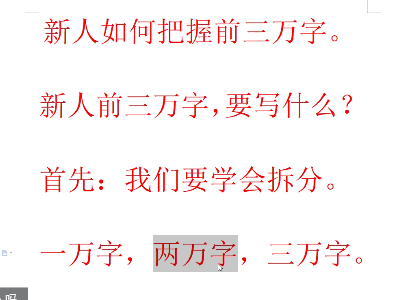
Ten thousand words: The beginning.
Golden fingers, world background, character identities, settings, and buildup.
First: Normal writing method.
At the start, he discovers he's transmigrated, fusing the memories of his new body, and then bound to a system.
The second method: flashback narrative. (Raising the anticipation within a single chapter)
Start by writing the story, then introduce your world background, your cheat code, and your persona.
For example: As long as I kidnap a celebrity, I can get a reward.
At the start, at the airport, the protagonist is mysterious, his gaze fixed on a female celebrity who just got off the plane, and then he makes a move.
Then the airport was shaken, the authorities were shaken, because the celebrity had been kidnapped.
What kind of writing style does it belong to?
Writing about anticipation. (Capturing readers' curiosity.) )
Right from the start, the story jumps right in, leaving readers eager to see how you handle the aftermath, to see what happens to the kidnapped person, and what happens next.
In Chapter Two, the protagonist stares at the clock on the wall, blocking the way at midnight, and finally breathes a sigh of relief.
Then he began to explain the whole story.
For example, my daughter is a killer.
Opening Chapter 2:
[Introducing Crisis and Desire] — [Ultimate goal: clarify the main storyline. 】
The protagonist had to do something.
Whether you want fame and money, or just give up.
[Explain to readers why I am doing this and what my purpose is. I'm as poor as a ghost now. If I don't make money, then I'm a worthless writer. 】
[Purpose: To clarify the main storyline. 】
[System Task: Many novels lack a clear main plot or can't be explained, so I simply leave it to the system.] The system assigned me tasks, telling me to complete certain tasks within a certain time limit. 】
I have an animal killer team.
First thing is, my money.
Urban novel: The main storyline is about making money and gaining fame.
Fantasy novel: Getting stronger and leveling up.
Historical Literature: Elevating status, officialdom.
Fanfiction: At most, add a bit of ambiguity.
Online game novel: Getting stronger.
Chapter 3: [Highlight the system's strength and provide a reasonable plugin for what you need to do next. ] Start with 999, a newbie gift pack.
For example: evolve once.
70% of the word count revolves around you to introduce how powerful your system is, using stories and plot to introduce rather than just talking. The system is truly impressive.
For example, system lotteries.
Chapter 3: Start the lottery. After winning something, the word count should be about 1000. The remaining 500 words can be written around your next story, but you don't need to write the story yourself.
Just tell the reader that you're about to get to work, and they'll see your fourth chapter.
Chapter 4: Stirring up hatred, setting up villains to build anticipation.
No matter what plot you write, you must first build up anticipation.
[Either stir up hatred, or set the stage for the upcoming plot. 】
Chapter 5: Showing off, slapping in the face. No need to act arrogant; just use the story and cheat codes to slap others in the face and gain benefits, and that's enough.
For example, at age eight, the protagonist earns 500,000 yuan in his very first plot.
For example, in entertainment novels, the first five chapters can be written as a protagonist singing the song, stunning the entire audience on stage, and stunning everyone, but you won't become famous.
[In short: I'm the protagonist. With the help of the system, I pretended to be a little pussy. I gained a bit of wealth, a little strengthened, but just a little.]
20,000 words:
Half setup, half showing off.
Setup:
0.5
Let's introduce a story.
The protagonist's friend invites him for a drink because everyone is getting married—it's the bachelor's final celebration. (600 words)
1: Enter the story.
A friend invited me for a drink, so I agreed, went to a bar to meet my friend, drank, and wrote about my character—these people are all wife-slave fans.
2: If nothing unexpected happens, then an unexpected event is coming. (The crisis has arrived. )
Streamer Performance: The Wife Group Rushes In.
Investment Novel: Across the board, the protagonist suddenly sets his sights on a stock, and it will go viral.
Hypothetical: Fantasy novel.
As the story begins, the protagonist enters a secret realm, where danger strikes and wild beasts suddenly attack, or after entering the realm, they immediately discover treasures.
2.5-5:
Strengthen hatred, heighten anticipation, strengthen your groundwork, then show off and slap yourself in the face.
Example:
The streamer can get along with the auntie incident.
The square dancing aunties get on the bus first, chattering away. Everyone on the bus is just a worker, exhausted, arguing—is there some point of hatred?
The first aggro point arrived, a newbie, directly slapped in the face.
He stepped forward and snapped back.
If I don't write about the protagonist, I write about the passerby, and if I downplay her, she's just a weak person.
Gaining sympathy, letting this passerby argue, then planning conflicts, deepening hatred and anticipation.
You can slap them in the face directly, or you can keep stirring up hatred.
The deeper you pull, the more satisfying the slap in the face next.
Similarly: showing off can also be lengthened.
Unreasonable and sarcastic, they just want you dead, but only targeting those close to the protagonist.
When the villain makes the supporting characters apologize, kneels and apologizes, (at the right moment) the protagonist steps in directly, not allowed to kneel—is this a disguised offense?
Still not satisfied, letting him crawl through a dog hole.
And he had to eat.
[Showing off and dragging it out, and on the other hand, you treat your friend the way he treats you.] When someone cries a supporting character, what is the protagonist's first reaction to cry at her? The second wave is specifically targeting the protagonist.
Story length:
Newcomers Chapters 5-8.
Veteran Chapters 8-15 end.
Phase One: The Opening
Stage Two: Main storyline + Enhancing the ability of your golden finger. Through your story, you indirectly tell readers how strong your golden finger is and how you can earn equivalent income.
What is the focus of the third stage?
Just for the sake of pleasure, super enjoyable.
Either on the path of showing off, or on the way to show off.
Normally, experienced writers typically reach the third stage between 50,000 and 70,000 words, while beginners typically write around 30,000 words.
Because in the previous two stages, you found yourself writing forty thousand words.
Regarding Feilu's 120,000-word release, at a fast pace,
The protagonist is invincible upon release, almost invincible.
40,000 to 70,000 words, if written in the style of an entertainment novel.
40,000 to 70,000 words. The protagonist's strength is probably that the whole country has listened to my songs, but I haven't become a superstar yet.
Roughly at the level of a top-tier star.
Starting with 10,000 words, I pretended to be a level 1 guy and got a level 2 item
In the second phase, I will equip a level 2-3 Pressure Warrior and receive a reward above level 3.
In the third phase, the rewards will be doubled directly, starting at levels 4-6, plus rewards around level 6.
Because you finish the third phase. You can think of the third stage as pulling out a long story, rather than actually writing thirty thousand words.
If you write 30,000 words, no matter how you write it, you must pull out a long-term story, which will take about 10 chapters.
The main storyline must have at least 10 chapters.
Phase One: At the start, I obtained the system, but I was proven wrong.
Phase Two: I entered a secret realm and received my reward.
Stage Three: I want to thoroughly prove how strong I am.
For example, it's normal to see sect competitions in many fantasy games. Pull out a plot that can write more than ten pages.
Chapter 1: Introduction
Chapter 2: Setting
Chapter 3: The Day of the Grand Competition
Chapter 4: Find various supporting characters to highlight the protagonist's strength, first downplaying then elevating the momentum, setting the stage
Chapter 5: The protagonist's turn, one move kills instantly, shocking the entire audience.
Chapter 6: Everyone was discussing among themselves, but felt that winning this round was impossible. After all, last time it was just an ordinary disciple, but he was instantly defeated
Chapter 7: The whole audience was shocked, then began to speculate, taking the protagonist seriously. Reactions from all sides revealed the protagonist was impressive. At the same time, one ranked eighth, and no one believed it again.
Chapter 8: Instant Kill, The True Shock of the Sect.
Chapter 9: Reaching the semifinals, then instantly reaching the finals.
Chapter 10: The Finals Begin
What is the main storyline of the Sect Grand Competition?
It turned out there was a place that opened every ten years, so the sect held a grand competition every ten years to send the elite inside.
Feilu's New Trends: (May 2022)
Wuxia (Seven Heroes Town, a character from 'My Own Swordsman,' a world of martial arts. )
Entertainment
Great Ming
Military Novel:
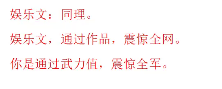
Game Story:
How a newcomer learns a truly impressive book
- Browse the rankings, look at the books on the list, see their strengths, unique features, and what makes them good.
- Interests: I can write, I don't know how to write it, chapter title (Revival of Spiritual Energy: billion-fold amplification), one story ends, one climax comes to an end.
The similarities in each story.
Setup, story, explosive public opinion, buildup, climax
From the beginning of the story to the end of the story, it lays the groundwork, unfolds the narrative, and spreads public opinion
[Often sorting out her own plot. Sticking a note on your own wall]
———————————————————–
The Golden Five are especially important, designed to quickly attract readers!
Chapter 1: Introduces the world background, character backgrounds, and events that happen to the protagonist.
Chapter 2: Introducing the system or cheat code, stirring up aggro, setting up the plot, and building anticipation. The higher the aggro level you pull, the stronger the anticipation.
Chapter 3: Upgrade Your Hatred, Conflicts, and Expectations.
Chapter 4: Showing off and slapping faces, adding a little foreshadowing.
Chapter 5: Ending the Show-Off Story, Continuing the Next Show-Off Story.
Chapter 6: Setup and Aggro.
Next, he continues to show off and slap faces, triggering the main storyline of the novel.
When writing a novel, the protagonist must set a goal!
————————————————-
"365 Days on the Run"
Chapter One: Worldview, Protagonist Introduction, What Happens to the Protagonist.
Chapter 2: Introducing how awesome the pursuers are, how the same group is anxious and anxious about the situation, others telling you how awesome their opponents are, introducing their own partners (all to set up the plot and stir up hatred: others look down on the protagonist) The golden finger appears.
Chapter 3: First, the chances of escaping are high, but then someone jumps in and says it's wrong, but the chances are still small, which makes everyone nervous. Then everyone starts trying to find solutions, but none of them seem very good, and just as they are about to leave (the anticipation is high—what will the main characters do?). ) At this moment, the protagonist appears and begins analyzing the situation.
A series of analysis and showing off sparked admiration (popularity) from viewers on TV.
Chapter 4: Continuing Analysis and Showing Off to Make the Protagonist Think He's Powerful. (Both the audience and supporting actors are praising the lead.) )
At this moment, showing off and crushing the already smart Huang Lei (contrast, satisfying feeling)
Chapter 5: The camera switches to another scene, providing a brief buildup. (He then began describing how strong the opponent was.) )
For supporting roles, make them a bit more vivid and well-developed. Only a distinct villain who is ultimately defeated has flavor.
Chapter 6: (Setup) The pursuers also have three celebrities appear. The story begins.
Three chasing celebrities drive to the villa to collect clues, and the expert team begins analyzing and directing the work.
Then the protagonist appears, and he evades the investigation in front of everyone (the satisfying part).
In the end, there's a suspense left (Where is he?) Attracting readers)
Chapter 7: The protagonist shows off, praised by everyone. Say three reasons to stay at the villa and take the risk, then take out one thing. (Showing off, buildup)
Chapter 8:
Mili explains what the core satisfying point is
Rice Grains:
Let me explain one point: what many people might not understand: the 'core satisfying point.' Once you understand this, then watch Jianshen's courses, and you'll probably get a bit better.
Rice Grains:
[Core Thrill] This is the book's constant revolve and support for the entire book's satisfying moments. And ideally, it should be able to be continuously upgraded.
Rice Grains:
For example: Entertainment: The songs I sing have all been requisitioned by the state.
Rice Grains:
The core thrill is that every time I sing, it ignites the public's patriotism, love for the military, passion, and a sense of history, which then catches the attention of relevant national departments, takes the song, and makes it an official promotional song. That's when you feel great, because you've received official support, your song is heavily promoted by the authorities, and it's a classic in this field (for example, 'Beijing Welcomes You', which was requisitioned by the state for the Olympics and sung nationwide, with foreigners joining in, experiencing thousands of years of culture, and warmly welcoming foreign friends).
Rice Grains:
Other songs are the same, centered around the core thrill of being requisitioned by the state. And it's constantly escalating—starting with Yangcheng TV, then the Education Bureau, then the military, then nationwide—constantly upgrading the departments you are requisitioned.
Rice Grains:
Another example is the world where elves spread worldwide. The core thrill is that you introduce a magical creature to everyone in the world. Others go from unknown to knowing about it, to liking it. In the end, you create elf battles and tournaments, changing the world, and the whole world reveres you as the godfather of elves.
The thrill points also keep evolving and popularizing: initially popular among ordinary people, then campus bellies, small business owners, big bosses (here are already some people, forming a small circle), Magic City, and nationwide
Rice Grains:
Here's a counterexample: a book that can't be written without its core satisfying points.
For example, a topic I came up with yesterday after discussing with a colleague:
"Entertainment: It Rains When I Sing, Mistakenly Mistaken for the Dragon King?" 》
Rice Grains:
His prototype is Jam Hsiao, who would rain every time he went to a place to sing. At first glance, it seems like it can be written, but on closer thought, it doesn't.
Because it lacks core satisfaction.
Rice Grains:
I can't just enjoy singing every time it rains, right? There's no way to find an upgraded, constantly revolving satisfying point to develop. So I thought about finding a suitable cheat to upgrade the satisfying points, but I couldn't think of a suitable one for now.
Rice Grains:
So the core pleasure point is very important. Once you have it, you'll know how to do what Jianshen mentioned
Regarding the layout and arrangement of the main plot, side plots, and filler lines in the novel
Regarding the layout and arrangement of the main plot, side plots, and filler lines in the novel
(1) Every novel must have a main storyline. What is the main storyline?
Many people write books without knowing what their main theme is. When an idea comes to mind, they start by saying, 'If you don't flop the job, who will?'
Let me give you an example
Example: In The Return of the Condor Heroes, Yang Guo rises from a humble figure through hard work to become a great hero.
Example: For example, the story of the Peerless Martial God, where the main male lead grows from a minor nobody into a formidable big shot.
Example: In old martial arts novels, some main storylines revolved around avenging one's father, romance focused on the male and female leads' entangled love and hate, and xianxia was about seeking immortality and the Dao.
This is the main storyline
The main storyline is the simplest; you just need to know what the protagonist's ultimate goal is.
(2) With a main storyline, we must have a side storyline. What is a side storyline?
Side story example 1: Yang went to Peach Blossom Island, what happened, and what goal was achieved?
Side Story Example 2: Yang went to Zhongnan Mountain to learn the craft. What happened and what goal was achieved?
Side Story Example 3: Yang Guo meets Xiaolongnü and becomes his apprentice. What happened, and what goal was achieved?
Side Story Example 4: Yang Guo leaves the ancient tomb, roams the martial world, what happens, and what goals are achieved
These side plots are the main storylines you want to write, focusing on Yang Guo's journey to becoming a great hero
Side quests must be designed around the main storyline and fill the main storyline
(3) Once we have a side line, we must have a fill line. What is a fill line? Let's take the side quest [Apprenticeship at Zhongnan Mountain] as an example.
Section (1) Filler line: Guo Jing took Yang to pay respects at the mountain gate, causing a misunderstanding and fighting. What purpose was achieved?
Section (2) Filling line: After entering the mountain gate, what happens and what purpose is achieved?
Section (3) filler line: After apprenticing under Zhao Zhijing, he encounters the villain, what conflicts arise, and what goals are achieved
(4) Fill line: And so on. After writing about apprenticeship at Zhongnan Mountain, what purpose is achieved, then you leave
*Note: The main plot supports the novel, the side plot supports the main storyline, and the filler plot supports the side storyline!
After we finish writing the filler lines, we can find an excuse to bring it back to side quest (2) and continue nesting with dolls
Let me give you an example and arrange it!
Example: Journey to the West
The main storyline of Journey to the West is: the journey between master and disciple
Let's pick any side quest.
For example, side quests: Three battles against the White Bone Demon
So, what is our fill line?
Three strikes on the White Bone Demon, definitely three battles.
First time: just a padded line
Second strike: This is the second fill line
Third time: the third fill line
One hit is one stroke.
The whole book can be reasoned level by level this way. It's just like math formulas—once you learn them, just follow the formulas.
Here's another example
Main plot: The story of a useless youth reborn in another world, rising against fate to become a big shot.
I just mentioned the main story. I'm now pushing side quests. If I plan to push 20 side quests, that's how I arrange it.
The first side quest: Useless, looked down upon by the family, then showing off and gaining recognition.
Second side quest: The family is wiped out, the whole family wiped out, and the male lead seeks revenge!
The third side quest: On the path of revenge, encounter an even more powerful force and join them.
Fourth side quest: Join an even more powerful faction and show off within it.
Side quests and so on. Once we've designed side quests, let's fill in the example of 'being looked down upon by the family.'
The first filler line: The cousin has a conflict with him and wants to fight him. They agree to a martial arts contest and win the match
Second filler line: After defeating his cousin Rang, he brings in an even tougher villain to fight the male lead, who then continues to train and take on the villain.
And so on.
In a typical family, if you beat the young, the old ones come; if you beat the old, the old ones come back. Otherwise,
(5) With the main storyline, side storyline, and filler line, we can also introduce detailed supplementary lines!
For example: my cousin has a conflict with him and wants to fight him, agreeing to a duel! (Filling line)
So, based on this filling line, what is the detail supplementary line?
That is: feeling pressure, the male lead works hard, then earns a golden finger (this is the detail supplement line).
(6) What should we pay attention to when designing lines?
This is especially important!!!
For example, the three battles against the White Bone Spirit. Isn't it about encountering the White Bone Spirit first? How did you meet? How do conflicts arise after meeting? How to resolve conflicts? And how to bring out new conflicts,
Keep asking yourself questions and find the answer—that's how the plot unfolds.
Ask yourself more often: why do I write this way? Instead of just turning on the computer and doing it
Then, after thinking about the main storyline, side storylines, filler lines, and detailed lines, we also have to ask ourselves: does each storyline make the protagonist feel satisfied? Or make the protagonist awesome and grow! Rise even offers psychological comfort and praise, but whether you need to think more about whether the protagonist did these things and provoked reactions from others. If not, just rewrite it. Just get rid of your writing and first figure out what story you want to write
How to better capture a sense of immersion
Method one: Resonance method
To resonate with readers, you must first resonate with yourself.
This resonance is not about the plot, but about the characters.
In other words, it's about substitution!
When writing, put yourself in each character's shoes and think about a question.
If you were this character, this person, facing this situation, what would your mental state be? Only then can you better write the characters' scenes opposite each other.
The scenes with each other are exciting and nuanced, which is what makes readers truly immersed.
When writing, if you don't immerse yourself in the field, it's easy to write a chronological account with thin dialogue and stiff psychological portrayals.
How can you enhance your reading experience?
1. Clear thinking.
Before writing, you need to first conceive what the chapter is about.
Divide the content into 1234.
What you need to do is arrange 1, 2, 3, and 4 more perfectly to enhance the reading experience.
It could be 2143, or maybe 2341.
2. Describe in order
Once the order of content is decided, describe it in order, avoiding confusion that could affect the reading experience.
For example, when writing 1, don't write 2 after writing half, and after finishing 2, come back to add the other half of 1.
3. Smooth writing style
Smoothness doesn't require too much of it—just discarding your own minor flaws.
For example:
Every time the protagonist is introduced, the beginning is himself, himself, how he did this.....
Or he, he, he, he...... How about that?
When you describe the protagonist, readers know you are describing them, and repeatedly emphasizing yourself (him) affects the reading experience.
Information about the reading experience also includes,
1. Simplify your own words; do not include colloquial words like 'de', 'mo', 'nan' in sentences
This makes the sentences more readable
2. Don't write about him—he, he. Using the protagonist's name instead, also helps readers relate and doesn't make it verbose
The simplest format for the novel's opening
1. Time
2. Location
3、“….. (A line the protagonist makes a sarcastic remark)
4. Introduction to the protagonist: A transmigrator, current identity, what he faces, and a golden finger.
5. Note: Some stories start with a female lead, so here we need to introduce her. Use more words to shape and enhance her character. (For example, the female lead is beautiful—don't use adjectives, but rather what level she belongs to in this era, her outstanding talent (she has done something proving her talent), and many admirers. )
6. Move into the first story, leave a sense of anticipation, and end with the conclusion.
Key Points:
1. For newcomers, don't make the opening too complicated. Try not to include too many characters, as this will make things harder. If you want to mock the protagonist, you can use a crowd of casual jokes instead of giving the supporting characters' names.
2. Don't make the cheat code too complicated—it's simple and blunt. (The cheat is used to help the protagonist show off; as long as it works, that's enough.)
I was approaching the fourth floor from the third floor
Third level: If you study some theories ———— overlap with the second level, you can simultaneously study the third level (about 2-3 years) if you are at the second level.
In the [second level beginner stage], you write novels based on instinct. No one teaches you how to design the plot, how to act cool, slap faces, or so on....... you know it yourself—it's your instinct. —At this point, you realize that relying on instinct can't improve your level any further. You realize you need to learn some theory. At this point, you learn about Long Kong, read some tutorial posts, and read 'Thirty-Six Lectures from Cabbage Group' and so on.
At this stage, you need to learn: the thrill, rhythm, anticipation, emotions, and various theories.......
At this stage, you understand quite a lot. At least when talking about online novels with others, you feel totally confident. You can even act like a pro, with a set of "emotion" theories—how anticipation can leave newcomers completely stunned.
At this stage, judging by Qidian subscription standards, the level is between 300 and 1000 subscriptions.
(Note: At this stage, your luck comes your way—suddenly come up with a good topic, even follow the trend, and occasionally write a novel with three thousand or ten thousand subscriptions—but you know this isn't your true level; there's a bit of luck.) )
Fourth level: Systematic theoretical review.
Same as the third level.
At the previous level, you start learning quite a few theories, but there's one problem: these theories are scattered. At this stage, you need to organize and form a systematic theory: specifically, from [how to choose the topic] to [design the outline/main storyline]—then to the [book title], [introduction], [opening]—[daily plot: for example, if I want to write 10,000 words tomorrow, how should I design the plot with those ten thousand words? This is called a daily plot], and so on. From start to finish, you review all the theories and form a systematic system.
Other matters are the same as above.
Finally
Thank you for reading this far. All content in this article is collected from the internet. If there is any infringement, please contact the webmaster for removal.



![[Open Source Reading] January 2024 ≈ 400 carefully edited book source compilation and update - Baiyun Blog](https://www.bybk.cc/wp-content/uploads/img/af867764c3780f0b7da88376fca7bf92.png)
![[Open Source Reading] November 950+ carefully proofread book source compilation and update - Baiyun Blog](https://www.bybk.cc/wp-content/uploads/2023/02/Screenshot_20230222-1001582-1024x593.png)


![[Open Source Reading] October 1300 Book Source Update - Baiyun Blog](https://www.bybk.cc/wp-content/uploads/img/1eeb6ae31cde88ab39faa2f19651638d.jpeg)
![[VMOS PRO 2.9.6 Member Edition] - Baiyun Blog](https://www.bybk.cc/wp-content/uploads/img/c303a7a50d3ebfa235cc380190db2980.png)




No comments yet