
Maybe you haven't flown before, or you're about toAir travel。 Unlike trains, airplanes may seem unfamiliar to many people. How do I buy plane tickets? What is an airline? What are the differences between different cabin classes? I believe after reading this article, you will find the answer.
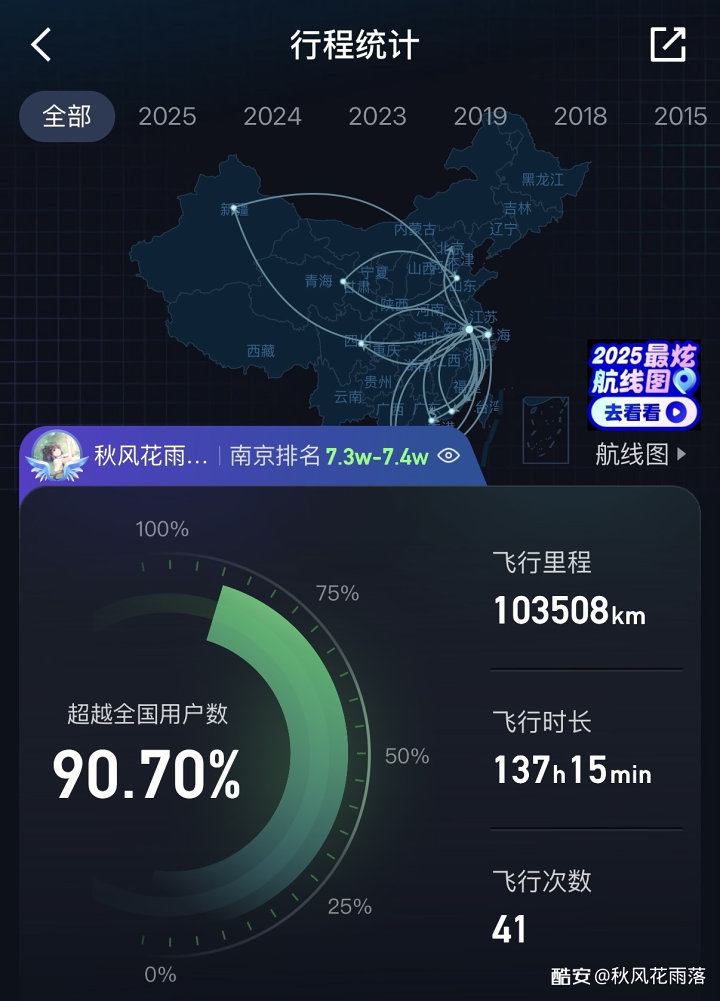
Personal flight experience
This article was originally published on 2024 At the end of the year, we received a lot of positive feedback. A year later, some of the information is outdated, so I have rewritten this "Plane Boarding Guide" in hopes of helping you with future travel. The article is written in Markdown format and usedAndroidEditionExtremely peacefulRead onA better experience.
Preparation
To fly, you first need to purchase a ticket。 The main information on a ticket includes time, aircraft type, cabin class, and airline. We will introduce each one below.

China Eastern Airlines first-class bar counter
Purchase tickets
Platforms for purchasing tickets are divided into official and third-party categories. Airline official websites and airlines app These are official channels, while Ctrip, Tongcheng, Fliggy, etc. are third-party channels. Official ticket prices are higher, but offer better protection in special situations like refunds or changes; Foreign airlines may face issues such as language barriers and payment difficulties, making third-party channels more convenient.

Some ticket purchase channels
Time
Generally, airfares are higher during the day, while early morning or late night tickets are relatively lower. When choosing a time, you need to consider not only your itinerary but also the time you get to the airport. Buying tickets early is easier to get lower prices, while buying close to the market may increase prices.

The impact of departure time on ticket prices
Model
Civil airliners are mainly divided into narrow-body and wide-body types. Narrow-body aircraft refer to aircraft with only one aisle inside the cabin, commonly including the A320, B737, and C919. Wide-body aircraft refer to aircraft with two or more aisles inside the cabin, commonly including the A330, A350, A380, B747, B777, B787, and others。 Wide-body airliners offer better seat pitch, cabin noise, and ride experience compared to narrow-body aircraft, so it's recommended to prioritize them.

A certain narrow-body aircraft can see business class and economy class

A wide-body aircraft can see first class, business class, and economy class
Space
The cabin classes for commercial airliners are ranked from highest to lowest: "First Class," "Business Class," "Super Economy," and "Economy Class."

Air China First Class
First class cabins generally use a 1-2-1 arrangement. Some first-class cabins offer private rooms and beds, offering excellent privacy and comfort.

First class
Business class generally uses a 1-2-1 or 2-2-2 layout, with various layouts available. Most wide-body aircraft and a few narrow-body aircraft support flat business class.

Anti-fishbone business class

Serial business class

Staggered business class
Super Economy is positioned between economy and business class, with actual quality depending on the airline. Some airlines only increase seat pitch, while others offer wider seats and fewer people per row, so you need to choose flexibly based on actual conditions.

Super Economy compared to regular Economy
Economy class generally uses a 2-4-2 or 3-3-3 arrangement, with legroom in the first row and emergency exit seats relatively wide, while other seats are narrower.

Economy class
Airlines
Airlines are divided into two categories: full-service carriers and low-cost carriers. The main domestic full-service airlines include Air China, China Eastern, China Southern, and HNA. These airlines provide meals or snacks, have relatively large seat spacing, and offer more flexible carry-on and checked baggage allowances. Low-cost carriers include Spring Airlines and 9 Yuan, but they do not provide free meals or checked baggage, and their checks for carry-on luggage are strict.

There are significant differences in routes and destinations among different airlines
Head to the airport
In terms of timing, it is recommended to arrive at the airport 2 hours early for domestic flights and 3 hours for international flights. Considering that most airports are far from cities, you can plan your itinerary in advance using map software to avoid delays along the way.

Plan your route in advance
After entering the airport, the first step is to complete check-in procedures, also known as check-in. The check-in counter will be marked in the ticketing app, and you can also check the airline logo or ask the staff. First class, business class (two-class) passengers and airline members can use priority check-in counters, while other passengers must queue at the economy class counter.

Check-in counter guidance

Queuing for check-in
Luggage
Generally, only suitcases smaller than 20 inches are allowed to be carried, as per airline regulations for details. Baggage exceeding the limit must be checked in. For checked baggage allowances, please refer to the instructions at the time of purchase. Power banks, lithiumBatteryhazardous materials, fresh foods, etc., cannot be checked in, but electronic products may be allowed to be shipped. Due to the complexity of baggage check-in, if you have any questions, it is recommended to consult the airline in advance to avoid problems upon arrival at the airport.

Some baggage regulations
If you are booking a connecting flight, special attention should be paid to whether your luggage is delivered directly to the final destination. Certain itineraries may require re-checking in and checked baggage at the transit airport.

A certain connecting flight
Choose your seat
After checking in your luggage, staff will assist you with seat selection. You can select your seat in advance on the airline's official website or pick your preferred seat on site. If you need to select a seat, please let it know proactively; otherwise, you may be assigned randomly.

Online seat selection page
Online advance seat selection offers greater flexibility. Generally, seats from the middle to rear of the aircraft can be chosen for free, while front seats require payment or points redemption. Some airlines will offer paid seats for free after check-in begins.
Personally, I recommend taking short flights by the window for better sightseeing; Long-haul flights are located in aisles, making it easy to get up and move around and access to the restroom. Front seats allow early access to onboard services and are also convenient for boarding and disembarking, so it's more popular than the back seats.

Window seats and hallway seats each have their own advantages and disadvantages
Emergency exit seats offer more legroom, but they have certain requirements for travelers. Elderly, children, people with disabilities, those who need help or cannot operate the emergency exit are not allowed to sit here. Although emergency exit seats offer more legroom, the backrest and armrests may not be adjustable.

Emergency exit seats
Security check
Once everything is completed, your luggage will be checked in and your boarding pass will be handed to you. Next, find the security checkpoint and follow the security officer's instructions to bring your umbrella, power bank,Mobile phones、NotebookComputerand other items are taken out of the bag for security inspection. Lighters, matches, and various liquids are not allowed inside the airport; free drinking water is provided in the waiting area.
(No photos are allowed during the security check; no photos here)
After passing security, follow the instructions on your boarding pass to find the corresponding boarding gate, and then you can wait to board. Some boarding gates are quite hidden; if you cannot find them, be sure to seek help promptly to avoid missing your flight.

Enter the airport

Boarding gate guidance
If you are a two-class passenger or airline member, you can enter the designated lounge to wait. The lounge offers drinks, snacks, and fruit, with hot meals served during meal times. Some high-end lounges also offer massage, accommodation, showers, and other services. Unless otherwise specified, the above services do not require additional payment.

Airline lounge
Boarding
There are generally three boarding methods: ground boarding, boarding via boardwalks, and shuttle bus boarding.

Boarding at the covered bridge
The most common is boarding via the covered bridge, with the passage behind the ticket gate leading directly to the aircraft cabin door, which is the most convenient. If the boarding gate does not provide a covered bridge, you must walk to board under the guidance of staff. If the plane is parked at a remote stand, you need to take a shuttle bus to the area near the plane.
In-flight experience
After boarding, the flight attendant will check your ticket and guide you to your seat. Carry-on luggage can be placed in overhead luggage racks. If the luggage rack is full, please inform the flight attendant promptly for processing, do not place it carelessly.

Reserved seats for seating
After sitting down, you need to fasten your seatbelt. Some airline routes offer full/light meals and drinks after the regular flight. Meal options vary by airline, and drinks are usually provided with orange juice, mineral water, tea, coffee, cola, Sprite, and more. If you need a blanket, you can request it from the flight attendant. Low-cost airlines do not provide the above services for free.

Business class dinner on a domestic flight

Economy class dinner on an international flight
Several restrooms are installed on board. Distributed at the front, middle, and rear of the cabin. The front restroom is generally reserved for passengers in both classes, while economy class passengers can use the middle and rear restrooms.

In-flight restrooms
After boarding, it is recommended to keep airplane mode on for the entire flight; without it, you won't be able to find signal. Some routes offer onboard WiFi, which may require a fee. The internet speed is sufficient for chatting, listening to music, and reading novels, but the video playback experience is poor. Some models are equipped with an in-flight entertainment system, allowing you to watch movies and play with small gamesGamesand check flight information.

Personal entertainment system
Arrived
After landing, passengers need to taxi and dock with the covered bridge before they can leave the plane. So there's no need to get up immediately; just follow the flight attendant's instructions.

Luggage carousel guidance
After leaving the plane, if you checked in your luggage, follow the signs to the baggage lounge, find the carousel corresponding to your flight, and wait for your luggage to be released. If you don't have checked baggage, you can leave directly. The first air trip also came to an end.

Looking forward to the next flight
Autumn Wind and Flowers Fall 2026.1.1
Thank you for reading this far
If you found this article helpful, please like, save, and share. Your support is my greatest motivation to create
For more air travel, please see your favoritesView the link
![[Open Source Reading] January 2024 ≈ 400 carefully edited book source compilation and update - Baiyun Blog](https://www.bybk.cc/wp-content/uploads/img/af867764c3780f0b7da88376fca7bf92.png)
![[Open Source Reading] November 950+ carefully proofread book source compilation and update - Baiyun Blog](https://www.bybk.cc/wp-content/uploads/2023/02/Screenshot_20230222-1001582.png)
![[Text and Image Summary] Summary of Terminals Currently Supporting 5G-A Carrier Aggregation --- Includes How to Check Carrier Aggregation Enabled on iOS - Baiyun Blog](https://www.bybk.cc/wp-content/uploads/2024/04/20240407140712630-e26ee861710dd3b075a1302dd00392d5e1db60a1.jpeg)
![[Open Source Reading] November 950+ carefully proofread book source compilation and update - Baiyun Blog](https://www.bybk.cc/wp-content/uploads/2023/02/Screenshot_20230222-1001582-1024x593.png)
![[Open Source Reading] October 1300 Book Source Update - Baiyun Blog](https://www.bybk.cc/wp-content/uploads/img/1eeb6ae31cde88ab39faa2f19651638d.jpeg)
![[VMOS PRO 2.9.6 Member Edition] - Baiyun Blog](https://www.bybk.cc/wp-content/uploads/img/c303a7a50d3ebfa235cc380190db2980.png)




No comments yet